
Cannabis versus opioids in pain treatment: comparison of efficacy and safety 2026
Cannabis versus opioids in pain treatment: what studies from JAMA, Cochrane, and NIDA say about efficacy, opioid-sparing effect, and safety of both groups in 2026.
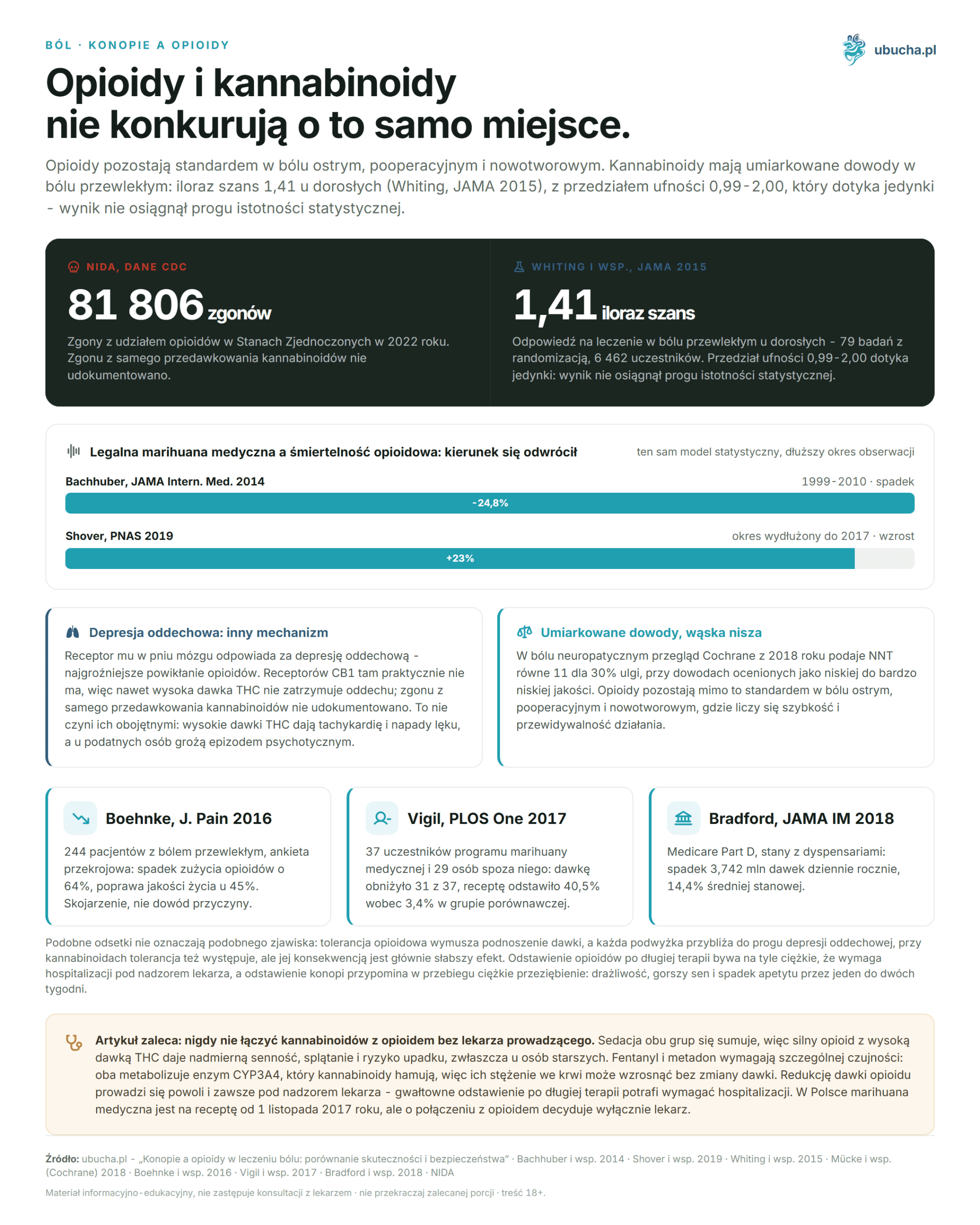
In 2022, 81,806 people died in the United States due to opioid-involved overdoses (NIDA, CDC data). This number changed how medicine discusses pain treatment and opened a serious discussion about cannabinoids. The question posed as “cannabis or opioids” is, however, poorly formulated. Both groups target different types of pain, have different risk profiles, and different roles in clinical practice. In Poland, medical marijuana has been back on prescription since November 1, 2017, and THC-free cannabis preparations can be bought without a prescription. Below is a comparison based on studies from JAMA, Cochrane, and NIDA reports: what is known about efficacy, safety, and where evidence ends.
KEY INFORMATION
• US states with legal medical marijuana recorded 24.8% lower opioid mortality from 1999-2010 (Bachhuber, JAMA Internal Medicine, 2014).
• CB1 receptors are absent in the brainstem respiratory center, so cannabinoids do not cause respiratory depression.
• In neuropathic pain, NNT for 30% relief is 11 (Cochrane, 2018).
• Opioids remain the standard in acute and cancer pain.
• In Poland, medical marijuana has been prescription-only since November 1, 2017.
What are opioids and how do they act on pain?
Opioids are analgesics acting on mu, delta, and kappa opioid receptors located in the brain, spinal cord, and peripheral tissues. They inhibit release of pain neurotransmitters and alter the emotional perception of suffering. The mu receptor is responsible both for analgesic strength and for respiratory depression and addiction potential.
Pharmacologically, they are divided into three groups. Natural, such as morphine and codeine, come directly from the opium poppy. Semi-synthetic, including oxycodone and hydrocodone, are chemically modified morphine. Synthetic, like fentanyl or tramadol, are fully lab-produced. Fentanyl is 50 to 100 times stronger than morphine, making it invaluable in palliative care and deadly outside medical control.
Without opioids, modern anesthesiology and palliative medicine would not exist. This must be stated clearly before any criticism. The problem is not that opioids are weak. The problem is that the mu receptor effect package is inseparable: you cannot get analgesia without sedation and increasing tolerance.
This tolerance has practical significance. After several weeks of regular use, the body needs a higher dose for the same effect, and risk rises with dose. In acute pain lasting days, this does not manifest. In chronic pain lasting years, it determines the entire therapy course and is where alternatives are sought today.
How large is the opioid crisis scale?
The scale is unprecedented in peacetime. In 2022, the US recorded 81,806 opioid-involved deaths, and nearly 727,000 total from 1999-2022 (NIDA, CDC data). In 2023, this number dropped to 79,358, the first clear reversal in a decade.
The crisis unfolded in three waves. The first, from the late 1990s, was based on prescription opioids and aggressive marketing. The second, after 2010, shifted users to cheaper heroin. The third, from 2013, is illicit fentanyl produced without oversight, now responsible for most deaths. Each wave required a different response, and responses designed for previous waves failed.
The economic cost is severe. The US Joint Economic Committee estimated the epidemic cost the economy nearly $1.5 trillion in 2020, 37% more than three years earlier. This includes lost productivity, healthcare, and justice system expenses.
Europe looks very different, and direct comparisons can be misleading. The European Monitoring Centre for Drugs reports about 6,100 drug-related deaths annually in the EU, with opioids involved in about two-thirds. Poland has around 200 such deaths yearly. The smaller scale results from more cautious prescribing of strong opioids, not better pain treatment.
What side effects does long-term opioid treatment cause?
The list is long and most effects do not subside over time. Respiratory depression remains the most dangerous complication, as mu receptors in the brainstem directly suppress the respiratory center. Opioid-induced constipation affects most chronic users and, unlike drowsiness, does not resolve with adaptation.
Other effects include nausea, skin itching, urinary retention, decreased libido, and hypogonadism after prolonged use. Opioid-induced hyperalgesia is a paradoxical increase in pain sensitivity in long-term high-dose users. Patients report stronger pain, receive higher doses, and the cycle tightens.
Addiction risk is well documented. Vowles in Pain 2015 synthesized chronic non-cancer pain data showing 7.8-11.7% addiction and 21.7-29.3% misuse (Vowles, Pain, 2015). These are not marginal percentages, especially for years-long therapy.
The last piece is withdrawal syndrome. Abrupt opioid cessation after long therapy causes symptoms that may require hospitalization, so dose reduction is gradual under medical supervision. None of these problems negate opioids but explain why pain medicine seeks dose reduction methods.
What are cannabinoids and how do they modulate pain signaling?
Cannabinoids are a group of over one hundred compounds in cannabis, best studied are THC and CBD. They act via the endocannabinoid system, described only in the 1990s. It is one of the most widespread neuromodulatory systems, present in brain, spinal cord, and immune cells.
CB1 receptor dominates in the central nervous system and mediates THC’s psychoactive effects. For safety, the key fact is that CB1 receptors are practically absent in the brainstem, where breathing is regulated. This biological reason explains why cannabinoid overdose does not stop breathing, though it can be very unpleasant.
CB2 receptor is mainly in immune cells and peripheral tissues. Its activation produces anti-inflammatory effects without altering consciousness. CBD does not strongly bind either receptor but modulates their action, inhibits anandamide breakdown, and affects TRPV1, GPR55, and 5-HT1A receptors.
Ethan Russo described in British Journal of Pharmacology 2011 how plant terpenes alter cannabinoid effects (Russo, BJP, 2011). This explains why full-spectrum and isolates behave differently despite the same declared active content. Pain modulation occurs simultaneously at three levels: spinal cord, brain, and peripherally at inflammation sites.
In which pain types do cannabinoids have the strongest evidence?
The strongest evidence concerns chronic pain in adults, especially neuropathic pain. Whiting in JAMA 2015 analyzed 79 randomized trials with 6,462 participants and reported an odds ratio of 1.41 for treatment response in chronic pain (Whiting, JAMA, 2015).
This number requires honest comment. The confidence interval was 0.99-2.00, so the lower bound touches one and the result did not reach statistical significance. The response rate was 37% versus 31% in placebo. The effect is real but moderate, and anyone promising spectacular relief goes beyond the data.
The US National Academies of Sciences in a 2017 report classified cannabinoid efficacy in adult chronic pain as supported by conclusive or substantial evidence (NASEM, 2017). This is the highest certainty category and includes spasticity in multiple sclerosis and chemotherapy-induced nausea.
Indications are uneven. Cannabinoids make sense in neuropathic pain, MS-associated pain, and as add-on in cancer pain. In acute, postoperative, and infarction pain, evidence is weak and onset too slow. It is not a universal pain remedy, and trying to sell it as such harms the cause.
What do studies on neuropathic pain and fibromyalgia show?
Neuropathic pain is notoriously treatment-resistant and cannabinoids found a niche there. The 2018 Cochrane review included 16 randomized trials with 1,750 participants. Thirty percent relief was achieved by 39% on cannabinoids versus 33% on placebo (Mücke, Cochrane Database, 2018).
The difference is 9 percentage points, translating to an NNT of 11: eleven patients must be treated for one to experience significant improvement. The authors rated evidence quality as low to very low and noted benefits may not outweigh adverse effects in some patients. This caution should be carried forward along with the numbers. The full endpoint table with harm data is in our post on neuropathic pain treatment with cannabis.
Fibromyalgia data mainly come from observations. Sagy described in Journal of Clinical Medicine 2019 367 patients treated with medical marijuana; after six months, 81.1% were responders and median pain intensity dropped from 9 to 5 (Sagy, JCM, 2019). Among opioid users, 22.2% stopped or reduced dose.
The study lacked a control group, so placebo effect cannot be isolated. In pain, where placebo response is high, this is a serious limitation. However, the improvement scale is large enough that fibromyalgia is on the list of conditions where medical marijuana is considered clinically.
Do cannabis products really reduce opioid use?
The opioid-sparing effect means lowering opioid dose while maintaining pain relief. Boehnke described in Journal of Pain 2016 244 chronic pain patients, with a 64% opioid use reduction and 45% reporting improved quality of life (Boehnke, Journal of Pain, 2016).
This cross-sectional survey shows association, not causation. Stronger evidence is consistency across populations. Vigil in PLOS One 2017 followed 37 medical marijuana program participants and 29 non-participants. Opioid dose was reduced in 31 of 37 participants, and 40.5% stopped opioid prescriptions versus 3.4% in controls (Vigil, PLOS One, 2017).
Population data align but require precision. Bradford analyzed Medicare Part D data in JAMA Internal Medicine 2018 and noted a 3.742 million daily dose annual decrease in states with dispensaries, about 14.4% state average (Bradford, JAMA Internal Medicine, 2018). States allowing only home cultivation saw about 7% decrease.
This difference matters and is often blurred in summaries. It is not medical marijuana legality alone but real sales availability. Where law existed only on paper without dispensing points, opioid prescribing impact was half as large.
Does legal medical marijuana reduce opioid mortality?
The answer is probably no, though it was believed otherwise for years. Bachhuber showed in JAMA Internal Medicine 2014 that states with medical marijuana laws had 24.8% lower annual opioid mortality from 1999-2010, confidence interval minus 37.5% to minus 9.5% (Bachhuber, JAMA Internal Medicine, 2014).
This result gained wide attention and still circulates online without follow-up. The follow-up is inconvenient. Shover repeated the analysis in PNAS 2019 extending to 2017 and found the association reversed: instead of minus 21%, plus 23% (Shover, PNAS, 2019). Authors considered the original link likely spurious.
Powell et al. described in Journal of Health Economics 2018 a mechanism partly explaining the discrepancy. Protective effect appeared where liberal dispensaries operated, weakened with stricter laws, and vanished in later years (Powell, Journal of Health Economics, 2018).
The 2026 conclusion is more tempered than most media want. Cannabinoids can reduce opioid demand in individual chronic pain patients, visible in individual data. They are not a tool against deaths driven by illicit fentanyl, which is a different problem with different population and supply chain.
Which group is safer for long-term use?
Cannabinoids have an undisputed advantage here, based on anatomy, not sympathy. Lack of CB1 receptors in the brainstem respiratory center means even very high THC doses do not stop breathing. No deaths from cannabinoid overdose alone have been documented, while opioids kill exactly this way.
This does not mean cannabinoids are harmless. High THC doses cause tachycardia, anxiety attacks, coordination disorders with fall risk, and can trigger acute psychotic episodes in predisposed individuals. Regular users may develop cannabinoid hyperemesis syndrome with persistent vomiting. Each reaction is reversible and not directly life-threatening.
Opioid complications increase with therapy duration. Chronic constipation can cause obstruction. Hyperalgesia worsens pain meant to be treated. Hormone level drops after years reduce life quality regardless of pain.
The difference boils down to reversibility. With cannabinoids, adverse effects fade with the substance and rarely require intervention. With opioids, some complications persist and the most dangerous offer no second chance. This asymmetry, not potency difference, determines current chronic pain treatment guidelines.
How does the point-by-point comparison look?
The table below organizes what was described above and shows no group wins all categories. Opioids lead in analgesic strength and predictability. Cannabinoids lead in all long-term risk aspects.
| Aspect | Opioids | Cannabinoids |
|---|---|---|
| Acute pain | Very high efficacy, standard of care | Moderate, limited evidence |
| Neuropathic pain | Moderate, often insufficient | Moderate, NNT 11 for 30% relief |
| Overdose death risk | 81,806 deaths in USA in 2022 | No documented deaths |
| Respiratory depression | Yes, main cause of deaths | No, no CB1 in brainstem |
| Addiction | 7.8-11.7% chronic users | About 9% recreational users |
| Tolerance | Rapid, forces dose escalation | Slower, less dose escalation |
| Withdrawal syndrome | Severe, requires medical supervision | Mild, self-limiting |
| Constipation | Very common, persistent | Not typical |
| Status in Poland 2026 | Rpw prescription, strict control | Marijuana on prescription, cannabis preparations OTC |
The addiction row is often misunderstood, so we expand it in the next section. Similar percentages do not mean similar phenomena.
How does cannabis addiction differ from opioid addiction?
Percentages are close but the burden is very different. NIDA estimates cannabis use disorder risk at about 9% recreationally and 17% for adolescent starters (NIDA). Vowles reported 7.8-11.7% addiction in chronic opioid therapy.
Comparing these numbers without context creates false equivalence. Opioid withdrawal after long therapy causes symptoms that may require hospitalization and is tapered slowly under supervision. Cannabis withdrawal resembles a severe cold: irritability, poor sleep, and appetite loss for one to two weeks. CBD alone is a separate matter, often confused with whole cannabis, discussed in our post on does CBD cause addiction.
The second difference is escalation. Opioid tolerance forces dose increases, each raising respiratory depression risk. Cannabinoid tolerance also occurs but results in weaker effect, not rising death risk. The safety ceiling is entirely different.
The third difference is social. Opioid addiction often leads to illegal market use with unknown composition and dose, causing most deaths today. Cannabis dependence rarely leads to this path, as motivation to increase dose is much weaker.
What is medical marijuana access like in Poland?
Legal framework has operated for nearly a decade. The Act of July 7, 2017, allowed pharmaceutical cannabis trade from November 1, 2017 (ISAP, Dz.U. 2017 poz. 1458). Any specialist doctor can issue a prescription; indications are not enumerated in the law.
Adoption grows rapidly. Filled prescriptions reached nearly 300,000 in 2023 and exceeded 600,000 in 2024, per e-Health Center data cited by trade press. November 2024 saw a sharp monthly drop after introducing a requirement for in-person visits to issue cannabis prescriptions.
Sativex, a balanced THC-CBD preparation, is registered in Poland since 2012 for MS spasticity. It is not reimbursed and few pharmacies stock it, so practical access is harder than registration suggests.
Three barriers exist, none legal. First is cost, as therapy is not reimbursed and patients pay full price. Second is the small number of doctors actually providing such treatment relative to demand. Third is pharmacy availability, varying by city and complicating therapy continuity. Stigma also discourages some patients from asking about this option.
What can CBD alone do and how to dose it?
CBD deserves separate treatment as it acts differently than THC and has a different risk profile. EFSA in a 2026 opinion set a provisional safe cannabidiol dose at 0.0275 mg/kg body weight per day, about 2 mg for a 70 kg person, and stated safety cannot be established in those under 25, pregnant or breastfeeding women, or those taking medications (EFSA, 2026).
The analgesic mechanism is diffuse. CBD stimulates TRPV1 receptor, the same activated by chili capsaicin, modulates GPR55 linked to neuropathic pain, interacts with serotonin 5-HT1A receptor, and inhibits anandamide-degrading enzyme, prolonging endogenous cannabinoid action.
However, what is lacking must be stated clearly. Most strong pain evidence concerns THC-containing or THC-CBD combination products, not CBD alone. Registered indications for pure cannabidiol are mainly rare drug-resistant epilepsies. In chronic pain, CBD remains a supplement with moderately documented effect, not a therapy substitute. Which claims have research backing and which are marketing-only are separated in our post on CBD and chronic pain.
In practice, doses usually range from 20 to 50 mg daily, divided into two or three portions, and up to 100 mg for resistant pain. Dose-effect relationship can be non-monotonic, so adding more milligrams does not always improve results. Sublingual form offers higher bioavailability than capsules by bypassing first-pass liver metabolism; oil is held under the tongue about a minute before swallowing. Effect assessment requires two to four weeks of titration.
Which cannabinoid oils are currently in the Bucha store?
We checked the catalog on August 8, 2026. Six oils are available, all CANNOVA brand, in three CBD and three CBG concentrations. Outside this category, in the Green Out line, there are two hemp oils dosed in drops. Altogether, eight oral oil preparations.
| Rank by cost per 100 mg | Product | Highlight | Price | Cost per 100 mg |
|---|---|---|---|---|
| 1 | CANNOVA Natural CBD Oil 2000 mg, 20%, 10 ml | Highest concentration in offer | 190.00 zł | 9.50 zł |
| 2 | CANNOVA Natural CBD Oil 1000 mg, 10%, 10 ml | Mid-range, easy titration | 110.00 zł | 11.00 zł |
| 3 | CANNOVA Natural CBD Oil 500 mg, 5%, 10 ml | Lowest entry threshold | 65.00 zł | 13.00 zł |
| 4 | CANNOVA Natural CBG Oil 1500 mg, 15%, 10 ml | Strong CBG profile | 240.00 zł | 16.00 zł |
| 5 | CANNOVA Natural CBG Oil 1000 mg, 10%, 10 ml | Medium CBG concentration | 175.00 zł | 17.50 zł |
| 6 | CANNOVA Natural CBG Oil 500 mg, 5%, 10 ml | Cheapest CBG entry | 100.00 zł | 20.00 zł |
| 7 | Green Out Pure XL 20 ml, Critical Jack | Pure hemp oil, strain terpene profile | 45.00 zł | up to 22.50 zł |
| 8 | Green Out Pure XL 20 ml, O.G. Kush | Same composition, different terpene profile | 45.00 zł | up to 22.50 zł |
Prices are from the store as of August 8, 2026, and may change. The full current list is in the oils category.
What is the real cost of 100 mg cannabinoids?
The bottle price alone says nothing about therapy cost, as volume is the same but content varies fourfold. Only the cost per 100 mg of phytochemicals allows fair comparison. The range turned out larger than shelf prices suggest.
Two conclusions arise. Switching from 5% to 20% oil lowers cost per 100 mg from 13.00 zł to 9.50 zł, over a quarter reduction despite triple bottle price. CBG products are clearly more expensive than CBD at the same content, reflecting harder extraction.
The ratio does not replace dose decisions. Highly concentrated oil requires precision in drop measurement and is easier to err with at low daily doses. Beginners often benefit from a more expensive, lower concentration product allowing gentler titration.
What won’t cannabinoids do and who should be cautious?
Start with efficacy limits. Infarction, labor, and postoperative pain after major surgery require fast and predictable drugs. Cannabinoids meet neither condition, so have no place there and attempting use delays proper treatment.
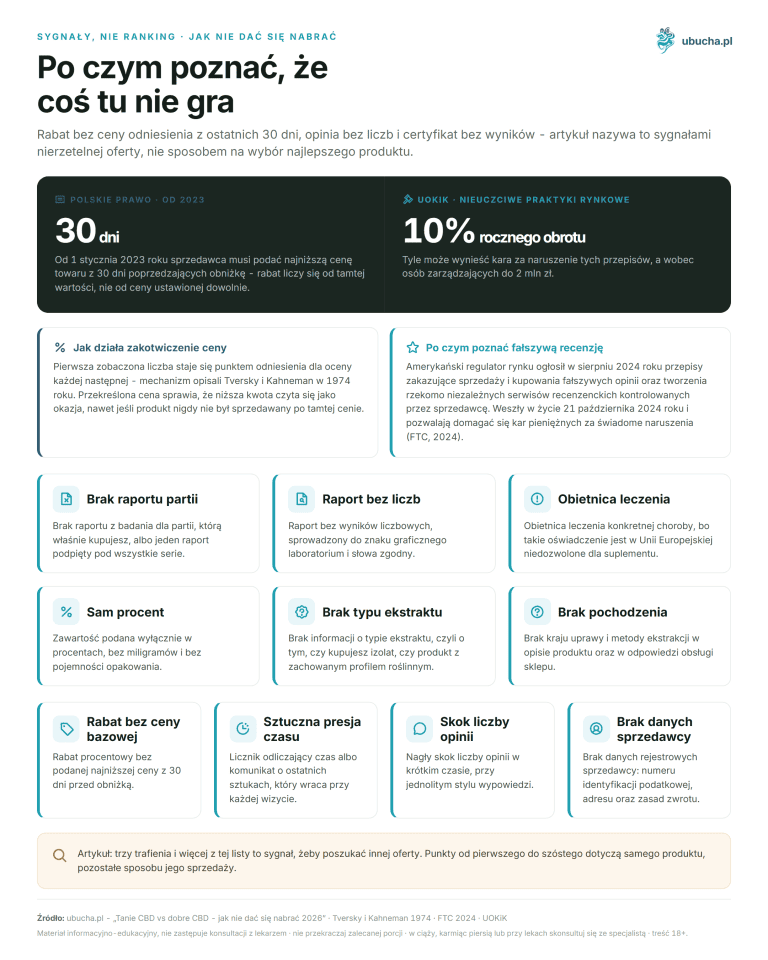
The second limit concerns product quality. The cannabis market is full of products with unconfirmed composition, lacking batch certificates of analysis. Without such documents, declared content is a promise, not data, making dosing impossible. Checking batch certificates is a basic reflex when buying.
Contraindications are specific. Cannabinoids are not used in pregnancy or breastfeeding, as THC crosses placenta and milk. Caution is needed in serious heart disease, as THC increases heart rate and cardiovascular load. Family history of psychosis or schizophrenia is a warning, as is age under 18 outside registered pediatric indications.
Drug interactions close the list. Cannabinoids inhibit cytochrome P450 enzymes, mainly CYP3A4 and CYP2C9, altering metabolism of warfarin, some statins, certain antiepileptics, and amiodarone. Patients on multiple chronic drugs must consult a doctor or pharmacist; this is a safety condition, not formality.
How to safely combine cannabinoids with opioids?
The basic rule: never without the treating physician. Sedation from both groups sums, so a strong opioid with high THC dose causes excessive drowsiness, confusion, and real fall risk, especially in elderly. This is the most common complication of self-combining and the easiest to avoid.
Opioid dose reduction is gradual. Clinically, doses are lowered by 10-20% every 2-4 weeks, monitoring pain control and withdrawal symptoms. Adding cannabinoids does not eliminate withdrawal syndrome, so tapering speed is dictated by the opioid, not by feelings after the new preparation.
Fentanyl and methadone require special vigilance. Both have narrow therapeutic indices and are metabolized by CYP3A4, the enzyme inhibited by cannabinoids. Blood level increases at unchanged dose are a real scenario, so changes are made only under pharmacological supervision.
Finally, order matters. It is wiser to stabilize cannabinoid dose for 2-3 weeks before starting opioid reduction. The reverse order mixes two effects and prevents knowing what worked. Recording daily pain intensity in a simple diary provides the doctor with data no memory-based conversation can replace.
Summary: when to use which tool
Opioids and cannabinoids do not compete for the same place. Opioids remain standard where speed and strength matter: acute, postoperative, and high-intensity cancer pain. The price is respiratory depression, tolerance, constipation, and addiction risk rising with therapy duration.
Cannabinoids work in chronic and neuropathic pain where standard treatment fails, and as a way to reduce opioid dose. Evidence is moderate: odds ratio 1.41 with confidence interval touching one in Whiting, NNT 11 in Cochrane review. It is a real effect without miracles.
The epidemiological layer requires greatest caution. Bachhuber’s effect reversed in Shover’s extended analysis, so claims that medical marijuana legalization saves from the fentanyl crisis lack data support today. Dose reduction in individual patients and national death statistics are two very different things.
The 2026 question is not “cannabis or opioids” but “when which and how to combine.” The answer depends on pain type, comorbidities, and other medications, and is made together with a doctor, not instead of one.
Frequently Asked Questions
Can cannabis replace opioids in pain treatment?
In most situations, they do not replace but complement. Boehnke in Journal of Pain 2016 described a 64% reduction in opioid use after introducing medical marijuana in chronic pain patients. Opioids remain standard in acute and high-intensity cancer pain where rapid and strong analgesia is crucial.
Does legalization of medical marijuana reduce opioid death rates?
The data are inconclusive. Bachhuber in JAMA Internal Medicine 2014 showed 24.8% lower opioid mortality in states with legal medical marijuana from 1999-2010. Shover in PNAS 2019 showed that extending analysis to 2017 reversed the association to plus 23%.
Which safety profile is more favorable?
Cannabinoids, unquestionably. In 2022, the US recorded 81,806 opioid-involved deaths, while no deaths from cannabinoid overdose alone were documented. The reason is anatomical: CB1 receptors are practically absent in the brainstem respiratory center, so respiratory depression does not occur.
What is the opioid-sparing effect?
It is the ability of another substance to reduce opioid dose while maintaining the same pain relief. Boehnke reported 64% of patients reduced opioid use, and 45% reported improved quality of life. Vigil in PLOS One 2017 noted dose reduction in 31 of 37 patients in a medical marijuana program.
Is medical marijuana legal in Poland in 2026?
Yes. The Act of July 7, 2017, allowed pharmacy trade from November 1, 2017. Any specialist doctor can issue a prescription after exhausting standard treatment methods. Therapy is not reimbursed, and filled prescriptions exceeded 600,000 in 2024.
How does cannabis addiction risk compare to opioids?
Numbers look similar, but the nature differs. NIDA estimates cannabis use disorder risk at about 9%, and 17% among adolescent starters. Vowles in Pain 2015 reports 7.8-11.7% addiction in chronic opioid-treated patients and 21.7-29.3% misuse.
Does CBD alone, without THC, relieve pain?
CBD acts differently than THC: it does not strongly bind CB1 receptor but modulates TRPV1, GPR55, and 5-HT1A receptors and inhibits anandamide breakdown. EFSA in 2026 opinion set a provisional safe dose at 0.0275 mg/kg body weight per day and stated safety cannot be established in those taking medications. Clinical evidence for CBD alone in pain is weaker than for THC.
Do cannabis and opioids interact?
Yes, on two levels. Pharmacodynamically, sedation sums, so combining a strong opioid with a high THC dose risks excessive drowsiness. Pharmacokinetically, cannabinoids inhibit cytochrome P450 enzymes including CYP3A4, which may increase fentanyl or methadone blood levels. Combining requires physician supervision.
If you are looking for cannabinoid oil as a pain therapy supplement, the current list of available preparations is in the oils category at Bucha store.
This article is for informational and educational purposes and does not constitute medical advice. Before starting cannabis or CBD for therapeutic purposes, consult a doctor, especially if you take other medications, are pregnant, or breastfeeding.
Author: Michał Waluk · Published: 2026-05-11 · Updated: 2026-08-08