
Hemp butter: how long to cook and at what temperature
Decarboxylation at 110 degrees for 40 minutes, infusion at 70-90 degrees for 2-3 hours. Step-by-step recipe and dosage conversion to teaspoon.
Hemp butter is made in two thermal stages: decarboxylation at 110 degrees Celsius for about 40 minutes, then infusion at 70 to 90 degrees for two to three hours. This is the answer to the question of how long to cook and at what temperature. The rest involves preparation and straining. Hemp butter is the simplest homemade method to transfer compounds from dried flower into food. The principle is simple: cannabinoids do not dissolve in water, but bind well with fat, so it is enough to heat the fat long enough and gently enough. The entire recipe is divided into three stages: decarboxylating the dried flower in the oven, slow infusion in butter, and straining through cheesecloth. Below you will find each of these broken down into individual steps, a table for converting cannabinoid content in the finished batch, a list of mistakes that ruin the result, and a separate section on what should not be done in a home kitchen. The latter is more important than it seems, because the entire recipe works for one raw material, and for another, it is a crime.
KEY INFORMATION
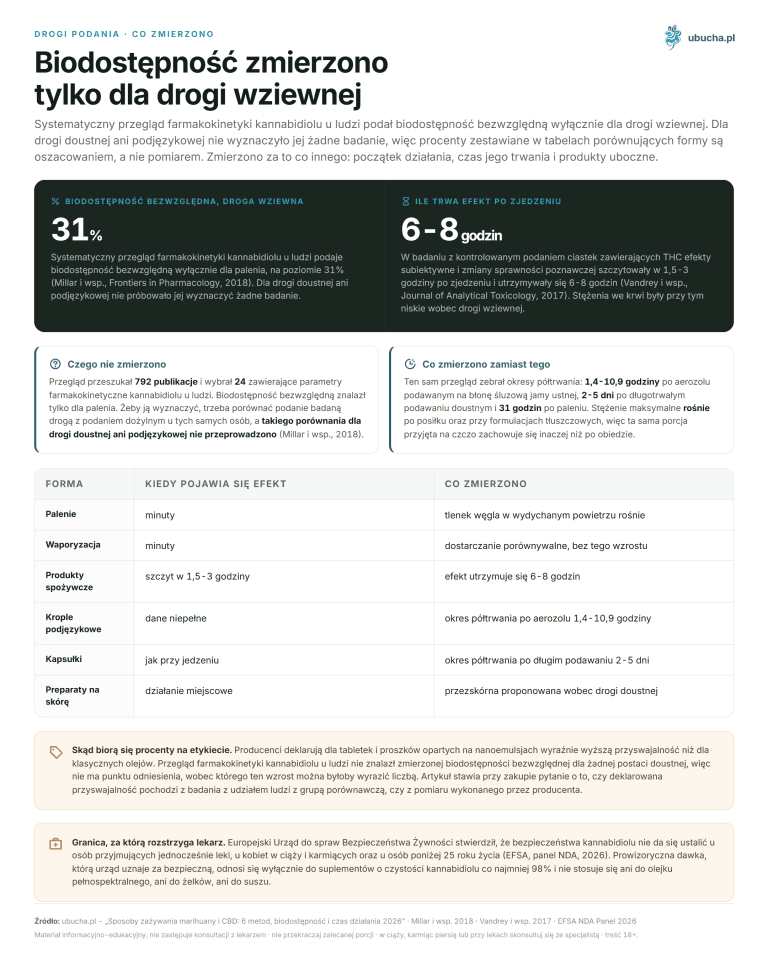
- Cannabinoids are highly lipophilic and have low bioavailability when taken orally (Bruni et al., Molecules, 2018).
- Decarboxylation is studied in the range of 80 to 145 degrees Celsius; the reaction proceeds according to first-order kinetics (Wang et al., Cannabis and Cannabinoid Research, 2016).
- Homemade processing of pharmaceutical-grade herb into butter is illegal in Poland; the recipe applies only to hemp fiber herb.
- From 250 g of butter and 20 g of herb with a 9% content, a maximum of 7.2 mg of cannabidiol is produced per gram of butter.
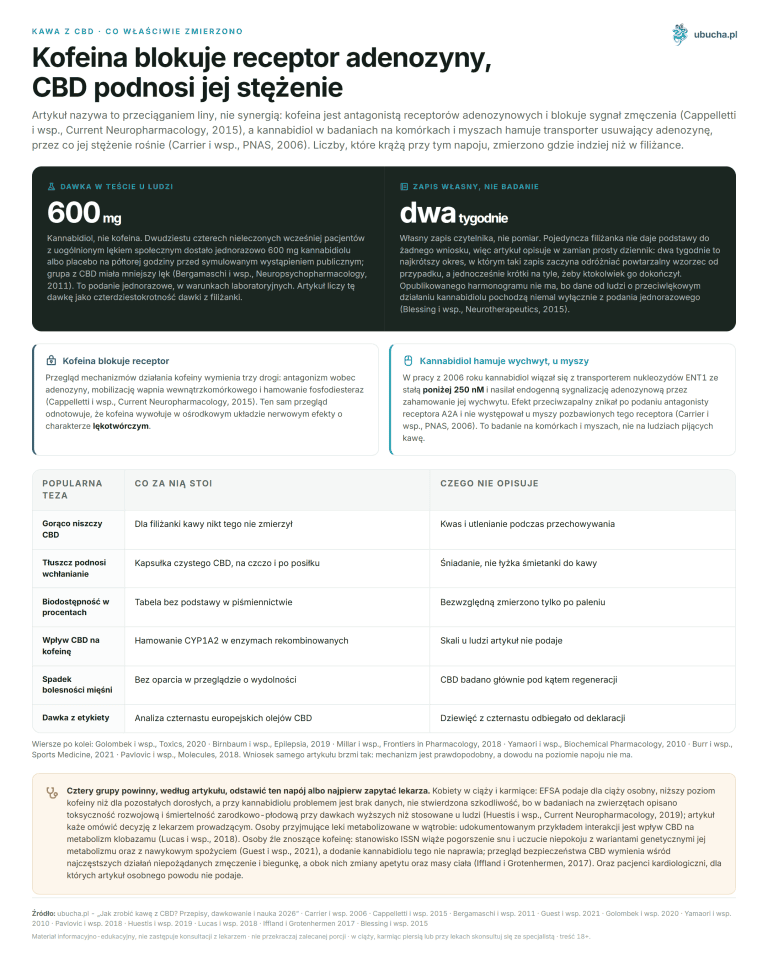
- EFSA states that the safety of CBD cannot be established in individuals under 25 years of age, in pregnant and breastfeeding women, and in those taking medications.
Why does fat extract cannabinoids better than water?
| Stage | Temperature | Time |
|---|---|---|
| Dekarboksylacja w piekarniku | 110 stopni Celsjusza | about 40 minutes, stirring every quarter hour |
| Infusion in butter | 70-90 stopni Celsjusza | 2-3 godziny, bez bulgotania |
| Straining and cooling | temperatura pokojowa | bez wyciskania gazy |
Because cannabinoids are strongly lipophilic compounds, meaning they readily transfer to fat, while they dissolve poorly in water. This property is described in the literature dedicated to cannabinoid carriers, where it is indicated as the reason for low bioavailability when taken orally (Bruni et al., Molecules, 2018).
For the kitchen, this has two consequences. An infusion of herb poured with just water carries negligible amounts of the compounds we are interested in, so tea made from herb without added fat is mainly just tea. Butter, coconut oil, or cream behave completely differently because they provide an environment where these molecules feel at home.
The same review points out the other side of the coin. Low oral bioavailability means that part of the content of the finished butter will never reach the bloodstream, and how much reaches it depends on the form of administration and what else is in the meal. A home kitchen has no way to measure this.
The practical conclusion for the recipe is therefore: choose fat with a high content of fatty fractions. Clarified butter has significantly more than regular butter, in which a substantial part of the volume consists of water and milk proteins. Clarification removes both, while raising the temperature at which the fat begins to burn.
Is it allowed to process pharmacy herb into butter at home?
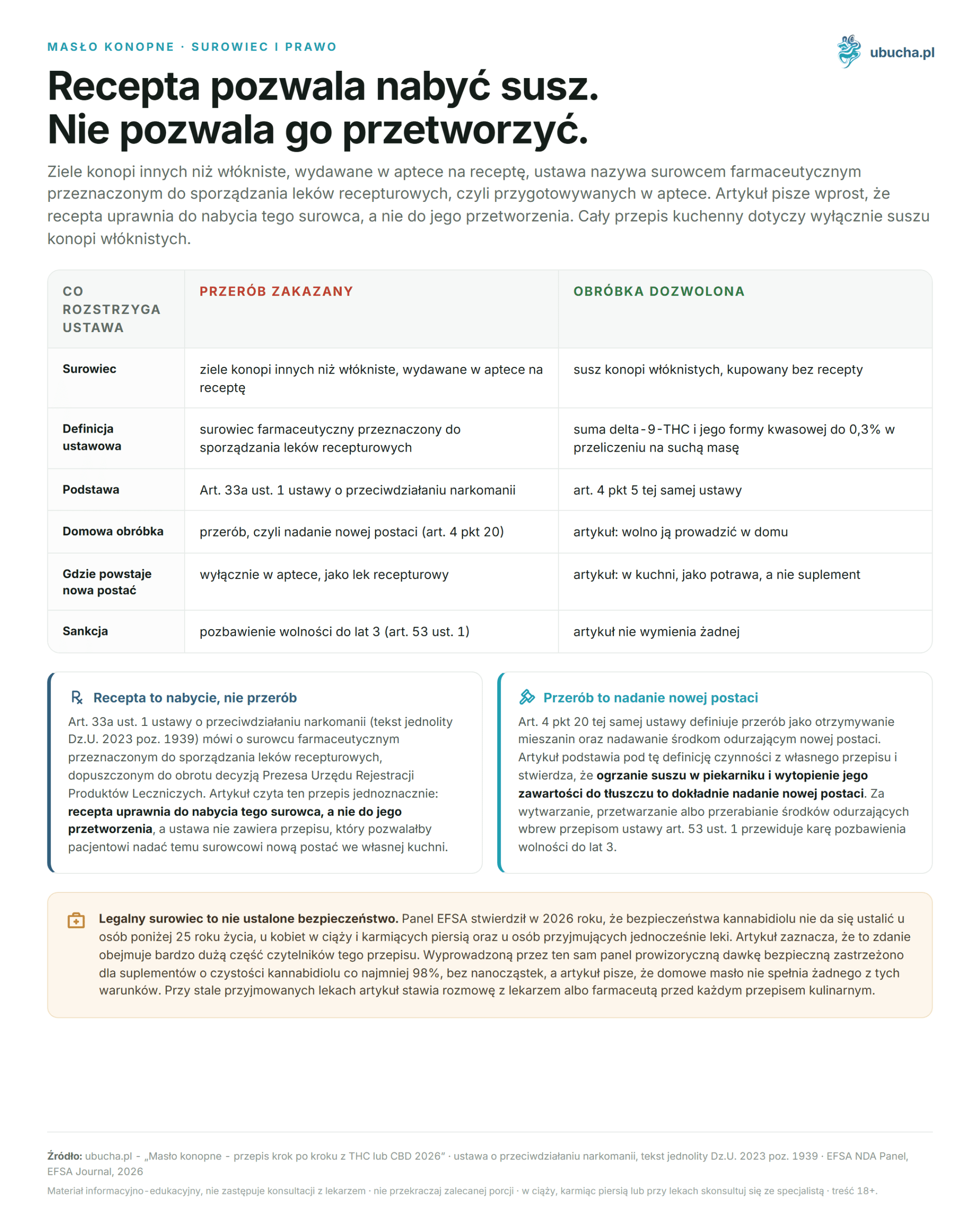
No, and this is the most important sentence in this text. Cannabis other than fiber, dispensed in pharmacies by prescription, is a pharmaceutical raw material intended for the preparation of compounded medications, that is, those prepared in the pharmacy. The law does not contain a provision that would allow the patient to give this raw material a new form in their own kitchen.
The basis is indicated directly. Article 33a, paragraph 1 of the Act on Counteracting Drug Addiction (consolidated text Dz.U. 2023 poz. 1939) speaks of a pharmaceutical raw material intended for the preparation of compounded medications, approved for circulation by the decision of the President of the Office for Registration of Medicinal Products. A prescription entitles you to purchase this raw material, but not to process it.
The second provision closes the matter. Article 4, point 20 of the same act defines processing as obtaining mixtures and giving narcotic substances a new form. Decarboxylation in the oven and melting the content into fat is precisely giving a new form. Article 53, paragraph 1 provides for a penalty of imprisonment for up to 3 years for producing, processing, or altering narcotic substances in violation of the provisions of the act.
So what remains? The raw material for which this culinary recipe was created remains: hemp fiber herb, that is, plants in which the sum of delta-9-THC and tetrahydrocannabinolic acid does not exceed 0.3% when calculated on a dry mass (Article 4, point 5 of this act). Such herb can be purchased without a prescription, and you are allowed to process it at home. The entire rest of the recipe concerns only it.
What is decarboxylation and why do it?
It is a reaction in which a carboxyl group is removed from the cannabinoid acid molecule, resulting in a neutral form plus carbon dioxide. In the fresh plant, acidic forms prevail, which do not act on cannabinoid receptors. Only decarboxylated forms are strong ligands for them (Lewis-Bakker i wsp., Cannabis and Cannabinoid Research, 2019).
The conditions of this reaction have been thoroughly investigated. The authors of the work dedicated to the kinetics of decarboxylation examined extracts from cannabis at temperatures of 80, 95, 110, 130, and 145 degrees Celsius for times up to 60 minutes and demonstrated that the concentration changes over time exponentially, according to first-order kinetics (Wang i wsp., Cannabis and Cannabinoid Research, 2016).
From the same work comes the finding that home recipes usually remain silent about. The rate constants for tetrahydrocannabinolic acid were twice as high as for cannabidiol and cannabigerol acids. In other words, the acidic form of cannabidiol requires a longer time or higher temperature than the acidic form of THC. The authors noted that the decomposition of the last two acids did not proceed so simply, as it was accompanied by an unexplained loss of substrates or products.
The practical conclusion: decarboxylation is not a switch, but a process stretched over time, and its course depends on what you keep in the oven. The relationship between acidic forms and active ones is detailed in a separate entry on acidic forms of cannabinoids.
What should be prepared before starting?
The list is short, but two items determine the outcome: a thermometer and herb with known cannabinoid content. Without the first, you work in the dark, as built-in oven thermostats can deviate from the setting by several degrees. Without the second, you cannot calculate anything that would make sense.
- 250 g of clarified butter, or ghee; it can also be clarified from regular butter by yourself
- 14-20 g of hemp fiber herb with the cannabinoid content stated on the package
- 500 ml of water, optionally, for the variant with a water bath
- kitchen thermometer with a probe, range up to 200 degrees Celsius
- osobny termometr piekarnikowy do sprawdzenia rzeczywistej temperatury komory
- blacha i papier do pieczenia oraz folia aluminiowa
- a pot with a thick bottom, capacity 1-2 liters
- a fine sieve and cotton gauze folded into three or four layers
- a glass jar with a lid and a wooden spoon
When choosing the raw material, pay attention to two things: the declared cannabinoid content and whether the seller publishes a batch testing report. Without the first number, all the arithmetic later in the text loses its meaning, and without the second document, that number is merely a declaration. The differences between the available types of dried material are described in the entry o suszu konopnym.
Also, pay attention to the vessels. A pot with a thin bottom creates overheating points right at the plate, which a thermometer submerged in the middle will not detect. A glass jar is better than a plastic container because fat is a good solvent and extracts more from materials than water.
How to choose the dried material for this recipe?
Two pieces of information from the packaging determine everything you will calculate later: the declared cannabinoid content and the batch number that can be linked to a testing report. Without the first number, the calculations from the table below have no starting point. Without the second, that number remains solely the manufacturer's declaration.
For extraction, use dry and crumbly material that can be crumbled between your fingers. Moist dried material introduces water into the pot, which alters the boiling temperature of the mixture and complicates process control. Material compacted into hard clumps heats unevenly, so its center undergoes decarboxylation less effectively than the surface.
The type of cannabinoid also matters for the work plan. Dried material with a predominance of cannabidiolic acid requires longer heating than material with a predominance of tetrahydrocannabinolic acid, which directly results from the difference in rate constants described above. The same caution applies to dried material rich in cannabigerol, as cannabigerolic acid behaves similarly in this study to cannabidiolic acid.
Also check if the packaging provides an expiration date and storage conditions. Dried material stored for a long time in heat and light changes composition even before entering your oven, and then the declaration on the label describes the state from months ago, not the current state.
The last thing is the quantity. A batch of 250 g of butter uses 14-20 g of dried material, so five-gram packages will only be enough for one extraction when you have three or four. For the first attempt, it's worth aiming for the lower end of this range, as it's cheaper to make a mistake in temperature with a smaller amount of raw material.
How to carry out decarboxylation step by step?
This stage takes less than an hour and involves evenly heating the ground dried material. A home setting to start with is 110 degrees Celsius for about 40 minutes. This value lies in the middle of the range studied in the cited work on reaction kinetics.
- Grind the dried material by hand or in a grinder to a coarsely ground coffee size, about 2-5 mm; avoid powder, as it complicates straining and gives a bitter taste.
- Line the baking tray with parchment paper and spread the dried material in a layer about a centimeter thick, without mounds.
- Cover with a second sheet of paper or aluminum foil to limit the evaporation of volatile aromatic components.
- Preheat the oven to 110 degrees Celsius and wait 10 minutes after reaching the setting; check the value with a separate thermometer, do not trust the knob scale alone.
- Slide the tray onto the middle rack and bake for about 40 minutes, stirring the dried material every quarter hour to ensure even heating.
- Remove the tray and let the dried material cool for 10-15 minutes; it should be dry and crumble between your fingers.
The control is visual and olfactory. The dried material after decarboxylation should be light to medium brown and have a more pronounced aroma than before baking. A nearly black color or the smell of burnt caramel indicates that the temperature was too high. There's no point in salvaging such a batch, as further stages will not improve it.
How to make cannabis butter step by step?
The second part of the process is slower and less demanding. It involves keeping the fat hot but not boiling for two to three hours. Check the temperature with a probe submerged in the butter, not by eye, as the appearance of the surface can be misleading.
Safety: Do not leave the pot unattended for three hours of extraction, keep cloths and paper away from the burner, and if using a water bath, monitor the water level, as its evaporation immediately raises the temperature of the fat.
- Melt 250 g of clarified butter in a pot with a thick bottom over low heat, not exceeding 90 degrees Celsius.
- Add the decarboxylated dried material and mix until it is fully coated in fat.
- Optionally, add 250-500 ml of hot water; water stabilizes the temperature and reduces the risk of burning.
- Maintain 70-90 degrees Celsius for 2-3 hours, stirring every quarter hour; the surface should lightly steam but not bubble.
- Line a sieve with three or four layers of gauze, set it over a jar, and slowly pour the contents of the pot.
- Wait fifteen minutes for the fat to drain on its own; do not squeeze the gauze completely, as the last drops carry chlorophyll and bitterness.
- Place the jar in the refrigerator; with the water variant, after a few hours, the butter will solidify on top, and you can simply pour off the water.
Finally, describe the jar. The date, the weight of the herb, its declared cannabinoid content, the weight of the butter, and the calculated content per gram: five numbers that no one will remember after two weeks. Without this label, the rest of the text becomes useless, as there will be nothing to base the calculations on.
Can another fat be used instead of butter?
Yes, and it depends on one feature: the proportion of fat in the carrier. Since cannabinoids transfer to the fatty fraction and not to water, the less water the carrier contains, the more room it has to absorb the compounds we are interested in. The rest of the choice comes down to taste and working temperature.
Clarified butter is the default choice because clarifying removes water and milk proteins while raising the smoke point. Coconut oil is equally good and more convenient for portioning, as it solidifies at room temperature; however, it brings its own distinct aroma, which may not suit everything. Olive oil and canola oil work well in savory dishes, but they remain liquid, making portioning more difficult.
Regular butter can also be used, but with a note on its composition. A significant portion of its volume consists of water, so either clarify it before melting, or accept lower efficiency and a higher risk of burning the proteins at the bottom of the pot. Clarifying takes about fifteen minutes and solves both problems at once.
What should be avoided? Fats with additives: margarines with water and emulsifiers, flavored butter with garlic, and spreads. Additives do not aid in extraction; instead, they complicate straining and shorten the shelf life of the finished batch. A simple fat with a single ingredient is always a better choice here.
How many cannabinoids end up in the finished butter?
You definitely know one number: how many cannabinoids were in the herb. The rest is an estimate. Herb with a 9% content contributes 1800 mg in 20 grams, so with 250 g of butter, the upper limit is 7.2 mg per gram. This is a theoretical maximum that the home process does not achieve.
| Content in the herb | W 20 g suszu | Maximum per 1 g of butter | Maximum per teaspoon (5 g) |
|---|---|---|---|
| 5% | 1000 mg | 4,0 mg | 20 mg |
| 9% | 1800 mg | 7,2 mg | 36 mg |
| 12% | 2400 mg | 9,6 mg | 48 mg |
| 15% | 3000 mg | 12,0 mg | 60 mg |
All values in the table were calculated for 250 g of butter and 20 g of herb as the product of mass and declared content. We do not multiply them by any efficiency factor because the home process does not have such a factor: it depends on grinding, temperature, time, and method of straining, and it can only be measured by testing the finished batch. The calculations for baked goods are detailed in a separate entry. o obliczaniu dawki w domowych wypiekach.
Set these numbers against one reference point. The EFSA panel established a provisional safe dose of cannabidiol in 2026 at 0.0275 mg per kilogram of body weight per day, which is about 2 mg daily for a person weighing 70 kg (EFSA NDA Panel, EFSA Journal, 2026). The upper limit for one teaspoon of butter from the table is many times higher than this value.
Why can't home efficiency be given as a single number?
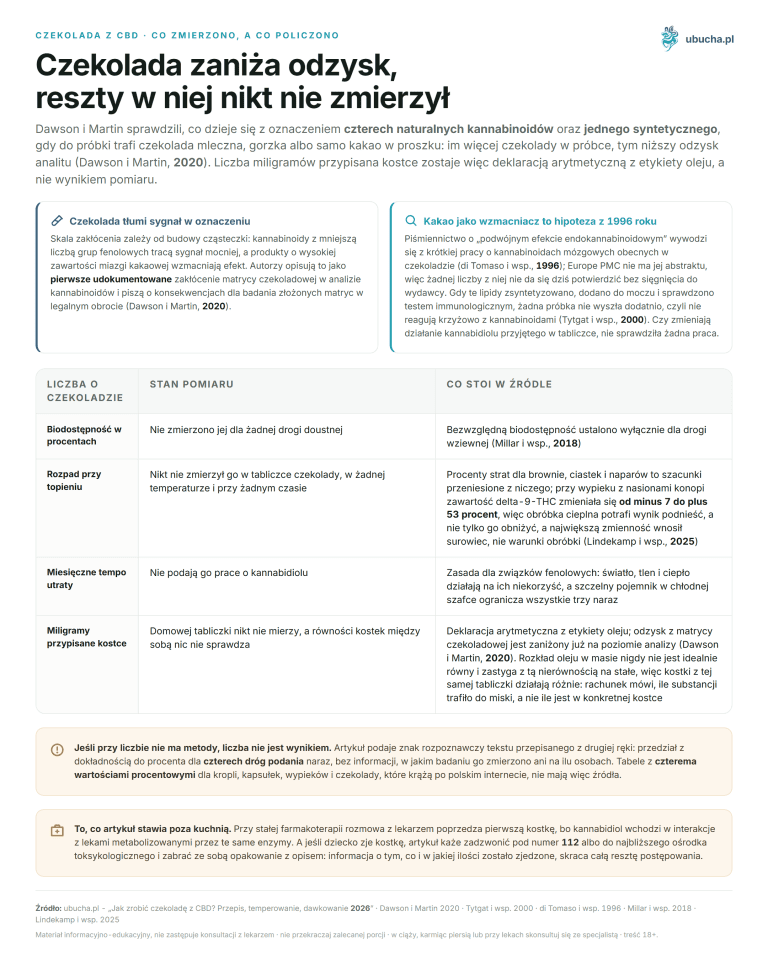
Because it depends on the method, and methods differ in their results. One study directly compared four techniques for extracting compounds from three strains of medical cannabis: Soxhlet extraction, supercritical extraction assisted by ultrasound, and microwave extraction, and then compared the chemical composition of the obtained extracts (Lewis-Bakker et al., Cannabis and Cannabinoid Research, 2019).
Two findings from this study directly transfer to the kitchen. First: the microwave method produced extracts that were completely decarboxylated, determined by temperature and exposure time. Second, and more importantly: optimal conditions may vary for each strain of cannabis. This statement means that a single conversion factor for all raw materials simply does not exist.
Additionally, there are variables that no study can encompass because they are yours: the degree of grinding of the herb, the actual oven temperature, the frequency of stirring, the thickness of the pot's bottom, the force with which you squeeze the cheesecloth. Each of these shifts the result by a few percent in one direction or another, and a home kitchen has no way to measure the sum of these shifts.
Therefore, the numbers in the table above are upper limits, not results. Wherever other recipes provide an efficiency factor of around 0.7 or 0.8, it is an accepted number, not a measured one. The authors of the cited study conclude for the entire industry: the repeatability of composition requires a higher rigor than is currently applied.
The very reaction from which everything begins is discussed separately in the text about dekarboksylacji, and the ready application of the butter in przepisie na ciastko.
How to store hemp butter?
Cool, airtight, and away from light. Hemp butter combines two problems at once: dairy fat goes rancid, and cannabidiol is a compound with poor stability, which is listed among its main pharmaceutical limitations (Grifoni i wsp., Molecules, 2022).
For everyday use, a refrigerator is sufficient. Keep the jar at the back of the shelf, not in the door, where the temperature fluctuates with every opening. For longer storage, a freezer is better, preferably in portions frozen in a silicone mold and transferred to an airtight bag.
Thaw in the refrigerator, not on the countertop, as water condenses on the cold fat, and moisture promotes mold. Do not refreeze a portion that has been thawed: each cycle adds more hours at intermediate temperatures, during which both the fat and the compounds it contains lose the most.
The packaging does more here than it seems. An opaque container or a jar wrapped in foil protects the contents from light, and an airtight lid limits contact with air. If you use a transparent jar, keep it in a closed container or in a box, as light turns on in the fridge with every door opening.
Four symptoms qualify for disposal: a rancid smell, a sharply bitter taste, discoloration towards gray, and any film on the surface. Homemade butter does not contain preservatives, so it makes no sense to scrape off the top layer in case of mold. A proper batch is yellowish-green, and the green hue comes from chlorophyll and is normal.
How to use hemp butter in the kitchen?
The safest applications are those where the butter is added to a dish that is already cooked or warm. The shorter and at a lower temperature you heat it, the less the composition of what you put in the jar changes. The reactions described during decarboxylation do not stop in the oven; they continue with temperature and time.
| Application | How to do it |
|---|---|
| Sandwiches and spreads | Without heating, directly from the jar; the herbal flavor is softened by honey or nut paste. |
| Sauces and dressings | Add to the finished sauce after removing it from the heat, do not fry in it. |
| Warm beverages | To milk or infusion cooled to a drinkable temperature |
| Wypieki | Replace part of the butter in the recipe and bake briefly; the dough mixture is cooler than the oven |
| Frying | Not recommended; for this purpose, use regular fat |
In baking, remember one thing that is easy to overlook when dividing portions. Butter distributes unevenly in the dough, so two pieces from the same tray may not contain the same amount. Thoroughly mixing the batter before pouring it into the mold is more important here than precision in weight.
The flavor is distinctly herbal and grassy, so it pairs well with ingredients that have a strong profile: cocoa, cinnamon, garlic, or aged cheese. Delicate dishes with light sauces tend to suffer from this.
It's also worth establishing the ratio before you start cooking. In most applications, hemp butter replaces part of the regular fat, not all of it, because a full substitution changes both the flavor of the dish and the portion content. Half is a safe starting point that leaves room for adjustment in the next attempt.
What mistakes most often ruin an entire batch?
The top three items on the list below account for most failed attempts, and all three relate to temperature or time. The good news is that each of these mistakes can be eliminated with one thermometer and one recorded quarter.
| Error | Skutek | How to avoid it |
|---|---|---|
| Skipping decarboxylation | Acid forms remain in the butter, inactive on receptors | A separate stage in the oven, not just cooking |
| Zaufanie skali piekarnika | The actual temperature differs from the setting | Osobny termometr piekarnikowy w komorze |
| Boiling fat | Burnt herb and bitter taste of the entire batch | Probe in the butter and low heat all the time |
| Wyciskanie gazy do sucha | Chlorophyll and plant residues in the finished butter | Gravity draining for fifteen minutes |
| No label on the jar | The contents of the batch cannot be recreated later | Five numbers recorded immediately after pouring |
| Przechowywanie na blacie | Rancidity of the fat and breakdown of the contents | Refrigerator or freezer, opaque jar |
Add one more organizational trap to the list: doing two stages of the same process in a hurry on the same day. Decarboxylation requires attention for forty minutes, infusion for three hours, and in between, the herb must cool down. Spreading this over two evenings costs less than one wasted batch.
Separately, it's worth mentioning a mistake that doesn't ruin the batch, just the result. Grinding the herb into powder seems reasonable because it increases the surface area in contact with the fat, but during straining, the powder passes through the cheesecloth and remains in the butter. The result is a noticeable bitterness and green sediment that cannot be removed.
When does a ready-made product outperform homemade butter?
When you care about consistency. Homemade butter gives control over the raw material and cost, but it lacks one thing: certainty about how much substance is in a portion. A product with declared concentration and a batch testing report offers exactly the opposite set of advantages.
Pharmacology also supports this. A review dedicated to cannabidiol carriers lists four limitations at once: poor solubility, low bioavailability, variable pharmacokinetic profile, and significant pre-systemic metabolism, meaning losses even before the substance enters the bloodstream (Grifoni et al., Molecules, 2022). Manufacturers respond to this with the form of the product, and a home kitchen lacks such tools.
There is also an opposing argument, and it's worth stating it honestly. Homemade butter allows you to use raw materials that you have chosen yourself, without additives, sugars, and preservatives found in ready-made food products. It also provides something that no product can replace: a dish, not a supplement.
It's also worth calculating the time. A homemade batch takes about four hours, most of which is spent monitoring the pot, plus purchasing raw materials and washing dishes. With one-time curiosity, this calculation looks different than with regular cooking, where one batch is enough for many dishes.
The decision therefore depends on the goal. If you want to cook and treat the content as a flavor addition, hemp butter makes sense. If you want to measure, choosing a form with a known concentration is quicker, cheaper in terms of effort, and free from the uncertainty described in the previous section.
What do you need to know about dosing and safety?
First of all, no one can today provide a safe daily amount for everyone. The EFSA panel stated in 2026 that the safety of cannabidiol cannot be established for individuals under 25 years of age, for pregnant and breastfeeding women, and for those taking medications simultaneously. This statement encompasses a very large portion of the readers of this recipe.
The provisional safe dose derived by the same panel, about 2 mg per day for a person weighing 70 kg, applies only to supplements with a purity of cannabidiol of at least 98%, without nanoparticles. Homemade butter does not meet any of these conditions, so it cannot be directly applied to it. Treat this value as a measure of how cautious the risk assessment is today, rather than a conversion to teaspoons.
The second point concerns medications. A pharmacokinetic review reminds us that both main cannabinoids are metabolized in the liver, which can lead to interactions resulting from the inhibition or stimulation of enzymes and transporters; an example given is the inhibition of clobazam metabolism by cannabidiol (Lucas i wsp., British Journal of Clinical Pharmacology, 2018). If you are taking anything on a regular basis, discussing it with a doctor or pharmacist takes precedence over any recipe.
The same work formulates a principle worth transferring to the kitchen: with cannabinoids, start with small amounts and increase slowly while observing the effects. In practice, this means one prepared dish at a time and intervals measured in hours, not minutes, because after a meal, the effect builds up more slowly than with other routes of administration.
Frequently Asked Questions
Is it allowed to make butter from prescription cannabis at home?
No. Article 33a of the Act on Counteracting Drug Addiction describes this cannabis as a pharmaceutical raw material for preparing prescription medications, that is, those prepared in a pharmacy. Giving it a new form is considered processing under Article 4 point 20, and Article 53 paragraph 1 provides for a penalty of imprisonment for up to 3 years.
At what temperature should decarboxylation be carried out?
The home starting point is 110 degrees Celsius for about 40 minutes. The kinetics of this reaction have been studied in the range from 80 to 145 degrees with times up to an hour, showing a profile consistent with first-order kinetics (Wang et al., Cannabis and Cannabinoid Research, 2016). Check the temperature with a separate thermometer.
What proportions of butter and cannabis should be used?
A typical batch consists of 250 g of clarified butter and 14-20 g of cannabis. More cannabis does not proportionally yield a stronger result because fat has a limited capacity, and excess plant material worsens the taste and complicates straining. After choosing the proportions, write them down on the jar.
Why do cannabinoids transfer to fat and not to water?
They are strongly lipophilic compounds, meaning they readily dissolve in fats and poorly in water; this same characteristic accounts for their low bioavailability when taken orally (Bruni et al., Molecules, 2018). Therefore, an infusion made with just water carries negligible amounts of these substances.
How much cannabidiol is in a teaspoon of homemade butter?
At most, as much as the raw material contributes. With 250 g of butter and 20 g of cannabis with a 9% content, the upper limit is 7.2 mg per gram, or 36 mg per teaspoon. The actual value is lower, and without testing the finished batch, it cannot be determined at home.
How long can hemp butter be stored?
In the refrigerator, treat it like regular butter and use it within a few days, and for longer storage, use the freezer. Cannabidiol has poor stability, which is listed among its main limitations (Grifoni et al., Molecules, 2022), so coolness, airtightness, and lack of light work in your favor.
Does butter made from hemp fiber cannabis have intoxicating effects?
Hemp fiber cannabis comes from plants where the total delta-9-THC and its acidic form do not exceed 0.3% based on dry mass, so negligible amounts end up in the butter. The main component is cannabidiol, described in pharmacological reviews as non-psychoactive (Lucas et al., 2018).
Can you fry in hemp butter?
It's better not to. The transformations of cannabinoids depend on temperature and time, so frying extends them beyond what you planned during decarboxylation. Use regular fat for frying, and add hemp butter to the dish taken off the heat or to the baked goods that are cooked briefly.
Podsumowanie: trzy etapy i jedna granica
The recipe boils down to three actions. Decarboxylate the ground herb at 110 degrees Celsius for about 40 minutes. Melt it in 250 g of clarified butter at 70-90 degrees for two to three hours. Strain through cheesecloth without squeezing and cool. The rest is portioning and labeling.
The boundary worth remembering is one and it runs at the raw material. Hemp flower with a delta-9-THC content of up to 0.3% and its acid form can be processed at home. Prescription flower obtained from a pharmacy cannot be processed because the law has provided for it only a pharmacy route, and home processing is considered processing under criminal law.
The last note concerns expectations. The home process does not have measured efficiency, so every number in this text is an upper limit, not a result. If you care about consistent content in a portion, a ready-made preparation with declared concentration and a batch testing report provides it cheaper than any kitchen experiment.
You can find the current selection of raw materials in the category dried hemp; before purchasing, check the product card for the declared cannabinoid content.
The article is informational and educational in nature and does not replace consultation with a doctor. If you are pregnant, breastfeeding, taking medications, or have chronic conditions, consult the use of supplements or herbs with a specialist.
Author: Michał Waluk · Opublikowano: 2026-05-11 · Aktualizacja: 2026-08-24