
How to make CBD chocolate? Recipe, tempering, dosing 2026
How to make CBD chocolate at home? Tempering, a dose of 10-25 mg per piece, and bioavailability in cocoa butter up to 40% higher (PMC, 2020). Step by step.
CBD chocolate is the most enjoyable and simultaneously the most effective form of homemade edibles with cannabinoids. According to the Grand View Research report from 2024, the global market for CBD chocolates is growing at a CAGR of 21.7% until 2030, and the homemade baking and bar segment already accounts for 28% of the entire category (Grand View Research, 2024). The reason is simple: cocoa butter is an ideal matrix for CBD, and cocoa masks the herbal taste of the oil better than any other carrier.
Making CBD chocolate at home gives you full control over the dosage, composition, and quality of the raw material. It does not require an oven, as chocolate melts at 40-50°C, and CBD is stable up to 160-180°C. This is a safe range that practically eliminates the risk of losing the cannabinoid. The whole process takes 30-40 minutes of work plus 2-3 hours of cooling.
This guide will show you how to make chocolate with CBD using tempering and simple melting methods, how to choose the best type of chocolate, how to measure the dose per piece, and how to avoid the five most common mistakes. Each recommendation is based on research from the Journal of Food Science, PMC, Project CBD, and EFSA. No guesswork, no 'about this much'.
KEY INFORMATION
– Chocolate melts at 40-50°C, while CBD begins to degrade only above 160-180°C (Journal of Food Science, 2022). Losses in homemade CBD chocolate are a maximum of 2-3%.
– Standard ratio: 3 ml of 10% CBD oil (300 mg) per 100 g of chocolate, which means 15-18 mg of CBD per piece from a bar divided into 16-20 servings.
– Dark chocolate 70-85% has 38-42% cocoa butter, which increases CBD bioavailability by 30-40% compared to pure oil (PMC, Frontiers in Pharmacology, 2020).
– Tempering gives a shiny surface, a firm snap, and durability for 6-8 weeks. Simple melting is sufficient for homemade pieces for immediate use.
– The effect appears in 45-90 minutes and lasts 6-8 hours, longer than with sublingual drops.
Why is CBD chocolate the best form of edibles?
Chocolate with CBD simultaneously addresses three problems faced by many cannabinoid users. Firstly, it masks the taste of oil, which 43% of beginners rate as 'unpleasant' (Project CBD, 2023). Second, the high cocoa butter content increases bioavailability. Third, ready-made pieces allow for precise dosing.
Cocoa butter is a unique lipid matrix. In dark chocolate, it constitutes about 38-42% of the total mass. This allows CBD, which dissolves only in fats, to create a stable solution without separation. In milk or yogurt, the cannabinoid would settle on the surface within hours, while in chocolate, it remains evenly distributed indefinitely.
Cocoa also provides something that no other carrier does: anandamide, an endogenous cannabinoid that binds to the same CB1 and CB2 receptors as CBD. A study from 2017 showed that cocoa raises blood levels of anandamide by 15-20% for 2-3 hours after consumption (PMC, 2017). This is a natural synergy that no other baked good offers.
What does the combination of CBD and cocoa provide?
The combination of CBD with cocoa creates what is known as the 'double endocannabinoid effect'. CBD modulates CB1 and CB2 receptors indirectly by inhibiting the breakdown of anandamide. Cocoa simultaneously provides anandamide from the outside. The sum of these two mechanisms gives a deeper relaxing effect than CBD alone in drops.
Practically, this means a stronger sense of calm, better sleep, and a clearer reduction in muscle tension. Users regularly report that 15 mg of CBD in chocolate works like 20-25 mg of CBD in drops. This is not a placebo effect, but a measurable increase in bioavailability and receptor activation.
Additionally, cocoa contains theobromine and phenylethylamine, which subtly improve mood. Together with CBD, they create a cocktail of ingredients that supports recovery, sleep, and a sense of comfort without the risk of addiction. This explains why cannabinoid chocolate has been a favorite form in the cannabis community for decades.
Who is CBD chocolate best suited for?
CBD chocolate is suitable for those seeking long-lasting support after a tough day. A steady level of CBD for 6-8 hours helps at night, after intense workouts, and during shift work. People with reflux often tolerate chocolate better than oils under the tongue. Patients after surgeries appreciate the ready-made form without a dropper.
It is also an excellent choice for those sensitive to the taste of cannabis. Cocoa almost completely masks the taste of oil, unlike yogurt, smoothies, or baked goods made with light flour. Chocolate thus becomes a 'gateway' for those who have previously rejected CBD due to its grassy aroma.
Who is CBD chocolate NOT a good choice for? For those who need quick action (drops or vaporization are better). For diabetics with severe diabetes without a version with erythritol. For pregnant or breastfeeding women and those under 18 (EFSA, 2022).
According to a study published in PMC in 2020, consuming CBD with a fat matrix, such as dark chocolate with 38-42% cocoa butter, increases the bioavailability of the cannabinoid by 30-40% due to the FIR effect (food-induced increase in bioavailability) (PMC, Frontiers in Pharmacology, 2020). Cocoa butter is one of the most effective carriers for edibles with cannabinoids.
What ingredients and equipment do you need?
The list of ingredients and tools for CBD chocolate is short but precise. Each element affects the quality, dosage, and stability of the finished bar. A thermal kinetic study from 2022 showed that errors in the fat matrix can reduce the uniformity of dosing between pieces by up to 35% (Journal of Food Science, 2022). Therefore, we start with good raw material, a thermometer, and the right mold.
Chocolate: dark, milk, or white?
Dark chocolate 70-85% is the number one choice. Why? Because it has the highest cocoa butter content (38-42%), the least sugar (12-15%), and best masks the taste of CBD oil. Additionally, cocoa in dark chocolate contains more flavonoids and anandamide, which enhances the effect of the cannabinoid.
Milk chocolate (30-35% cocoa butter, 45-50% sugar) also works, but dissolves CBD less effectively and masks the taste of the oil worse. However, if someone cannot stand bitterness, milk chocolate is an acceptable compromise. Choose premium milk chocolate with 45-55% cocoa mass, not regular dessert chocolates with 26-28% cocoa.
White chocolate contains only 28-30% cocoa butter (pure cocoa butter without mass), a lot of sugar, and powdered milk. The fat matrix is suitable, but the sweet taste dominates and does not mix evenly with CBD. If you make white chocolate with CBD, choose varieties with 30-35% cocoa butter and increase the dose of vanilla.
CBD raw material: oil or flower?
CBD oil is the simplest and most repeatable path. Ready, without decarboxylation, easy to measure in milliliters. A 5% oil provides 500 mg of CBD in 10 ml, while a 10% oil provides 1000 mg in 10 ml. For a 100 g bar divided into 16 pieces of 15 mg CBD, you need 240 mg, which is 2.4 ml of 10% oil.
CBD hemp flower is an option for advanced users. It requires decarboxylation at 110°C for 30 minutes and infusion in cocoa butter (90-120 minutes at 75-85°C). CBD flower 9% provides about 90 mg of CBD per gram. It gives a richer terpene profile but requires more work and time. For chocolate, oil wins decisively.
In a survey of home bakers of edibles, 78% choose CBD oil, mainly due to the simplicity and repeatability of dosing (Project CBD, 2023). When it comes to chocolate, it's worth choosing broad spectrum or full spectrum oils, not isolates. A full terpene profile creates an entourage effect that becomes particularly pronounced in the cocoa matrix.
Cocoa butter and other additives
Cocoa butter (cocoa, not mass) is an optional but highly recommended addition. 10 g per 100 g of chocolate improves shine, facilitates tempering, and slightly increases the fat content, which better dissolves CBD. Buy raw, deodorized cocoa butter (20-30 PLN for 100 g in health food stores).
A pinch of sea salt (about 1 g per bar) enhances the bitterness of the chocolate and reduces the perception of sweetness. Vanilla extract (1/4 teaspoon) adds depth of flavor without affecting tempering. These two additions are classics and work great with broad spectrum CBD oil.
For flavor additives, consider: roasted hazelnuts or almonds (15-20 g), freeze-dried raspberries (5-10 g), candied orange peel (10 g), chili flakes (1/4 teaspoon), or coarsely ground coffee (5 g). Remember that nuts require prior roasting and complete cooling.
Kitchen equipment that makes a difference
A digital kitchen thermometer with an accuracy of 0.5°C is essential if you want to temper chocolate. Without a thermometer, you work 'by eye', and a deviation of even 5°C results in a dull surface and white blooms after 2-3 days. A good thermometer costs 40-80 PLN and lasts for many years.
Two glass bowls for a water bath. The larger bowl with water (55°C) and the smaller one for the chocolate. The diameter of the smaller bowl should fit into the larger one without submerging the bottom in water. Glass heats evenly, while metal bowls often cause local overheating and degradation of cocoa butter.
A silicone mold for chocolate is a practical and visually appealing choice. Molds are available for 16, 20, or 24 pieces, classic rectangles, squares, triangles, or fancy shapes. Buy a food-grade mold with LFGB certification, not cheap Chinese variants (risk of plasticizer migration).
A 5 ml syringe without a needle (for measuring CBD oil with an accuracy of 0.1 ml), a silicone spatula, a small measuring cup for water. All equipment costs 80-150 PLN and lasts for years of regular homemade CBD chocolate making.
What is tempering chocolate?
Tempering is a controlled process of crystallizing cocoa butter, which gives chocolate a shiny surface, a hard snap, and a long shelf life. Cocoa butter has six crystalline forms (I-VI), of which form V is the only desirable one in tempered chocolate. According to confectionery textbooks, properly tempered chocolate retains its shine and structure for 6-8 weeks at room temperature (Journal of Food Science, 2019).
Why is tempering important?
Untempered CBD chocolate has several distinct problems. The surface appears dull or even grayish. The bar is soft, crumbles irregularly, instead of breaking with a clear snap. After 5-7 days, a white bloom (fat bloom) appears from unstable crystalline forms of fat.
Tempered chocolate looks professional, tastes more intense (a stable matrix releases aromas better), and stores longer. For homemade pieces for immediate use (to be eaten within a week), tempering is not necessary. For bars that will wait 2-4 weeks, tempering is a must.
Tempering does NOT affect CBD activity. The maximum temperature in the process (45-50°C) is safe for the cannabinoid. It is primarily a matter of aesthetics, durability, and taste. For many people, it is an additional satisfaction of making something professional at home.
Tempering temperatures for different chocolates
Dark chocolate (70-85%): heat to 45-48°C, cool to 27-28°C, work at 31-32°C. Milk chocolate (35-50%): heat to 43-45°C, cool to 26-27°C, work at 29-30°C. White chocolate (30-35% fat): heat to 40-42°C, cool to 25-26°C, work at 28-29°C.
The accuracy of temperature measurement matters. A difference of 2°C at any stage is enough for the process to fail. Therefore, a digital thermometer is an investment that pays off. Analog thermometers have a tolerance of +/- 5°C, which is too imprecise for tempering.
Seeding method step by step
The seeding method is the simplest way to temper chocolate at home. It involves adding ready, well-tempered chocolate (from store-bought dark chocolate pieces) to the melted mass. The V-form crystals in the added chocolate 'infect' the rest of the mass and lead to proper crystallization.
Ratio: 30% chopped chocolate to 70% melted. For a 100 g bar: melt 70 g, add 30 g for seeding. Stir for 3-5 minutes until all pieces dissolve. The temperature will naturally drop to 27-28°C. Then gently heat to 31-32°C and pour into the mold.
Alternative: the table method (tablering) involves pouring chocolate onto a marble countertop and gathering it with a spatula. It gives great results but requires marble and experience. For home use, seeding is more practical and takes up less space.
Does the melting temperature of chocolate destroy CBD?
No, the melting temperature of chocolate is completely safe for CBD. Chocolate melts at 40-50°C, and the cannabinoid CBD is thermally stable up to 160-180°C (Journal of Food Science, 2022). This means a safety buffer of about 110-130°C. CBD losses in homemade chocolate are usually 2-3%, practically negligible.
Comparison with other forms of edibles
CBD brownies are baked at 160-170°C for 25-30 minutes, losing 6-13% of the active cannabinoid. Butter cookies at 180°C for 15 minutes result in 8-15% losses. CBD hemp tea brewed with boiling water at 95°C loses 15-25% (and not due to temperature, but due to poor solubility in water).
CBD chocolate looks great in this comparison. A working temperature of up to 48°C is 4-5 times lower than the degradation threshold. Cocoa butter additionally protects CBD from oxidation, as it creates a stable suspension without contact with air. No other form of edibles offers such low losses.
In comparison, chocolate eaten 'warm' (fondue, hot chocolate) at 55-65°C also does not destroy CBD. The threshold of 65°C is still far from 160°C, so the cannabinoid remains active. Only cooked cocoa (above 90°C) begins to subtly reduce the concentration, but this is a rarely used form.
When can temperature be harmful?
The problem arises only with overheating in the microwave. Waves can locally heat a block of chocolate to 90-110°C in a few seconds. With a longer cycle (over 60 seconds at full power), the temperature can exceed 130°C, and the cocoa butter begins to burn.
The second danger is careless melting in a pot directly on the burner. The bottom of the pot can reach 200-250°C over medium heat. Chocolate touching the bottom immediately burns and locally loses 30-50% of CBD. Therefore, always use a water bath or a temperature not exceeding 55°C.
The third danger is overheating for too long. Even in a safe range of 50°C, holding chocolate for 30-60 minutes gradually degrades terpenes and subtly lowers activity. Therefore, the entire process should take a maximum of 15-20 minutes from the start of melting to pouring into the mold.
The thermal study from the Journal of Food Science in 2022 confirmed that CBD is thermally stable up to 160-180°C, meaning that at the melting temperature of chocolate (40-50°C), degradation is practically negligible, usually not exceeding 2-3% (Journal of Food Science, 2022). This makes chocolate the best matrix for edibles with cannabinoids.
How to calculate the CBD dose per piece of chocolate?
The math of dosing CBD chocolate is simple and fully repeatable if you use CBD oil instead of flower. A typical dose of 10-25 mg of CBD per piece covers the needs of most adults, and Project CBD in its 2023 guide recommends starting with 10-12 mg and assessing the effect after 90 minutes (Project CBD, 2023). Formula: (mg CBD in the entire bar) divided by the number of pieces = dose per serving.
Examples of dosing for different oil concentrations
Scenario A, CBD oil 5%. A 10 ml bottle contains 500 mg of CBD. For a 100 g bar (16 pieces), add 3 ml (150 mg). Dose: 150/16 = 9.4 mg per piece. Ideal for beginners, seniors, and those with low tolerance. Raw material cost: about 23 PLN per bar.
Scenario B, CBD oil 10%. A 10 ml bottle contains 1000 mg of CBD. For a 100 g bar (16 pieces), add 2.5 ml (250 mg). Dose: 250/16 = 15.6 mg per piece. Standard for regular users. Raw material cost: about 25 PLN per bar.
Scenario C, CBD oil 10% for advanced users. Add 4 ml (400 mg) to a 100 g bar with 20 pieces. Dose: 400/20 = 20 mg per piece. For those with high tolerance or requiring stronger evening support. Cost: about 40 PLN per bar.
How much oil is too much?
The maximum amount of CBD oil that can be dissolved in 100 g of chocolate without disturbing the structure is about 5 ml of MCT oil. Above this limit, the mass becomes too loose, poorly tempers, and softens at room temperature. With 5 ml of 10% oil, you will get 500 mg of CBD, which is 31 mg per piece with 16 portions.
If you want a higher dose, increase the concentration of the oil (from 5% to 10%) instead of the volume. Alternative: use 20% CBD oil or isolate crystals, which add minimal volume. 200 mg of pure CBD isolate is only 0.2 ml in volume and can be dissolved in 50 g of chocolate without any problem.
In the editorial practice at u Bucha, we tested chocolates with 5, 10, 15, 20, and 25 mg of CBD per piece. The most commonly chosen dose is 15 mg, providing a clear relaxing effect without excessive drowsiness. Above 25 mg, a noticeable drop in concentration was observed in most testers, confirming the recommendations of Project CBD from 2023.
"Start low, go slow" principle„
The principle is promoted by Project CBD, NORML, and most cannabinoid research institutes. First trial: one piece (10-15 mg). Wait 90-120 minutes before a possible second serving. Only after a week of regular use can you assess your individual reaction and possibly increase the dose.
The most common mistake among amateurs is the 'doubling mistake', eating a second piece too soon because the first one 'isn't working'. The effect of edibles appears with a delay of 45-90 minutes, leading to the temptation to top up. After 2 hours, both pieces are absorbed simultaneously, giving a doubled dose and unwanted drowsiness.
Record your reaction in a notebook: dose, time of consumption, time of effect onset, strength, and duration of action. After 10-14 days, you will have a real picture of how your body reacts to CBD in chocolate. This is much better than guessing with each batch.
Basic recipe: homemade CBD chocolate step by step
The classic recipe for CBD chocolate for a 100 g bar provides 15 mg of CBD per piece using 2.5 ml of 10% CBD oil. Total active working time: 25-30 minutes, cooling and crystallization: 2-3 hours. The recipe is fully scalable: for 200 g, double all ingredients, for 300 g, triple, keeping the proportions.
Ingredients for a 100 g bar (16 pieces)
- 100 g of dark chocolate 70-85% (recommended: Wedel Gorzka 64%, Lindt Excellence 70%, Wawel Gorzka 80%, Callebaut 811)
- 3 ml of 10% broad spectrum CBD oil (= 300 mg CBD; dose 18 mg/piece) OR 2.5 ml of 10% CBD oil (= 250 mg; 15 mg/piece)
- 10 g of cocoa butter (optional, improves shine and tempering)
- 1 g of fine sea salt
- 1/4 teaspoon of vanilla extract (optional)
- Optional additives: 15 g of roasted hazelnuts, 8 g of freeze-dried raspberries, 1/4 teaspoon of chili flakes
Step-by-step instructions
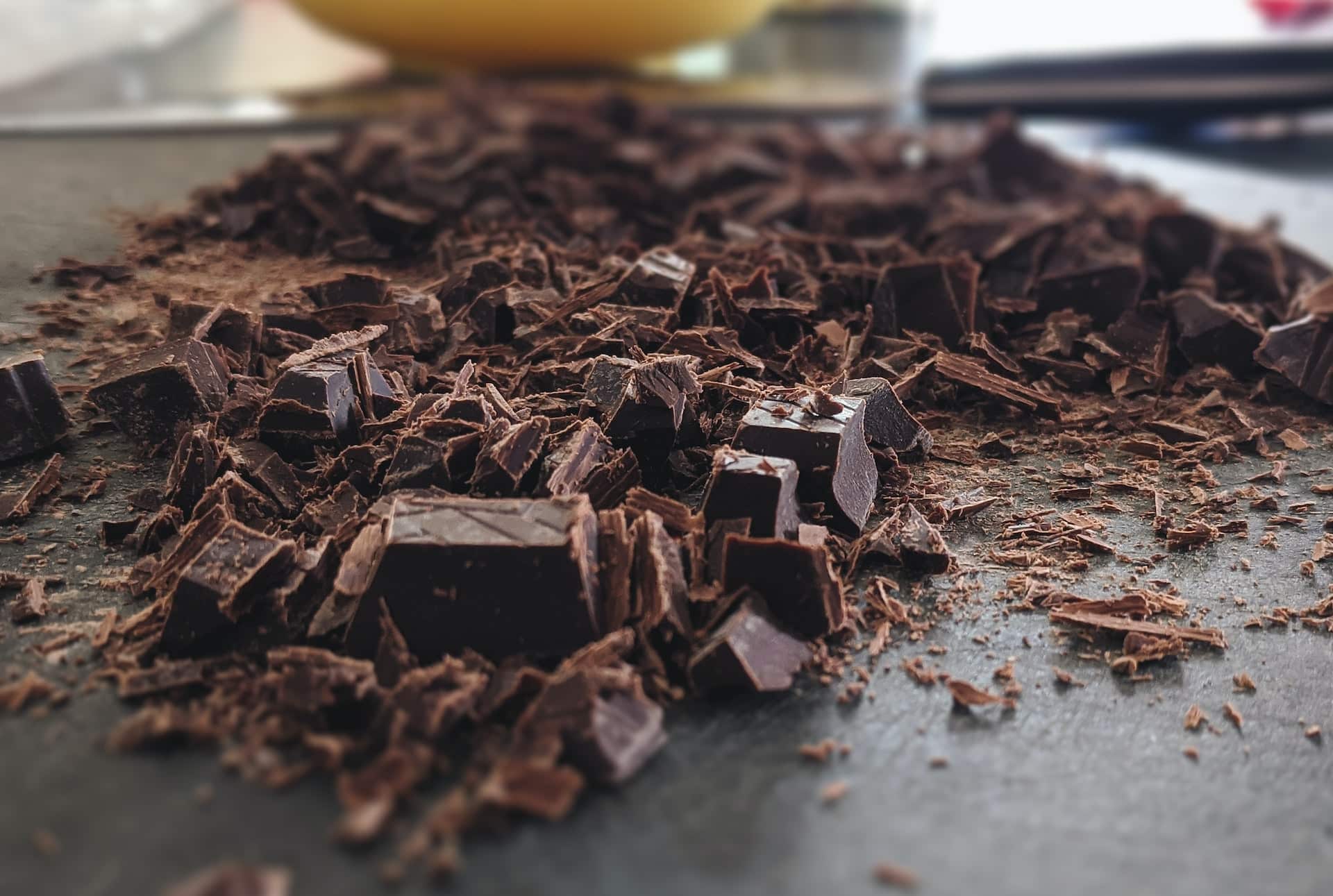
Step 1, preparing equipment and ingredients. Take out the silicone mold, wipe it with a dry paper towel. Calibrate the thermometer in boiling water (it should show 100°C) or ice water (0°C). Chop 100 g of chocolate into pieces of 5-8 mm. Set aside 30 g (for seeding), and place 70 g in a smaller glass bowl.
Step 2, melting chocolate in a water bath. In the larger bowl, heat water to 55°C (slightly steaming, not boiling). Place the smaller bowl with 70 g of chocolate and 10 g of cocoa butter on it. Stir with a silicone spatula every 30 seconds. Bring to 45-48°C for dark chocolate. Monitor with the thermometer.
Step 3, seeding for tempering. Remove the bowl from the water bath. Add the reserved 30 g of chopped chocolate. Stir continuously for 3-5 minutes. The temperature will drop to 27-28°C. This is the crystallization phase of the cocoa butter V form, crucial for the final shine and hard snap.
Step 4, adding CBD oil. Measure 2.5 ml of 10% CBD oil with a syringe. Pour it in a thin stream into the chocolate while stirring constantly. Add sea salt and possibly vanilla extract. Stir vigorously with a whisk for 90 seconds to evenly suspend CBD in the fat matrix.
Step 5, heating to working temperature. Place the bowl back in the water bath for 5-10 seconds, stirring vigorously. Heat to 31-32°C (this is the working temperature for dark chocolate). Too high (above 34°C) spoils crystallization. Too low (below 28°C) causes too rapid setting in the mold.
Step 6, pouring into the mold. Pour the mixture into silicone molds. Tap the mold on the countertop 5-10 times to remove air bubbles. Distribute the additives (nuts, raspberries, chili) on top. Work quickly before the chocolate starts to set; you have about a 3-4 minute window.
Step 7, cooling and crystallization. Set the mold in a cool, dry place (18-20°C) for 2-3 hours. DO NOT put it in the fridge, as thermal shock causes white cocoa butter blooms. After setting, gently pop the pieces out of the mold. Store in an airtight container at 15-20°C.
Quick version without tempering
If you are making chocolate for yourself 'right now', you can skip seeding and work in a single step. Melt 100 g of chocolate in a water bath to 45-50°C. Remove from the bath. Cool to 35-40°C. Add CBD oil, mix for 60-90 seconds. Pour into a mold. Set aside to solidify at room temperature for 3-4 hours.
Result: dull chocolate, softer, shelf life 7-14 days instead of 6-8 weeks. Taste and CBD activity identical to the tempered version. This method takes 10-15 minutes of work and is excellent for weekend flavor experiments.
What are the most common mistakes when making CBD chocolate?
Most failed batches of CBD chocolate result from five recurring mistakes. In a survey of home bakers of CBD in 2024, 58% of respondents reported problems with structure, dosage, or appearance (Project CBD, 2024). The good news: all are easy to avoid when you know the mechanism and use a thermometer.
Mistake 1: overheating the chocolate
Consequence: cocoa butter separates, the mass becomes grainy and does not temper. Solution: thermometer and maximum temperature of 48°C for dark, 45°C for milk, 42°C for white. If the chocolate reaches 55°C+ and looks grainy, it cannot be saved; you have to start over.
How to recognize overheating? Chocolate, instead of being shiny and smooth, looks dull, with visible fat grains on the surface. The taste becomes 'burnt', slightly bitter, unpleasant. This is a signal that the fat's crystalline structure is permanently damaged.
Mistake 2: contact with water during melting
Consequence: chocolate 'seizes', forming lumps and does not return to a smooth mass. Even a single drop of water is enough to ruin the entire bar. Solution: make sure that the bowl for the chocolate is perfectly dry, and steam from the water bath does not get inside.
A common mistake: after the water bath, someone moves the bowl and a drop of water drips from the bottom into the chocolate. Solution: before moving, wipe the bottom of the bowl with a dry towel. If seizing has already occurred, adding 1 tablespoon of hot cream 30% can sometimes save the batch (but CBD dilutes and it's hard to control the dose).
Mistake 3: uneven distribution of CBD
Consequence: dosage variation between pieces can be up to 50%. One piece may contain 5 mg CBD, while a neighboring one contains 25 mg. Solution: always mix CBD oil vigorously for at least 60-90 seconds with a whisk. Simple 'mixing with a spatula' is not enough; you need to force the oil into suspension in the fat.
Never add CBD oil directly to silicone molds or drip it onto the finished mass after pouring. CBD will settle locally at the bottom, giving one piece a double dose and another none. Only a suspension throughout the mass guarantees uniformity between servings.
Mistake 4: cooling too quickly
Consequence: thermal shock, gray streaks (sugar bloom), and white cocoa butter blooms (fat bloom) on the surface within 24-48 hours. Solution: stable, cool room temperature of 18-20°C for 2-3 hours. NOT a standard fridge (5-8°C), NOT a freezer.
The fridge seems like an obvious solution for quick setting, but it introduces moisture from steam that settles on the surface of the chocolate. At temperatures below 10°C, cocoa butter crystallizes in an unstable form IV, which gives white streaks after being taken out of the fridge.
The only acceptable 'cool' method: a wine fridge or a special confectionery cabinet (12-15°C, low humidity). Such devices cost 800-2000 PLN and are an investment for those who make chocolate regularly. For home production, room temperature works excellently.
Mistake 5: too much oil in proportion to chocolate
Consequence: chocolate does not set or sets soft, remaining a greasy mass in the mold. Solution: a maximum of 5 ml of oil per 100 g of chocolate. Above this limit, the liquid fat (MCT) outweighs the crystalline fat (cocoa), and the structure deteriorates.
If you want a higher dose than 500 mg per 100 g, use 20% CBD oil or isolate in crystals (the latter adds almost no volume). Alternative: increase the size of the bar to 200 g while maintaining the ratio. Never 'squeeze' 10 ml of oil into 100 g of chocolate; the effect will be unacceptable.
In editorial tests at u Bucha in 2025, we compared 100 g bars with different amounts of CBD oil: 2 ml, 3 ml, 4 ml, and 5 ml. Up to 3 ml, the structure and tempering were perfect. At 4 ml, a subtle softening was noticeable, and at 5 ml, the bar remained soft for 48 hours. Conclusion: 3 ml of 10% CBD oil per 100 g of chocolate is a safe limit for the home chocolatier.
How to store CBD chocolate so it doesn't lose potency?
CBD chocolate retains full activity for 4-6 weeks under optimal storage conditions. Key parameters: temperature 15-20°C, low humidity (below 55%), no exposure to light and oxygen. Under these conditions, CBD loses 2-5% of activity monthly, significantly less than sublingual drops, which lose 8-12% (PMC, 2020).
Short-term storage (1-14 days)
Stable room temperature (18-20°C), airtight glass or plastic container. Wrap each piece in plastic wrap or parchment paper to avoid absorbing odors from the environment. A kitchen cabinet away from the stove and window is an ideal place.
DO NOT store CBD chocolate in a standard refrigerator. Low temperature (4-6°C) and high humidity (70-80%) cause water droplets to settle on the surface, resulting in gray streaks (sugar bloom). After 3-5 days in the fridge, the chocolate looks 'old', although it is still active.
Exception: wine or confectionery fridge (12-15°C, humidity 55%). In such conditions, CBD chocolate can be stored for up to 8-10 weeks without losing quality. However, this is an investment for those making chocolate regularly or running a home production.
Long-term storage (over 4 weeks)
Freezing at -18°C or lower is an option for those making a large batch for stock. Individually wrap each piece in plastic wrap, then place in a ziplock bag, from which you will squeeze out the air. Under these conditions, CBD in chocolate loses a maximum of 5% of activity over 3 months.
Thawing: transfer a piece from the freezer to an airtight container and place it in the fridge (do not remove from the bag) for 4-6 hours. Then take it out to the countertop and wait 30 minutes to reach room temperature. Rapid thawing causes condensation on the surface and white blooms.
Freezing does NOT destroy CBD activity. The cannabinoid in the fat matrix is stable at low temperatures. Only the structure changes slightly (after thawing, the chocolate may be a bit more brittle), but the taste and dose are preserved.
Labeling and safety
Each batch of CBD chocolate should have a label with the dose of CBD per piece, the date of production, and the expiration date. Without a label, it is easy to confuse a regular batch with a CBD batch, which can lead to unintentional overdosing among household members or guests.
Keep CBD chocolate high and out of reach of children. In 2023, the CDC reported 82 cases of unintentional consumption of CBD edibles by children in the USA, mostly from home supplies (CDC, 2023). The best solution: a container with a child-lock lid or the top shelf of a cabinet with a lock.
If a child accidentally eats a piece with 15 mg of CBD, do not panic. Typically, mild drowsiness will occur without lasting effects, but medical supervision is advisable. Call a poison control center (in Poland 800 100 100) or go to the hospital with the container's label.
Variants of CBD chocolate: vegan, erythritol-based, with additives
Adapting the basic recipe for special diets retains the same dose of CBD and working temperature. Only the chocolate matrix and sweetener change. According to a Statista report from 2024, 32% of consumers of CBD edibles in Europe choose vegan or sugar-free products (Statista, 2024). It is worth knowing the adaptations, especially for those on a keto or lactose-free diet.
Vegan CBD chocolate
Choose vegan dark chocolate 70-85%, making sure to check the ingredients. Some chocolates contain trace amounts of milk even in the dark segment. Verified vegan brands: Lindt Excellence 85%, Moser Roth Dark, Wawel Klasyczna Gorzka, Polish Czekolada Manufaktura.
The tempering process is identical to that for regular dark chocolate. Temperatures: 45-48°C melting, 27-28°C cooling, 31-32°C working. Broad spectrum CBD oil is naturally vegan. Cocoa butter (not mass) is also vegan, unlike dairy butter.
The taste of vegan CBD chocolate is practically indistinguishable from regular dark chocolate. For vegans sensitive to the grassy taste of the oil, we recommend adding 1 teaspoon of vanilla extract and a pinch of chili, which subtly masks the cannabinoid aroma.
CBD chocolate with erythritol (keto)
For those on a ketogenic diet or type 2 diabetes, standard dark chocolate with 15% sugar is not ideal. Solution: buy sugar-free chocolate (Lindt Zero, Feliks Zero, Moser Roth No Sugar) sweetened with erythritol or stevia. The tempering process is identical.
Alternative: make chocolate from scratch using only cocoa butter. Recipe: 50 g of cocoa butter, 25 g of dark cocoa powder without sugar, 20 g of powdered erythritol, 1 g of sunflower lecithin (stabilizer), 2.5 ml of 10% CBD oil, a pinch of salt and vanilla. Melt, mix, and pour into molds.
The caloric content of keto CBD chocolate is about 42 kcal per piece (with 2 g of net carbohydrates), compared to 58 kcal in the classic version. The taste is more intense (lack of sweetness weakening the cocoa), slightly cooling (erythritol). Ideal for those on a reduction or in diabetic states.
CBD chocolate + flavor additives
Additives expand the flavor of chocolate without affecting the dose of CBD or tempering. Nuts (hazelnuts, walnuts, cashews): 15-20 g roasted and chopped. Add after tempering, before pouring into the mold. Roasting removes moisture and enhances aroma.
Freeze-dried fruits: raspberries (8 g), strawberries (10 g), blueberries (8 g). Their crunchiness and tartness balance the sweet cocoa perfectly. Do not use fresh fruits, as they will introduce moisture and spoil the structure of the bar.
Spices and flavors: chili flakes (1/4 teaspoon), cinnamon (1/2 teaspoon), dried ginger (1/4 teaspoon), candied orange peel (10 g), dried mint leaves (1 teaspoon). Experiment with one spice per batch to discover individual flavor effects.
Does CBD chocolate affect bioavailability differently than other edibles?
Yes, CBD chocolate has a distinctly higher bioavailability than most other forms of edibles. The bioavailability of CBD in dark chocolate is 15-19%, compared to 6-12% in capsules and 9-15% in brownies (PMC, Frontiers in Pharmacology, 2020). This is a difference of up to 40% in favor of chocolate, resulting from the ideal fat matrix and the presence of natural cocoa cannabinoids.
The FIR effect (food-induced increase in bioavailability)
The FIR effect is the phenomenon of increased absorption of lipophilic substances in the presence of dietary fats. Key mechanism: fat stimulates the production of bile and pancreatic lipases, which break down cannabinoids into micelles that are easily absorbed in the small intestine.
Dark chocolate with 38-42% cocoa butter provides an ideal matrix. Cocoa butter consists mainly of palmitic (26%), stearic (34%), and oleic (35%) fatty acids, which are exceptionally well tolerated and effectively transport lipophilic cannabinoids.
In comparison, MCT oil in CBD drops provides a bioavailability of 20-25%, but consumed without food. Dark chocolate with 3 g of fat per piece adds a synergistic FIR effect, which practically raises active CBD levels in the blood above those from drops alone. This is surprising for many people.
The role of anandamide and PEA
Cocoa naturally provides anandamide (N-arachidonoylethanolamine), an endogenous cannabinoid normally produced in the human brain. In 100 g of cocoa, there is about 0.2-0.3 mg of anandamide, which sounds small, but in combination with CBD creates a synergistic effect on CB1 receptors (PMC, 2017).
Additionally, cocoa provides PEA (palmitoylethanolamide), a molecule structurally similar to anandamide that activates PPAR-alpha receptors. These receptors are associated with pain modulation and inflammation. Thus, in CBD chocolate, a mini-cocktail of three active compounds is created that support each other.
Most articles about CBD edibles overlook the role of natural cocoa cannabinoids. Meanwhile, it is this synergy that makes chocolate such a unique form of delivery. It's not that chocolate "absorbs CBD better"; it's that cocoa itself acts a bit like CBD and combines with the external oil.
Comparison of forms: chocolate, brownie, drops, vaporization
Sublingual drops: bioavailability 25-35%, onset 15-45 min, effect 4-6 hours. CBD brownies: bioavailability 9-15%, onset 60-120 min, effect 6-8 hours. CBD chocolate: bioavailability 15-19%, onset 45-90 min, effect 6-8 hours. Vaporizing flower: bioavailability 30-50%, onset 2-5 min, effect 2-3 hours.
Chocolate ranks in the middle for bioavailability but wins in terms of taste, stability, and duration of action. For those seeking daily evening support, CBD chocolate is often the best compromise between the pleasure of eating and therapeutic effectiveness.
Combining forms provides the most comprehensive support. Drops in the morning (quick onset), CBD chocolate in the evening (long, deep effect). Within 24 hours, you achieve a steady concentration of CBD in the blood without peaks and valleys. A total daily dosage of 20-50 mg covers the needs of most regular users.
A pharmacokinetic study from 2020 showed that the bioavailability of CBD in dark chocolate is 15-19%, higher than in capsules and brownies, due to the ideal cocoa butter fat matrix and the FIR effect (PMC, Frontiers in Pharmacology, 2020). Additionally, anandamide present in cocoa synergistically enhances CBD activity at CB1 receptors.
When and how to consume CBD chocolate?
CBD chocolate begins to take effect 45-90 minutes after consumption, peaks in 2-3 hours, and maintains its effect for 6-8 hours. The onset is faster than with brownies (60-120 min) but slower than with drops (15-45 min). According to clinical data from 2020, the optimal time for consumption is 30-60 minutes after a fatty meal (PMC, 2020).
What time of day: morning, daytime, or evening?
Most users consume CBD chocolate in the evening, 2-3 hours before bedtime. The long effect (6-8 hours) covers the entire night, providing stable support without waking up. A dose of 15-20 mg of CBD per piece is standard for an evening ritual with one serving.
During the day, it's better to stick to 10-15 mg (two smaller pieces at a lower dose or one at the standard). CBD does not negatively affect concentration at doses up to 20 mg, but in 15-20% of people, it may cause slight drowsiness. Driving after a dose above 20 mg is not recommended.
In the morning, CBD chocolate works well for those with high anxiety levels or morning muscle stiffness. A slower onset is an advantage: the effect appears just as you enter more intense tasks of the day. A breakfast with fats (avocado, nuts, Greek yogurt) additionally increases bioavailability.
What meal to combine with CBD chocolate?
The optimal choice: a fatty meal 30-60 minutes before the chocolate piece. Examples: scrambled eggs in butter, avocado and salmon salad, full-fat yogurt with nuts, cheese with whole grain bread. The presence of fat in the stomach increases CBD bioavailability by 30-40%.
Avoid consumption on an entirely empty stomach. Although the effect will appear faster (45 min), bioavailability drops by 10-15%. This is a loss of milligrams of active CBD that you planned to deliver. Unless you want a deliberately faster effect, e.g., before a trip.
Avoid combining with alcohol. Alcohol amplifies the sedative effect of CBD, burdens the liver metabolizing cannabinoids, and interacts with receptors. With a glass of wine, you can eat a 15 mg piece, but with more alcohol, it's better to postpone CBD until the next day.
Individual variability and 'start low, go slow'
The polymorphism of the CYP2C19 gene causes 15-25% of the population to metabolize CBD twice as slowly as 'rapid metabolizers' (PMC, 2019). For them, the effect appears after 120-150 minutes and lasts 10-12 hours. This is normal but requires patience.
Body weight and body fat percentage affect the reaction. A 100 kg person with 15 mg of CBD will have a lower plasma concentration than a 55 kg person. The standard is 0.15-0.30 mg of CBD per kilogram of body weight for the first trial. A 70 kg person starts with 10-21 mg, covering 1-2 pieces of a standard bar.
The 'start low, go slow' principle also applies to CBD chocolate. First trial: one piece (15 mg). Assess the effect after 90 minutes. A second dose on the same day only if the effect was too weak. After 7 days of regular use, you can adjust the dose.
Is CBD chocolate safe? Side effects and interactions
CBD is well tolerated by most adults. In a 2018 WHO review, cannabidiol was deemed safe at doses up to 1500 mg per day (WHO, 2018). The most common side effects from edibles: dry mouth (16.5%), drowsiness (15%), mild fatigue (12%), reported in an observational study from 2021 (Cannabis and Cannabinoid Research, 2021).
Common side effects and how to minimize them
Dry mouth (xerostomia) results from inhibiting the activity of salivary glands by the CB1 receptor. Solution: drink 200-300 ml of water within 30 minutes after chocolate. The symptom resolves spontaneously within 1-2 hours. In 20% of users, mild dry eyes also occur.
Drowsiness at higher doses (20-25 mg) is a normal reaction. Therefore, most people consume CBD chocolate 2-3 hours before bedtime. During the day, stick to 10-15 mg to avoid affecting concentration. Do not drive for 6 hours after consuming a dose above 20 mg of CBD.
Stomach discomfort occurs in 8-12% of users, especially with the first doses and on an empty stomach. It usually resolves within 3-5 days of regular use. If symptoms worsen, reduce the dose by half. If they persist for a week, stop consuming chocolate and consult a doctor.
Drug interactions
CBD inhibits cytochrome P450 enzymes (CYP3A4, CYP2C9, CYP2C19), responsible for the metabolism of about 50% of drugs on the market (PMC, 2019). This means that CBD can increase the concentration of some medications in the blood, amplifying effects and side effects.
This applies to warfarin (anticoagulant), statins (cholesterol), antiepileptic drugs (clobazam), SSRI antidepressants, benzodiazepines, antihypertensives (amlodipine), immunosuppressants (cyclosporine, tacrolimus). If you are taking prescription medications, consult your doctor before regularly using CBD chocolate.
Separating CBD and the medication by at least 2-3 hours reduces, though does not eliminate, the interaction. Monitor the medication's effects and report changes to your doctor. Never stop taking a prescription medication without consulting, as the effect of CBD does not replace treatment.
Absolute contraindications
Children and adolescents under 18: CBD chocolate is not intended for them unless there is a clear pediatric recommendation. Homemade edibles do not replace pharmacological treatment under the supervision of a specialist.
Pregnancy and breastfeeding: insufficient clinical data, EFSA and FDA recommend refraining from CBD (EFSA, 2022). CBD crosses the placenta and passes into breast milk. The risk to the fetus and newborn is undefined.
Severe liver diseases, cannabis allergy, post-organ transplant state, active chemotherapy, some mental disorders in acute phase. In each of these cases, consultation with a doctor is necessary before consuming any CBD edibles.
CBD chocolate vs. other forms of cannabinoid delivery
Chocolate is one of many forms of delivering CBD, each with a different pharmacokinetic profile. According to a Project CBD survey from 2024, 41% of users combine edibles with sublingual drops to benefit from two complementary profiles (Project CBD, 2024). Knowing the alternatives helps choose the form for a specific situation.
Chocolate vs. CBD drops
Sublingual drops: quick onset (15-45 min), shorter effect (4-6 hours), bioavailability 25-35%. CBD chocolate: slow onset (45-90 min), long effect (6-8 hours), bioavailability 15-19%. Drops are more economical in terms of milligrams of active CBD, while chocolate is definitely more enjoyable in taste.
Recommended combination: drops in the morning for a quick start to the day, CBD chocolate in the evening for a long effect at night. This configuration covers 24 hours of stable support. A total daily dose of 20-50 mg of CBD is sufficient for most regular users. Learn more about CBD oils available at u Bucha.
Chocolate vs. CBD brownies
CBD brownies: bioavailability 9-15%, onset 60-120 min, effect 6-8 hours, mixed matrix (fat + flour + sugar). CBD chocolate: bioavailability 15-19%, onset 45-90 min, effect 6-8 hours, pure fat matrix. Chocolate wins in bioavailability and simplicity (no baking).
Brownies win in satiety (larger portion, more calories) and occasion (cake form for special occasions). Chocolate works better for daily rituals. A detailed recipe for CBD brownies can be found in a separate article at u Bucha.
Chocolate vs. CBD tea or coffee
CBD coffee and CBD hemp tea are 'warm' forms, with a medium absorption rate (30-60 min), moderate duration of action (4-5 hours). Bioavailability is lower than in chocolate because the water matrix transports lipophilic cannabinoids less effectively. Ideal for a morning or afternoon ritual.
Chocolate wins in masking taste and duration of effect. Tea and coffee win in simplicity (2 minutes of preparation) and lower caloric content. Most regular users have both options in the kitchen: portioned chocolate pieces in the cupboard and bags of hemp tea in the drawer. Learn how to make coffee with CBD and how to brew hemp CBD tea.
Chocolate vs. ready-made adaptogenic products
Ready-made adaptogenic chocolate is an alternative for those who do not want to make bars themselves. It contains CBD along with adaptogens (ashwagandha, reishi, lion’s mane) in thoughtful proportions. A standard piece provides 10-15 mg of CBD plus additional adaptogenic support.
The advantage of a ready-made product is standardized dosing, beautifully tempered structure, and verified composition. The downside: higher cost per milligram of CBD than homemade production (usually 2-3x more expensive). For spontaneous people or those without time for confectionery, it is a convenient choice, especially for travel.
The role of CBG and other cannabinoids in chocolate
CBG (cannabigerol) is a biosynthetic precursor of CBD and other cannabinoids. In a mature plant, it usually constitutes less than 1% compared to 10-20% CBD (Nature, 2021). Adding CBG to chocolate enhances the entourage effect and provides a subtly different action profile than CBD alone.
When is it worth adding CBG to chocolate?
Adding 50-100 mg of CBG to a 100 g bar with 250 mg of CBD (ratio 1:2.5 to 1:5) gives a deeper relaxing effect without excessive sedation. A survey study from 2021 showed that CBG supports concentration and reduces tension in 51% of users (Cannabis and Cannabinoid Research, 2021).
15% CBG oil provides 150 mg of cannabigerol per milliliter. For a 100 g bar, 0.5-1 ml is sufficient. Add it together with CBD oil at the stage of mixing with melted chocolate. Effect: an additional bonus for those who want a clear mind and deep relaxation simultaneously.
CBN in chocolate, for whom?
CBN (cannabinol) has strong sedative effects, which is why it is rarely added to chocolate for daily use. It makes sense only in 'night' bars consumed 90 minutes before sleep. Add 50 mg of CBN to a 100 g bar with 16 pieces, which is 3 mg of CBN per piece.
CBN is not suitable for morning or daytime consumption, as it induces drowsiness lasting 8-10 hours. For those with chronic insomnia, a 'night' bar with CBD + CBG + CBN may be more effective than CBD alone, but requires individual proportion adjustments.
Advanced version: with hemp flower
CBD hemp flower provides a full terpene profile and entourage effect that standard oil does not. Process: decarboxylate 2-3 g of 9% CBD flower at 110°C for 30 minutes. Infuse in 80 g of cocoa butter (80-85°C, 90 minutes, continuous stirring). Strain through cheesecloth. Use the resulting butter as a base for chocolate.
Result: about 160-220 mg of CBD in 80 g of cocoa butter. Combine with 20 g of 85% dark chocolate, additives, and pour into molds. A 100 g bar with infusion provides a full cannabis profile: CBD, CBG, CBC, terpenes (myrcene, linalool, beta-caryophyllene). A deeper relaxing effect than with pure oil.
Economics: how much does a bar of CBD chocolate cost?
A homemade 100 g bar of CBD chocolate (16 pieces of 15 mg) costs 30-45 PLN, depending on the raw material and quality of the chocolate. In comparison, ready-made CBD bars in stores cost 45-75 PLN for 100 g at a similar dose (Statista, 2024). Homemade production reduces the cost by 30-50%, and the quality can be higher.
Cost calculation for 10% CBD oil
- 10% CBD oil SOOL (2.5 ml from a 10 ml bottle for 99 PLN): about 25 PLN
- Dark chocolate 70-85% (100 g): 8-15 PLN
- Cocoa butter (10 g): 2-3 PLN
- Salt, vanilla: 1 PLN
- Optional additives (nuts, raspberries): 3-5 PLN
- Total: 39-49 PLN for a 100 g bar = 2.4-3.1 PLN/piece
Cost calculation for 5% CBD oil
- SOOL CBD Oil 5% (3 ml from a 10 ml bottle for 76 PLN): about 23 PLN
- Dark chocolate (100 g): 8-15 PLN
- Other ingredients: 3-4 PLN
- Optional additives: 3-5 PLN
- Total: 37-47 PLN for a 100 g bar with 9-10 mg of CBD per piece
10% oil provides a better price-to-dose ratio, as you deliver more CBD in a smaller volume. For regular chocolate making (once a week), we recommend 10% oil. For occasional use (once a month), 5% oil will suffice, and you don't have to worry about quickly using up the bottle.
Is it worth making chocolate instead of buying it?
Homemade production has three advantages. First, a savings of 30-50% per milligram of active CBD. Second, full control over the composition (you don't add anything you don't want). Third, the satisfaction of making something by hand and the ability to experiment with flavor additives.
Disadvantages: requires 30-40 minutes of work plus 2-3 hours of cooling. Requires a thermometer and a silicone mold. In the first attempts, the result may be dull or imperfectly tempered. For those without time or patience, ready-made CBD chocolate in stores remains a more convenient option.
Most baking tips for CBD chocolate treat it as a "simple dessert". However, this is the most difficult form of edibles to make because it requires precise temperature control and crystallization. On the other hand, the final effect (taste, appearance, stability) is the most professional of all homemade CBD edibles.
Frequently Asked Questions
Does CBD degrade during the melting of chocolate?
No, CBD is completely safe within the melting temperatures of chocolate. Chocolate melts at 40-50°C, and CBD begins to degrade only above 160-180°C (Journal of Food Science, 2022). In homemade CBD chocolate, you lose a maximum of 2-3% of the cannabinoid, provided you do not overheat the mass above 60°C. Therefore, chocolate is the best matrix for CBD edibles.
How much CBD oil to add to 100 g of chocolate?
The standard ratio is 3 ml of 10% CBD oil (300 mg CBD) per 100 g of chocolate divided into 16-20 pieces, which gives 15-18 mg of CBD per piece. For beginners, 1.5 ml of 10% oil (150 mg) or 3 ml of 5% oil is sufficient. Project CBD recommends starting with 10-12 mg per serving and assessing the effect after 90 minutes (Project CBD, 2023). Do not exceed 500 mg of CBD per 100 g of chocolate to avoid diluting the mass.
Is it necessary to temper CBD chocolate?
Tempering is not necessary, but it significantly improves the quality of the final product. Untempered CBD chocolate has a dull surface, crumbles unevenly, and quickly develops a white bloom (bloom) from cocoa butter. Tempered chocolate retains its shine, hard snap, and stability for 6-8 weeks at room temperature (Journal of Food Science, 2019). For simple homemade pieces for immediate use, melting in a water bath also gives a decent effect.
What chocolate is best for CBD edibles?
Dark chocolate 70-85% is the best choice. It contains 38-42% cocoa butter, providing an excellent lipid matrix for dissolving and absorbing CBD. Additionally, cocoa naturally contains anandamide (endocannabinoid), which synergistically interacts with CBD (PMC, 2017). Milk chocolate (30-35% fat) and white chocolate (28-30% fat) also work, but they mask the taste of the oil worse and provide more sugar.
Why does chocolate increase CBD bioavailability?
Cocoa butter is a lipid matrix that increases bioavailability through the FIR effect (food-induced increase in bioavailability). Pharmacokinetic studies have shown that consuming CBD with fats increases bioavailability by 30-40% compared to pure oil without food (PMC, Frontiers in Pharmacology, 2020). Dark chocolate with 38-42% cocoa butter provides one of the best absorption rates among all forms of edibles with cannabinoids.
How to store homemade CBD chocolate?
Store homemade CBD chocolate in an airtight container at 15-20°C, away from light and moisture. Under these conditions, it retains full activity for 4-6 weeks. DO NOT store in a standard fridge, as moisture causes white sugar blooms. CBD in the chocolate matrix loses 5% of activity monthly at room temperature and only 2% in a wine fridge (12-14°C, low humidity) (PMC, 2020).
Can you make CBD chocolate in the microwave?
The microwave works, but it gives much worse temperature control and the risk of local overheating. If you use it, set the power to 30-40% and melt in cycles of 20-30 seconds, stirring between cycles. The temperature inside the chocolate block can jump to 70-80°C with a few seconds of overheating, which lowers the quality of the matrix, although it does not yet destroy CBD. A water bath is much safer and gives a better tempering effect.
Summary: CBD chocolate that really works
CBD chocolate is the most enjoyable and simultaneously one of the most effective forms of homemade edibles. The key rules are three: a melting temperature of a maximum of 45-48°C for dark chocolate (a safe buffer to the degradation threshold of CBD at 160-180°C), vigorous mixing of CBD oil with the melted mass for at least 60-90 seconds for an even dose, cooling at room temperature of 18-20°C for 2-3 hours without the fridge.
A dose of 10-25 mg of CBD per piece covers the needs of most adults. Start with 10-15 mg and observe the effect for 90-120 minutes. The effect appears in 45-90 minutes and lasts 6-8 hours. For the best bioavailability, consume chocolate 30-60 minutes after a fatty meal, which increases absorption by 30-40% due to the FIR effect.
The simplest path for beginners: 5% or 10% CBD oil, 70% dark chocolate, and a simple recipe without tempering. For advanced users: tempering using the seeding method, possibly CBD hemp flower with cocoa butter infusion, with the addition of 15% CBG for maximum terpene profile and entourage effect.
Store CBD chocolate at 15-20°C for up to 6 weeks or in the freezer for up to 3 months. Label the dose on the container. Keep out of reach of children. Consult your doctor if you are taking medications metabolized by cytochrome P450. Do not drive for 6 hours after consuming a dose above 20 mg. Use regularly for 2-4 weeks to assess the full effect on the endocannabinoid system.
This article is for informational and educational purposes and does not constitute medical advice. Before starting to use CBD for therapeutic purposes, consult your doctor, especially if you are taking other medications, are pregnant, or breastfeeding. CBD chocolate is not intended for individuals under 18. Do not drive after consuming CBD edibles.
Author: Michał Waluk, Editor of the Bucha blog
Publication date: April 23, 2026
Last update: April 23, 2026