
Acidic forms of cannabinoids - CBDa, CBGa, THCa vs active forms (table)
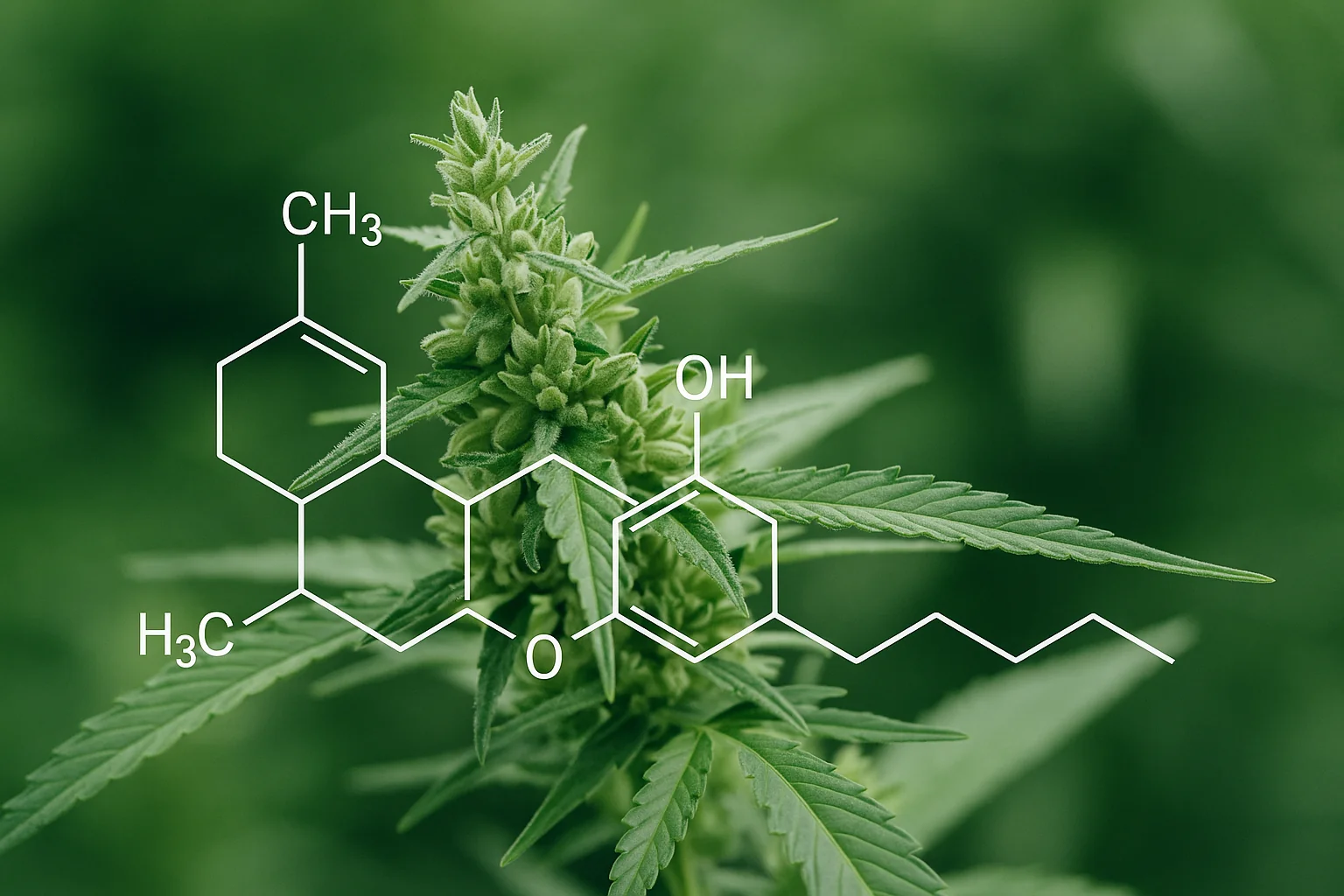
Acidic forms of cannabinoids: comparison, differences, and what to choose. Table from u Bucha.
Most discussions about cannabinoids focus on CBD and THC - active forms that only develop after heating the plant. Meanwhile, in live hemp, these substances are practically absent. The plant produces their acidic precursors: CBDa, THCa, and CBGa, which have their own distinct biological properties. The study by Takeda et al. showed that CBDa inhibits the COX-2 enzyme responsible for inflammation even more effectively than active CBD in laboratory conditions (Takeda et al., Drug Metab. Dispos., 2008). This article explains what acidic cannabinoids are, how they transform into active forms, and why "raw CBD" is not the same as regular CBD oil.
KEY INFORMATION
• Live hemp produces acidic cannabinoids (CBDa, THCa, CBGa) - not CBD or THC directly.
• Decarboxylation (heat or time) converts acidic forms into active ones: CBDa → CBD, THCa → THC.
• THCa from raw hemp does not produce a psychoactive effect - only heat creates psychoactive THC.
• CBDa inhibits COX-2 more strongly than CBD in vitro - it has its own independent biological properties.
• CBGa is the "mother of all cannabinoids" - from it CBDa, THCa, and CBCa are derived.
Biosynthesis of cannabinoids - where do acidic forms come from?
The cannabinoid biosynthetic pathway in the hemp plant starts from a single parent molecule - CBGa (cannabigerolic acid). This is the starting point from which hemp enzymes (synthases) produce all other acidic cannabinoids. CBDA synthase converts CBGa into CBDa, THCA synthase into THCa, and CBCA synthase into CBCa. This hierarchy explains why CBGa is sometimes referred to as the "mother of all cannabinoids."
In a healthy, unprocessed hemp plant, acidic forms constitute 95-99% of the total cannabinoid profile. CBD, THC, and CBG in active form are present in the live plant only in trace amounts - as a result of spontaneous, slow decarboxylation occurring over time. Only harvesting, drying, and especially thermal processing (vaporization, combustion, cooking) convert masses of acidic cannabinoids into their active counterparts.
This biology has direct consequences for the CBD industry. Freshly harvested plant material mainly contains CBDa, not CBD. The decarboxylation process - the intentional heating of the raw material before extraction or the extract after extraction - is a production step that determines whether the final product contains CBDa (the "raw" product) or CBD (the standard product). Manufacturers who do not perform decarboxylation obtain "raw" oils with a dominant CBDa.
Dekarboksylacja - jak i przy jakiej temperaturze?
Decarboxylation is a simple chemical reaction: two groups - hydrogen and CO2 - detach from the molecule, creating the active cannabinoid form. Each cannabinoid has a slightly different decarboxylation temperature, which has practical implications for oil production and vaporization.
The decarboxylation temperature under laboratory conditions with a 30-minute exposure: THCa decarboxylates the fastest and at the lowest temperature (around 105-110°C), CBDa requires a slightly higher temperature (around 120°C), and CBGa decarboxylates under similar conditions as CBDa. At higher temperatures (above 160°C), active cannabinoids begin to degrade - CBD and THC convert to CBN and other degradation products. Vaporization at 170-190°C efficiently extracts active cannabinoids without excessive degradation.
Spontaneous decarboxylation also occurs at low temperatures, but very slowly. Dried hemp stored for a year at room temperature loses a significant portion of THCa due to spontaneous conversion to THC. This phenomenon is important for testing THC content in old samples - the measured THC may be higher than at the time of harvest.
Comparison table - acidic vs active forms of cannabinoids
The table below compares pairs of acidic and active cannabinoids based on biological properties, legal status, and presence in products. The biological data is based on in vitro and preclinical studies - clinical evidence in humans is still limited for most acidic forms.
| Acidic form | Active form | Decarboxylation temperature | Biological properties (acidic form) | Legal status in PL |
|---|---|---|---|---|
| CBDa (kwas kannabidiolowy) | CBD | ~120°C / 30 min | Inhibits COX-2, antiemetic, antiproliferative in vitro | Legalne (THC <0,3%) |
| THCa (tetrahydrocannabinolic acid) | THC | ~105-110°C / 30 min | Neuroprotective, anti-inflammatory, non-psychoactive | Gray area - depends on THC content after decarboxylation |
| CBGa (cannabigerolic acid) | CBG | ~120°C / 30 min | Precursor of all cannabinoids; antibacterial, anticancer in vitro | Legal |
| CBCa (cannabichromene acid) | CBC | ~120°C / 30 min | Poorly researched; potentially antibacterial | Legal |
| CBNa (cannabinolic acid) | CBN | ~120°C / 30 min | Very poorly researched | Legal |
Data update: May 04, 2026 | Sources: Takeda et al. 2008, Rock et al. 2013, Nachnani et al. 2021
CBDa - its own properties, independent of CBD
For years, CBDa has been treated as an inactive precursor to CBD - something that needs to be decarboxylated to obtain the "true" active substance. This perspective is beginning to change with the increasing number of studies showing that CBDa has a distinct biological activity profile, in some aspects stronger than CBD. Takeda's 2008 study showed that CBDa inhibits the COX-2 enzyme (cyclooxygenase-2) in in vitro tests significantly more effectively than CBD. COX-2 is an enzyme that produces prostaglandins involved in the inflammatory response and pain perception - the same target that non-steroidal anti-inflammatory drugs (NSAIDs) like ibuprofen act on.
Studies on the antiemetic properties of CBDa yield interesting results. Rock et al. demonstrated that CBDa exhibits stronger antiemetic properties than CBD in animal models, acting through 5-HT1A serotonin receptors (Rock et al., British Journal of Pharmacology, 2013). Importantly, the effective dose of CBDa in these studies was 100-1000 times lower than the dose of CBD necessary to achieve a comparable effect - suggesting that CBDa may be pharmacologically more potent than its decarboxylated form for this specific effect.
In vitro studies on breast cancer (MCF-7 line) have shown that CBDa inhibits the migration of cancer cells by regulating COX-2 and MAGL expression. These results are preliminary and should not be interpreted as evidence of CBDa's action in cancer treatment in humans - but they open a research direction that has previously been ignored by focusing solely on CBD.
THCa - legal status and biological properties
THCa is a substance with a dual legal character in Poland, which raises legitimate questions. THCa itself in raw hemp is not psychoactive - it does not bind to CB1 receptors. However, when heated (vaporization, combustion, baking), it immediately becomes THC - a controlled substance in group I-N. The Anti-Narcotics Act defines THC as a prohibited substance, and Polish law does not distinguish between THCa and THC for regulatory purposes in products.
THCa products available in the USA (where some states treat THCa differently than THC) have sparked discussions about legal loopholes in recent years. In Poland, the approach is more conservative: products with excessive THCa content are treated as THC products. The European Medicines Agency and EMCDDA monitor regulations regarding THCa in the EU (EMCDDA, Drug Profiles, 2024).
Biologically, THCa exhibits neuroprotective properties in preclinical studies - it protects neurons from degeneration in Huntington's and Parkinson's disease models (Molina-Holgado et al., PNAS, 2011). It also exhibits anti-inflammatory activity through pathways other than the CB1 receptor, which opens up the possibility of neuroprotective use without psychoactive effects. However, clinical studies in humans are still very limited.
CBGa - the matrix of all cannabinoids
CBGa occupies a special place in the biochemistry of hemp: it is the precursor from which the plant's enzymes produce all other acidic cannabinoids. CBDA synthase converts CBGa into CBDa, THCA synthase into THCa, and CBCA synthase into CBCa. This means that a plant with low levels of THCA synthase will accumulate CBGa instead of producing THCa - hence "high-CBG" strains naturally have more CBGa and CBG relative to CBD and THC.
Biological studies of CBGa include antibacterial activity (including against methicillin-resistant Staphylococcus aureus - MRSA), potential anti-cancer effects in vitro, and modulation of TRPV1 receptors related to pain and temperature perception. CBGa is also being studied for its inhibition of SARS-CoV-2 in the context of binding to the virus's spike protein (van Breemen et al., J. Nat. Prod., 2022) - although these studies are preliminary and do not provide a basis for therapeutic applications.
Products "raw" - is it worth looking for acidic forms of CBD?
On the CBD supplement market, there are so-called "raw" products - oils and extracts from hemp that have not undergone decarboxylation. They contain CBDa instead of CBD as the main cannabinoid. Manufacturers argue that CBDa has its own biological properties and synergistically enhances the effects of active CBD (if it is also present in the product). This is not a marketing invention - studies actually suggest distinct properties of CBDa.
The practical problem with raw products is that their cannabinoid profile is less predictable. CBDa is more unstable than CBD - it slowly converts to CBD even at room temperature, which means that the declared CBDa content changes over time from production to consumption. The CoA issued at production may not reflect the CBDa content in the bottle six months later. For this reason, raw products require more careful storage (low temperature, darkness) and quicker consumption after opening.
For those seeking the maximum spectrum of hemp phyto-substances, full-spectrum products containing both active CBD and trace amounts of acidic forms provide a good compromise between the entourage effect and stability. Dedicated "raw CBDa" products are more niche and require more attention in storage and interpretation of CoA.
Are "raw CBD" products better than standard CBD oils?
The question of the superiority of raw products over standard ones arises from a logical assumption: since CBDa has its own biological properties, and standard CBD oils contain decarboxylated CBD without CBDa - then raw should be "more complete". This reasoning is correct in principle, but the practical advantage depends on the purpose of use and the quality of the specific product.
The advantage of raw products is real for two applications. First, for those seeking anti-COX-2 and antiemetic properties - CBDa exhibits stronger effects than CBD for these specific effects in in vitro studies. Second, for those looking for the most natural, minimally processed profile of phyto-substances - raw oils contain CBDa, CBGa, terpene acids, and other compounds that may partially degrade during the decarboxylation process.
The argument against: stability. CBDa is significantly less stable than CBD - it spontaneously decarboxylates at room temperature, especially under light exposure. A "raw" product purchased three months after the production date may have a significantly lower CBDa/CBD ratio than at the time of production. Without a CoA with a specific date and result for a given batch, you do not know how much CBDa is actually in the bottle. Standard CBD is more predictable and stable in this regard, which is important for regular supplementation with a controlled dose.
How is THCa accounted for in tests and CoA certificates for CBD products?
The issue of THCa in tests is practically important for anyone buying CBD oil or full extract. Standard HPLC tests for CBD products typically measure both THC (active form) and THCa (acidic form) separately. The legal problem arises in interpretation: Polish regulations set a limit of 0.3% THC, but do not specify whether this refers only to delta-9-THC or to "potential THC" (THC + THCa × 0.877).
In the USA, the FDA and DEA use the formula "total THC" = THC + (THCa × 0.877). The factor 0.877 is the ratio of the molecular weights of THC and THCa - after decarboxylation, one gram of THCa yields 0.877 grams of THC. In practice, this means that a product with 0.2% delta-9-THC and 0.2% THCa may be considered to exceed the standards if "total THC" = 0.2 + 0.2×0.877 = 0.375%.
In Poland and the EU, regulations on this topic are less precise. Most manufacturers and laboratories report results for delta-9-THC, not 'total THC'. However, when purchasing products made from raw hemp or non-decarboxylated extracts, it is worth checking the CoA for THCa values - especially if you use the product regularly or are subject to drug testing. Heating the raw material (hemp tea, cooking with the raw material) can convert THCa into THC, making a legal product actually psychoactive.
Frequently Asked Questions
What are acidic forms of cannabinoids?
Acidic forms of cannabinoids are natural precursors of active cannabinoids, produced by a living cannabis plant. They contain an additional carboxyl group (-COOH). In live or raw cannabis, CBDa, THCa, and CBGa dominate. Only heat (decarboxylation) transforms them into active CBD, THC, and CBG. Acidic forms have their own independent biological properties.
What is decarboxylation and how does it transform acidic cannabinoids?
Decarboxylation is a chemical reaction in which, under the influence of heat, carboxyl groups (-COOH) detach from the molecule as CO2. CBDa → CBD at about 120°C; THCa → THC at about 105-110°C; CBGa → CBG. Therefore, raw marijuana is not psychoactive - THCa does not bind to CB1 receptors. The effect only appears after decarboxylation through heat. THCa exhibits its own neuroprotective and anti-inflammatory properties in preclinical studies. In Poland, products with high THCa are legally treated similarly to products with THC.
Does CBDa have its own biological properties?
Yes. CBDa inhibits the COX-2 enzyme responsible for inflammation more strongly than CBD in vitro (Takeda et al., 2008). CBDa also shows stronger antiemetic properties than CBD in animal models at doses 100-1000 times lower (Rock et al., BJP, 2013). Clinical studies in humans are still limited.
Does THCa produce a psychoactive effect?
No - THCa does not bind to CB1 receptors and does not cause intoxication. Raw hemp with high THCa does not produce a psychoactive effect. The effect only appears after decarboxylation through heat. THCa exhibits its own neuroprotective and anti-inflammatory properties in preclinical studies. In Poland, products with high THCa are legally treated similarly to products with THC.
What products contain acidic forms of cannabinoids?
Acidic cannabinoids are present in raw, unprocessed thermal products: raw flowers for cold consumption, 'raw' CBD oils (without decarboxylation), capsules with raw extract. After vaporization, combustion, or cooking, most acidic forms convert to active ones. Standard CBD oils mainly contain active CBD - with CBDa in trace amounts or none.
Is CBGa more important than CBG?
CBGa and CBG have different roles. CBGa is the biosynthetic precursor of all acidic cannabinoids in the plant - enzymes produce CBDa, THCa, CBCa from it. As an acidic form, CBGa has its own antibacterial and potentially anticancer activity in vitro. CBG (the active form after decarboxylation) is better clinically understood. Both are significant, but for different purposes.
This article is for informational and educational purposes and does not constitute legal advice. The legal status described in the article is valid as of the publication date - regulations regarding cannabis may change. Consult a lawyer or current legal acts before making decisions.
Author: Michał Waluk · Published: 2026-05-04 · Updated: 2026-05-04