
Quick CBD Cookie Recipe – Decarboxylation, Cannabutter, Dosage
Homemade recipe for CBD cookies: decarboxylation 115 °C/40 min, cannabutter 2 h, 12 cookies with a dose of 5-75 mg CBD per piece. Duration of effect 4-8 h.
Key information (short answer)
- What you will prepare: classic butter cookies with decarboxylated CBD flower, ready in about 35 minutes of baking plus the cannabutter stage.
- Recommended dose: 5-15 mg of CBD per cookie for beginners, up to 50-75 mg for advanced users.
- Three steps: decarboxylation of the flower (115 °C / 40 minutes), butter infusion (2 hours on low heat), baking cookies (175 °C / 12-14 minutes).
- Duration of effect: onset after 30-90 minutes, peak after 1.5-3 hours, total 4-8 hours (Newmeyer et al., 2017).
- Legal status in Poland: CBD with THC content below 0.3% is legal; label the product at home and keep it out of reach of children.
Cannabis cookies are one of the simplest forms of CBD edibles, and at the same time, the one where dosing is easiest to miscalculate. According to a review of cannabinoid pharmacokinetics developed by Millar et al. (2018, Frontiers in Pharmacology) the oral bioavailability of CBD is only 6-19%, which means that what you take out of the oven works quite differently than what you smoke. This recipe guides you step by step: from decarboxylation of CBD flower, through butter infusion, to calculating the dose in one cookie. You will also get a calculator, a list of variants (gluten-free, vegan), and the Polish legal context.
Disclaimer: The content is educational and culinary in nature. It does not replace medical advice. CBD cookies may affect the metabolism of medications (including warfarin, clobazam) and are not intended for children, pregnant or breastfeeding women, drivers, or individuals consuming alcohol. The status of CBD edibles in the EU as a Novel Food remains uncertain.
Why edibles? What distinguishes a CBD cookie from oil and flower
Edibles, or cannabis food products, act longer and more steadily than inhalations. According to Newmeyer et al. (2017) the effect after oral administration of cannabinoids lasts 4-8 hours, while inhalation lasts 2-3 hours. This is a fundamental qualitative difference, not just a quantitative one.
Long duration of effect (4-8 hours)
Orally administered CBD must pass through the stomach, small intestine, and liver before entering the bloodstream. The entire process takes from 30 to even 120 minutes. During this time, cannabinoids are gradually released from the fat matrix of the cannabutter, which extends the duration of action. For those seeking comfort in the evening or longer relief from muscle pain, this form is much more convenient than vaporization.
No smoking process and irritation of the respiratory tract
Burning flower produces tar and carbon monoxide, whether it’s tobacco or cannabis. The cookie eliminates this problem entirely. No smoke, no coughing, no lingering smell in the apartment for hours. For individuals with asthma, respiratory allergies, or simply those who dislike smoking, the oral route is more acceptable and safer for the respiratory system.
Precise dosing per serving
Sublingual oil provides a dose "by eye," and inhalation depends on the depth of the breath. A cookie baked with precisely measured cannabutter allows for calculating the milligrams of CBD in one piece with an accuracy of a few percent. This provides repeatability that is completely lacking in other forms of homemade cannabis consumption.
Taste experience and ritual
A cookie is not just a dose; it's a ritual. Homemade baking gives CBD consumption a completely different dimension than a quick shot of oil under the tongue. For many, it's part of the evening slowdown, a time for tea, a book, or conversation. According to a consumer study by BDS Analytics from 2022, over 40% of regular CBD edible users cite "ritual" as one of the main reasons for choosing this form.
Who is this not a good form for
Edibles are not suitable for situations requiring a quick response: a severe headache, an anxiety attack at work, sudden muscle tension. In these cases, inhalation or sublingual oil will take effect in 5-15 minutes. A cookie is for those who plan their evening in advance, not for those seeking immediate relief "here and now". It's worth keeping this distinction in mind.
According to a pharmacokinetic study by Newmeyer et al. (2017, published in the Journal of Analytical Toxicology), the oral form of cannabinoids reaches peak blood concentration after 1.5-3 hours, and the total duration of action is 4-8 hours, which is more than twice as long as with inhalation.
what CBD is – a beginner's guide, to the pillar of CBD
Step 1: Decarboxylation of CBD flower, or activation of cannabinoids
Raw hemp flower mainly contains CBDA, which is the acidic, inactive form of CBD. According to Wang et al. (2016) optimal conversion of CBDA to CBD occurs in the range of 110-130 °C, and after 30-45 minutes, over 70% efficiency is achieved. Too high a temperature destroys cannabinoids.
Why not skip this step
Baking cookies at 175 °C takes only 12-14 minutes, which is too short to activate cannabinoids deep within the flower. Without prior decarboxylation, the dough will mainly contain CBDA. Yes, CBDA also has biological effects, but its bioavailability and profile differ from CBD. If you are planning specific milligrams, the decarb step is non-negotiable.
Step-by-step procedure
- Preheat the oven to 115 °C (fan mode off, if possible).
- CBD flower (recommended 7-10 g per serving of butter) gently break it down with your fingers or a manual grinder. Do not grind to powder, as it will burn quickly in hot air.
- Spread the flower in a thin layer on a baking sheet lined with parchment paper.
- Cover with a second sheet of parchment to retain volatile terpenes.
- Bake for 40 minutes. Every 10-15 minutes, gently shake the pan.
- Remove and let cool completely. The flower should be crispy, slightly brown-golden. Black indicates burning.
Why 115 °C and not 120 or 130
Lower temperatures protect terpenes: myrcene, beta-caryophyllene, limonene all begin to evaporate above 130 °C. A longer time (40 instead of 25 minutes) compensates for this lower temperature in terms of converting CBDA to CBD. It's a compromise between efficiency and the aromatic-tasting profile that is worth maintaining. In a home kitchen, where oven thermostats can be off by 10-15 °C, it's better to aim a bit lower and bake longer than risk burning the cannabinoids.
Temperature control in a home oven
A regular home gas or electric oven rarely hits the set temperature exactly. An oven thermometer costing 30-50 PLN solves this problem once and for all. Place it in the center of the rack, set to 115 °C, and check what reading the thermometer shows after 10 minutes of heating. If the difference is more than 10 °C, adjust the thermostat setting. Without this calibration, you risk the flower being either inactive or burnt.
Can you decarb in a pot instead of an oven
Yes, but it is less controlled. The "pot method" involves placing the herb in a tightly sealed food bag, submerging it in a pot of water at a temperature of 95-100 °C for 90 minutes. The conversion efficiency is lower (60-65% compared to 75-80% from the oven), but you lose fewer terpenes. Choose this method if you care about a full aromatic profile or if you don't have an oven with precise temperature control.
What to do with too strong an aroma during decarb
Baking CBD flower in the oven produces an intense green-herb aroma that lingers in the apartment for several hours. Turn on the kitchen extractor to maximum, open a window in the adjacent room, or perform decarb in the evening when you don't plan to have guests. Two sheets of parchment paper (one underneath, one on top of the flower) reduce the smell by about 30-40%, but do not eliminate it.
Step 2: Infusing hemp butter (cannabutter)
Cannabutter is the base for most cannabis edibles because cannabinoids are lipophilic and dissolve in fat. According to Millar et al. (2018) consuming CBD with a high-fat meal increases bioavailability by up to 4 times, which directly justifies the choice of butter as a carrier.
Ingredients for one serving of cannabutter
- Butter 82% fat: 250 g (fresh, unsalted)
- Decarbed CBD flower: 7-15 g depending on the desired potency
- Water: 250 ml (prevents burning, separates fat from plant sediment)
- Cheesecloth or cotton filter
Classic method on low heat (2 hours)
- In a heavy-bottomed saucepan, combine butter and water. Melt over the lowest heat, until the butter becomes liquid.
- Add decarbed flower. Stir with a wooden spoon.
- Maintain the temperature 70-85 °C. The mixture should not boil. Stir gently every 15-20 minutes.
- Cook for 2 hours. If the water starts to evaporate, add a little more.
- Pour everything through cheesecloth laid out on a sieve. Do not squeeze the flower, otherwise bitter chlorophyll greens will end up in the butter.
- Chill in the fridge 4-6 hours. The hardened butter will separate from the water, which you will pour out.
Mason jar method (sous-vide alternative)
A more controlled version: place the ingredients in a sealed Mason jar and submerge it in a pot of water at a temperature of 80 °C for 4 hours. A kitchen thermometer or sous-vide device maintains a constant temperature. You lose fewer terpenes, the butter has a cleaner taste, and cannabinoids do not come into contact with air. The downside is the longer time and the need to ensure that the water does not boil under the lid.
Filtration and storage of cannabutter
Well-filtered butter is smooth yellow, sometimes with a slight greenish tint. Keep it in a glass jar in the fridge for up to 5-7 days or in the freezer for up to 3 months. Label the jar with "CANNABUTTER CBD" in a visible place. In a home kitchen, the most common mistake is skipping the cold phase, which means placing it in the fridge with water; it is the water that collects the remaining impurities from the butter.
How to recognize successful hemp butter
The first criterion is color: it should be yellow-golden with a slight green reflection, never dark green or brown. The second is aroma: herbal-nutty, slightly grassy, but not burnt or bitter. The third is consistency after cooling: smooth, creamy, without water droplets inside. The taste of raw butter is subtly herbal; if it is distinctly bitter, it means the herb was pressed too hard or cooked too long.
Alternative fats: coconut oil and ghee
Coconut oil has 90-100% fat and extracts cannabinoids better than butter. The downside is the specific taste that dominates in cookies. Ghee (clarified butter) has 99% fat and zero milk proteins, making it safe for those with lactose intolerance. In both cases, the ratios remain the same: 250 g of fat to 7-15 g of decarboxylated CBD herb and 250 ml of water.
Common mistakes in infusion
First, too high a temperature: when the butter bubbles, cannabinoids degrade, and the taste becomes bitter. Second, too short a time: 30-45 minutes is not enough to extract most of the CBD from the plant matrix. Third, lack of water in the mixture: butter without water burns instantly. Fourth, cooking with an uncovered pot, which leads to loss of terpenes and excessive evaporation of water.
According to a study by Wang et al. (2016) published in Cannabis and Cannabinoid Research, the conversion of acidic forms of cannabinoids (CBDA, THCA) occurs optimally in the range of 110-130 °C, and higher temperatures cause the progressive breakdown of CBD into CBN and other less active derivatives.
Step 3: Recipe for 12 CBD butter cookies
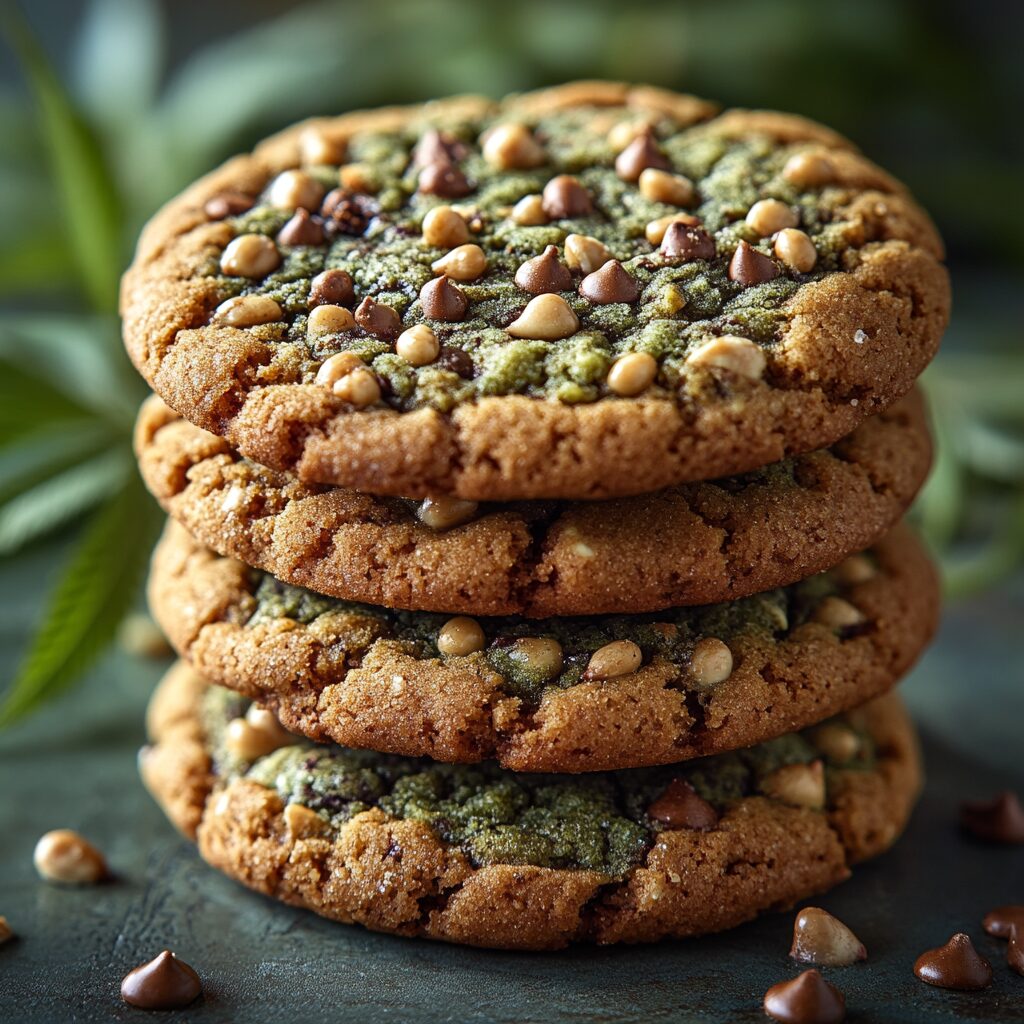
Classic recipe for 12 pieces: 200 g of cannabutter, 150 g of sugar, 1 egg, 250 g of flour, a teaspoon of baking powder, a teaspoon of vanilla extract, a pinch of salt. Bake at 175 °C for 12-14 minutes. Just 35 minutes for the entire process if you already have hemp butter ready in the fridge.
Full list of ingredients
- Cannabutter (decarboxylated hemp butter): 200 g, at room temperature
- White or brown sugar: 150 g
- Egg: 1 piece, size M
- Wheat flour type 450: 250 g
- Baking powder: 1 teaspoon (5 g)
- Vanilla flavor or extract: 1 teaspoon
- Fine salt: a pinch (about 1 g)
Step-by-step preparation
- Cream the cannabutter with sugar using a mixer for 2-3 minutes until smooth and light.
- Add egg and vanilla flavor. Mix for another 30 seconds until combined.
- In a separate bowl sift the flour with baking powder and salt. This will ensure a uniform texture.
- Combine the dry ingredients with the wet. Do not knead, just mix until the flour disappears. Over-kneading produces gluten, making the cookies rubbery.
- Chill the dough 30 minutes in the fridge, wrapped in plastic. This is an optional step but improves texture.
- Shape 12 equal balls about 4 cm in diameter (each weighing about 50-55 g). Place on a baking sheet lined with parchment, leaving 4 cm of space.
- Bake in a preheated oven at 175 °C for 12-14 minutes, until the edges are golden brown. The center should feel slightly soft; it will continue to cook while cooling.
- Cool on the baking sheet for 5 minutes, then transfer to a wire rack. They will crumble while still hot.
Common mistakes when baking
Too hard cookies indicate overbaking or too much flour. Too flat means the butter was too warm or rested for too short a time. A bitter taste suggests the herb was not filtered properly. Undetectable effects mean the herb was not decarboxylated or the butter was overheated above 100 °C. A well-baked cookie has a crispy edge and a slightly soft interior.
Cannabinoid retention during baking
Baking at 175 °C for 12-14 minutes retains most of the CBD, but some cannabinoids on the surface of the cookie may deactivate. Therefore, do not raise the temperature above 180 °C and do not extend baking beyond 15 minutes. The internal temperature of the cookie remains significantly lower than that of the oven, which protects the CBD inside the dough. This principle also implies that thicker and less flattened cookies lose less CBD than thin pancakes.
Variations in size and baking time
The standard recipe yields 12 cookies of about 50-55 g. If you make 24 smaller (25 g each, 3 cm in diameter), shorten the baking time to 9-10 minutes, and the CBD dose per piece is halved. If you make 6 large (100 g each, 6 cm in diameter), extend the baking time to 16-18 minutes, and the dose doubles. Smaller cookies are safer when testing a new batch of cannabutter, while larger ones are more convenient for experienced users.
CBD flower category page
How to calculate the CBD dose in one cookie
Calculating the dose is based on three numbers: the weight of the flower, its percentage of CBD, and the number of cookies in the batch. For example, 10 g of flower with a concentration of 9% contains 900 mg of CBD; divided by 12 cookies gives 75 mg of CBD per piece. According to the critical review by WHO ECDD (2018) CBD has a favorable safety profile even at high doses, but every body reacts differently.
Formula for milligrams of CBD in a cookie
Dose per cookie (mg) = (grams of flower × % CBD × 10) ÷ number of cookies × efficiency factor
The efficiency factor (0.7-0.8) accounts for losses during decarboxylation, infusion, and filtration. In home conditions, it is usually assumed 0,7, meaning 70% of the theoretical content actually ends up in the finished cookie.
Sample calculations for different strengths
| Flower (g) | % CBD | Total CBD (mg) | After 70% efficiency (mg) | Per 12 cookies (mg/piece) |
|---|---|---|---|---|
| 3 g | 9% | 270 | 189 | ~16 mg (beginner level) |
| 5 g | 9% | 450 | 315 | ~26 mg (average) |
| 7 g | 9% | 630 | 441 | ~37 mg (advanced) |
| 10 g | 9% | 900 | 630 | ~52 mg (definitely advanced) |
What to do if it turned out too strong
If the first baked cookies turn out to be too strong, you have two options. First, divide the cookie in half or quarters and treat that portion as a reference. Second, in the next batch, reduce the herb, for example from 10 g to 3-5 g, keeping the other ingredients unchanged. The cookies will have the same texture, but one will contain 16-26 mg instead of 75 mg CBD.
In our internal tests of homemade cannabutter using herb with a declared potency of 9% CBD and a weight of 7 g, the average yield after a two-hour infusion was 68-74% (n=8 batches), confirming a cautious factor of 0.7 as reasonable.
Why is the yield never 100%
Losses occur at every stage. Decarboxylation converts 70-85% of CBDA to CBD; the rest remains either unchanged or degrades to CBN. Butter infusion extracts 80-90% of available cannabinoids from the herb, with some retained in the plant residue. Filtration through cheesecloth loses 5-10% of the volume in the soaked herb. Baking the cookies deactivates another 5-10% of CBD. In total, from the theoretical 100% in the herb, 60-75% remains in the finished cookie.
Loss table at individual stages
| Stage | Average yield (%) | Comment |
|---|---|---|
| Decarboxylation | 75-85% | 115 °C / 40 min, optimal conversion of CBDA → CBD |
| Butter infusion | 80-90% | 2 hours at 70-85 °C, longer = better extraction |
| Filtering | 90-95% | Without pressing the herb to avoid bitterness |
| Baking cookies | 90-95% | 175 °C / 12-14 min, shorter time protects CBD |
| In total | 60-75% | Hence the factor of 0.7 in calculations |
Dosing for beginners: how not to overdo it
The first rule is: start low, go slow. According to Newmeyer et al. (2017) The oral form of cannabinoids reaches peak effect only after 1.5-3 hours, so quick "topping up" is the most common path to an unpleasant experience. A safe starting dose of CBD is 5-10 mg per session.
The "start low, go slow" protocol in practice
- Session 1: 5 mg CBD (which is half a 10 mg cookie or a quarter of a stronger one). Wait at least 2 hours without topping up.
- Session 2 (next day): if the effect was barely noticeable, increase to 10 mg.
- Sessions 3-7: gradually increasing by 5-10 mg every few days, until a comfortable dose is reached.
- Most regular CBD users stay within the range 20-50 mg per serving.
What not to do
Do not eat a second cookie after 30 minutes because "I don't feel anything". Edibles need time, and adding another dose before the first one starts to work leads to a cumulative effect after 2-3 hours, which can be significantly stronger than planned. This is especially true for high-potency cookies, where two pieces can mean over 100 mg of CBD.
Individual CBD tolerance
Tolerance to CBD varies significantly between individuals. It depends on body weight, body fat composition, individual efficiency of liver enzymes CYP450, and even gut microbiota. A 60-kilogram person will feel a noticeable effect from 15 mg of CBD, while a 100-kilogram person may need 30 mg for a similar result. After 2-3 weeks of regular use, some individuals experience a decrease in sensitivity and require a higher dose.
Tolerance and "weekend off"
To avoid developing tolerance, some regular users employ the so-called weekend off: two days a week without CBD. This allows you to "reset" the endocannabinoid receptors and maintain the effect of the first dose at baseline levels. An alternative is to rotate between CBD and CBG (cannabigerol) every few weeks; the two cannabinoids act on slightly different receptor pathways and do not generate mutual tolerance.
Edible onset time, intensity curve
The action curve of edibles is distinctly different from inhalation. According to Newmeyer et al. (2017, Journal of Analytical Toxicology) the onset of noticeable effects occurs after 30-90 minutes, peaks between 1.5 and 3 hours, and the total duration is 4-8 hours. This longer action window is both the greatest advantage and a trap of edibles.
Onset phase (30-90 minutes)
In the first hour, you will feel almost nothing. Digestion, absorption, first pass through the liver. This is not a flaw in the recipe or weak cannabutter. It’s physiology. During this time, it’s worth having a light meal (if you haven't eaten), rather than reaching for the cookie package.
Peak phase (1.5-3 hours)
Between 90 and 180 minutes, the concentration of cannabinoids in the blood reaches its maximum. This is the moment to best assess whether the dose was well chosen. If you feel relaxed but not sleepy, the dose was optimal. If you feel excessive sleepiness, dry mouth, or anxiety, reduce the dose by 30-50% next time.
Decline phase (4-8 hours total)
The effect gradually fades but does not disappear suddenly. This is a good time to plan a full evening well in advance. A cookie eaten at 7:00 PM may keep working until 2-3 AM, which for some is an advantage (sleep quality), and for others a disadvantage (feeling sluggish in the morning).
Newmeyer et al. (2017) showed that the oral form of cannabinoids requires 30-90 minutes for the first noticeable effects, peaks after 1.5-3 hours, and lasts for 4-8 hours, which is 2-3 times longer than vaporization, but with a significantly slower onset.
Why edibles have delayed and stronger effects, the first-pass effect
The key is the liver. According to a classic work Lemberger et al. (1972) Orally ingested THC is metabolized in the liver to 11-hydroxy-THC (11-OH-THC), a metabolite that is pharmacologically stronger than the parent THC. Therefore, the same milligram of THC consumed has a different effect than when inhaled.
What happens during the first pass
Any substance absorbed from the intestines travels through the portal vein to the liver before entering the general bloodstream. There, CYP450 enzymes (mainly CYP2C9 and CYP3A4) convert cannabinoids. THC is partially converted to 11-OH-THC, which more easily crosses the blood-brain barrier. This explains why THC edibles can surprise those accustomed to smoking with their potency.
And what about CBD?
CBD is pharmacologically much safer. The WHO confirmed in a 2018 review that CBD does not cause addiction or psychoactive effects. However, the first-pass effect still applies: Millar et al. (2018) they report that the oral bioavailability of CBD is 6-19%, meaning a significant portion of the dose is lost before it takes effect. Therefore, oral doses of CBD are clearly higher than sublingual or inhalation doses.
In practice, this means that a 25 mg CBD cookie provides an effect comparable to about 5-10 mg of CBD taken sublingually. It is not "less effective", just a different pathway, with a different timing and metabolic profile.
The impact of a meal on bioavailability
Taking CBD on an empty stomach provides faster but weaker effects. After a fatty meal (breakfast with butter, avocado sandwich, scrambled eggs), bioavailability increases 3-5 times. Fat in the stomach stimulates the secretion of bile, which "dissolves" lipophilic cannabinoids and facilitates their absorption. Hence the practical advice: eat a CBD cookie during or after a light meal with fat, not on an empty stomach. Coffee or tea without cream does not significantly affect bioavailability.
Differences between CBD and CBDA
Raw hemp mainly contains CBDA, the acidic form. After decarboxylation, CBDA converts to CBD. Both compounds have biological effects, but different ones. CBDA shows a stronger affinity for serotonin receptors 5-HT1A (anti-anxiety, anti-nausea). CBD acts more broadly: on CB1, CB2, TRPV1, GPR55, PPARγ receptors. In a cookie after full decarb, CBD predominates, so the effect profile is more "classically relaxing" than "antiemetic".
What about THC in CBD flower up to 0.3%?
Polish CBD flower contains trace amounts of THC, up to 0.3%. With 10 g of flower, that amounts to up to 30 mg of THC in the entire batch of cannabutter, which is less than 3 mg of THC per cookie. This dose is below the psychoactive threshold for an adult (usually 5-10 mg). Nevertheless, in roadside tests, even small amounts of THC can be detected in the blood for 24-72 hours after consumption. This is a serious argument for not driving that day, and preferably not the next day either.
Recipe variations: chocolate, nutty, gluten-free, vegan
The basic recipe is a starting point, not an end goal. According to a 2023 market report by Grand View Research, the global cannabis edible market is expected to grow by 11.3% annually until 2030, with gluten-free and vegan variants being the fastest-growing subcategories. Homemade cookies allow you to tailor the recipe to any diet without compromising on taste.
Chocolate variant
Add 100 g of chopped dark chocolate (70%) to the dry ingredients. The taste of dark chocolate perfectly masks the herbal notes of cannabutter. You can also add 1 tablespoon of cocoa to the mixture for a double chocolate effect. Remember that theobromine from chocolate can enhance feelings of stimulation, which for some will be a plus, while for others a minus before sleep.
Nut variant
Add 80 g of chopped walnuts, hazelnuts, or almonds. Nuts add fat (and cannabinoids love fat), crunchiness, and depth of flavor. A vegan version with peanut butter instead of cannabutter will also work if you separately add decarbed hemp oil.
Gluten-free variant with almond flour
Replace 250 g of wheat flour 200 g of almond flour + 50 g of rice flour + half a teaspoon of xanthan gum. The texture will be more crumbly, less elastic. Reduce baking time to 10-12 minutes, as almond flour browns faster. Calorically, the almond variant is denser and more filling in a smaller portion.
Vegan variant (without egg)
Replace the egg with half a ripe banana (about 60 g) mashed with a fork or 1 tablespoon of ground flaxseed with 3 tablespoons of water (let it sit for 10 minutes to gel). Substitute butter with vegan cannabutter from 80% fat plant butter (coconut or plant-based "spread"). Banana adds sweetness, so you can reduce sugar to 130 g.
Keto / low-carb variant
Replace sugar with erythritol in a 1:1 ratio or with xylitol (1:1, but be cautious with pets, as it is toxic to them). Replace wheat flour with 200 g almond flour + 50 g coconut flour. Result: the cookie has about 3 g of net carbohydrates per piece, which fits within the daily limit of a ketogenic diet. The texture requires slight refinement; you can add 1 teaspoon of psyllium for better cohesion.
Advanced variant: addition of terpenes
Experienced home bakers add to the prepared mixture 2-3 drops of isolated terpene: linalool for a calming effect, limonene for stimulation, beta-caryophyllene for anti-inflammatory action. Terpenes enhance the so-called entourage effect, which is the synergistic action of cannabinoids. Note: isolated terpenes are highly concentrated; never use more than 5 drops per batch of 12 cookies.
Storage of cannabis cookies
According to FDA food safety guidelines, products containing egg and butter should be refrigerated if they are to be consumed for more than 2 days. Cannabis edibles also require labeling, as they may look identical to regular cookies. Well-stored CBD cookies retain their full potency for up to 3 months in the freezer.
Refrigerator, up to 5 days
In an airtight container, preferably glass, at a temperature of 4 °C, cookies maintain freshness and potency for 5 days. After 4-5 days, the butter may start to absorb odors from the fridge, so use a container with a rubber seal. Before eating, it's advisable to take them out for 15-20 minutes to allow the cannabutter inside to loosen.
Freezer, up to 3 months
Freshly baked, cooled cookies should be packed individually or in pairs in plastic wrap, then into a ziplock bag. Frozen this way, they last 3 months without losing CBD potency, although the texture may be slightly more crumbly after thawing. Thaw in the refrigerator for a few hours, not in the microwave.
Labeling, ESSENTIAL
Clearly label each container of CBD cookies with "CBD – NOT FOR CHILDREN" and the production date and estimated dose per piece. This is not a formality. A child who accidentally eats 3 cookies of 25 mg CBD will receive 75 mg, which is an inappropriate dose for their body weight and requires medical consultation.
Safety and interactions, what to avoid
CBD edibles are generally considered safe, but they are not pharmacologically neutral. The WHO ECDD warned in its 2018 review about interactions between CBD and medications metabolized by cytochrome P450, including warfarin, clobazam, and some statins. Consulting a doctor before regular use is advisable, especially for individuals on chronic medications.
Four categories of "NO"
- NO for children. Without exceptions. Adult doses can cause drowsiness, confusion, and respiratory disturbances in children.
- NO during pregnancy and lactation. There is no safety data; the FDA and EFSA advise against using CBD during these periods.
- NO with alcohol. CBD may potentially enhance the depressive effects of alcohol on the central nervous system.
- DO NOT drive after consumption. Even though CBD is not psychoactive in the classical sense, drowsiness and reduced reaction time are real.
Drug interactions
CBD is an enzyme inhibitor CYP3A4 and CYP2C9. It can increase blood levels of medications such as warfarin (risk of bleeding), clobazam (stronger sedation), some antidepressants (serotonin syndrome), or statins (muscle toxicity). If you are taking any prescription medication, consult your doctor or pharmacist before introducing regular CBD edibles.
Warning signs
After consuming CBD cookies, monitor yourself for 4-8 hours. Concerning symptoms include: severe sedation preventing normal functioning, diarrhea, palpitations, anxiety, confusion. In most cases, symptoms resolve on their own after 6-12 hours. If they persist or are intense, seek medical help and inform the doctor that you have consumed a product containing CBD.
List of drugs requiring special caution
- Anticoagulants: warfarin, dabigatran, rivaroxaban (risk of bleeding)
- Antiepileptic drugs: clobazam, valproate, phenytoin (stronger sedation, hepatotoxicity)
- SSRI/SNRI antidepressants: fluoxetine, sertraline, venlafaxine (risk of serotonin syndrome)
- Statins: atorvastatin, simvastatin (muscle toxicity)
- Immunosuppressive drugs: cyclosporine, tacrolimus (altered metabolism)
- Some pain medications: tramadol, codeine (stronger sedation)
What to do in case of accidental ingestion by a child
If a child has eaten a CBD cookie, call immediately emergency number 112 or to Toxicology Information Center (in Poland, the number is 22 619 66 54). Do not induce vomiting on your own. Secure the container with the cookies and the label so that the doctor can assess the dosage. Symptoms of CBD poisoning in children are usually mild and resolve within 12-24 hours, but require medical consultation, especially in children under 6 years old.
Pet Safety
Dogs and cats are more sensitive to cannabinoids than humans. A dog that eats a cookie with 25 mg of CBD may experience ataxia (coordination disorders), excessive sedation, and hypotension. Keep the container with the cookies in a place inaccessible to pets: a locked cabinet or a high shelf. If your dog accidentally ate a CBD cookie, call your veterinarian and describe the dosage and the animal's weight.
Polish Legal Context of CBD and Edibles
In Poland, CBD derived from hemp is legal as long as the THC content does not exceed 0,3%, according to the Act of July 29, 2005, on counteracting drug addiction. The status of CBD edibles as food remains ambiguous in the EU, as CBD is classified as Novel Food requiring authorization.
CBD Flower and Home Preparation
Buying CBD flower in hemp shops in Poland is legal if the product meets the 0.3% THC limit. Home use of flower for personal culinary needs is not separately regulated, as long as the final product is not sold or offered publicly. In other words: cookies for yourself and loved ones at home are legal.
Novel Food Status in the EU
According to Regulation (EU) 2015/2283 on novel food extracts from Cannabis sativa containing CBD were not consumed to a significant extent in the EU before May 15, 1997, so they require authorization as Novel Food. The European Commission suspended applications from producers in 2020 and is conducting a review. The practical consequence: commercial sale of CBD edibles as food is suspended in many EU countries, although flower and CBD oils are available on the market.
What is allowed, what is not (a brief map)
| Action | Status in Poland |
|---|---|
| Buying CBD flower < 0.3% THC | Legal |
| Homemade cannabutter for personal use | No prohibition |
| Sale of homemade CBD cookies | Requires Novel Food authorization (usually not available) |
| Driving after consuming CBD edibles | Risky, possible legal consequences with THC content |
| Use in children | Only by prescription and under medical supervision |
According to the Act of July 29, 2005, on counteracting drug addiction, hemp with a THC content of up to 0.3% is legal in Poland, and Regulation (EU) 2015/2283 classifies CBD extracts as Novel Food, which halts the commercial sale of CBD edibles until authorization is obtained.
Recommended CBD flowers and products for the recipe
For this recipe, you primarily need medium or high potency CBD flower. According to data from laboratory tests of homemade cannabutter, flower in the range of 8-15% CBD provides the best balance between dosage and flavor (too strong flower requires a small amount and overheats the terpenes). Below are four proven suggestions available at the hemp store u Bucha.
Mars CBD 9% flower
A classic indica-dominant flower with a CBD concentration of 9%. Well-balanced in terpenes, mild in aroma. Priced at 59 PLN per package, it allows you to comfortably buy 5-10 g for a batch of cannabutter. This is a good choice for beginners who want measurable, moderate doses in a cookie (16-26 mg in our table).
SOOL CBD 5% (oil)
Full-spectrum oil at 5%, ideal as an alternative or supplement to flower. You can add 1-2 ml of oil to the prepared cookie dough to increase the dose without changing the cannabutter. Priced at 76 PLN.
SOOL CBD 10% (oil)
A higher concentration of the same oil. Used sublingually after consuming a cookie if you want to add the effect more quickly without waiting for digestion. Priced at 99 PLN.
Cannova CBG 15%
An interesting cannabigerol alternative: CBG has a more energizing profile than CBD. Recommended for "morning" cookies or for dividing into small doses throughout the day. Price 240 PLN for premium-grade extract.
How to choose CBD flower for baking
Not every CBD flower is equally suitable for edibles. It's worth paying attention to three parameters. First: freshness. Flower older than 12 months loses up to 30% potency; it's better to buy a smaller package of fresh flower than a large old one. Second: terpene profile. Myrcene and linalool enhance the relaxing effect, making them well-suited for evening cookies. Third: laboratory certificate. Reputable producers publish test results on their website; check the actual percentage of CBD and THC levels.
Flower vs oil vs concentrate: what to choose
For traditional cannabutter, we definitely recommend CBD flower. Oil is convenient if you want to skip decarboxylation and infusion. Concentrates (waxy, shatter) provide the highest concentration but are technically demanding for home use. For 90% of home bakers flower with 8-12% CBD is the best compromise between potency, price, and ease of processing.
History and culture of cannabis edibles
Cannabis edibles are not a recent invention. As early as ancient India, bhang, a drink made from milk, ghee, spices, and cannabis, was prepared and used during the Holi festival and in religious rituals. According to cultural historians, bhang has been documented for over 3000 years, making it one of the oldest forms of cannabis edibles in the world.
Bhang: the precursor to cannabutter
Traditional bhang is prepared by grinding fresh cannabis leaves with milk and ghee. The high fat content in milk and clarified butter extracts cannabinoids, using the same mechanism as modern cannabutter. Sugar, almonds, cardamom, and saffron were added to it. Today's CBD cookies are direct descendants of this tradition, although the cultural and legal context has completely changed.
The first "weed brownies" in the United States
The modern popularity of cannabis edibles in Western culture began in 1954 when Alice B. Toklas published a recipe for hashish fudge in her cookbook. The recipe became an icon of the counterculture of the 60s and 70s, and its later versions (including the famous "Alice B. Toklas brownies") spread the idea of home baking with cannabis in pop culture.
The boom of the CBD edibles market after 2018
After the signing of the 2018 Farm Bill in the USA, which legalized hemp with THC below 0.3%, the CBD edibles market exploded. According to a 2023 report by Brightfield Group, the American CBD edibles market reached 1.8 billion dollars in 2022 and is expected to triple in value by 2027. In Europe, growth is slower due to the Novel Food status, but the retail market is growing by 15-20% annually.
Polish cultural context
In Poland, the CBD edibles culture is relatively young. Just 5 years ago, the topic of homemade CBD cookies was niche, known mainly to patients using medical marijuana by prescription. Today, interest in homemade recipes is growing in culinary groups, blogs, and YouTube channels. The legal purity of CBD flower up to 0.3% THC opens the door to legal experimentation in the home kitchen.
According to the Brightfield Group report (2023), the American CBD edibles market reached a value of 1.8 billion dollars in 2022, and the global hemp edibles category is expected to grow at a rate of 11-13% annually until 2030, with an increasing share of homemade recipes and gluten-free variants.
Troubleshooting: 10 most common questions in the home kitchen
The home practice of baking CBD edibles has its pitfalls. According to our observations from the u Bucha community, the most frequently recurring issues relate to taste, potency, and texture. The compiled list of 10 situations covers 80-90% of the questions readers have in the early months of their edibles journey.
1. The cookies are too weak, I don't feel any effects
Possible causes: the flower was not decarboxylated, the butter was overheated above 100 °C, too little flower was used relative to the number of cookies. Start by checking: did the flower in the oven change color to a light brown? Did the butter bubble during infusion? Did you calculate the dose with a yield of 70%? In the next batch, increase the flower by 50% and closely monitor the infusion temperature.
2. The cookies are too strong, unpleasant symptoms
Reduce the portion: start with a quarter of a cookie. In the next batch, reduce the flower by 50%, e.g., from 10 g to 5 g. Remember that tolerance increases over time; always test the first cookies at a low dose, regardless of the declared potency.
3. The butter has an intense green color
This means that the flower was pressed too hard or cooked too long. Chlorophyll from the plant residues transfers to the fat and gives a bitter taste. In the next batch, do not squeeze the flower in cheesecloth; allow only for gravitational drainage. Also, shorten the infusion time to 90 minutes.
4. The cookies are spreading on the baking sheet
The butter was too warm during mixing, or the dough did not rest in the fridge. Chill the formed balls for 30 minutes before baking. Also, check the oven temperature: too low (below 165 °C) causes the butter to melt before the cookie starts to bind.
5. The cookies are hard as a rock
Overbaking or too much flour. Remove the cookies when the edges are golden brown, but the center still seems soft; it will "finish baking" while cooling. Check the weight of the flour, 250 g should be sifted, not packed.
6. The cookies have an intense herbal taste
This is a natural characteristic of cannabutter with a lot of flower. Mask it with chocolate (100 g to the mixture), cocoa (1-2 tablespoons), or cinnamon (1 teaspoon). You can also reduce the flower in the next batch; the taste will not change as drastically as you might think.
7. How long should it take for me to feel the effects
30-90 minutes is standard for edibles. If you don't feel anything after 2 hours, the dose was probably too low, or the cannabutter was inactive. Don't add another cookie; wait until the next day and increase the portion by 50%.
8. Can I use old flower from a 2-year-old package
Yes, but the potency will be noticeably lower. CBD degrades slowly to CBN, so 2-year-old flower may have 50-70% of the original content. Increase the amount by 30-50% and expect a more sedative profile (CBN is sleepy). Fresh flower always provides better, more predictable effects.
9. The cookies mold after 3 days in the fridge
The humidity was too high. Check if you completely cooled the cookies before putting them in the container. The container should have parchment paper at the bottom to absorb excess moisture. If the apartment is humid, wrap the cookies in breakfast paper before placing them in the container.
10. Can I dose a cookie to someone on medication
Never without consulting a doctor. CBD interacts with dozens of medications metabolized by cytochrome P450. This applies not only to prescription drugs but also to some supplements (St. John's wort, high doses of vitamin E). Safety requires individual assessment.
FAQ, frequently asked questions about CBD cookies
1. How long will it take for me to feel the effects of the CBD cookie?
The first noticeable effects after oral CBD appear after 30-90 minutes, and the peak effect is reached after 1.5-3 hours (Newmeyer et al., 2017). Eating a cookie on an empty stomach shortens the onset by 20-30 minutes, but reduces bioavailability. After a high-fat meal, the effect starts more slowly but is stronger.
2. How many grams of dry herb for 250 g of butter?
Depending on the desired potency, use 3-15 grams of 9% CBD dry herb for 250 g of butter. 3 g yields mild cookies with about 16 mg of CBD per piece, while 15 g yields strong cookies with about 78 mg per piece from a batch of 12. For beginners, we recommend starting with 3-5 g.
3. Are CBD cookies legal in Poland?
Homemade cookies made from legal CBD dry herb (Act of July 29, 2005, THC below 0.3%) for personal use are not prohibited in Poland. However, selling CBD edibles requires Novel Food authorization in the EU, which most producers do not have. So, you can bake for yourself, but selling is not allowed.
4. What should I do if I ate too much and feel unwell?
An excessive dose of CBD is rarely dangerous but can cause drowsiness, diarrhea, and dry mouth. Drink a lot of water, eat something light, and lie down in a comfortable place. According to WHO ECDD (2018) CBD has a favorable safety profile even at high doses. Symptoms subside within 6-12 hours.
5. Can I use CBD oil instead of dry herb?
Yes. Skip the decarboxylation step and mix 2-5 ml of CBD oil directly into the melted cannabutter (or into the cookie mixture after combining the ingredients). This is a simpler route, but you lose the aromatic terpene profile of the dry herb. The dosage is also easier to calculate: 5 ml of 10% oil equals 500 mg of CBD, divided into 12 cookies is about 41 mg per piece.
6. Why butter instead of cooking oil?
Butter has 82% milk fat, an ideal carrier for lipophilic cannabinoids. Coconut oil, with 90-100% fat, works even better but alters the taste of the cookies. Canola or sunflower oil is too thin, cannabinoids do not hold well in them, and the texture of the cookies is unsatisfactory. The best compromise: 82% butter or coconut butter for vegans.
7. Will CBD cookies help me sleep?
Many users report improved sleep quality after doses of 25-50 mg of CBD in the evening. According to Millar et al. (2018) CBD affects the endocannabinoid system that regulates sleep, but the effect is individual. For some, CBD acts as a stimulant at low doses (5-15 mg) and as a sedative at higher doses. Experiment cautiously.
8. What if my cookies are bitter?
A bitter taste means that the herb was not well filtered. Next time filter the cannabutter twice through cheesecloth and do not force the herb out (chlorophyll is released from the plant material). You can also mask the bitterness by adding 100 g of dark chocolate or 1 tablespoon of cinnamon to the recipe.
9. Can I mix CBD with THC in one cookie?
In Poland, products with THC above 0.3% are illegal, so you won't find mixed herb commercially. CBD and THC in a 1:1 ratio show therapeutic synergy (entourage effect) in clinical studies, but require a legal source and medical supervision. At home, it's better to stick to pure CBD herb.
10. How long will fresh cookies retain their potency?
Freshly baked, in the fridge: up to 5 days without losing CBD potency. In the freezer: up to 3 months. After this time, CBD may slowly degrade to CBN, which lowers effectiveness and changes the action profile (CBN is more sedative). It's best to bake small batches and consume them fresh.
Comparison of CBD cookies with other forms of consumption
CBD cookie is one of many available forms of consumption, each with a different time profile, bioavailability, and application. According to a 2020 meta-analysis of cannabinoid administration forms in Drug Metabolism Reviews, the oral bioavailability of CBD (6-19%) is significantly lower than sublingual (13-35%) and inhalation (25-50%), but the duration of action is the longest.
Sublingual oil
Sublingual CBD oil takes effect after 15-45 minutes, peaking after 60-90 minutes, lasting a total of 3-5 hours. The bioavailability is 13-35%, which is 2-3 times better than oral. It's a good choice for those who want quick control over their dose, for example, during acute stress or pain. The downside is the distinct herbal taste and the need to hold the oil under the tongue for 60-90 seconds.
Inhalation (vaporization, smoking)
The fastest form: effect after 2-10 minutes, peaking after 15-30 minutes, lasting a total of 2-3 hours. Bioavailability is 25-50%, the highest of all forms. The downside is the short duration of action, which requires more frequent dosing, and the irritating effect on the respiratory tract (smoking) or the need to invest in a vaporizer (300-1500 PLN).
CBD capsules
Profile identical to cookies, as both forms are consumed orally and pass through the liver: 30-90 minutes to effect, peak 1.5-3 hours, total 4-8 hours. Capsules are more discreet and precise in dosing (each contains exactly measured CBD), but they lose the ritual and pleasure of eating. Excellent for those who want to "deal with" dosing quickly and without preparation.
Comparison table of CBD forms
| Form | Beginning | Peak | Duration | Bioavailability |
|---|---|---|---|---|
| CBD cookie | 30-90 min | 1.5-3 h | 4-8 h | 6-19% |
| Sublingual oil | 15-45 min | 1-1.5 h | 3-5 h | 13-35% |
| Vaporization | 2-10 min | 15-30 min | 2-3 h | 25-50% |
| Capsules | 30-90 min | 1.5-3 h | 4-8 h | 6-19% |
| Cream (topical) | 5-30 min | 1-2 h | 3-6 h (locally) | < 1% (systemically) |
When to choose a cookie and when to opt for another form
A cookie is perfect for: a planned evening of relaxation, assistance with falling asleep, long-lasting pain relief, a social situation with friends who also know about CBD. Oil works better for: an acute need for stress control, a daily morning routine, precise dosing in therapy. Vaporization: a crisis moment, sharp pain. Cream: localized muscle pain, skin irritation, joint inflammation.
According to a meta-analysis from Drug Metabolism Reviews (2020), the oral bioavailability of CBD is 6-19%, sublingual 13-35%, and inhalation 25-50%, which explains the significant differences in effective doses between forms and justifies higher milligrams in oral edibles than in sublingual oils.
Terpene profile and synergy with diet
Terpenes are volatile aromatic compounds responsible for the taste and smell of cannabis, but they also modulate the effects of cannabinoids. According to a pharmacological review from 2020 in the British Journal of Pharmacology, terpenes can enhance the effects of CBD by as much as 25-30% if preserved during processing. This justifies the gentle treatment of the herb at temperatures not exceeding 130 °C.
Key terpenes in CBD herb
Myrcene dominates in many indica strains, providing a sedative and muscle-relaxing effect. Linalool smells of lavender, has anxiolytic properties. Beta-caryophyllene binds directly to the CB2 receptor, has anti-inflammatory effects. Limonene smells citrusy, is energizing. Pinene has a refreshing profile, supports concentration. Fresh CBD herb contains a mixture of 5-15 dominant terpenes that together create an individual strain profile.
How terpenes survive the baking process
Most terpenes evaporate above 130-160 °C. Standard cookie baking at 175 °C causes significant loss of aromatic profile. This can be partially compensated by: lower decarboxylation temperature (115 °C), a closed jar during butter infusion, and shorter baking time (12 minutes instead of 14). Some users add terpenes "back" in the form of drops of food-grade essential oils, which requires caution and knowledge.
Synergy with other dietary components
Black pepper contains beta-caryophyllene, the same terpene as cannabis. A pinch of pepper in the dough can enhance the effect of CBD. Dark chocolate contains anandamide, an endogenous cannabinoid produced by our body, which enhances the "feel-good" effect. Ginger and turmeric have anti-inflammatory properties and work synergistically with CBD for muscle pain. A cookie with 1 teaspoon of cinnamon plus a pinch of pepper plus a drop of ginger extract is an aromatic and pharmacological boost to the classic recipe.
What to avoid in the diet around CBD
Grapefruit juice is a classic "booster" for CBD by inhibiting CYP3A4 enzymes, but this effect is uncontrolled and can dangerously increase the concentration of CBD and other drugs metabolized by the same pathway. Coffee in large amounts can mask the relaxing effect of CBD. Alcohol is absolutely contraindicated, as it enhances the depressive effect of CBD on the central nervous system.
Kitchen equipment and small tools
Baking CBD cookies at home does not require professional equipment, but a few tools can significantly ease the process. According to data from Polish household appliance stores, a basic set costs around 150-200 PLN and pays for itself after 3-4 batches of cookies (compared to ready-made imported edibles). It is an investment in consistency and control over the process.
Oven and kitchen thermometer
An oven thermometer (30-50 PLN) shows the actual temperature inside the heating chamber. A kitchen thermometer with a probe (50-80 PLN) allows you to measure the temperature of the butter during infusion. Without these two tools, you are conducting the process "blindly": the oven can be off by 15-20 °C, and the butter may bubble unnoticed on the burner. A one-time investment, it lasts for years.
Kitchen scale with 0.1 g accuracy
A standard kitchen scale has an accuracy of 1 g, which is insufficient for CBD flower. A jewelry scale (40-70 PLN) with an accuracy of 0.1 g or 0.01 g allows for precise weighing of 3-15 g of flower. The difference between 5 g and 6 g of flower is the difference between a "gentle" dose and a "moderate" dose in the finished cookie, which means between 26 and 31 mg of CBD per piece.
Mason jar and sieve with cheesecloth
A 500-750 ml Mason jar (15-25 PLN) with an airtight lid is perfect for an alternative water infusion method. A metal sieve with a fine mesh (20-40 PLN) plus food-grade cheesecloth (10-15 PLN per roll) is a standard filtering set. You can also use ready-made cotton herbal tea bags.
Storage containers
Glass containers with rubber seals ("weck" or "kilner" type) keep cannabutter and cookies fresh longer than plastic ones. A set of 3 containers of 500 ml costs 50-80 PLN. Plus, freezer zip bags (1 pack of 30 for 10-15 PLN). Remember to use durable labels with a permanent marker.
Experiments and further steps in CBD cooking
Once you master classic cookies, it's worth expanding your repertoire to other forms of homemade edibles. According to data from the consumer group Konopne Eksperymenty 2023, the most popular "next steps" after cookies are: chocolate pralines with CBD, granola with hemp oil, savory crackers with decarbed flower, coconut cookies, and breakfast muffins. Each variant has its own challenges and its own learning curve.
CBD chocolate truffles
Melt 200 g of dark chocolate in a water bath, add 30-50 g of cannabutter (well-heated), and mix. Pour into silicone truffle molds and cool. 20 truffles made with 50 g of cannabutter from 10 g of 9% CBD flower yield about 22 mg of CBD per piece. Chocolate perfectly masks the taste of cannabis.
Breakfast granola with hemp oil
Mix 300 g of oats with 100 g of nuts, 50 g of honey, 30 g of hemp oil (decarboxylated if it is to be effective), and 30 g of coconut oil. Bake for 25 minutes at 160 °C, stirring every 10 minutes. A 50 g serving in the morning = about 8 mg of CBD, ideal for those practicing microdosing.
Savory crackers with decarboxylated flower
Combine 200 g of flour, 50 g of cannabutter, 50 ml of water, 1 teaspoon of salt, and 1 teaspoon of ground hemp flower (for decoration). Roll out thinly (3 mm), cut into squares, and bake for 12 minutes at 180 °C. Perfect for hummus, picnics, or parties. The dose is easy to adjust by the number of crackers.
Summary and next steps
CBD cookies are one of the simplest forms of homemade edibles, but they require three things: decarboxylation of the flower at 115 °C for 40 minutes, infusion of butter at 70-85 °C for 2 hours, and precise dosing per piece. For beginners, a safe starting dose is 5-10 mg of CBD, with a two-hour window before adding more. In Poland, CBD flower below 0.3% THC is legal, and home consumption among friends is not subject to restrictions. Remember to label products at home, avoid alcohol, do not drive, and consult a doctor if you are taking prescription medications. Start with a small batch using 3 g of flower, and adjust subsequent batches based on the effect you observe after 24 hours.
pillar article on oils