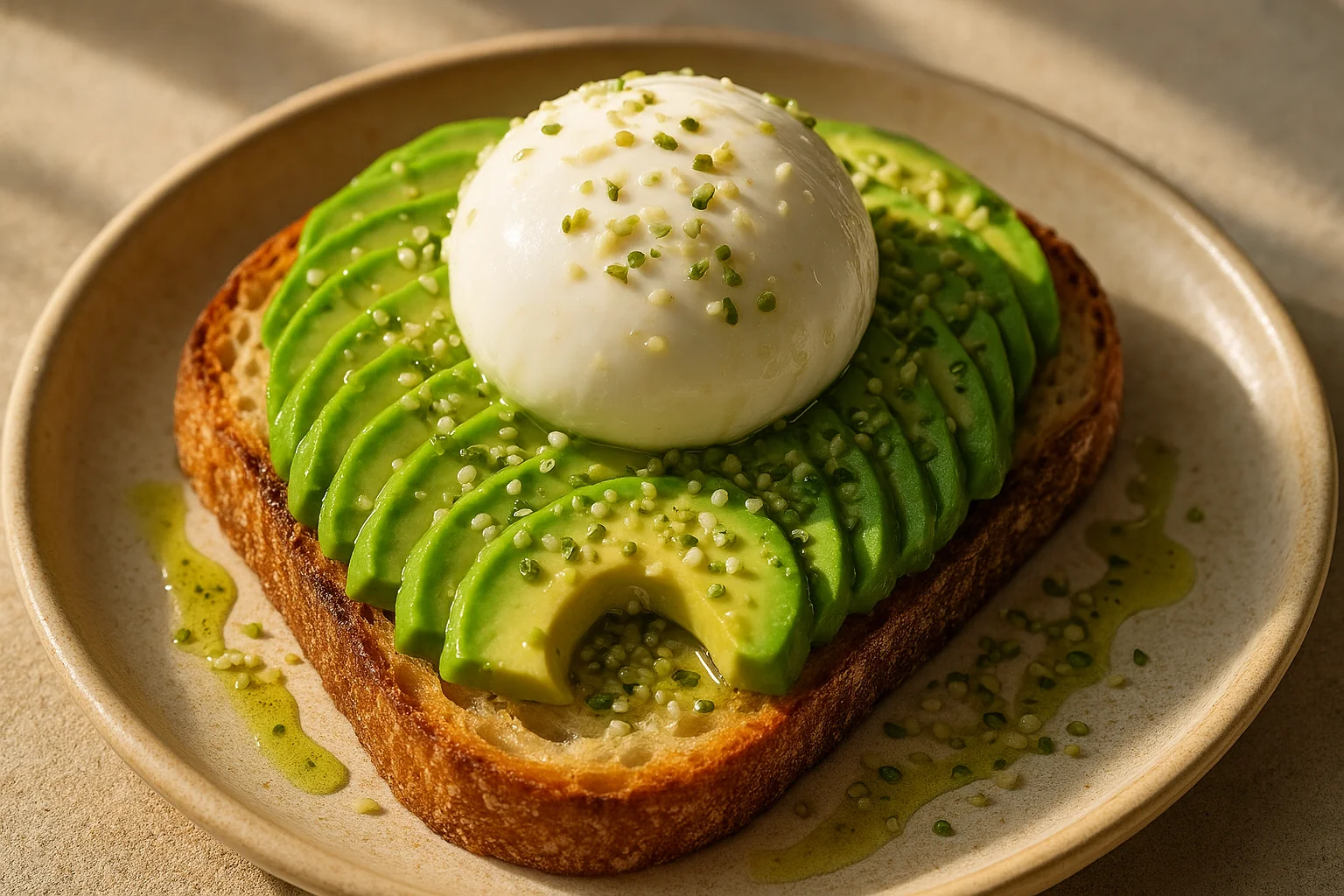

Avocado Toast with Hemp Oil: Quick Filling Breakfast
Avocado toast with hemp oil in 10 minutes: proportions for a serving, nutritional values, and what studies really say about the omega-6 to omega-3 ratio.
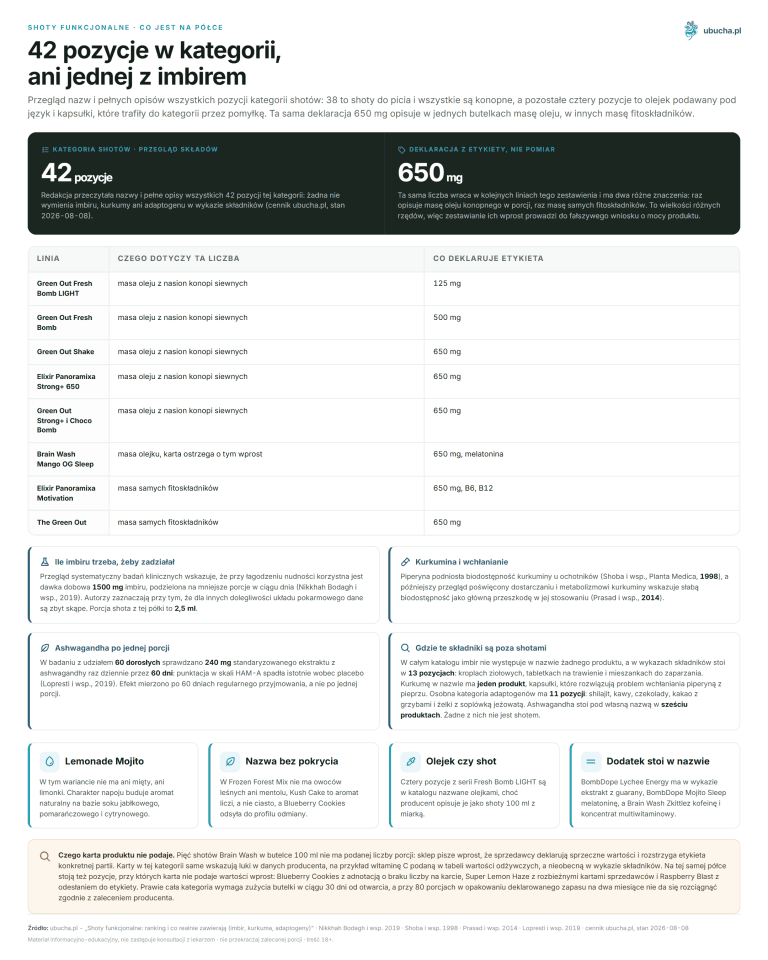
Avocado toast seems like a breakfast that can’t go wrong, and that’s why it rarely reaches its full potential. Avocado mainly provides monounsaturated fats, and it has very little polyunsaturated fats. A teaspoon of hemp seed oil drizzled on a warm toast right after taking the bread out of the toaster perfectly fills that gap. This results in a complete breakfast in ten minutes, without a pan and without any cleanup. The whole trick is in the order: the oil goes on the toast only after toasting, never in the pan. Below you will find proportions for one serving, a step-by-step process, and numbers from the food composition database and studies, including a correction of the omega ratio that popular texts have long attributed to the wrong institution.
KEY INFORMATION
• Avocado has 9.8 g of monounsaturated fats per 100 g, but only 1.82 g of polyunsaturated fats and 0.11 g of alpha-linolenic acid (USDA, record 171705).
• Hemp seed oil is over 80% polyunsaturated acids, with an omega-6 to omega-3 ratio of 2:1 to 3:1 (Callaway, Euphytica, 2004).
• The ratio in Western diets has increased from 1:1 during evolution to 20:1 today (Simopoulos, Nutrients, 2016).
• Every 7 g of fiber per day is associated with a 9% lower risk of cardiovascular diseases (Threapleton, BMJ, 2013).
Why does hemp oil pair well with avocado?
Because it completes the fat profile that avocado does not. In the USDA food composition database, raw avocado has 9.8 g of monounsaturated fats per 100 g, including 9.07 g of oleic acid, but only 1.82 g of polyunsaturated fats (record 171705). There is 0.11 g of alpha-linolenic acid, which is plant-based omega-3.
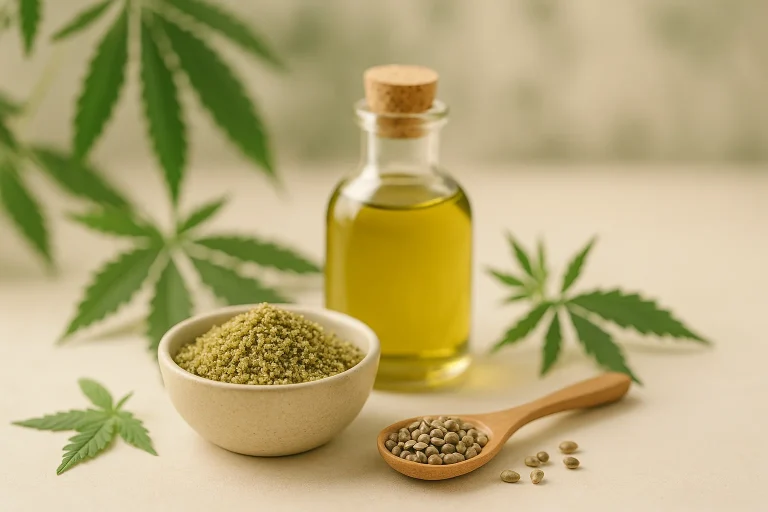
Polyunsaturated acids, namely linoleic and alpha-linolenic, are not produced by the body and must be obtained from food. Hemp seed oil is a dense source of them: it consists of over 80% polyunsaturated acids, and the omega-6 to omega-3 ratio usually ranges from 2:1 to 3:1 (Callaway, Euphytica, 2004). A teaspoon on the toast does not change the meal’s flavor in a way that bothers anyone, but it changes its composition.
What do studies say about the omega-6 to omega-3 ratio?
They say less than popular descriptions of oils suggest. Simopoulos (Nutrients, 2016) describes that in Western diets, the omega-6 to omega-3 ratio has increased from about 1:1 during evolution to 20:1 today or even higher, and he links this increase to the rising prevalence of overweight.
It is important to know what this work does not do. It is a review dedicated to the risk of obesity, not setting nutritional thresholds, and it does not provide any target ratio for the diet. The author concludes that a balanced ratio is important for health; however, there is no specific number to measure.
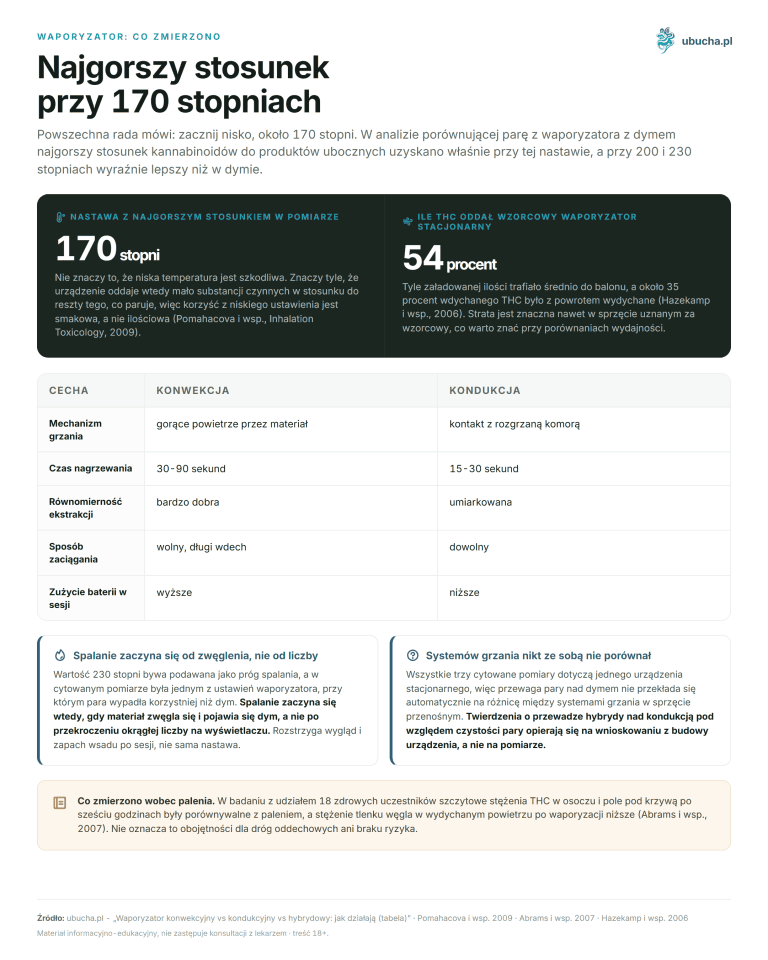
Hence the correction that is perhaps repeated most often in texts about hemp oil. The statement about the ratio “considered optimal for human health” comes from a summary by Callaway and is right after the range of 2:1 to 3:1. It is an assessment by the author of the work on hemp seeds, not a recommendation from WHO, although it is often signed with the name of this organization along with the 4:1 threshold. The advantage of hemp oil over refined oils rich only in omega-6 remains a fact resulting from its composition; however, there is no threshold to which it can be applied.
What does a serving of two toasts provide?
From the proportions given below, it comes out to about 520 kcal, 11 g of protein, 33 g of fat, and 13 g of fiber. This calculation is based on the composition of the products used, not the measurement of the finished dish, so treat it as an order of magnitude. The largest single contribution comes from the avocado: 150 g of flesh is 240 kcal, 22 g of fat, and 10 g of fiber (USDA, record 171705).
This last number has stronger backing than the rest. Threapleton and colleagues (BMJ, 2013) gathered 22 publications from cohort studies and calculated the dose-response relationship: every 7 g of fiber per day was associated with a 9% lower risk of cardiovascular diseases (relative risk 0.91, confidence interval 0.88 to 0.94) and the same reduction in the risk of coronary disease. These are observational studies, so they speak of correlation, not causation.
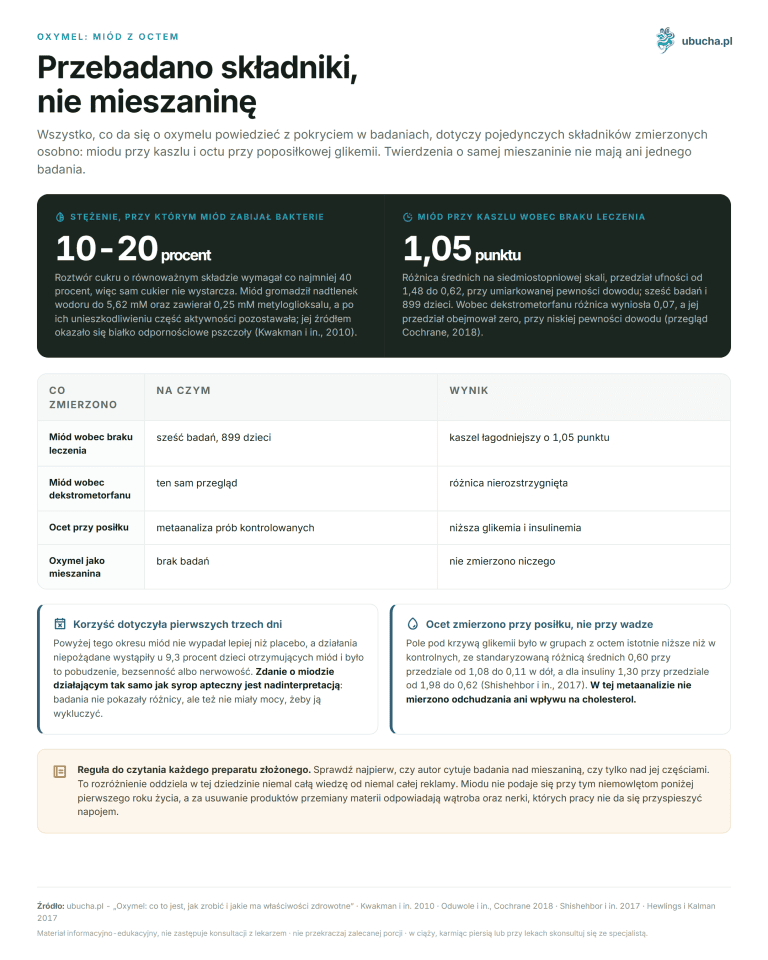
The bread chosen for the toasts also contributes something. Scazzina and colleagues (Journal of Cereal Science, 2009) baked four breads from two flours and two types of leaven, and then measured postprandial glycemia in healthy volunteers. Both sourdough breads produced significantly lower glycemic responses than their corresponding breads made with baker’s yeast. The presence of fiber alone did not explain this.
What ingredients do you need for one serving?
Two slices make one serving. The outcome depends on two things: the quality of the bread and the ripeness of the avocado. A ripe fruit yields to gentle pressure from a thumb and has no black spots under the skin; a hard one will be bitter and will not mash into a paste. For the oil, pay attention to the description: you need food-grade cold-pressed hemp seed oil, dark green and nutty in smell, not aromatic hemp oil from a dropper. Use hulled seeds, as unhulled ones have a hard shell that crunches unpleasantly on the toast. After opening, keep the oil in the fridge and use it within a few weeks, as polyunsaturated fats go rancid faster than olive oil. Rancid oil can be recognized by a sharp, irritating smell, and such oil cannot be salvaged.
- 2 slices of sourdough bread, whole grain rye, or gluten-free
- 1 ripe avocado
- juice from half a lime or lemon
- pinch of sea salt and chili flakes or cayenne pepper
- 2 teaspoons of cold-pressed hemp seed oil
- 1 teaspoon of hulled hemp seeds
- optional poached egg, arugula, sliced radish, or sprouts
How to prepare the toasts step by step?
Ten minutes from fridge to table. If you are making a poached egg, start boiling water at the same time you turn on the toaster, as both will be ready at the same moment.
- Toast the bread. Place two slices in the toaster and toast until light golden. Over-toasted sourdough bread becomes bitter and overpowers the avocado. Without a toaster, a preheated oven at 200°C for five minutes will suffice.
- Prepare the paste. Cut the avocado along the pit and twist the halves in opposite directions. Scoop the flesh into a bowl with a spoon, add lime juice, salt, and chili. Mash with a fork, not a blender: a few detectable chunks are an advantage, not a flaw of the paste.
- Spread the toast. Generously spread the paste on the hot slices, about a centimeter thick. The heat of the bread will slightly warm the avocado and bring out its aroma.
- Drizzle with hemp oil. Spread a teaspoon of hemp seed oil on each toast. Always add the oil to the finished dish off the heat. It is over 80% polyunsaturated, and such fats oxidize faster when heated than saturated fats, so it is not suitable for frying.
- Add toppings and serve immediately. Sprinkle with hemp seeds, add arugula or sprouts, and place a poached egg on top. Serve immediately, as avocado darkens after a few minutes of exposure to air.
What variations of toast work best?
The base tolerates almost any addition, so it is worth treating it as a starting point. Smoked salmon, two or three slices on the paste, adds long-chain omega-3 acids that plant sources do not contain in ready form. Salmon does not duplicate the hemp oil but adds acids of a different structure.
A poached egg raises the protein content most simply of all variations. Boil water with a teaspoon of vinegar, crack an egg into a bowl, gently slide it into the boiling water, and cook for three minutes. A spicy version is created by adding a quarter teaspoon of sriracha or harissa to the paste and sprinkling the toast with toasted pumpkin seeds.
If the avocado you bought turned out to be hard, place it in a paper bag with a banana for a day or two. The ethylene released speeds up ripening. On mornings when you don’t even have ten minutes, our recipes for banana oatmeal with hemp oil or millet porridge with hemp oil and raspberries will work. You can find the same oil in a lunch version in avocado salad with hemp oil.
Frequently Asked Questions
Why does hemp oil pair well with avocado?
Because it complements what avocado lacks. Raw avocado contains 9.8 g of monounsaturated fats per 100 g, but only 1.82 g of polyunsaturated fats (USDA, record 171705). Hemp seed oil consists of over 80% of them, with an omega-6 to omega-3 ratio of 2:1 to 3:1 (Callaway, Euphytica, 2004).
How many calories are in avocado toast with hemp oil?
From the given proportions, it comes out to about 520 kcal, 11 g of protein, 33 g of fat, and 13 g of fiber per serving of two slices. This calculation is based on the composition of the products, not the measurement of the finished dish. The avocado alone accounts for 240 kcal and 22 g of fat, as 150 g of flesh is almost half the energy of this breakfast.
Is there a recommended omega-6 to omega-3 ratio?
Not in the form that circulates on the internet. The 4:1 threshold attributed to WHO is not found in any of the sources cited in this article. The only statement about the ratio considered optimal comes from Callaway (Euphytica, 2004) and pertains to a range of 2:1 to 3:1. Simopoulos (Nutrients, 2016) states that in Western diets, the ratio reaches 20:1, but does not set a target value.
Can hemp oil be used instead of olive oil?
Yes, for cold dishes, but not for frying. It can replace olive oil on a finished, warm toast without reservations. However, it is over 80% polyunsaturated (Callaway, 2004), while olive oil has about 10.5 g of such acids per 100 g (USDA, record 171413), and it is these that oxidize fastest when heated.
What type of bread is best for avocado toast?
Sourdough bread. In a study by Scazzina (Journal of Cereal Science, 2009), sourdough breads produced significantly lower postprandial glycemic responses than the same breads made with baker’s yeast. Whole grain rye is a sensible alternative due to its fiber content, and buckwheat or rice bread works well for celiac disease.
This article is for informational and educational purposes and does not replace consultation with a doctor. If you are pregnant, breastfeeding, taking medications, or have chronic conditions, consult a specialist before using supplements or herbs.
Author: Michał Waluk · Published: 2026-06-02 · Updated: 2026-08-16