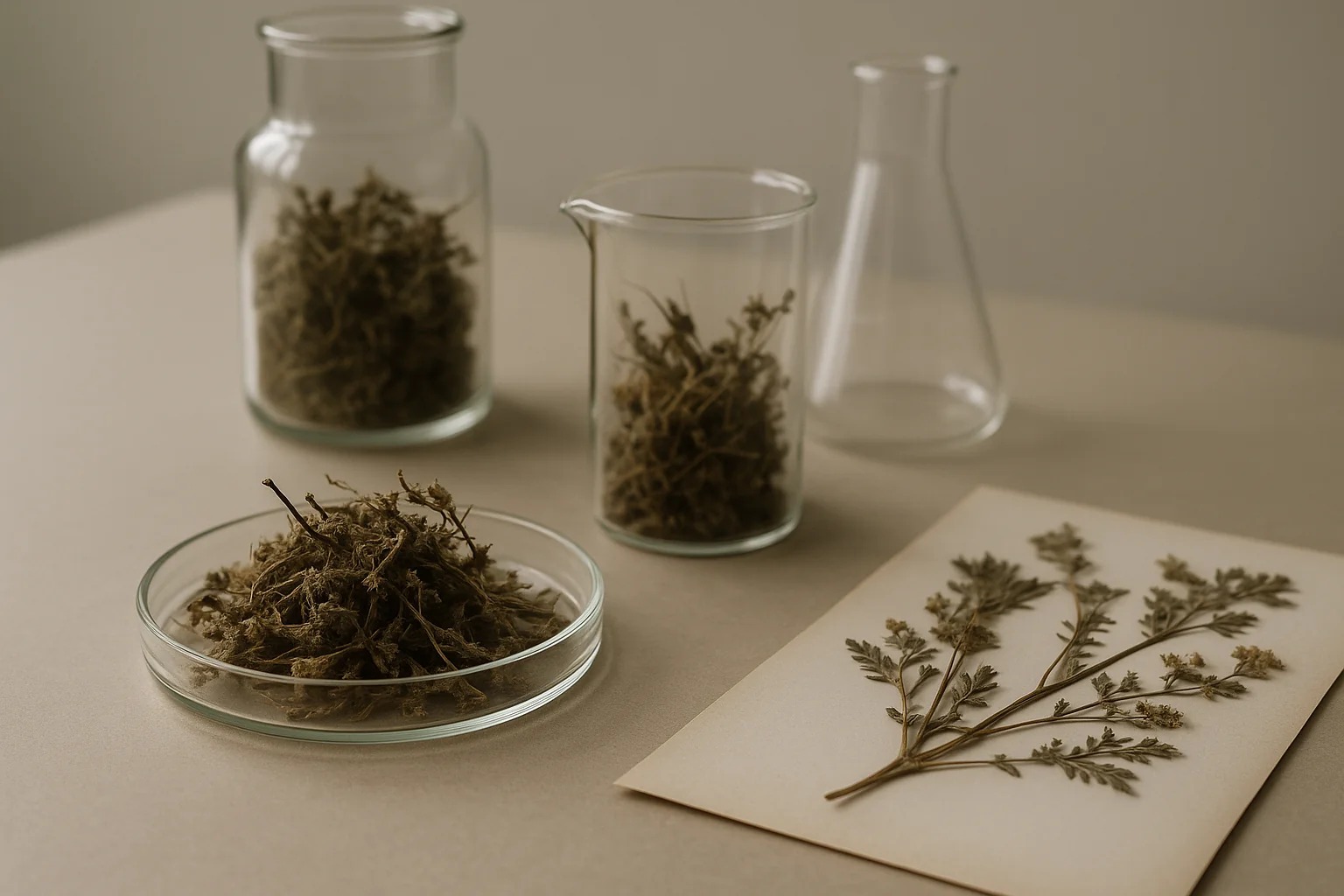

Canopy Growth and Spectrum Therapeutics: one company, two names on the packaging
The same Canadian manufacturer signs in Polish pharmacies with two names at once. We have collected thirteen of its strains, showing what can be verified in documents and what is solely the producer's assurance.
Who is Canopy Growth and where does its raw material come from?
A Canadian company based in Smiths Falls, Ontario. In the Polish market, it operates through Canopy Growth Polska sp. z o.o. from Toruń, and this company is responsible for the pharmacy positions. However, the dried flower is sold under the Spectrum Therapeutics brand, and the producer describes its own crops as Canadian.
The Polish company has a longer history than the brand it carries today. It has been registered since July 2013, initially under the name Tibon Central Europe, renamed to Spektrum Polska in the fall of 2017, to Spektrum Cannabis Polska in the spring of 2018, and has been operating under the current name since the end of April 2019. The address has remained the same all this time, on Grudziądzka Street in Toruń. The same company today operates two Polish websites: a retail one under the brand name and an educational one aimed at doctors and pharmacists.
We have not established the cultivation location for a specific series. In materials for the Canadian market, the producer lists facilities in Smiths Falls, Kincardine, and Kelowna, and describes the 7ACRES brand as cultivated in Canada; however, the pharmacy product card in Poland only provides the responsible entity. The cultivation in Denmark, mentioned a few years ago in relation to this company, was closed in 2021 and sold to another company, so referencing it today would be misleading.
Why does the same manufacturer appear under two names?
Because one of them is a registered name, and the other is a trade designation. The pharmacy position lists the name Cannabis flos Canopy Growth, while the brand website and the educational service run by the same company refer to Spectrum Therapeutics. Until August 2026, our registry counted them as two separate entities, thus listing seventeen manufacturers instead of sixteen.
The records in the data determine this, not the declaration. In two Polish strain databases we use, there are twenty-four records concerning this raw material; the producer field in each of them is filled by Spectrum Therapeutics, while the registered name in twenty of them is Canopy Growth. In the list of pharmacy positions, fifteen entries are divided into eight signed with the brand and seven signed with the company, with Kush Mints appearing there twice: once under one name and once under the other, with two different terpenes listed first.
The direction of consolidation is not arbitrary. The official designation of the product indicates the manufacturer, so Canopy Growth remains in the registry, while Spectrum remains a trade label that can be mentioned in the text. In fact, there are more than two brands: the Polish educational service of this company lists twelve, including Tweed and 7ACRES, which are the labels under which several strains from the list below originate. The German subsidiary went a step further and in 2023 changed Spectrum Therapeutics to Canopy Medical, so that the medical brand would be named after the company.
Which Canopy Growth strains are available in Polish pharmacies?
Thirteen cultivars in the list that this cluster stands on. Twelve of them have no other supplier in our market, and Hindu Kush shares the shelf with one competitor. Together, they account for fifteen pharmacy positions, as two strains are listed in the source under two name entries.
| Strain | Leading terpene according to pharmacy data | Positions of this manufacturer | Composition according to collected sources | Lineage |
|---|---|---|---|---|
| Afghan Kush | myrcene | 1 | consistent in both databases | nieustalony |
| Blood Orange Kush | limonene | 1 | one source | lemon kush x guava kush |
| Deep Breath | myrcene | 1 | one source | nieustalony |
| Hindu Kush, na Bakerstreet shelf | myrcene | 1 | one source | nieustalony |
| Krypton, also Snowtorious Krypton | myrcene | 2 | sources differ | chemdawg 91 x captain krypt og |
| Kush Mints | limonene | 2 | one source | bubba kush x animal mints |
| Lemon Skunk | terpinolen | 1 | one source | nieustalony |
| Original Gangster Deluxe | terpinolen | 1 | sources differ | og kush breath x triangle kush x josh d og |
| Penelope | pinene | 1 | one source | nieustalony |
| Red No 2, kultywar Jack Haze | terpinolen | 1 | one source | white widow x haze |
| Red Velvet Cake | limonene | 1 | one source | red headed stranger x cookies n’ cream |
| Ultra Jack | myrcene | 1 | one source | ultra sour x jack haze |
| White Widow X | myrcene | 1 | undocumented profile | white widow x cold creek kush |
The terpene profile of the leading strains in this selection is narrow. Six strains are based on myrcene, three on limonene and three on terpinolene, and one on pinene. There is not a single entry with caryophyllene leading, although it dominates in thirty strains out of eighty-five in our entire pharmacy list, making it more common than any other. Therefore, this producer does not provide a market overview, only a snapshot. There are several layers of nomenclature, and it is easy to get lost in them: there is a separate registered name from the pharmacy, a separate commercial brand designation like Red No 2, a separate name given by the breeder, such as Bakerstreet, and finally, the cultivar name used by strain databases. The last one is listed in the table above, as it is the only one that can be compared with entries from other suppliers.
We maintain the current availability status separately, in a list of strains available in pharmacies, where all producers' entries are listed at once. Our store's dried flower category On the other hand, it contains hemp products available without a prescription and is not equivalent to the pharmaceutical raw material described here; a similar name often confuses these two things more than one might think.
Why does the list of strains from this manufacturer change over time?
Because products enter and exit the market, and the trade name is often assigned to subsequent cultivars. The producer's website currently lists eight products for Poland, while our list has gathered thirteen, and this difference is not an error of either list, but rather a gap in time between one and the other inventory.
The history of this brand along the Vistula consists of interruptions. The product sold as Red No 2 was registered as a pharmaceutical raw material earlier than any other, then disappeared from pharmacies in December 2019 and returned only in May of the following year. Even earlier, the delivery waited months for release into circulation because laboratory testing showed a content of active substances different from what the producer declared.
Two later events are visible in our summary as separate entries. In June 2024, the producer announced that under the name Red No 2, the cultivar Jack Haze would be introduced and that it would replace the existing Lemon Skunk, so one trade designation carries two different plants for us. In September of the same year, the company itself withdrew Penelope, explaining the decision by the susceptibility of aging genetics to fluctuations in quality. At that time, it was their only Polish product with a balanced composition, and among the eight currently listed by the producer, there is no equivalent with such characteristics.
How does the raw material from Canopy Growth differ from that of other producers?
By three things that can be verified outside of promotional materials: the method of preservation, the structure of the registration name, and the fact that part of the lineage is provided by the producer itself. The remaining differences mentioned in its own materials are assurances without published results, so we do not treat them as series data.
The producer openly admits to preservation by radiation. Its Polish educational service lists gamma radiation and an electron beam and explains the process as the removal of microbiological contaminants. There is also an assurance that the content of active substances remains unchanged, and the aroma changes by less than five percent. The first half of this sentence describes the technology, and we read it that way; the second is a number without a specified measurement, so it remains in the promises column.
The registration name describes potency, not the plant. In our data, fifteen descriptions of this producer's strains fit into eight registration names, and under one of them, there are as many as five cultivars at once. Kush Mints goes the other way and appears under two entries. Anyone looking for a specific strain by the pharmacy label will not find it this way, because the label carries the declared content, not the designation of the plant.
Eight out of thirteen strains have documented origins, and for four, the source is the producer's own website or the brand 7ACRES belonging to it. In the market context, this is quite a lot, as most suppliers in our list of lineages do not provide any at all. On the other side is a gap that the producer does not fill: the Polish website does not provide certificates of analysis for download, and its research tab refers to forty years of work on hemp in general, without indicating a single entry regarding its own raw material.
What is known and what is not known about the raw material from this producer?
It is known how many products and under what names are available in pharmacies and what composition two Polish strain databases declare. It is not known how this composition relates to the actual batch, as the shares reported by the databases do not sum up to a whole, and the producer does not publish results of tests on its own raw material.
We calculated this based on fourteen descriptions from this producer, for which the database provides shares of terpenes at all. The lowest sum is sixty, the highest one hundred sixteen, the median lies halfway between eighty-five and ninety, ten descriptions do not reach one hundred, three hit it exactly, and one exceeds it. Since the same measure sometimes does not reach the total and sometimes exceeds it, the denominator is different and unknown in each description. Therefore, we do not provide the profile composition here in percentages anywhere, even where the numbers are readily available.
Documentation in this thirteen is uneven. The composition matches in both databases only for one strain, for two the databases provide divergent sets of terpenes, nine describe only one source, and for White Widow X we found no profile in any. For the content of active substances, it is even tighter: the deviation from the value declared by the producer is provided by sources for only four products, so for the others, we do not provide it at all.
Shortcomings must be named. It is not known in which facility the batch lying in the pharmacy today was grown, as the pharmacy card does not reveal this. It is also not known how this company's raw material compares to that of its competitors, as no comparative studies of brands have been published, and patient reports circulating on forums describe a single batch, not the manufacturing process.
How quickly does this producer's dried flower act and how long does it last?
Just like the dried flower of any other producer, because the course is determined by the route of administration, not the label on the package. For none of its thirteen strains has the producer published pharmacokinetic studies, so the following ranges describe the method of taking the raw material, not the properties of this specific brand.
The route of administration determines the course more than the variety itself. After vaporization, the substance passes from the lungs to the blood almost immediately, so the first sensations appear after a few minutes, the intensity increases for another ten to thirty minutes, and the whole effect lasts for two to four hours. After ingestion, the raw material first passes through the intestine and liver, so the first sensations are awaited from half an hour to two hours, and the episode can last six, sometimes eight hours. Hence the most common mistake with oral administration: anyone who thinks nothing is happening after thirty minutes and takes another dose will receive both doses at once. The above ranges describe the route of administration, not this variety; pharmacokinetic studies for a single cultivar have not been published.
With this producer, there is one more caveat. Its raw material is sometimes preserved by radiation, and the company itself admits that this process affects the aroma. No one has measured the impact of such treatment on the course of action, so it cannot be determined whether a preserved batch behaves over time the same as an unpreserved one.
What adverse effects have been reported after using this producer's raw material?
None that could be specifically attributed to it. Reports are collected in Poland for a prescription drug made from the raw material, not for the producer's name, so there are simply no compilations divided by brands. The following pertains to dried hemp as a group of raw materials.
Reports of adverse effects are collected for medicinal products with a batch number, not for the strain name, so the following pertains to hemp dried flower as a group of raw materials. The most frequently reported symptoms are dry mouth, red eyes, and increased heart rate. Dizziness upon rapid standing, daytime drowsiness, and temporary worsening of short-term memory are less frequently described, as well as anxiety that increases with dosage. A separate issue is medications taken concurrently, especially sedatives and those affecting coagulation: their assessment requires knowledge of the entire list of preparations, not just the description of the plant. We do not provide the frequency of these symptoms numerically, as public compilations for hemp dried flower in Poland do not separate them by individual products.
The boundary of this knowledge results from regulations, not from anyone's negligence. The raw material itself is not subject to supervision by the registration office as a separate unit; supervision only covers the prescription drug prepared on prescription. Entities distributing the raw material are also not required to report sales to the monitoring system, which the administration has publicly indicated. As long as this remains the case, numbers for a single producer will not emerge, and we do not consider estimating them on one's own to be fair.
Frequently asked questions about Canopy Growth's dried flower
Is Spectrum Therapeutics the same company as Canopy Growth?
Yes. Spectrum Therapeutics is the medical brand of Canopy Growth, and in Germany, the same brand was renamed Canopy Medical in 2023 specifically to align it with the company's name. In Poland, the brand's website is operated by Canopy Growth Polska sp. z o.o. from Toruń.
How many strains from this producer have reached Polish pharmacies?
Thirteen cultivars in the summary on which this cluster stands, and fifteen pharmacy entries, as Krypton and Kush Mints are listed in the source twice. The producer's website currently lists eight products for Poland, which is fewer than our list has gathered.
Why does the pharmacy label not indicate what strain it is?
Because the registration name describes the declared potency of the raw material, not the plant. In our data, fifteen descriptions of this producer's strains fit into eight registration names, and under one of them, there are five different cultivars.
Does this manufacturer preserve dried flower with radiation?
Yes, and he states this explicitly. His Polish educational service mentions gamma radiation and an electron beam, citing the removal of microbiological contaminants as the reason. The assurance of minimal impact on the smell comes from the manufacturer and there is no published measurement to support it.
What happened to the Penelope strain?
It was withdrawn by the manufacturer himself in September 2024, explaining the decision by the susceptibility of aging genetics to fluctuations in quality. At that time, it was his only Polish strain with a balanced composition, and among the eight he lists today, there is no equivalent with such characteristics.
Can this dried flower be purchased without a prescription?
No. The raw material is only available by prescription from a doctor, in the Rpw category, and the responsible entity listed for the pharmacy item is Canopy Growth Polska. The retail category of dried flower includes hemp products available without a prescription and is not equivalent to this raw material.
Hemp dried flower is a pharmaceutical raw material dispensed by prescription from a doctor in the Rpw category. The material is for informational purposes only, does not replace medical advice, and is not an encouragement to use.
Editorial text: redakcja ubucha.pl.