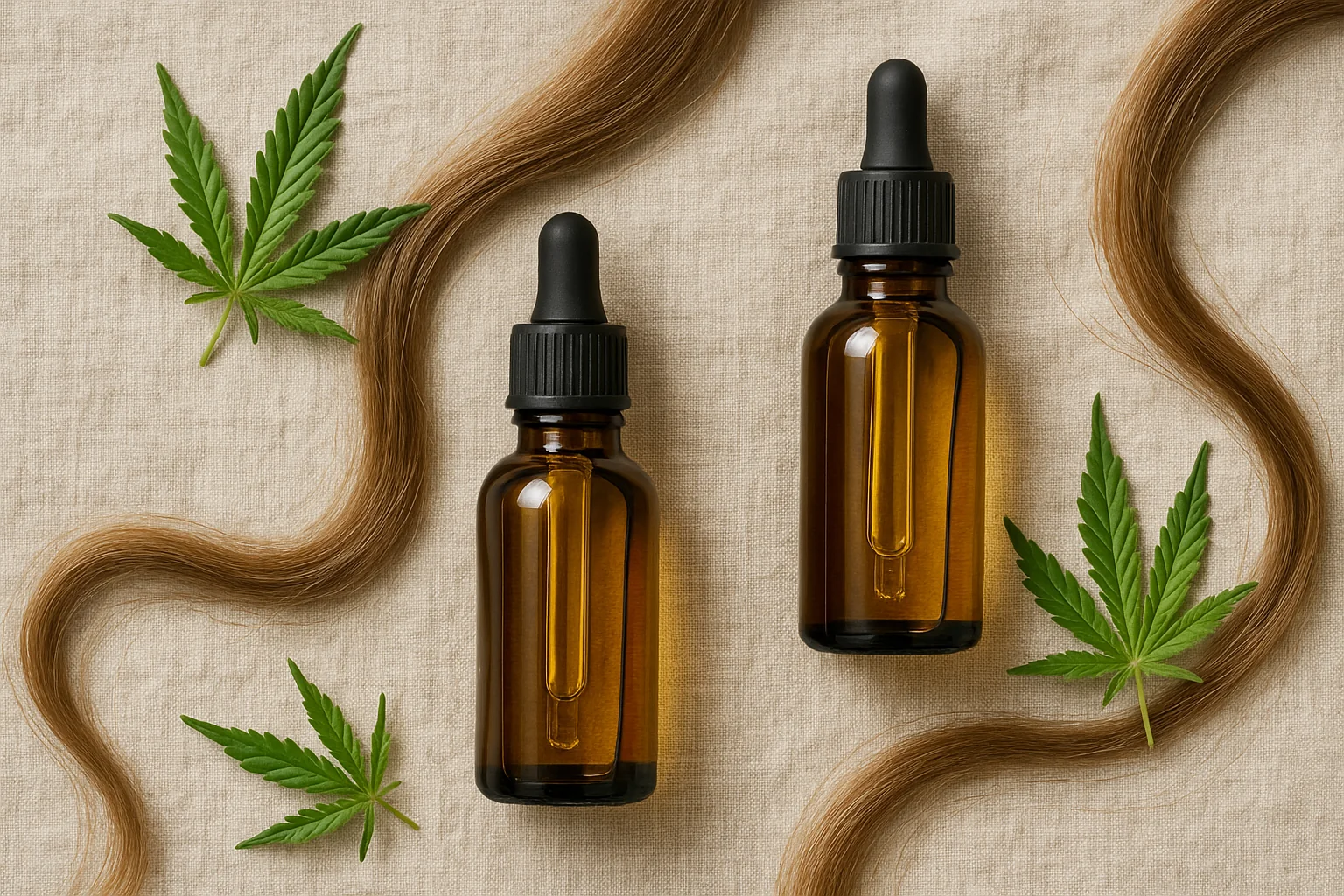

Hemp oil for hair and scalp: hemp seed oil or CBD, the difference
Hemp seed oil and CBD oil are two different products for hair and scalp. Check what studies say about each of them and which one to choose for your issue.
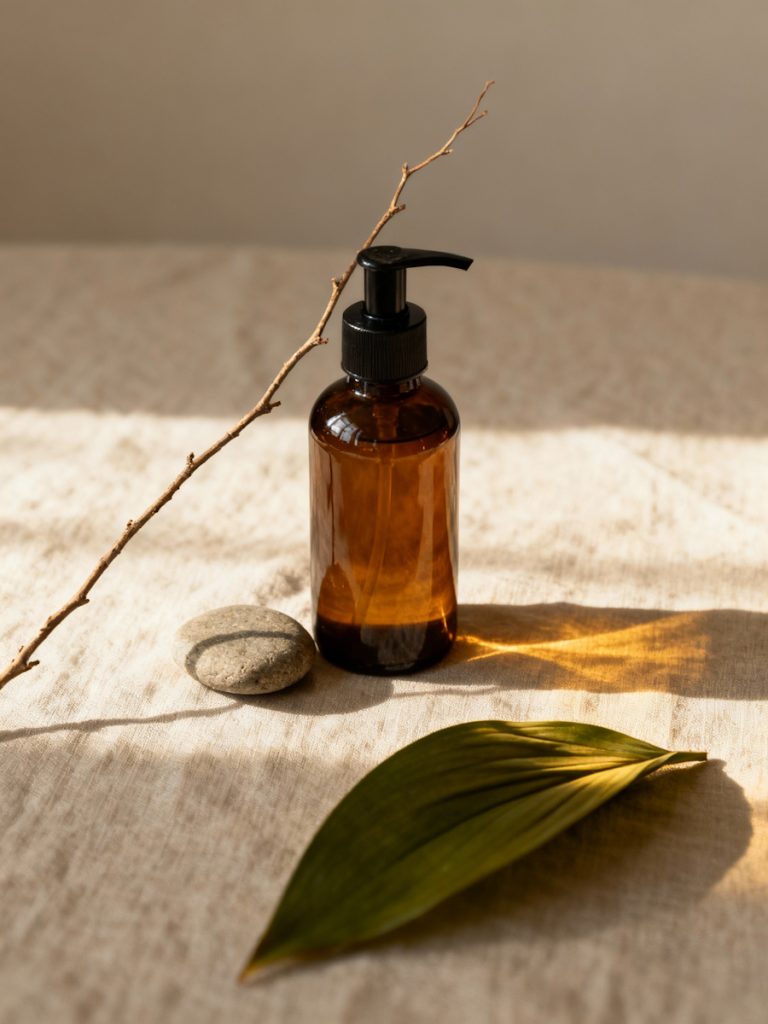
On the label of a hair product, "hemp oil" can mean two completely different things. The first is oil pressed from hemp seeds, a regular plant oil without cannabinoids. The second is an extract from flower buds containing cannabidiol, suspended in a carrier oil. Both come from Cannabis sativa, and that’s where the similarity ends: they have different compositions, different mechanisms of action, and completely different qualities of evidence. Confusing them can cost either unnecessary money or a product that cannot address your issue because it lacks the ingredient you were looking for. Sellers rarely distinguish between them, and the name on the label can be identical for both. This article separates the two products, checks the sources for what is actually known about each from research, and shows which one makes sense for which problem.
KEY INFORMATION
• Hemp seed oil contains no cannabinoids: it is over 80% polyunsaturated fatty acids, with an omega-6 to omega-3 ratio usually between 2:1 and 3:1 (Callaway, Euphytica 2004).
• The scalp has its own endocannabinoid system, which is also present in the hair follicle and sebaceous gland (Bíró et al., Trends in Pharmacological Sciences 2009).
• Cannabidiol inhibits sebum production through the TRPV4 channel, not through the CB2 receptor (Oláh et al., Journal of Clinical Investigation 2014).
• Evidence for CBD against hair loss is based on one open study involving 35 people; the direction of action depends on the concentration (Gupta and Talukder, 2022).
What is hemp seed oil and what does it do for hair?
Hemp seed oil is a pressed plant oil without cannabinoids. Seeds do not produce them, as cannabinoids are formed in the flower buds and leaves. The value of this oil for hair comes solely from its fatty acid profile, which is unusual: over 80% of its composition consists of polyunsaturated fatty acids.
Review Callawaya (Euphytica, 2004) It is reported that seeds contain over 30% oil and about 25% protein, and the ratio of omega-6 to omega-3 fatty acids in the oil is usually between 2:1 and 3:1. This is one of the few plant oils with such balanced proportions; most cooking oils have a significantly higher omega-6 dominance. The main component is linoleic acid, the same one that builds ceramides in the epidermis and the lipid layer of the scalp.
What does this mean for the hair? Small-molecule fatty acids penetrate the damaged, porous shaft and fill in the gaps in the lipid layer. A smoother surface reflects light better, making hair appear shinier. The oil also reduces friction between the scales, which limits breakage during combing. These are cosmetic effects and should be treated as such: no plant oil changes the rate of hair growth or treats the scalp.
It is important to distinguish between two things that blend into one in product descriptions. The nutritional composition of the seeds has been reliably described, and this knowledge is twenty years old. The translation of this composition into a care effect measured on human hair has not been supported by comparable studies, so we rely on the general physicochemistry of plant oils rather than clinical trials with this specific oil.
How does CBD oil differ from hemp seed oil?
CBD oil is an extract from flower buds suspended in a carrier oil, which can indeed be hemp seed oil. The difference thus comes down to one ingredient: cannabidiol, which is completely absent in hemp seed oil. This ingredient has a biological purpose in the skin, while the base oil does not.
The skin has its own endocannabinoid system. Bíró et al. (Trends in Pharmacological Sciences, 2009) They described cannabinoid receptors and enzymes of this system in epidermal cells and skin appendages, including in the hair follicle and sebaceous gland. The authors link the disruption of this balance to skin diseases ranging from acne and seborrhea to itching and hair growth disorders. This is the basis for interest in cannabinoids in scalp cosmetics: the system they can act on is indeed present.
How exactly does cannabidiol work? This is best known from studies on the sebaceous gland. Oláh i wsp. (Journal of Clinical Investigation, 2014) They showed in cultures of human sebocytes and in organotypic skin cultures that CBD inhibits lipid production and the proliferation of sebocytes, and that this occurs through the TRPV4 ion channel, not through the CB2 receptor. The anti-inflammatory action, in turn, occurred through the adenosine A2a receptor and inhibition of the NF-κB pathway. The popular statement "CBD regulates sebum through CB2 receptors" is therefore mechanistically false, although the sebostatic effect has been confirmed.
The practical conclusion from this distinction is simple. Hydration and shine are provided by the oil itself, so cheap pressed seeds do exactly the same as an expensive extract suspended in the same oil. The influence on sebum production and inflammation is due to cannabidiol, and that is what you pay for in CBD oil. If your problem is cosmetic, the extra cost buys you nothing.
Does hemp seed oil perform better than other plant oils?
In one dimension, yes, but in others, there are no decisive comparisons. It is distinguished by an omega-6 to omega-3 fatty acid ratio close to 2:1 or 3:1, while typical cooking oils have this advantage many times higher. Beyond this one parameter, comparisons between oils are mainly based on their physicochemistry, as we have not been able to find direct trials comparing them on human hair.
Coconut oil is often cited as a reference point because it indeed penetrates the shaft well due to its high lauric acid content. However, this is a saturated acid, so on fine hair, the effect can be the opposite of intended: instead of softness, stiffness and weight can occur. Hemp seed oil has very few saturated fatty acids, which makes it behave lighter, and this is a real practical difference, not just a marketing slogan.
Borage oil and evening primrose oil contain more gamma-linolenic acid than hemp, so if you are specifically looking for this ingredient, hemp is not the best source. It makes more sense to think of hemp oil as a good universal oil rather than a record holder in any single category.
We consciously omit the circulating product descriptions that rate comedogenicity on a five-point scale. This is a classification from the cosmetics industry, not from scientific literature, and the values assigned to the same oil differ between sources. If your scalp reacts with clogged follicle openings, the decision is made based on a small area test, not a number from a table.
How to use hemp seed oil and CBD oil on hair?
Both products can be used in one treatment, as they work in different areas: hemp seed oil on the lengths, CBD oil on the scalp. Below are methods of use that arise from the physical properties of both preparations.
Hemp seed oil for hair:
- Before washing: a few drops on dry or slightly damp lengths, 20 to 30 minutes before shampooing. The layer of oil limits hair swelling and the leaching of proteins.
- After washing: one or two drops rubbed in hands, applied only to the ends, without rinsing. More oil does not provide a better effect, only an oily appearance.
- On the scalp: a teaspoon of oil and five minutes of massage before washing, if the skin is dry and itchy.
CBD oil for the scalp is used differently, as the goal is not the lengths, but the skin. A few drops are spread directly on the skin with fingertips, using a pressing motion, not rubbing, left on for 20 to 30 minutes and washed off with shampoo. Once or twice a week is enough to assess whether the product makes any difference.
Two practical notes. CBD oil purchased from a supplement store is usually an oral preparation and has nothing to do with a cosmetic formula intended for the skin; check what the manufacturer intended before use. The second point is patience: if you are assessing the impact on seborrhea or itching, it takes several weeks of regular use, as the scalp rebuilds its lipid layer slowly.
Does CBD stop hair loss?
It is unknown, and the evidence is thin and sometimes contradictory. The most commonly repeated statement that cannabidiol extends the hair growth phase through the CB1 receptor is not supported by the study it references. In fact, it is the opposite.
Telek i wsp. (FASEB Journal, 2007) They cultivated isolated human hair follicles from the scalp and tested anandamide and THC on them. Both substances, depending on the dose, inhibited stem elongation, limited the division of matrix keratinocytes, and accelerated the entry of the follicle into the regression phase. The effect was reversed by the CB1 receptor antagonist. The authors state directly that CB1 agonists could be used to limit unwanted hair, while antagonists would be candidates against hair loss. Thus, the direction is contrary to what advertising promises.
Cannabidiol is not a classical CB1 agonist, so this result cannot be directly applied to it. The picture organizes the review. Gupty i Talukder (Journal of Cosmetic Dermatology, 2022): CBD may stimulate hair growth, but the effect depends on the concentration and at high concentrations reverses into hair loss, while some other phytocannabinoids act unfavorably here. The authors cite one study in which 35 people with androgenetic alopecia used a CBD-rich extract once a day for six months, and the number of non-follicular hairs increased by about 93.5%. This is one trial on a small group, and the review does not state whether it had a control arm; its own conclusion is that the safety and efficacy of topical CBD preparations still require investigation.
Separately, there is the thesis about stress: since sudden hair loss can be a consequence of severe stress, an anxiolytic substance should help indirectly. Blessing i wsp. (Neurotherapeutics, 2015) They summarized the evidence for the anxiolytic effect of CBD and deemed it promising, but cautioned that data in humans are limited to single administration and come from a few studies in clinical populations. The review did not measure hair and does not provide a dose for the reader. Thus, it is a hypothesis with two links, neither of which has been tested on this issue. If you are looking for something with proven efficacy, start with the text about. supplements for hair loss.
Which oil should you choose for your problem?
It depends on what you expect. If it’s about the appearance of hair, hemp seed oil is sufficient, and there is no reason to pay extra for cannabidiol. If it concerns a scalp with seborrhea or irritation, CBD oil has at least a described mechanism behind it, although there are no clinical studies on the scalp.
Use hemp seed oil for dry, frizzy, and brittle hair, when there is no specific skin problem, and when you want a product for everyday use. It is cheaper, well tolerated, and does not contain any ingredient that could act undesirably.
Use CBD oil when the scalp becomes oily quickly or itches. Treat it as a trial, not as therapy: two months without change is a result that indicates the product does not work for you. In cases of hair loss with a known hormonal cause, cannabidiol does not replace treatment and should be purchased as such. If you are considering a cleansing formula instead of oil, you can find a comparison in the text about. szamponie z konopi.
You can also use both at the same time, and this is a sensible order: first, massage the scalp with CBD oil, then apply seed oil to the lengths, and wash after twenty minutes. One treatment then serves two different purposes, not the same purpose twice.
Summary: two products, two different tasks.
Hemp seed oil and CBD oil share a common origin and little else. The former is a good, inexpensive cosmetic oil with balanced proportions of fatty acids and works on the appearance of hair. The latter carries an active ingredient with a described effect on the skin and is sensibly purchased for the scalp, not for the lengths.
It is also worth looking soberly at the promises. The sebostatic effect of cannabidiol has been demonstrated in cell cultures, not on the scalps of patients. The impact on hair loss is based on one open study, and the review that cites it calls the topic unresolved. This is much less than product descriptions suggest, and at the same time enough for the trial to make sense if you undertake it with an awareness of how much of this is verified.
If you were to remember one sentence, let it be this one about price. When buying CBD oil for moisturizing ends, you are paying for an ingredient that does nothing in this task, as the base oil does the work. When buying seed oil for an oily scalp, you are purchasing a product without the ingredient you were looking for. Checking the composition before purchase takes a moment and resolves this question faster than any marketing description. Separately, it is worth remembering that in cases of hair loss with a hormonal basis, neither of these two products replaces diagnostics, and postponing a visit to a dermatologist for six months can be more expensive than an ill-fated purchase.
Frequently Asked Questions
What is the difference between hemp seed oil and CBD oil?
Seed oil is pressed plant oil without cannabinoids, composed of over 80% polyunsaturated fatty acids, with an omega-6 to omega-3 ratio usually from 2:1 to 3:1 (Callaway, Euphytica 2004). CBD oil is an extract from flower clusters suspended in a carrier oil. The former works on the appearance of the hair, while the latter has an active ingredient that works in the skin.
How to use hemp oil on hair?
Apply seed oil to the lengths: a few drops 20 to 30 minutes before washing or one drop on the ends after washing, without rinsing. Massage the scalp with a teaspoon of oil for five minutes before shampooing. Spread CBD oil directly on the scalp with your fingertips, leave for 20 to 30 minutes, and wash out with shampoo.
Does CBD oil help with hair loss?
The evidence is preliminary and ambiguous. The review by Gupta and Talukder (2022) cites one open study involving 35 people with androgenetic alopecia, in which after six months the number of non-hair follicles increased by about 93.5%, but notes that the effect depends on the concentration and at high concentrations CBD may promote hair loss. The authors consider the topic to require further research.
Does CBD regulate sebum production in the scalp through CB2 receptors?
No. Oláh et al. (Journal of Clinical Investigation, 2014) demonstrated in human sebocyte cultures that cannabidiol inhibits lipid production through the TRPV4 ion channel, and the anti-inflammatory action is mediated through the A2a adenosine receptor and inhibition of NF-κB. The sebostatic effect is real, but attributing it to CB2 receptors is a repeated error in product descriptions.
Is hemp seed oil suitable for all hair types?
It has low saturated fatty acids, so it behaves lighter than coconut oil and usually works well on fine hair as well. There are no studies comparing plant oils on human hair, so the decision is made based on a small amount of product. Thick and tightly curled hair may be better served by denser oils used as a top layer.
You will find hemp cosmetics for hair and skin, including masks and creams, in the category. cosmetics. We described the overview of the entire line in the text about. kosmetykach konopnych Palacio.
This article is for informational and educational purposes. It contains internal links to product categories available in the u Bucha store. Prices and specifications may change: check the current data on the product page before purchasing.
Author: Michał Waluk · Opublikowano: 2026-05-29 · Aktualizacja: 2026-08-15