
Hemp shampoo: properties for hair loss and does hemp really help
Hemp shampoo – properties, impact on hair loss, and does hemp really help? Omega-3, omega-6, GLA for the scalp. A reliable assessment 2026.
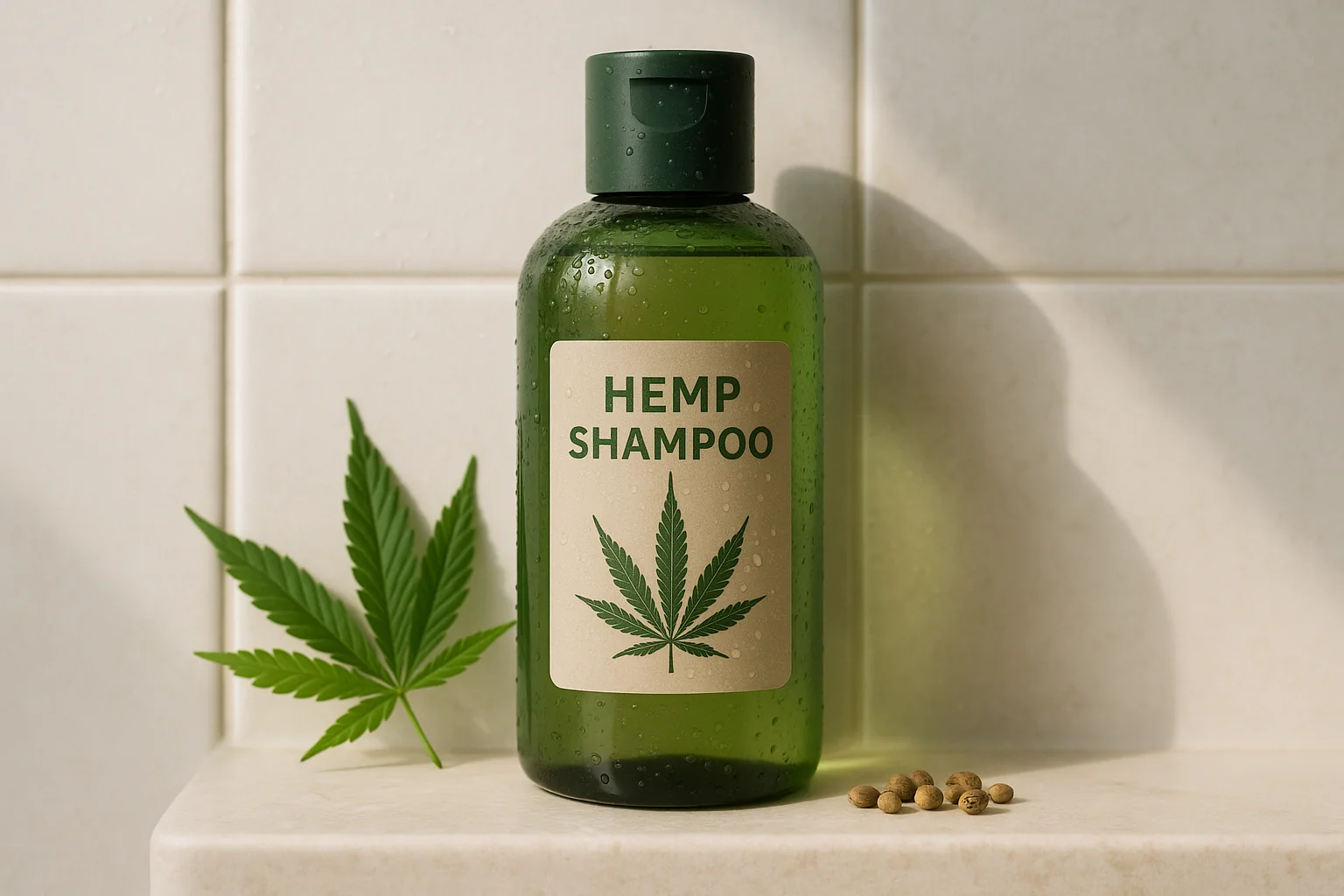
Hemp shampoos have filled the shelves of drugstores and natural cosmetics stores - bringing with them a wave of promises: "strengthens hair", "prevents hair loss", "moisturizes the scalp". But which of these promises are backed by data, and which are just flashy marketing? Does hemp shampoo really help with hair loss? And how to distinguish good products from those that contain hemp solely as a trendy ingredient on the label? In this article, we will conduct a thorough analysis of the properties of hemp shampoo - with particular emphasis on hair loss, dandruff, and dry scalp.
KEY INFORMATION
• Hemp seed oil in the shampoo provides omega-3, omega-6, and GLA to the scalp - supports hydration, reduces dandruff and dryness, but does not treat androgenetic alopecia (AGA).
• AGA (androgenetic alopecia) requires pharmacological treatment: minoxidil or finasteride - hemp shampoo is a complementary care product, not a therapy.
• The shampoo is a rinse-off product - the contact time with the scalp is only a few minutes; the effect is less than with conditioners, scalp oils, or leave-in ampoules.
• GLA from hemp seed oil exhibits anti-inflammatory properties - beneficial for dandruff from dryness and seborrheic dermatitis (Horrobin, Journal of Nutritional Medicine, 1990).
What does hemp shampoo contain and how does it affect the scalp
The key ingredient of hemp shampoo is hemp seed oil (Cannabis sativa seed oil in INCI) or hemp extract rich in CBD. Both act on the same target - the scalp - but through different mechanisms. Hemp seed oil shampoo mainly serves as a lipid provider; CBD shampoo is a product that modulates the endocannabinoid system of the scalp.
Hemp seed oil in the shampoo provides the scalp with fatty acids: linoleic (omega-6, ~55%), alpha-linolenic (omega-3, ~17%), and GLA (gamma-linolenic, ~3%). These lipids penetrate the stratum corneum of the scalp, regulate sebum production, moisturize, and support the lipid barrier. The effect is similar to that which hemp seed oil has on facial skin - with one significant difference: the shampoo is rinsed off. Horrobin (Journal of Nutritional Medicine, 1990) described GLA as a substance particularly important for skin health, reducing inflammation through prostaglandins of series 1.
The scalp has its own endocannabinoid system - CB1 and CB2 receptors on hair follicles, keratinocytes, and sebocytes. Topical CBD can modify the hair growth cycle (anagen-catagen-telogen phases), regulate sebum production by the sebaceous glands of the scalp, and reduce inflammation of hair follicles. Studies Bíró et al. (Trends in Pharmacological Sciences, 2009) have shown that the endocannabinoid system regulates hair biology at the cellular level - this provides a biological basis for the action of CBD in scalp and hair care products.
Limiting the shampoo as a carrier: the contact time of the shampoo with the scalp is typically 1-3 minutes during standard washing. This is short for active ingredients to penetrate deeper. Therefore, hemp shampoos mainly act on the surface layer of the scalp and the cuticular layer of the hair - the effect is more noticeable with longer washing (3-5 minutes of massaging the shampoo into the scalp before rinsing) or when using hemp conditioners/masks left on the hair for a longer time.
Does hemp shampoo help with hair loss - an honest answer
This question requires distinguishing the type of hair loss, as "hair loss" is not a single disease - it encompasses several different conditions with various causes and treatment methods.
Androgenetic alopecia (AGA): The most common cause of hair loss in men and women. Caused by the sensitivity of hair follicles to dihydrotestosterone (DHT). Hemp shampoo does not block DHT - it does not address the cause of AGA. For AGA, medications are needed: minoxidil (topical, OTC) or finasteride/dutasteride (oral, Rx). Hemp shampoo can improve the condition of the scalp as a supplement, but it will not replace pharmacological treatment or hair transplants in advanced AGA.
Telogen hair loss (effluvium): Transient, reactive hair loss after stress, illness, malnutrition, or hormonal changes. Here, hemp shampoo can play a supportive role - nourishing the scalp, improving microcirculation during massage, and reducing inflammation. However, this is a systemic issue (micronutrient deficiencies, stress, hormones) - shampoo cannot replace iron, zinc, biotin supplementation, or addressing the cause of telogen effluvium.
Hair loss due to dry scalp, dandruff, and irritation: In this case, hemp shampoo is indeed effective. If hair follicles are weakened by dry, inflammatory, or seborrheic scalp, hemp oil and CBD can improve the hair growth environment. A moisturized scalp, balanced sebum, and no excessive inflammation promote healthy hair growth. This is a real, documented effect of hemp shampoo.
Our observations: The most common mistake is reaching for hemp shampoo in hopes of stopping androgenetic alopecia. The disappointment is inevitable - because AGA is a hormonal issue, not a cosmetic one. Hemp shampoo works where the problem lies in the scalp: dryness, dandruff, irritation. If hair is falling out and the receding hairline resembles the MPB (male pattern baldness) pattern or the parting line is widening in women - it’s a signal for a dermatologist or trichologist, not for a new shampoo.
Properties of hemp shampoo - what it really does for hair and scalp
Beyond the context of hair loss, hemp shampoo has several well-justified properties that translate into visible effects with regular use.
Moisturizing the scalp: Fatty acids from hemp seed oil (omega-3, omega-6) penetrate the stratum corneum of the scalp and reduce transepidermal water loss (TEWL). A moisturized scalp is less itchy, less flaky, and more resistant to external factors. This effect is noticeable after 2-4 weeks of regular use.
Sebum regulation: Hemp seed oil mimics the lipid structure of natural sebum - when applied to the scalp, it can normalize sebum production, reducing both excessive oiliness (oily skin) and excessive dryness (dry skin due to extreme diet or frost). This is particularly valuable during seasonal changes - in winter, the scalp often dries out due to heating.
Nourishment and shine of the hair: Fatty acids from hemp seed oil penetrate the cuticle layer of the hair, "sealing" the scales and increasing shine. Hair richer in lipids is less prone to frizz, static, and mechanical damage. The effect is similar to using a conditioner - the difference is that hemp seed oil provides exogenous lipids, not synthetic silicones that mask damage. People with hair damaged by coloring, keratin treatments, or frequent drying will particularly appreciate this effect of restoring the hair's lipid layer.
Reduction of dryness-related dandruff: GLA in hemp oil reduces inflammation of the scalp, and normalizing sebum limits the formation of flakes. For dandruff caused by dry or oily scalp (non-viral dandruff), hemp shampoo can be an effective solution. For fungal dandruff (Malassezia fungus), a shampoo with ketoconazole (Nizoral) or zinc pyrithione is needed - hemp alone does not eliminate Malassezia.
Gentleness and hypoallergenicity: Hemp seed oil is considered hypoallergenic - it rarely causes reactions. Hemp shampoos can be gentler than shampoos with strong detergents (SLS) for people with sensitive scalps. Allergic reactions, if they occur, are usually triggered by other ingredients in the shampoo (fragrance compositions, preservatives), not by hemp. It’s worth testing each new shampoo for 2-4 weeks before assessing the effects - the scalp needs time to adapt to the new surfactant profile and active ingredients. A temporary increase in oiliness or dandruff in the first week is often a normal transition effect between shampoos with different pH and detergent profiles.
How to choose a good hemp shampoo - what to check on the label
The market for "hemp" shampoos is even more extensive than that for creams - and even more qualitatively diverse. Here are a few rules to help you choose a product that actually contains a sufficient amount of active hemp ingredients.
Check the position of Cannabis sativa seed oil on the INCI list - INCI ingredients are listed in descending order by concentration. If hemp appears in the first half of the ingredient list, it is present in a sufficient concentration. If it is at the end, after preservatives and colorants - it is present in trace amounts and the effect will be cosmetic (marketing), not therapeutic.
Avoid shampoos with SLS (sodium lauryl sulfate) or SLES as the first detergent for sensitive scalps - even with a good hemp content, too aggressive a detergent negates the effects of hemp oil, stripping natural sebum. Look for gentler surfactants: sodium lauroyl sarcosinate, coco-glucoside, decyl glucoside. A shampoo with a mild base + hemp seed oil is a much better combination for the scalp than a strong clarifying shampoo with a symbolic amount of hemp for marketing purposes.
Shampoo with CBD (hemp extract, not just hemp seed oil): check the mg of CBD on the packaging if provided, or look for "hemp extract", "Cannabis sativa flower extract" or "cannabidiol" on the label. Without this information, you cannot verify how much CBD the product actually contains. Too many products on the market claim "hemp extract" without stating the CBD concentration - this is a sign that the amount is insignificant or deliberately hidden.
pH of the shampoo: healthy scalp has a pH of ~5.5. Shampoos with a pH of 5-6 support the natural bacterial flora of the scalp and do not disrupt the acid lipid mantle. Alkaline shampoos (pH 7+) can cause irritation and disrupt the keratin structure of the hair. A good hemp shampoo should have a pH of 4.5-6.5 - although this information is rarely provided on labels; look for it on the manufacturer's website or in the product description.
Hemp shampoo in combination with AGA treatment - when it makes sense
Although hemp shampoo does not treat AGA, it can be a valuable complement to pharmacological treatment. When using topical minoxidil - which can cause irritation, dryness, and dandruff of the scalp as side effects - hemp shampoo can alleviate these adverse effects. Hemp seed oil and CBD reduce inflammation and moisturize the scalp, improving the tolerance of minoxidil and comfort of use.
Combined protocol for people with AGA: minoxidil 5% (in the evening, after washing hair) + hemp shampoo as daily/alternate day wash. Use the shampoo in the morning or after minoxidil - not at the same time, as the shampoo's surfactants will wash minoxidil off the scalp before it is absorbed. A gap of 4-6 hours between minoxidil application and hair washing is standard dermatological advice. Regular washing with hemp shampoo during minoxidil therapy can also reduce the chances of contact dermatitis of the scalp (a common side effect of minoxidil in alcohol solution), thanks to the soothing and moisturizing properties of hemp seed oil and CBD.
From our experience: People using hemp shampoo as the sole intervention for AGA are disappointed after 2-3 months of no effect and abandon hemp care products altogether. This is a mistaken conclusion. Hemp shampoo has its place in hair care - it just isn't a cure for genetic baldness. When used for the right indications (dry scalp, dandruff, overall hair condition), it provides noticeable effects. You can read more about hemp cosmetics in Palacio hemp cosmetics.
Details about hemp creams for the face can be found in Hemp cream for the face.
Frequently Asked Questions
Does hemp shampoo help with hair loss?
It depends on the cause of hair loss. For dry scalp, dandruff, and seborrheic dermatitis - yes, hemp shampoo can improve the hair growth environment. For androgenetic alopecia (AGA) - no, because it does not block DHT responsible for AGA. Bíró et al. (Trends in Pharmacological Sciences, 2009) they demonstrated that the endocannabinoid system regulates the biology of hair follicles, which provides a mechanism for the action of CBD, but AGA requires pharmacotherapy.
What does hemp shampoo contain and how does it affect hair?
Hemp shampoo contains hemp seed oil rich in omega-3, omega-6, and GLA. It acts on the scalp: moisturizing, regulating sebum, reducing inflammation (GLA → series 1 prostaglandins), improving the condition of the hair cuticle. CBD shampoo additionally modulates the endocannabinoid system of the scalp through CB2 receptors.
Is hemp shampoo good for dandruff?
Yes, for dandruff from dryness or seborrheic dermatitis of the scalp. GLA and normalization of sebum can reduce flaking and inflammation. For fungal dandruff (Malassezia), a shampoo with ketoconazole or zinc pyrithione is needed - hemp seed oil alone does not eliminate the fungus. If the dandruff is intense, recurrent, and accompanied by redness, consult a dermatologist.
How often should you use hemp shampoo?
2-4 times a week for average scalp. For dry skin: 1-2 times, extending the massage time to 3-5 minutes before rinsing - longer contact = better absorption of ingredients. For oily skin: daily, if the formula is gentle. Assess effects after 4-6 weeks of regular use.
Is hemp shampoo suitable for everyone?
For most hair and scalp types - yes. Hemp seed oil is hypoallergenic and rarely causes reactions. Hemp shampoo is particularly beneficial for dry, sensitive, and oily scalps. There are no age contraindications. People allergic to Cannabis sativa (rare) or sensitive to auxiliary ingredients (fragrances, preservatives) should check the full INCI composition before purchase.
What is the difference between hemp seed oil shampoo and CBD shampoo?
Hemp seed oil (oil from hemp seeds) is a pure plant oil without cannabinoids - it moisturizes, provides lipids, and regulates sebum. CBD (hemp extract with cannabidiol) additionally modulates the endocannabinoid system of the scalp - anti-inflammatory action and potential impact on the hair growth cycle. CBD shampoo is usually more expensive. You can read more about the properties of hemp products in the article Hemp ointment for joints.
This article is informational and educational in nature. It contains internal links to products available in the u Bucha store. Prices and specifications may change - please check the current data on the product page before purchasing.
Author: Michał Waluk · Published: 2026-05-04 · Updated: 2026-05-04