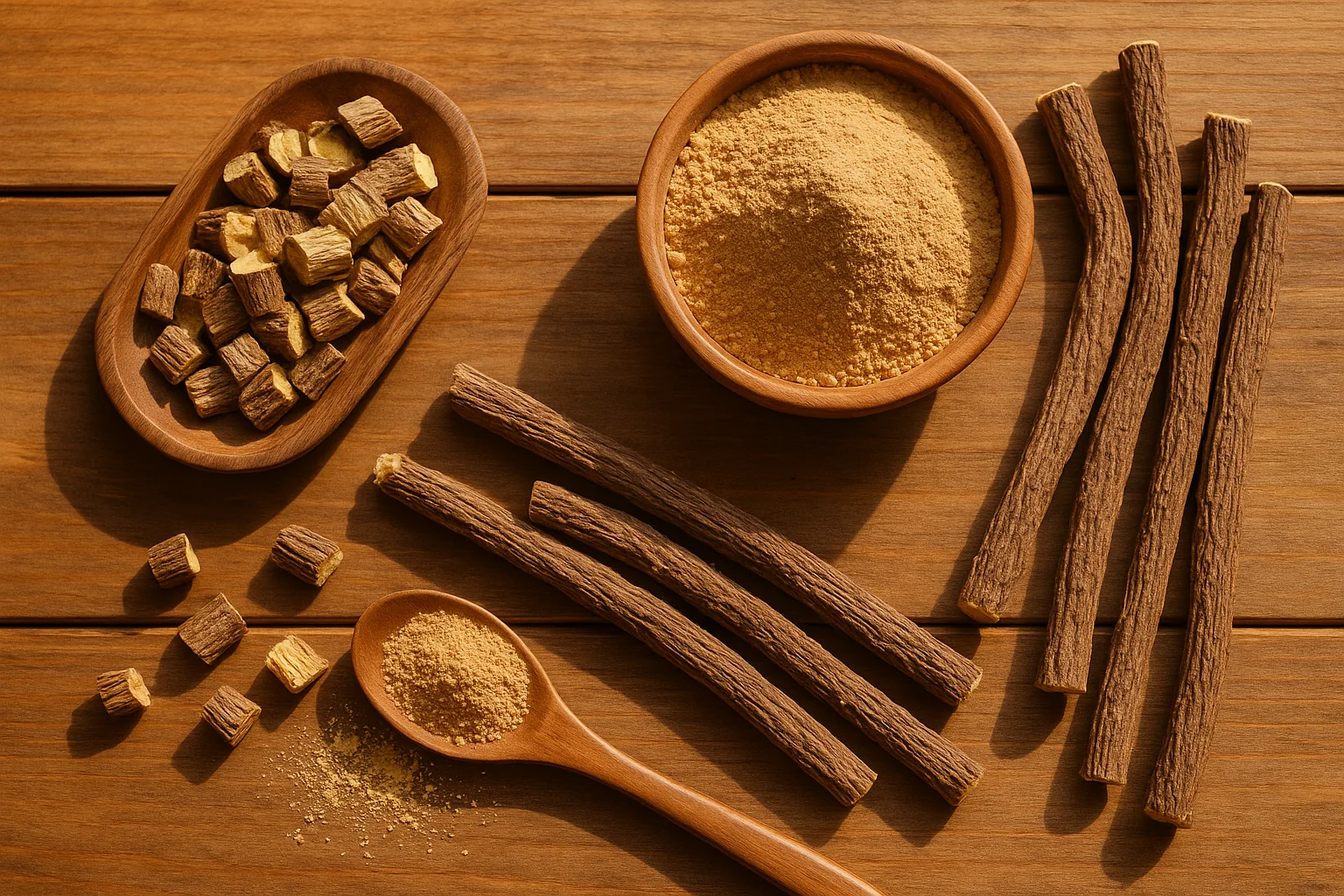

Licorice - properties, dosage, and who it harms (table)
Lukrecja: bezpieczenstwo, przeciwwskazania i interakcje w tabeli. u Bucha.
Licorice (Glycyrrhiza glabra) is one of the oldest medicinal herbs in the world - used in Chinese, Ayurvedic, and European traditions for over 3000 years. It contains over 300 active compounds, the most important being glycyrrhizic acid (glycyrrhizin) and its derivatives. Clinical studies confirm the effectiveness of licorice for gastric ailments, cough, and viral infections, but the same compound is responsible for serious side effects with excessive consumption (PMC, 2019). This article shows when licorice helps, when it harms, and how to use it safely.
KEY INFORMATION
• Licorice root has an EMA monograph as an herb for cough, upper respiratory tract infections, and stomach ailments.
• Glycyrrhizin at doses above 100 mg/day can cause pseudoaldosteronism: increased blood pressure, edema, hypokalemia (PMC, 2019).
• WHO safe dose of glycyrrhizin: 0.2 mg/kg body weight/day - for a 70 kg person about 14 mg per day.
• DGL (deglycyrrhizinated) licorice is safe for people with hypertension - contains less than 2% glycyrrhizin.
• Absolute contraindications: pregnancy, uncontrolled hypertension, hypokalemia, kidney failure.
What does licorice contain and how does it work?
Licorice root contains up to 6% glycyrrhizic acid (glycyrrhizin) - a saponin triterpenoid responsible for the characteristic sweetness (50 times sweeter than sucrose) and most of both its medicinal properties and side effects. In the body, glycyrrhizic acid is hydrolyzed to 18β-glycyrrhetinic acid (GA), which inhibits the enzyme 11β-hydroxysteroid dehydrogenase (11β-HSD2) - a key enzyme that inactivates cortisol in renal tubular cells (PMC, 2019).
The effect of this inhibition is pseudoaldosteronism: cortisol behaves like aldosterone, causing sodium retention and potassium excretion. At therapeutic doses, the effect is minimal. At intakes above 100 mg of glycyrrhizin per day (possible, for example, from drinking large amounts of licorice tea or using strong extracts), blood pressure rises, edema and hypokalemia may occur. Regardless of the pseudoaldosteronic mechanism, glycyrrhizin also exhibits direct antiviral activity: it inhibits the replication of herpes viruses (HSV-1, HSV-2) and respiratory viruses in vitro, disrupting the ability of viral particles to attach to cell membranes (PMC, 2019). This explains the wide use of licorice root preparations in treating sore throats and viral coughs in East Asian medicine - not only as an expectorant but also as an active antiviral agent.
Little known fact: licorice candies sold in Northern Europe (Scandinavia, the Netherlands) may contain significantly more glycyrrhizin than supplements. Consuming 200 g of sweet licorice daily for several weeks is enough to cause a clinically significant increase in blood pressure. Cases of hospitalization due to hypokalemia after a diet rich in sweets containing real licorice are well documented in clinical literature.
Besides glycyrrhizin, licorice contains isoflavones (formononetin, glabridin) with estrogen-like effects - significant for women in menopause but requiring caution with hormone-dependent cancers. Flavonoids (liquiritin, isoliquiritin) exhibit anti-inflammatory and antiviral effects in vitro, particularly against herpes and influenza A viruses.
Licorice safety table - indications, doses, and contraindications
| Aspect | Standard licorice (with glycyrrhizin) | DGL licorice (without glycyrrhizin) |
|---|---|---|
| Indications | Cough, sore throat, infections, adrenal support | Peptic ulcer disease, reflux, GERD |
| Safe daily dose | Up to 14 mg of glycyrrhizin (about 5 g of root) | 300-900 mg of DGL extract (no glycyrrhizin restrictions) |
| Maximum duration of use | Up to 8 weeks without interruption | Longer tolerated - no EMA restrictions |
| Blood pressure | May increase with doses above 100 mg of glycyrrhizin per day | No significant impact |
| Potassium (hypokalemia) | Risk of hypokalemia with excessive intake | No significant impact |
| Pregnancy. | Przeciwwskazana - ryzyko przedwczesnego porodu | Avoid - no safety data |
| Hypertension | Przeciwwskazana or only under medical supervision | Permissible in standard doses |
| Kidney diseases | Przeciwwskazana przy GFR <30 | Caution - no RCT data |
| Drug interactions | Corticosteroids, diuretics, digoxin, warfarin, antihypertensive medications | Minimal - only at very high doses |
Data updated: May 4, 2026
Licorice for the stomach - when to use DGL, when to use standard extract?
For stomach ailments - hyperacidity, reflux, peptic ulcer disease, irritable bowel syndrome - DGL preparations are definitely a safer option than standard extract. DGL (deglycyrrhizinated) is licorice root from which over 97% of glycyrrhizin has been removed using an enzymatic method. The remaining flavonoids, including carbenoxolone and isoliquiritigenin, stimulate the production of mucin and protective prostaglandins in the gastric mucosa - a mechanism confirmed in clinical studies (PubMed, 1982).
Standard extract with a full glycyrrhizin profile is indicated for cough, upper respiratory infections, and as support for adrenal function. Glycyrrhizic acid inhibits the activity of 11β-HSD1 in the adrenal glands, which translates to prolonged cortisol activity in tissues - which can be supportive in cases of low morning cortisol or chronic fatigue. However, this effect is a double-edged sword: with high cortisol or increased stress, licorice may worsen insomnia and anxiety.
Licorice and oral and throat health
Licorice has confirmed antibacterial effects Streptococcus mutans - the main pathogen responsible for tooth decay. In vitro studies show that licorice isoflavones, primarily glabridin and liquiritin, inhibit biofilm formation. S. mutans on the enamel of teeth, limiting the bacteria's ability to colonize tooth surfaces and produce demineralizing acids (PMC, 2019). Although the studies remain in vitro and do not replace fluoridation or mechanical hygiene, the results indicate a justification for including licorice extracts in mouthwashes and toothpaste as an auxiliary ingredient.
Mouth rinses with DGL licorice are used as a natural aid in the treatment of canker sores and erosions of the oral mucosa. Small clinical trials have noted a reduction in healing time for recurrent canker sores in patients using DGL rinses compared to placebo - an effect attributed to the stimulation of protective mucin and the local anti-inflammatory action of flavonoids. The DGL form is preferred here, as the rinse acts locally and does not cause systemic absorption of glycyrrhizin in clinically significant amounts.
In cases of postoperative sore throat and cough, the results are more definitive. A randomized clinical trial published in 2012 in JAMA showed that gargling with a liquiritin solution before intubation for general anesthesia reduced postoperative sore throat and cough by about 50% compared to placebo (PubMed). The mechanism likely involves both anti-inflammatory action and coating of the throat mucosa similar to that of mucolytics, which reduces mechanical irritation caused by the intubation tube.
In practice, DGL preparations for local use in the oral cavity are most often available in the form of lozenges or rinses. A typical protocol used in studies is 700 mg of DGL dissolved in 200 ml of warm water, rinsing 3 times a day for 1-2 minutes, without swallowing - or lozenges and DGL tablets slowly dissolved in the mouth before swallowing. This form of use is often chosen for recurrent canker sores and chronic dryness of the throat mucosa, where glycyrrhizin is not needed and could pose unnecessary risks.
Komu lukrecja szkodzi - grupy ryzyka
Absolute contraindications for using standard licorice preparations include several groups. Pregnant women: a Finnish cohort study from 2017 found that children of mothers who consumed a lot of licorice during pregnancy had higher cortisol levels and poorer cognitive test results at age 8 (PMC, 2017). Mechanism: glycyrrhizin crosses the placenta and disrupts the cortisol balance of the fetus.
Individuals with uncontrolled hypertension: even moderate doses can raise blood pressure by 5-10 mmHg within a few weeks of use - the effect is dose-dependent and varies by individual sensitivity, but with baseline values above 140/90 mmHg, any increase in blood pressure is clinically significant. Individuals with hypokalemia or those taking thiazide diuretics: the combination accelerates potassium loss and increases the risk of arrhythmias, especially dangerous in the presence of coronary artery disease. Patients with CKD (GFR below 30): impaired renal filtration hinders the excretion of glycyrrhizin metabolites, leading to their accumulation and exacerbation of side effects disproportionately to the dose consumed.
From practice, we observe that many people treat licorice as a "mild herb for tea" without realizing that supplemental extracts can contain many times more glycyrrhizin than homemade infusions. One capsule of standardized extract 10:1 (600 mg) can provide 30-40 mg of glycyrrhizin - above the safe dose set by WHO for a person weighing 70 kg when taken daily for weeks. Therefore, when purchasing a licorice supplement, always check the label for glycyrrhizin content per capsule, not just the amount of raw extract.
Frequently Asked Questions
How much licorice is safe to take daily?
WHO has established a safe level of glycyrrhizin at 0.2 mg/kg of body weight per day - for a 70 kg person, this is about 14 mg. This corresponds to approximately 5 g of dried root. Standardized supplements 10:1 (600 mg per capsule) can provide 30-40 mg of glycyrrhizin - above the safe dose for daily use. Do not use for more than 8 weeks continuously (PMC, 2019).
Is DGL licorice safe for people with hypertension?
Yes - DGL licorice contains less than 2% glycyrrhizin and does not show significant effects on blood pressure at standard therapeutic doses. DGL preparations are indicated for stomach ailments in individuals with hypertension. However, at very high doses or in severe hypertension, always consult your healthcare provider before use.
What does licorice help with in herbal medicine?
Licorice root has an EMA monograph for cough and upper respiratory tract inflammation (expectorant action), gastrointestinal complaints (mucosal protection, DGL), and mild adrenal support. Flavonoids exhibit anti-inflammatory and antiviral effects in vitro. DGL preparations are clinically studied for peptic ulcer disease with promising results (PubMed).
Does licorice interact with medications?
Yes. The most significant interactions include: increased effects of corticosteroids (hypokalemia), weakening of antihypertensive medications (sodium retention), risk of hypokalemia with thiazide diuretics, increased toxicity of digoxin (hypokalemia lowers the toxicity threshold of cardiac glycosides), and potential weakening of warfarin. Before using licorice in pharmacological therapy, always consult your doctor or pharmacist.
What symptoms indicate an excess of licorice?
Symptoms of pseudoaldosteronism after excessive intake include: increased blood pressure, swelling of the legs and face, muscle weakness, headaches, fatigue, and hypokalemia. At very high doses, heart rhythm disturbances may occur. Symptoms resolve after discontinuing licorice within 1-2 weeks. Muscle weakness or arrhythmia require immediate medical consultation.
Is licorice safe during pregnancy?
Standard licorice is absolutely contraindicated during pregnancy. Glycyrrhizin crosses the placental barrier and disrupts the cortisol balance of the fetus. A Finnish cohort study from 2017 showed that children of mothers who consumed large amounts of licorice during pregnancy had higher cortisol levels and poorer cognitive and behavioral test results at the age of 8 (PMC, 2017). Even DGL licorice should be avoided during pregnancy - the lack of any safety data for this group means that caution dictates avoiding it throughout the duration of pregnancy.
This article is for informational and educational purposes and does not replace consultation with a doctor. If you are pregnant, breastfeeding, taking medications, or have chronic conditions, consult the use of supplements or herbs with a specialist.
Author: Michał Waluk · Published: 2026-05-04 · Updated: 2026-05-04