
RSO and FECO - what is Rick Simpson oil and how to dose it (guide)
RSO i FECO — co to, jak dziala i na co. Zrozumialy przewodnik u Bucha.
RSO (Rick Simpson Oil) is one of those topics where the narrative has outpaced science by a decade. Thousands of patient reports from around the world describe dramatic effects of using thick cannabis extract for cancers and other serious conditions. Meanwhile, scientific research is slowly catching up - and while the entourage effects of full extracts are increasingly well documented, RSO as a preparation has not yet been the subject of large clinical studies with placebo. However, the study by Gallily et al. showed that full cannabis extracts exhibit clearly stronger biological activity than isolated CBD at the same dose (Gallily et al., Pharmacology & Pharmacy, 2015). This article explains what RSO and FECO are, how they are produced, and what the dosing schemes realistically look like.
KEY INFORMATION
• RSO is a thick full cannabis extract obtained through alcohol extraction of the whole plant - containing THC, CBD, terpenes, and flavonoids.
• FECO (Full Extract Cannabis Oil) is synonymous with RSO; the term is also used for CBD-dominant extracts.
• RSO with THC above 0.3% is illegal in Poland without a medical prescription (Rpw).
• The traditional Simpson protocol (60 g/90 days) is very aggressive - modern approaches recommend microdosing starting from 2.5 mg of THC per day.
• Full extracts exhibit the entourage effect - a stronger biological effect than isolated CBD (Gallily et al., 2015).
History and Origin of RSO
Rick Simpson is a Canadian industrial worker who diagnosed himself with skin cancer (basal cell carcinoma) in 2003. After reading studies suggesting that cannabinoids may inhibit the growth of cancer cells, he decided to prepare his own concentrated cannabis extract. He applied it to the affected area under a bandage and claimed that the lesions disappeared after a few days. This story - widely circulated by Simpson through the 2008 film "Run from the Cure" - sparked a global movement of patients preparing RSO at home or seeking it in the gray market.
Scientific verification of this specific story is impossible - there is no medical documentation. However, this does not change the fact that cannabinoids, particularly THC and CBD, exhibit in vitro and in vivo anti-cancer activity in animal models. Studies published in Nature Reviews Cancer and other peer-reviewed journals confirm that THC can induce apoptosis (programmed cell death) of cancer cells through CB1 and CB2 receptors (Velasco et al., Nat Rev Cancer, 2012). The key difference between laboratory studies and the use of RSO in humans is, however, enormous - treating cancer by self-administering cannabis extract without oncological supervision is a serious risk of delaying proven treatment.
How RSO and FECO are produced - extraction methods
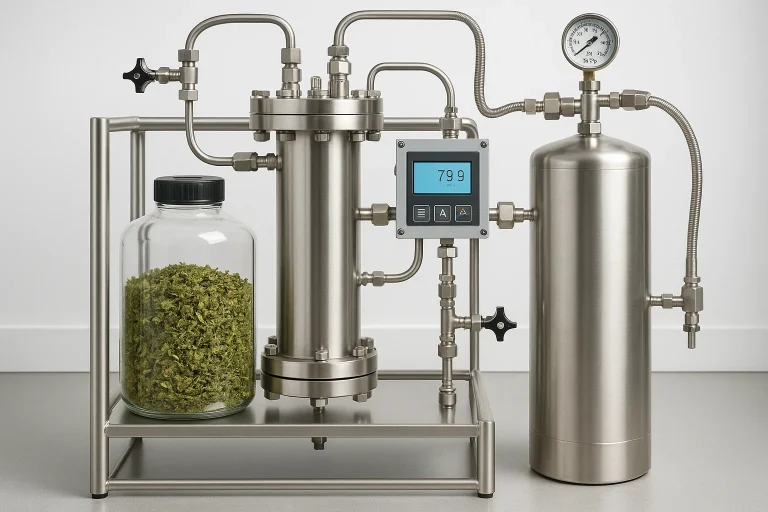
The traditional Simpson method involves soaking plant material (flowers and leaves of cannabis) in isopropanol or ethanol, repeatedly washing, filtering out the plant material, and evaporating the solvent under low pressure or at low temperature. The result is a thick, dark resin with a tar or toffee-like consistency, containing a concentrated profile of cannabis phytochemicals.
FECO (Full Extract Cannabis Oil) is produced similarly, but this term is often reserved for methods using only pharmaceutical ethanol (spiritus) - considered safer than isopropanol due to the lack of toxic impurities when not fully evaporated. Pharmaceutical-grade ethanol classified as GRAS (Generally Recognized As Safe) is more selective than isopropanol: it extracts cannabinoids and terpenes well, but less so chlorophylls and waxes. Premium FECO products may be decolorized through additional filtering and cooling (the "winterization" method).
The chemical composition of RSO/FECO primarily depends on the raw material. An extract from a high-THC strain (e.g., containing 20-25% THC) will yield a product with a very high THC content - even 60-80% in dry mass. An extract from a hemp strain (low THC, high CBD) will yield a CBD-dominant product, without psychoactivity. Both are classified as RSO/FECO, which can lead to misunderstandings - always ask for the cannabinoid profile confirmed by a CoA.
Comparison Table of RSO, FECO, and Classic CBD Oil
| Feature | RSO (THC-dominant) | FECO CBD-dominant | Classic CBD oil |
|---|---|---|---|
| Extraction method | Alcohol (isopropanol/ethanol) | Pharmaceutical-grade ethanol | CO2 / ethanol / MCT |
| Main cannabinoid | THC 50-80% | CBD 30-60% | CBD 5-30% |
| Consistency | Thick resin / paste | Thick oil / paste | Liquid oil |
| Legal status in Poland | Illegal without prescription Rpw | Legalne (CBD przy THC <0,3%) | Legalne (THC <0,3%) |
| Psychoactive effect | Strong (high THC) | None or trace | None |
| Entourage effect | Full | Full | Depends (full-spectrum vs isolate) |
| Availability | Pharmacy (by prescription) / targeted import | CBD stores, online | Pharmacy, CBD stores, online |
Data updated: May 04, 2026
Dosage of RSO and FECO - protocols and modern approaches
The Rick Simpson protocol involves taking 60 grams of RSO over 90 days. It starts with a dose the size of a grain of rice (about 25-30 mg of extract, which at 60% THC gives about 15-18 mg of THC) three times a day and doubles the dose every 4 days until reaching a gram daily dose. This is a very aggressive scheme - most adults who are intolerant to THC experience strong psychoactive symptoms, confusion, and drowsiness at such doses. Simpson claimed that "sleeping is healing" - which has no scientific basis.
The modern medical approach is radically different. When used in a medical context, THC titration starts from a minimal dose of 2.5 mg of THC per day and increases slowly - by 2.5 mg every 3-7 days - under a doctor's supervision and depending on the patient's tolerance. The guidelines from the Society of Cannabis Medicine indicate that many people achieve a therapeutic effect at 10-30 mg of THC per day and do not require escalation to gram doses. The Simpson protocol is not a medical standard.
FECO CBD-dominant (without THC or with trace amounts) does not require such careful titration, as it does not cause psychoactivity. However, high doses of CBD (above 150-300 mg per day) may cause interactions with drugs metabolized by CYP450 and require medical consultation, especially in individuals with liver diseases or those taking anticoagulants.
Safety and legal issues of RSO in Poland
The legal status of RSO in Poland is clear: cannabis extract containing THC above 0.3% is a controlled substance in group I-N of the Act on Counteracting Drug Addiction (Dz.U. 2000 nr 75 poz. 468). Its possession, production, and trade without permission is a crime. Legal access is only possible with a medical prescription Rpw, as a registered preparation or as part of individual targeted import approved by the Ministry of Health.
FECO CBD-dominant with THC below 0.3% is legal in Poland. Products in this category are available in CBD stores and online. When purchasing, always check the CoA confirming that THC is below the legal limit - especially in the case of thick, dark extracts sold as "full cannabis extract" or "cannabis oil," which can be misleading.
How to store RSO and FECO to maintain their activity?
Thick cannabis extracts - RSO and FECO - are significantly more durable than standard CBD oils, but improper storage accelerates the degradation of cannabinoids and terpenes. The main enemies of extract activity are: UV light, oxygen, and heat. THC, under the influence of oxidation and heat, gradually converts to CBN (cannabinol) - which has different pharmacological properties and weaker activity at CB1 receptors. CBD, on the other hand, converts to CBE and other degradation products.
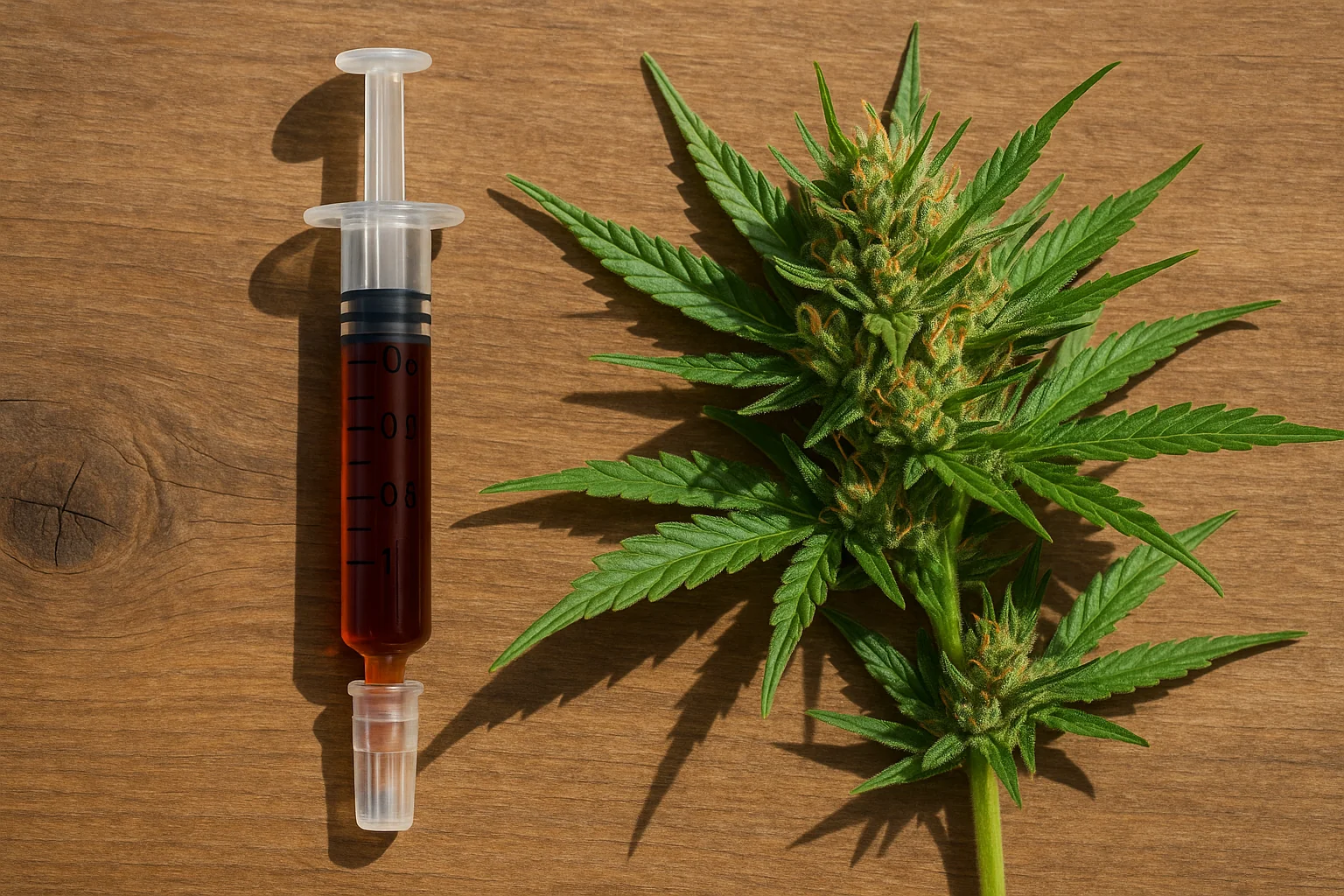
Optimal storage conditions: temperature 2-8°C (refrigerator), dark airtight packaging (glass syringe or brown glass vial), minimal exposure to air with each use. A closed product in the refrigerator retains activity for 12-24 months. An opened product should be stored with minimal air in the packaging - filled syringes stored in the refrigerator maintain quality for 6-12 months.
An important difference compared to CBD oil: RSO and FECO have the consistency of a thick paste or resin, especially when cooled. Before use, the syringe can be gently warmed in the hands or in warm water (not exceeding 40°C) to liquefy the extract and facilitate dosing. Never heat directly over a flame or in a microwave - temperatures above 80-100°C can degrade active phyto-substances.
What drug interactions are particularly important when using RSO?
RSO and FECO - as full extracts with high cannabinoid concentrations - have a more pronounced potential for drug interactions than low-concentration CBD oils. A key role is played by the inhibition of the CYP450 enzyme system in the liver. CBD strongly inhibits the CYP2C19 enzyme (which metabolizes, among others, clopidogrel, warfarin, omeprazole) and CYP3A4 (which metabolizes statins, benzodiazepines, immunosuppressive drugs). THC, on the other hand, inhibits CYP1A2 (caffeine, theophylline, clozapine) and acts as a substrate for CYP3A4.
Practical consequences: in individuals taking anticoagulant medications (warfarin, clopidogrel), the use of RSO/FECO without medical supervision can significantly alter anticoagulant effects and lead to dangerous bleeding or clots. Patients taking antiepileptic drugs (especially clobazam - metabolized by CYP2C19) may experience changes in drug serum concentrations. Doses of RSO/FECO should always be consulted with a physician familiar with cannabis pharmacology.
One positive aspect of interactions: in children with severe forms of epilepsy using Epidiolex (a CBD-based drug), doctors intentionally monitor and adjust clobazam doses - as CBD increases clobazam concentrations, enhancing the anticonvulsant effect, but requiring precise regulation. This is an example where the interaction of CBD with a drug is used therapeutically - under strict neurologist supervision.
Frequently Asked Questions
What is RSO (Rick Simpson Oil)?
RSO is a thick, dark brown cannabis extract obtained by extracting the whole plant with alcohol (ethanol or isopropanol). It contains THC, CBD, terpenes, flavonoids, and other phytochemicals in concentrated form. The name comes from Canadian activist Rick Simpson, who popularized this form of cannabis in the 2000s. RSO with high THC is illegal in Poland without a prescription.
What is the difference between RSO and FECO?
RSO is traditionally associated with high-THC extracts (above 60% THC), produced using the Simpson method with alcohol. FECO (Full Extract Cannabis Oil) is a broader term for full extract - it can be THC-dominant or CBD-dominant, using only pharmaceutical ethanol. In practice, both terms are often used interchangeably, but FECO is also used for legal CBD extracts.
How to dose RSO?
The traditional Simpson protocol involves 60 g of RSO in 90 days - from a grain of rice three times a day to 1 g per day. This is a very aggressive scheme. Modern medicine recommends titration starting from 2.5 mg of THC per day, increasing by 2.5 mg every 3-7 days under a doctor's supervision. Many people achieve a therapeutic effect at 10-30 mg of THC per day - gram doses are not a medical standard.
Is RSO legal in Poland?
RSO with THC above 0.3% is illegal in Poland without a medical prescription Rpw under the Act on Counteracting Drug Addiction (Dz.U. 2000 nr 75 poz. 468). FECO or CBD-dominant RSO with THC below 0.3% is legal. Access to THC-dominant extracts is only possible with a medical prescription at a pharmacy.
What studies confirm the effects of RSO?
There are no clinical studies specifically for RSO. There are studies regarding full cannabis extracts and their components - including evidence of apoptosis of cancer cells in vitro by THC (Velasco et al., Nat Rev Cancer, 2012) and a stronger biological effect of full extracts vs isolate (Gallily et al., 2015). Laboratory studies are not equivalent to clinical cancer treatment.
Can RSO or FECO be applied externally (on the skin)?
Yes, full cannabis extracts can be used externally - on the skin for dermatological changes, muscle pain, or joint pain. CBD and other cannabis phyto-substances are absorbed through the skin to a limited extent, not reaching significant concentrations in the blood with typical topical use. This means that external use of RSO/FECO CBD-dominant is safe in terms of psychoactive effects and detectability in tests. However, with very thick THC-dominant extracts applied to large skin areas - especially damaged ones - THC absorption may be higher and produce systemic effects. Always check the composition and CoA of the product before external use.
This article is for informational and educational purposes and does not replace consultation with a doctor. If you are pregnant, breastfeeding, taking medications, or have chronic conditions, consult the use of supplements or herbs with a specialist.
Author: Michał Waluk · Published: 2026-05-04 · Updated: 2026-05-04