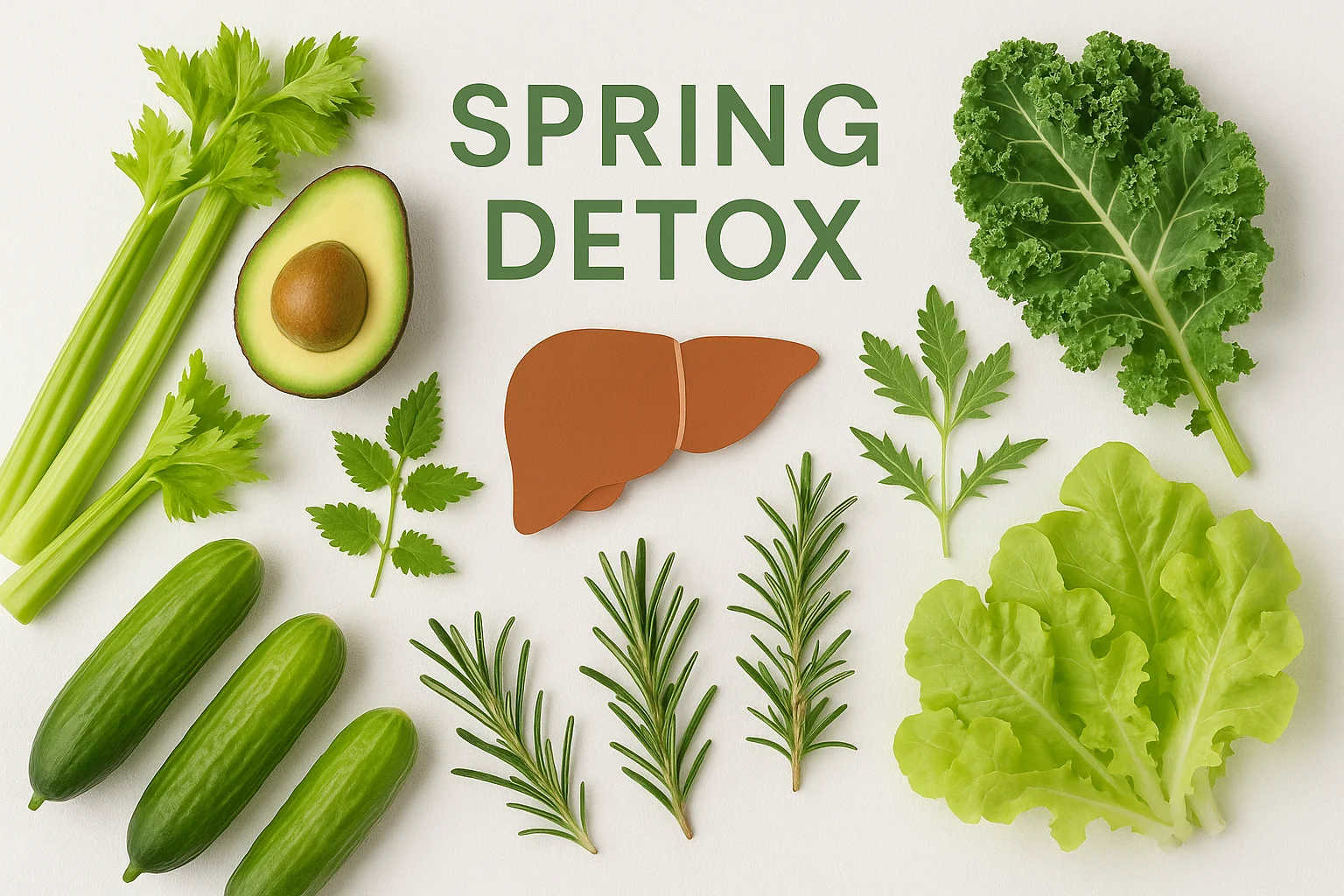

Spring detox without fasting: which supplements support the liver and intestines
Detox is a marketing term, not a medical one. We check what research says about milk thistle and NAC, what truly relieves the liver, and which supplements harm it.
In spring, search engines fill up with queries about body cleansing, and stores respond with treatments promising to remove toxins in seven days. Let's start with a statement you won't find on the packaging: detox in this sense does not exist. The liver and kidneys work continuously and cannot be turned on by a treatment. The review by Klein and Kiat from 2015 found not a single randomized study of commercial detox programs in humans. Below, you will find what is truly known: where the evidence for milk thistle is weaker than advertising suggests, why hospitals administer NAC, what truly relieves the liver, and which popular preparations can damage it.
KEY INFORMATION
• The review by Klein and Kiat (Journal of Human Nutrition and Dietetics, 2015) found no randomized studies of commercial detox treatments in humans.
• The Cochrane review (Rambaldi et al., 2007) included 18 studies and 1088 patients and found no impact of milk thistle on mortality or the histological appearance of the liver.
• Herbal and dietary preparations account for about 20 percent of liver damage cases in the USA (Navarro et al., Hepatology, 2017).
• The greatest reduction in the risk of chronic diseases was noted with a daily intake of 25-29 g of fiber (Reynolds et al., Lancet, 2019).
Does body detoxification even exist?
Not in the sense that advertising uses it. Detox understood as a treatment removing vaguely defined toxins from the body is a marketing concept, not a medical one. The body continuously eliminates metabolites through the liver and kidneys. There is no preparation that triggers this process.
The critical review by Klein and Kiat (Journal of Human Nutrition and Dietetics, 2015) summed it up bluntly: despite the boom in the detox industry, there is very little clinical evidence, and the few studies of commercial treatments have flawed methodology and small groups. The authors found no randomized studies assessing the effectiveness of commercial detox programs in humans at all.
We noticed a recurring pattern while browsing seasonal offers: the description promises the removal of toxins, but nowhere does it specify which substances are involved or how it was verified that they were removed. Without these two pieces of information, the promise cannot be confirmed or refuted. A fair version of a spring resolution looks different: less alcohol, more fiber, and a blood test instead of a treatment. It costs less than any cleansing kit off the shelf and, in the process, tells you something specific about your liver.
How do the liver and kidneys eliminate toxins without help?
Through continuous biotransformation, which occurs regardless of the season. The liver processes substances absorbed from the intestines in two enzymatic stages, and the kidneys excrete the resulting metabolites in urine. This system has no standby mode that could be activated by a supplement.
The first stage is led by cytochrome P450 enzymes, primarily CYP3A4 and CYP1A2. They oxidize lipophilic molecules: drugs, hormones, and foreign substances. The resulting products can be more reactive than the substrates, so they must enter the second stage. There, transferases conjugate them with glutathione or glucuronic acid and convert them into water-soluble forms, ready to be excreted by the kidneys and in bile.
This biochemistry has one very practical consequence for spring treatments. The second stage consumes amino acids and B vitamins, and glutathione is produced from cysteine supplied by dietary protein. Fasting cuts off the supply of these substrates for several days. Therefore, fasting does not accelerate the transformation of toxins; it only limits the material from which the body conducts it. The liver works best when it is nourished and not burdened by alcohol.
Does milk thistle improve liver function?
Milk thistle is the best-researched herb in this group, but the results are ambiguous even in liver diseases. Silymarin, a complex of flavonolignans from the seeds Silybum marianum, has described antioxidant mechanisms, but translating them into hard endpoints remains unconfirmed.
The Cochrane review (Rambaldi et al., 2007) gathered 18 randomized studies and 1088 patients with alcoholic liver disease or viral hepatitis types B or C. Milk thistle did not significantly affect overall mortality, liver disease complications, or histological appearance. Liver-related mortality decreased in the analysis of all studies, but the effect disappeared after limiting the analysis to studies of high methodological quality, which accounted for less than 29 percent. The authors' conclusion was straightforward: the beneficial effect of milk thistle remains in question.
Metaanaliza Kalopitasa i in. (Nutrition, 2021) of the eight studies on non-alcoholic fatty liver performed better: silymarin reduced transaminases more than placebo, regardless of weight loss. However, the authors themselves noted the qualitative weaknesses of the source studies and that it is unknown whether a decrease in ALT indicates an improvement in the microscopic appearance of the liver. Milk thistle is well tolerated, but that is not the same as proven efficacy. A broader comparison can be found in the post liver supplements.
Why is NAC really used?
N-acetylcysteine has one well-documented use, and it is not spring liver support. NAC is an antidote for acute paracetamol poisoning, administered in a hospital, usually intravenously, according to a protocol dependent on the time elapsed since the drug was taken and its concentration in the blood.
The mechanism is logical. Excess paracetamol produces a reactive metabolite that depletes glutathione reserves in hepatocytes and begins to damage cells. NAC provides cysteine, which is a substrate that limits the rate of glutathione replenishment, and allows for the neutralization of the metabolite before it leads to necrosis. The review by Burnham et al. (Expert Review of Clinical Pharmacology, 2021) discusses the intravenous protocols used in such poisoning, which clearly shows the context we are talking about.
Transferring this mechanism to an everyday capsule bought at a drugstore is a leap of thought that research does not justify. In a healthy, well-nourished, and unpoisoned person, the glutathione reserve is not depleted, so there is nothing to replenish. NAC has researched applications in other areas, mainly respiratory, but the term liver-cleansing supplement does not belong to them. We have gathered details in a separate text about NAC i jego zastosowaniach.
What really relieves the liver and intestines?
Boring and cheap things, but with the strongest evidence: less alcohol, more fiber, and regular sleep. Water also counts, as the kidneys excrete the ready metabolites. None of these are sold as treatments because they cannot be packaged for 30 days.
Alkohol jest tu na pierwszym miejscu. Badanie obserwacyjne Mehty i in. (BMJ Open, 2018) included 94 people who abstained from alcohol for a month and 47 people from the comparison group. After four weeks of abstinence, insulin resistance decreased by nearly 26 percent, systolic blood pressure by 6.6 percent, and levels of VEGF and EGF clearly dropped. In the drinking group, nothing changed.
Fiber works in the intestine and indirectly relieves the liver: it binds bile acids and feeds bacteria that produce butyrate for the colonic epithelium. Seria metaanaliz Reynoldsa i in. (Lancet, 2019), encompassing 185 prospective studies and 58 clinical trials, showed a 15-30 percent lower overall mortality and reduced incidence of type 2 diabetes in people consuming the most fiber. The greatest risk reduction was noted with an intake of 25-29 g per day from food. We discuss how to choose microbiota support in the post prebiotyki a probiotyki.
Which supplements can damage the liver?
The same shelves that offer liver cleansing contain products capable of damaging it. The review by Navarro et al. (Hepatology, 2017) states that herbal and dietary supplements are already responsible for about 20 percent of cases of hepatotoxicity recorded in the USA, most often multi-ingredient mixtures with unknown culprits.
Green tea extract is a textbook example here. A systematic review by the American Pharmacopeia (Oketch-Rabah et al., Toxicology Reports, 2020) collected descriptions of liver damage at doses of EGCG from 140 mg to about 1000 mg per day, with high individual variability, likely genetically conditioned. Absorption increases when the supplement is taken on an empty stomach, which is why the USP monograph requires a warning about taking it with food and discontinuing it in case of abdominal pain, dark urine, or jaundice.
Ashwagandha has also made it into the hepatology literature. The case series by Philips et al. (Hepatology Communications, 2023) described eight patients with liver damage after a single-ingredient supplement, most often with cholestatic hepatitis. In three individuals with pre-existing chronic liver disease, acute failure occurred on that basis, and all three died. Chemical analysis did not reveal any adulteration of the supplement, so the raw material itself was responsible. Garcinia cambogia, sold for weight loss, has descriptions of acute liver failure (Le et al., Cureus, 2023). Bez recepty nie znaczy bez ryzyka.
Do fasting, juicing, and enemas cleanse the intestines?
No, and some of these practices have documented complications. This is the least justified part of spring detoxes, even though it sells the best because it gives a sense of immediate effect.
Systematic review by Acosta and Cash (American Journal of Gastroenterology, 2009) found not a single reliable controlled study assessing colon cleansing for health purposes. However, it found numerous case reports and case series documenting adverse effects. The authors' conclusion was clear: this practice cannot be recommended based on current data.
Osobno przebadano lewatywy kawowe. Review by Sona et al. (Medicine, 2020) identified nine case reports, seven of which concerned colitis after self-administered procedures, and two more serious complications. Not a single study confirming effectiveness was found. Juice diets are also not neutral: opis przypadku z Cureus (Raja i in., 2023) present acute kidney damage in the mechanism of oxalate nephropathy after a week of such a diet, confirmed by biopsy and requiring dialysis. Fruit juice provides simple sugars and oxalates, but does not provide protein, from which glutathione is formed. This is the opposite of what is needed for the second phase of liver metabolism.
When do liver test results require a doctor?
Instead of buying a detox treatment, it is cheaper and more sensible to get a blood test. The basic panel includes ALT, AST, alkaline phosphatase, and bilirubin, and the interpretation is based on which parameter has increased disproportionately to the others.
Wytyczne American College of Gastroenterology (Kwo i in., 2017) they state that indeed the normal ALT activity ranges from 29 to 33 IU/l in men and from 19 to 25 IU/l in women, which is lower than the upper limit printed on many laboratory results. A result above this range is worth discussing with a doctor, as elevated ALT has been associated in studies with increased mortality from liver causes.
The diagnostics of elevated transaminases includes testing for viral hepatitis types A, B, and C, assessing steatosis and alcohol consumption, as well as rarer causes: hemochromatosis, autoimmune hepatitis, Wilson's disease, and alpha-1-antitrypsin deficiency. Guidelines separately mention a history of prescription and over-the-counter medications, which includes supplements. So if you are taking a herbal preparation and have elevated ALT, inform your doctor instead of adding another liver supplement.
Frequently Asked Questions
Does spring detox really cleanse the body?
There is no evidence for that. The review by Klein and Kiat from 2015 found not a single randomized study of commercial detox treatments in humans. The liver and kidneys continuously remove metabolites and do not need a seasonal detox. The advertisement does not specify which toxins are involved or how their removal is measured.
Is milk thistle worth using for the liver?
The evidence is ambiguous. The Cochrane review from 2007 included 18 studies and 1088 patients and did not show an effect of milk thistle on mortality, complications, or histological findings. A meta-analysis from 2021 showed a reduction in transaminases with liver steatosis, but the authors noted the poor quality of the source studies.
Is NAC a supplement for the liver?
Not in that sense. The documented use of N-acetylcysteine is as an antidote in paracetamol poisoning, administered in a hospital, most often intravenously, according to a protocol dependent on time and the concentration of the drug in the blood. This is a different situation than a daily capsule bought as liver support.
Can supplements damage the liver?
Yes. Herbal and dietary supplements account for about 20 percent of liver damage cases recorded in the USA. Damage has been reported after green tea extract, after ashwagandha, and after garcinia, including cases of liver failure. Lack of a prescription does not mean lack of risk.
Does fasting or juice therapy help the liver?
There is no evidence that it helps, but there are descriptions of harm. The second phase of liver metabolism consumes amino acids and vitamins, which fasting does not provide. Acute kidney damage requiring dialysis has been reported after a week of juice diet. The liver does not need fasting to function.
What liver tests make sense?
The basics are ALT, AST, alkaline phosphatase, and bilirubin. According to the ACG guidelines from 2017, normal ALT activity is about 29 to 33 IU/l in men and 19 to 25 IU/l in women. A result above this range requires evaluation by a doctor, not self-treatment with herbs.
If you are looking for dietary supplements rather than a cleansing treatment, check the section supplements.
This article is for informational and educational purposes and does not constitute medical advice. Before starting supplementation, consult your doctor, especially if you are taking medications regularly, are pregnant or breastfeeding, or have a chronic illness.
Author: Michał Waluk · Opublikowano: 2026-06-22 · Aktualizacja: 2026-08-08