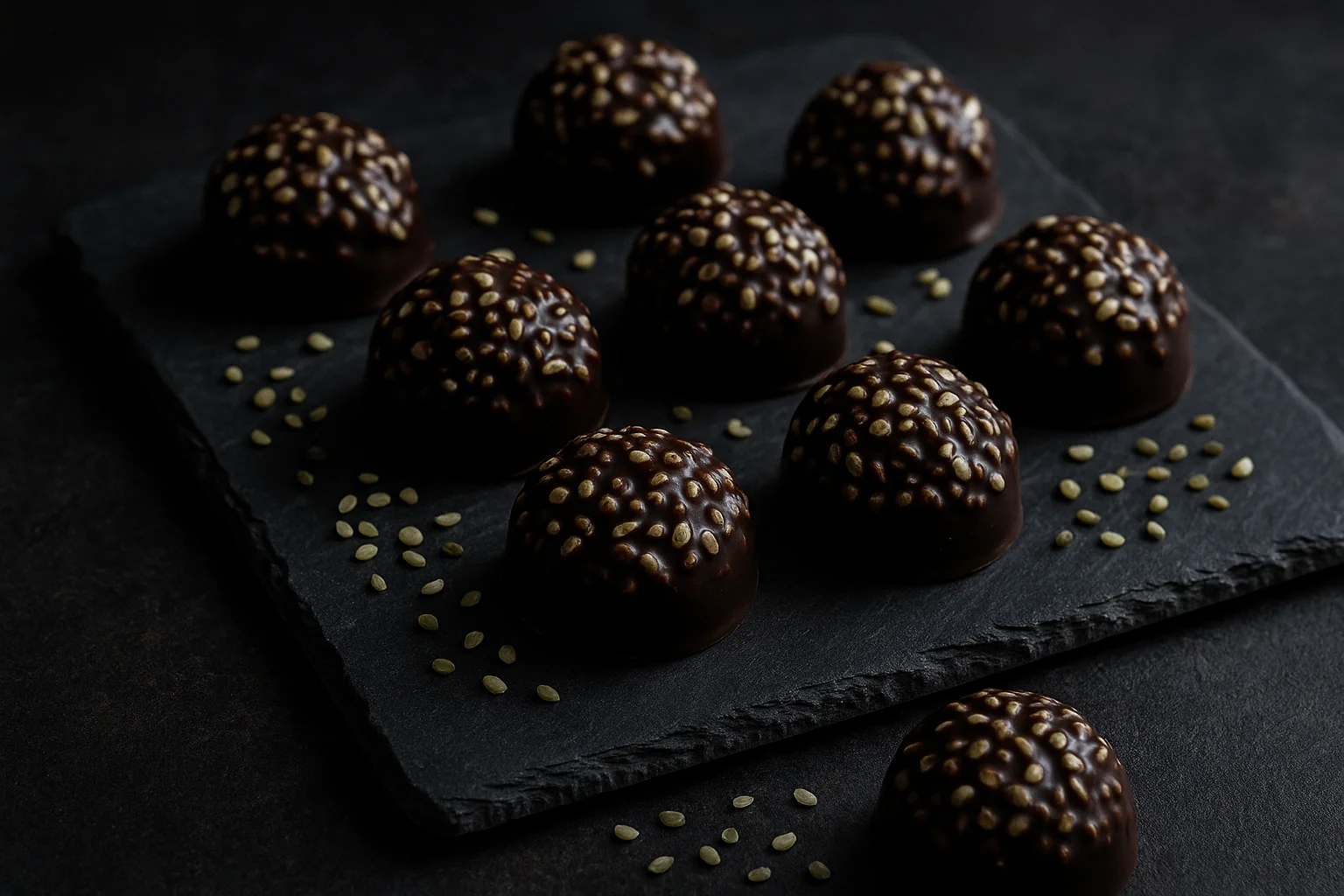

Pralinki z nasionami konopi w polewie czekoladowej
Hemp seed pralines in chocolate coating – no-bake recipe. Elegant homemade chocolates with complete protein. Ready in 30 minutes.
Hemp seed truffles are an elegant dessert that surprisingly comes together easily. The filling made from almond butter and hulled hemp seeds creates a creamy base with nutty, crunchy accents - dark chocolate (min. 70% cocoa) forms a bitter, glossy coating around it. Each truffle provides complete plant protein from hemp seeds and flavonoids from chocolate. I will show you step by step how to shape the perfect filling balls and why freezing before dipping changes everything.
KEY INFORMATION
• Hulled hemp seeds contain about 31 g of protein per 100 g and all 9 essential amino acids (House et al., Food Chemistry, 2010).
• The omega-6 to omega-3 ratio in hemp seeds is about 3:1 - optimal for humans (Callaway, Euphytica, 2004).
• 3 tablespoons of hemp seeds (30 g) provide about 9 g of protein, 14 g of fat, and 210 mg of magnesium (USDA FoodData Central, 2023).
• One praline (approx. 18 g): about 85 kcal, 2.5 g of protein, 6 g of fat, 5 g of carbohydrates.
Why do hemp seeds and chocolate make a good combination?
Hemp seeds have a nutty, slightly earthy flavor - a profile very similar to sesame and hazelnuts. When combined with dark chocolate (min. 70% cocoa), which has a similarly complex, bitter profile, these two ingredients enhance each other rather than compete. This is the same principle that applies to truffles with hazelnuts: textural and flavor complementarity.
The technique is simple, but one step determines the success of the entire recipe: freezing the filling balls before dipping them in chocolate. Warm melted chocolate (about 45-50°C) would immediately melt the almond butter if the filling were at room temperature. Frozen balls withstand contact with warm chocolate for the few seconds needed to regenerate the coating. Without this step, the truffles fall apart in the chocolate bowl.
Nutritionally, hemp seeds bring something to each truffle that chocolate lacks - complete plant protein. Chocolate provides magnesium (about 8 mg/100 g) and iron, but cocoa protein is incomplete in amino acids. Hemp seeds fill this gap: they contain all 9 essential amino acids, including lysine and methionine (House et al., Food Chemistry, 2010). Magnesium from hemp seeds (approx. 210 mg/100 g, USDA FoodData Central, 2023) complements the magnesium from chocolate - together, one session of 3-4 truffles provides about 15-20% of the daily magnesium requirement.
Nutritional values - what does one truffle provide?
One truffle (about 18 g, almond-hemp filling + chocolate coating) provides about 80-90 kcal, 2.5 g of protein, 6 g of fat, and 5 g of carbohydrates. A serving of 3 truffles (about 55 g) is about 255 kcal and 7.5 g of protein - comparable in calories to 2 milk chocolates, but with twice the protein content and a significantly better fatty acid profile. The omega-6 to omega-3 ratio in hemp seeds is 3:1 (Callaway, Euphytica, 2004) - close to the optimal recommended by WHO.
Ingredients - what do you need?
- 100 g of almond or cashew butter (unsweetened)
- 50 g of hulled hemp seeds
- 2 tablespoons of honey or maple syrup
- 1 teaspoon of vanilla extract
- a pinch of sea salt
- 200 g of dark chocolate (min. 70% cocoa) for coating
- optional: 1 teaspoon of coconut oil for the chocolate (for better fluidity), salt flakes for decoration
How to prepare hemp seed truffles - step by step?
Active work: about 20 minutes. Cooling the filling: 20-30 minutes. Cooling the chocolate: 15-20 minutes. Total about 60-70 minutes from start to finished dessert.
Step 1. Mix the filling. Combine almond butter, hemp seeds, honey, vanilla, and salt. Mix until smooth and thick. Dough consistency: the mixture holds the shape of a ball formed in your hands. If too runny - refrigerate for 15 minutes. If too hard - add a teaspoon of honey.
Step 2. Shape and freeze the balls. Scoop portions of about 10 g with a teaspoon and form balls with cool hands. Place on a baking sheet lined with paper. Put in the freezer for 20-30 minutes. The frozen filling will not soften when dipped in warm chocolate.
Step 3. Melt the chocolate. Chop the chocolate and melt it in a water bath or microwave. Chocolate temperature: about 45-50°C. You can add a teaspoon of coconut oil for a more fluid consistency and shiny surface.
Step 4. Dip the balls. Insert a toothpick into the frozen ball. Dip in chocolate, drain, and place on a baking sheet. Immediately sprinkle with hemp seeds or flakes of salt. Repeat quickly - after a few minutes, the chocolate begins to cool and thicken.
Step 5. Chill. Refrigerate for 15-20 minutes until the coating is completely hardened. Truffles are ready when the coating is matte and firm. Store in the refrigerator in an airtight container.
Tips and variations
We noticed in tests that pralines coated with chocolate containing coconut oil (1 teaspoon per 200 g of chocolate) have a noticeably thinner coating and a shinier surface than those made with pure chocolate. Coconut oil reduces the viscosity of melted chocolate, allowing it to flow better from the praline when draining and preventing thick, unsightly clumps at the bottom. The difference is visible to the naked eye.
Ganache version. Instead of peanut butter, use thick ganache (200 g of chocolate + 80 ml of cream) cooled to a play-dough-like consistency. Mix hemp seeds into the ganache and shape into balls. The chocolate coating on ganache provides a doubly intense chocolate flavor with a hemp crunch inside.
Fruit version. Replace 20 g of hemp seeds with dried cherries or cranberries. The fruits provide a sweet-sour contrast in the nutty filling and distinct red accents visible through the chocolate when you cut the pralines.
Alcohol version. Add a tablespoon of orange liqueur (Cointreau) or rum extract to the filling. Alcohol enhances the nutty profile of almond butter and is a classic element of Belgian pralines. Hemp seeds with hints of orange and dark chocolate create a combination worthy of pastry shop displays - and it can be made in 20 minutes without any pastry experience.
Chewy filling version. Add 1 tablespoon of agave syrup or maple syrup to the nut mixture and chill only to refrigerator temperature (not freezer). The filling will remain softer and more pliable after being coated in chocolate - creating a texture reminiscent of caramel truffles with a nutty-hemp note. Less visually elegant, but with a more interesting texture when bitten.
Check out our recipe for homemade hemp balms - bardziej rustykalny format, ta sama konopna baza.
Frequently Asked Questions
Why is the chocolate on the pralines matte and gray?
This is fat bloom - the migration of fat due to temperature fluctuations. It is not harmful. Prevent it by storing at a constant refrigerator temperature (4-6°C) and tempering the chocolate. Hemp seeds contain omega-3 and omega-6 in a 3:1 ratio (Callaway, 2004) - do not affect bloom.
How much protein do hemp seed pralines contain?
One praline provides about 2.5 g of protein. Hemp seeds contain about 31 g of protein/100 g with a complete profile (House et al., 2010). A serving of 3 pralines contains about 7.5 g of protein in total.
How long can you store hemp seed pralines?
In the refrigerator for up to 2 weeks, in the freezer for up to 3 months. Magnesium in hemp seeds: about 210 mg/100 g (USDA, 2023). At temperatures above 22°C, the coating softens - always cool.
What chocolate should you choose for coating pralines?
At least 70% cocoa. 85% chocolate provides a more intense profile and better masks the nutty flavor of hemp seeds. Milk chocolate (below 50%) is too soft for a hard shell. Couverture (higher cocoa butter content) gives the best shine effect (USDA, 2023).
Can you make hemp pralines without peanut butter?
Yes - a date paste (100 g of dates + 20 g of ground almonds) or cream cheese with cocoa as the filling base. Hemp seeds contain about 14 g of fat/30 g (USDA, 2023) and maintain the stickiness of the filling regardless of the base.
This article is for informational and educational purposes and does not replace consultation with a doctor. If you are pregnant, breastfeeding, taking medications, or have chronic conditions, consult the use of supplements or herbs with a specialist.
Author: Michał Waluk · Published: 2026-05-04 · Updated: 2026-05-04