
Ginkgo biloba (Japanese ginkgo): properties, dosage, and what it helps with
Ginkgo biloba properties – extract EGb 761, 24% flavonoids, 6% terpenes. Dosage 120-240 mg/day, Cochrane research results on dementia, interactions with warfarin. Guide 2026.
Ginkgo biloba is one of the most researched phytotherapeutics in the world and simultaneously one of the most mythologized. Advertisements promise improved memory for anyone who takes a capsule. The reality is more complex: ginkgo has documented effects on cerebral microcirculation and may help with existing cognitive disorders, but as a prevention for dementia in healthy individuals, it has not shown effectiveness in the largest clinical study. More importantly, it interacts dangerously with anticoagulant medications. This article explains what ginkgo really works for, how to dose it, and when to absolutely avoid it.
KEY INFORMATION
• EGb 761 - standardized ginkgo extract (24% flavonoids + 6% terpenes) is the clinical reference preparation described in over 300 studies over 30 years.
• The GEM study (DeKosky et al., JAMA 2008, n=3069) found that ginkgo 240 mg/day for 6 years does not prevent dementia in healthy older adults - a key finding for understanding the limits of effectiveness.
• Dawkowanie: 120-240 mg/d ekstraktu EGb 761 w 2-3 dawkach podzielonych - efekty widoczne po 4-6 tygodniach.
• Absolute warning: interactions with warfarin, clopidogrel, and aspirin - cases of intracranial bleeding have been reported.
What is ginkgo biloba and why is EGb 761 key to understanding the research?
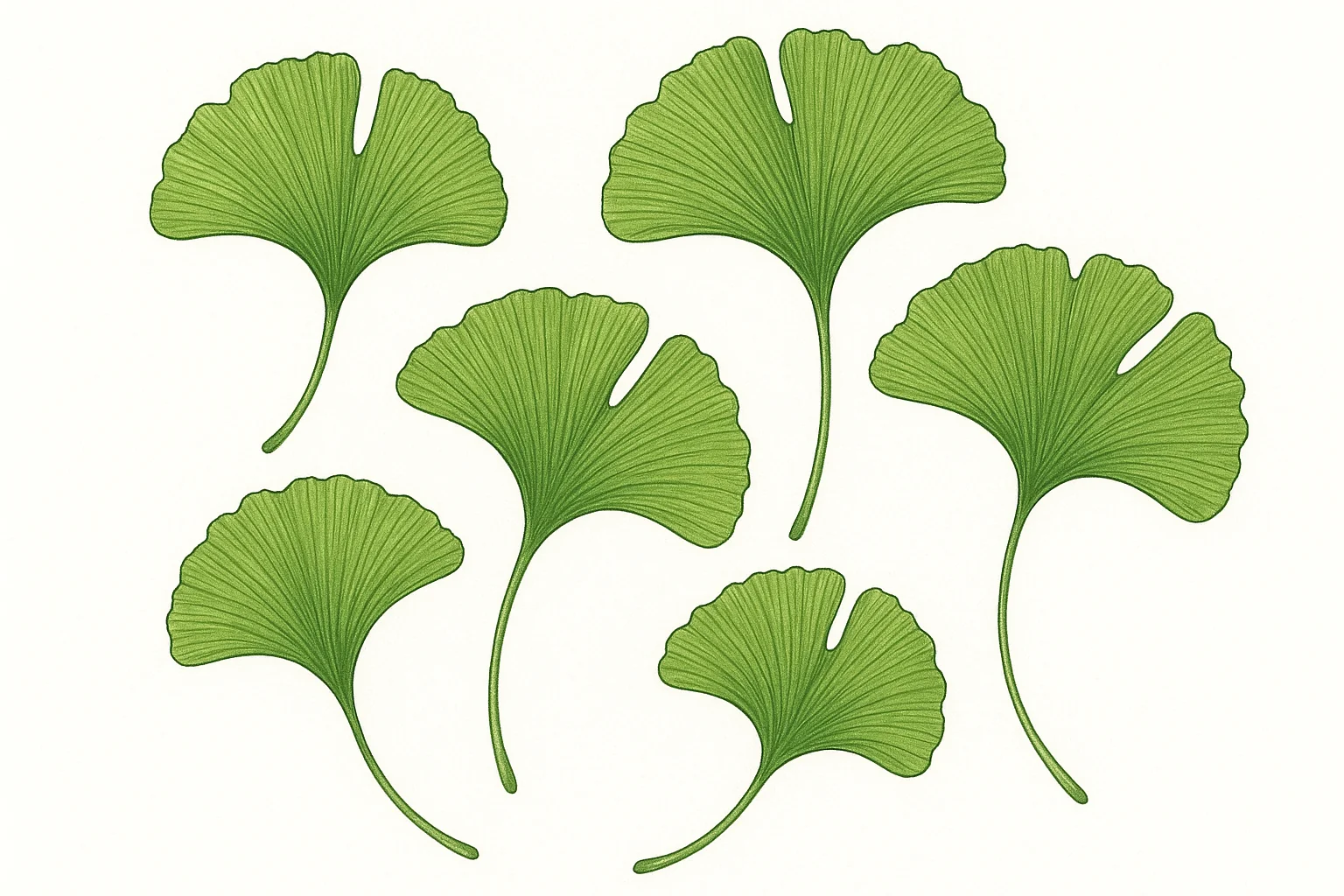
Ginkgo biloba (Japanese ginkgo, Ginkgo biloba L.) is a tree with a 270-million-year history - a living fossil species, unchanged since the age of dinosaurs. Its fan-shaped leaves contain two groups of active compounds: flavonoid glycosides (quercetin, kaempferol, isorhamnetin, and their glycosides) responsible for antioxidant action and vascular protection, and terpene lactones - ginkgolides A, B, C, and bilobalide, which act antagonistically on the platelet-activating factor (PAF) and protect neurons.
Why is EGb 761 so crucial? Because most clinical studies have tested this standardized extract (produced by Schwabe Pharmaceuticals), rather than "ginkgo biloba" as such. An extract with a different standardization profile (e.g., 14% flavonoids) may have a completely different effect. When reading meta-analyses and you want to assess whether a given product is likely to work as in the study - check if it uses EGb 761 or an extract labeled "24% flavonoid glycosides + 6% terpene lactones."
How does ginkgo biloba affect the brain and circulation?
The main mechanisms of action of ginkgo biloba at the molecular level are well described. First - the antioxidant flavonoids neutralize free radicals, particularly ROS (reactive oxygen species) that damage vessel walls and neurons. Second - ginkgolides B and A inhibit PAF (platelet-activating factor), a factor responsible for platelet aggregation and vasoconstriction. The effect: improved blood flow in small vessels (microcirculation), including cerebral vessels.
Birks and Evans (Cochrane Database of Systematic Reviews, 2009) They conducted a review of 36 RCTs (n=4423) assessing ginkgo in dementia and cognitive disorders. Results: ginkgo EGb 761 showed statistically significant improvement in cognitive tests and daily functioning scales in individuals with mild cognitive impairment (MCI) and early dementia - but the effects were moderate and heterogeneous across studies. The authors stated that the evidence is "promising but inconclusive."
Does ginkgo biloba prevent dementia? What does the largest study say
The GEM study (Ginkgo Evaluation of Memory) published by DeKosky et al. (JAMA, 2008) This is the most important evidence in the debate about the preventive action of ginkgo. In this randomized, double-blind study, 3069 participants aged 72-96 without dementia were involved. For 6 years, they took ginkgo EGb 761 240 mg/day or a placebo. Result: no statistically significant difference in the incidence of dementia, Alzheimer's, or MCI between the groups.
This result is crucial and often overlooked in supplement marketing. Ginkgo biloba does not prevent dementia in healthy older individuals. However, the GEM study concerned primary prevention - preventing the onset of disease. A different situation applies to individuals who already have MCI (mild cognitive impairment) or early dementia. Here, the results are more promising, as shown by the Cochrane review (Birks 2009). In other words: ginkgo may slow progression, but it does not prevent the incident.
Dosage of ginkgo biloba - how and when to use it?
Effective dosing of ginkgo biloba is an area where most consumers make mistakes: they reach for doses that are too low, irregularly, for too short a time. The therapeutic dose is 120-240 mg of EGb 761 extract daily. In cases of cognitive disorders and intermittent claudication, the upper range is used: 240 mg/day, usually in two doses of 120 mg (morning and noon).
Time to effect: 4-6 weeks of regular use. The mechanism of improving microcirculation is gradual - vessels improve their elasticity and reactivity slowly. Expecting an effect after a week is unrealistic. In clinical studies lasting 12-24 weeks, effects were more pronounced at the end than at the beginning of the observation period.
Form: capsules or tablets with dry EGb 761 extract are definitely better than tea made from ginkgo leaves (which contains an unknown, uncontrolled amount of active ingredients and may contain potentially allergenic ginkgolides). Avoid products that do not specify standardization - these are products with unknown composition.
Our observations: Individuals most often reporting a noticeable improvement after ginkgo are those with microcirculation disorders - cold feet, vascular tinnitus, difficulty concentrating with chronic fatigue. This suggests that ginkgo works best where there is a problem with peripheral or cerebral circulation - not as a "booster" for healthy individuals. If you are a healthy 25-year-old looking to improve memory before exams, you have other, better-documented options (e.g., L-theanine with caffeine, ashwagandha).
Ginkgo biloba and tinnitus - what do studies say?
Vascular or unknown origin tinnitus is one of the indications where ginkgo has moderate clinical documentation. Cochrane Review (Hilton et al., 2013) Analyzed 4 RCTs with 1543 participants - results were mixed. Two qualitatively better studies did not show significant improvement vs placebo. Older studies (of lower quality) showed improvement. The overall conclusion from Cochrane: insufficient evidence to recommend or exclude ginkgo for tinnitus.
In clinical practice, ginkgo is still used for vascular tinnitus (especially related to Meniere's disease and cerebral circulation disorders), where improving the microcirculation of the cochlea may provide relief. The effects vary individually. If there is no improvement after 12 weeks of using EGb 761 240 mg/d, continuation is likely ineffective.
Interakcje z lekami - kiedy ginkgo jest niebezpieczne?
This is the most important section of this article. Ginkgo biloba has confirmed, clinically significant interactions with several classes of drugs. Before starting supplementation, consult with a doctor or pharmacist if you are taking anything on a regular basis.
Warfarin and anticoagulants: Ginkgolides inhibit PAF and platelet aggregation. Combining with warfarin, heparin, or direct oral anticoagulants (NOAC: rivaroxaban, apixaban) significantly increases the risk of bleeding. Cases of spontaneous intracranial hemorrhages and gastrointestinal bleeding have been reported. Absolute contraindication without strict medical supervision and regular INR monitoring.
Aspirin and clopidogrel: Dual antiplatelet action (drug + ginkgo) increases the risk of bleeding, especially after surgeries. Discontinue ginkgo at least 2 weeks before a planned surgery.
Antiepileptic drugs: Ginkgolides may lower the seizure threshold. In epilepsy, the use of ginkgo is contraindicated. Cases of seizures in patients using ginkgo in combination with phenytoin and carbamazepine have been reported.
CYP450 inhibitors: Ginkgo may affect drug metabolism through CYP2C9 and CYP3A4 - influencing the concentrations of drugs metabolized by these pathways. When using immunosuppressants, statins, and other drugs metabolized by CYP, it is advisable to consult a pharmacist.
Check the properties of gotu kola - another herbal support for memory and circulation.
Ginkgo biloba and depression and anxiety disorders - what does science say?
Ginkgo biloba is also studied for its effects on mood and anxiety states, although this area is less developed than research on cognition. Potential mechanism: improved cerebral circulation may indirectly enhance neurotransmitter functions; flavonoids exhibit antioxidant effects that protect neurons from oxidative stress associated with depression. Woelk et al. (Journal of Psychiatric Research, 2007) They compared ginkgo EGb 761 with sertraline in 136 older patients with depression - both preparations showed comparable improvement on the HAM-D scale, although the study had methodological limitations.
In anxiety disorders, the evidence is very weak and insufficient for clinical recommendations. Ginkgo is not a treatment for depression or anxiety disorders. Using ginkgo alone instead of proven medications or therapies for these conditions may delay appropriate treatment. If you are considering ginkgo as a supplement to pharmacotherapy for depression - a consultation with a psychiatrist is mandatory due to interactions with MAO inhibitors and SSRIs.
A more interesting area is its effect on neurogenesis and neuron protection under oxidative stress. In vitro studies and animal models show neuroprotection by ginkgolides and bilobalide. Bilobalide exhibits particularly interesting properties: it inhibits neuronal apoptosis and reduces the area of damage after ischemic stroke in animal models. None of these findings have been confirmed in sufficiently strong clinical studies in humans, but the direction of research is promising.
How to choose a good ginkgo biloba supplement?
The ginkgo supplement market is flooded with products of low standardization or false composition declarations. A few rules for choosing a good preparation:
Look for a clear declaration of "24% flavonoid glycosides" and "6% terpene lactones" or the proprietary name EGb 761. Products described only as "ginkgo biloba leaf extract 60 mg" without standardization are an undefined mixture - it may contain 5% or 30% flavonoids, and you won't know what to expect. The content of ginkgolides (bilobalide, ginkgolide acid) should be below 5 ppm - they are potentially allergenic and neurotoxic at higher concentrations. A good manufacturer declares their absence or low concentration.
The tablet or capsule form with dry extract is better than tea from leaves - the latter not only has an uncontrolled composition but may contain raw ginkgolides in larger amounts than standardized extract.
Ginkgo biloba and intermittent claudication
Intermittent claudication - pain in the calves and legs when walking caused by narrowing of peripheral arteries - is an indication where ginkgo has the strongest clinical documentation alongside cognitive disorders. Mechanism: improvement of blood flow in small vessels through anti-aggregatory and vasodilatory effects. Dosage for this indication: 240 mg/d of EGb 761, used for a minimum of 12 weeks.
Pittler and Ernst (American Journal of Medicine, 2000) in a meta-analysis of 8 RCTs showed that ginkgo significantly increases the pain-free walking distance (by about 34 m in pooled analysis) compared to placebo in patients with claudication. The effect is moderate but clinically significant for patients with limited mobility.
Learn more about natural methods to support concentration
Ginkgo biloba a zdrowie oczu - czy pomaga przy jaskrze?
Glaucoma and age-related macular degeneration (AMD) are conditions where improving microcirculation in the eye vessels may have clinical significance. Study by Shim et al. (Clinical and Experimental Ophthalmology, 2012) In 27 patients with normal tension glaucoma, it was shown that ginkgo EGb 761 120 mg/d for 4 weeks improved blood flow in the central retinal artery. This is preliminary data, without confirmation in large RCTs. Ginkgo does not lower intraocular pressure - if glaucoma is treated pharmacologically, ginkgo may be considered only as a supplement after ophthalmological consultation, not as a substitute for treatment.
In AMD (age-related macular degeneration), the mechanism is similar - chronic ischemia of the retinal capillaries accelerates macular degeneration. Several small studies suggested slowing progression with ginkgo, but there is a lack of strong evidence from large RCTs. The standard treatment for AMD remains AREDS2 supplements (vitamins C, E, zinc, copper, lutein, zeaxanthin), not ginkgo.
Frequently Asked Questions
What is EGb 761 extract and why is it important?
EGb 761 is a standardized dry extract from Ginkgo biloba leaves containing 24% flavonoid glycosides and 6% terpene lactones (ginkgolides + bilobalide). It is the reference extract for clinical studies. Standardization means a repeatable, predictable amount of active ingredients regardless of the batch of leaves. Most RCTs tested this specific preparation.
What does ginkgo biloba really help with?
The best-documented actions are: improvement of cerebral and peripheral microcirculation, alleviation of symptoms of intermittent claudication, supporting cognitive functions in early dementia. Birks and Evans (Cochrane, 2009) analyzed 36 RCTs - mixed results: improvement in individuals with existing disorders, weak preventive effects in healthy individuals.
What is the correct dosage of ginkgo biloba?
Standard dosage of EGb 761 extract: 120-240 mg/d in 2-3 divided doses. Effects appear after 4-6 weeks. For intermittent claudication, 240 mg/d. Do not exceed 240 mg/d without medical consultation.
Does ginkgo biloba interact with warfarin?
Yes - this is an absolute safety issue. Ginkgo biloba inhibits platelet aggregation and may enhance the effects of warfarin and other anticoagulants, increasing the risk of bleeding. Cases of intracranial hemorrhage have been reported. Use with anticoagulants requires strict INR monitoring and medical consultation.
Does ginkgo biloba prevent dementia?
No. The GEM study (DeKosky et al., JAMA 2008, n=3069) showed that ginkgo 240 mg/d for 6 years does not reduce the risk of developing dementia or Alzheimer's in healthy older adults. However, it may slow progression in those with existing mild cognitive impairments.
What are the side effects of ginkgo biloba?
Ginkgo at therapeutic doses is well tolerated by most healthy adults using it regularly. Possible: headaches in the first week, gastrointestinal disturbances, dizziness. Serious: risk of bleeding with anticoagulants. Contraindications: pregnancy (ginkgolides may induce uterine contractions), planned surgery (discontinue at least 2 weeks before the procedure). Gradually discontinue after long-term use.
This article is for informational and educational purposes and does not constitute medical advice. Before starting to use cannabis or CBD for therapeutic purposes, consult a doctor, especially if you are taking other medications, are pregnant, or breastfeeding.
Author: Michał Waluk · Published: 2026-05-04 · Updated: 2026-05-04