
CBD and allergic rhinitis and seasonal allergies - does it alleviate (FAQ)
CBD and allergic rhinitis and seasonal allergies: answers to the most common questions and what studies say. u Bucha.
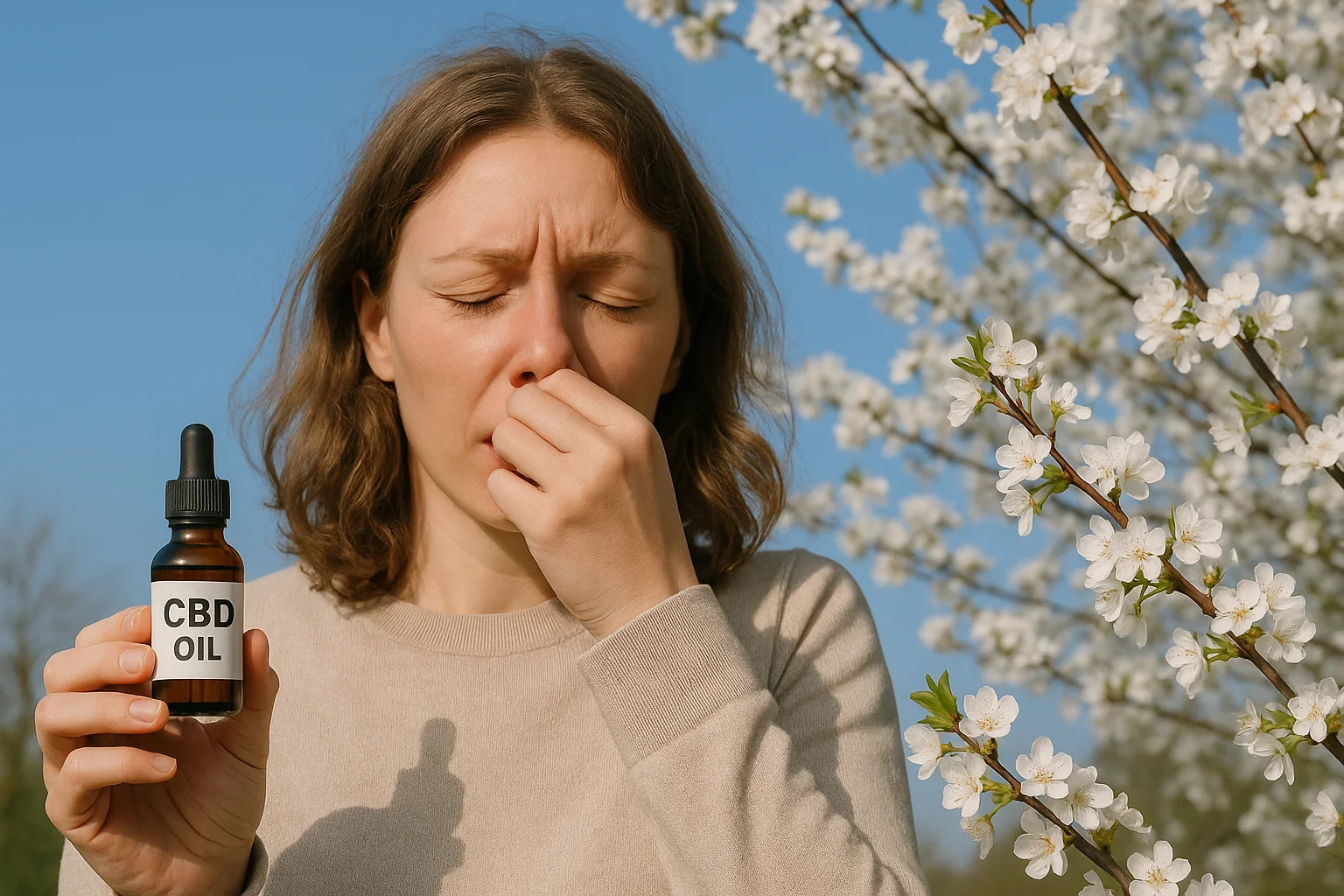
Seasonal rhinitis affects about 22% of adults in Poland and is one of the most common allergic diseases (Obtulowicz et al., Pneumonologia Alergologia Polska, 2020). More and more people are seeking natural methods to alleviate symptoms - and CBD appears in these searches. Preclinical studies suggest that CBD may modulate the immune response related to allergies by inhibiting mast cell degranulation. What does this mean in practice and what does science really say? This article answers the 8 most important questions.
KEY INFORMATION
• CBD is not an antihistamine - it does not block H1 receptors like cetirizine or loratadine.
• In vitro studies indicate that CBD may inhibit mast cell degranulation and reduce histamine release (Petrosino et al., European Journal of Pharmacology, 2019).
• There are no controlled clinical studies in humans confirming the effectiveness of CBD in treating allergic rhinitis.
• CBD may interact with antihistamine medications metabolized by CYP450.
• Inhaling CBD is not recommended during pollen season - it may irritate sensitized airways.
How does the endocannabinoid system relate to allergies?
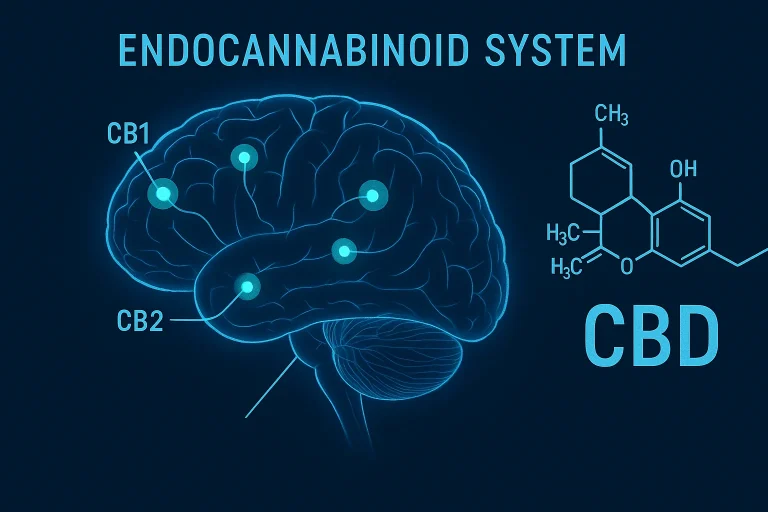
The endocannabinoid system (ECS) is a network of receptors, neurotransmitters, and enzymes present throughout the body - including in immune cells. CB1 and CB2 receptors are present, among others, on the surface of T lymphocytes, mast cells, and eosinophils - all cells playing a key role in the allergic response (Turcotte et al., PLOS ONE, 2010). This anatomical connection suggests that the ECS influences the course of the immune response.
The allergic reaction to pollen proceeds schematically: the allergen (pollen) contacts the nasal mucosa, binds to IgE antibodies on the surface of mast cells, mast cells degranulate - releasing histamine, leukotrienes, and cytokines. Histamine dilates blood vessels, increases vascular permeability, and irritates nerve endings - hence the runny nose, tearing, itching, and sneezing. CBD, interacting with CB2 receptors present on mast cells, may potentially inhibit this mechanism.
What do studies say about CBD and mast cells?
The study by Petrosino and colleagues from 2019, published in the European Journal of Pharmacology, showed that CBD inhibits mast cell degranulation in vitro - that is, in laboratory conditions, without the involvement of living organisms (Petrosino et al., European Journal of Pharmacology, 2019). Inhibiting degranulation means less release of histamine and other inflammatory mediators.
Earlier studies have shown that the ECS plays a regulatory role in the response to allergens: mice with genetically disabled CB2 receptors exhibited an intensified allergic reaction to common allergens. This suggests that activation of CB2 receptors (which is indirectly influenced by CBD) may inhibit the IgE-dependent response (Turcotte et al., PLOS ONE, 2010).
Important disclaimer: in vitro and animal studies do not directly translate to effectiveness in humans. There is no controlled clinical trial (RCT) assessing CBD in the treatment of allergic rhinitis in humans. The mechanism is biologically plausible, but clinical efficacy remains unproven. This is a significant difference between 'may work' and 'works.'
CBD a histamina - czy CBD jest lekiem przeciwhistaminowym?
The short answer: no. CBD does not block histamine H1 receptors - the mechanism of action of classic allergy medications, such as cetirizine, loratadine, or fexofenadine. Blocking the H1 receptor means that histamine cannot cause allergic symptoms, even if it is released. Antihistamines therefore work symptomatically and quickly - the first effects are seen 30-60 minutes after administration.
CBD does not work this way. Its potential impact on allergies is upstream - at the stage of histamine release, not its action on receptors. This is theoretically a more beneficial mechanism (prevention rather than alleviation), but: first, it is not proven in humans, second, it requires regular supplementation (it does not work 'on demand' like an allergy pill). In practice, in the midst of an acute pollen season, a classic antihistamine will provide relief faster and more predictably than CBD.
| Feature | Antihistamines (cetirizine) | CBD |
|---|---|---|
| Mechanism | H1 receptor blocking | Potential inhibition of mast cell degranulation (in vitro) |
| Duration of action | 30-60 minutes after administration | Efekty po 2-4 tygodniach regularnej suplementacji |
| Clinical studies in humans | Tak - liczne RCT | None for allergic rhinitis |
| Side effects | Drowsiness (less in the second generation), dry mouth | Fatigue, dry mouth, drug interactions |
| Availability | Over the counter at pharmacies | In CBD shops, pharmacies |
| Use during pregnancy | Cetirizine - approved with caution | Not recommended - lack of safety data |
CBD interactions with allergy medications
Before combining CBD with antihistamines, you need to be aware of one important issue: CBD is an inhibitor of CYP3A4 and CYP2D6 enzymes in the liver's cytochrome P450. These same enzymes metabolize many anti-allergic drugs. Specifically: cetirizine, fexofenadine, and loratadine are substrates of CYP3A4 or P-glycoprotein transporter - CBD may slow their metabolism, leading to higher drug concentrations in the blood (Brown & Winterstein, Pharmacy, 2019).
In practice, this means: if you regularly take an antihistamine and want to incorporate CBD, inform your doctor or pharmacist about it. In most cases, the interaction at standard CBD doses (5-25 mg) and typical OTC drug doses will not be clinically significant - but it is worth knowing, especially if the drug is prescribed by a doctor at higher doses.
In what form and when to use CBD for allergies?
The method of administering CBD matters, especially in the context of seasonal allergies. Inhaling CBD through a vaporizer - despite a relatively quick onset of action - is not a good choice for an allergy sufferer with a runny nose and sensitized airways. Inhaling any vapor (even without irritating substances) can exacerbate symptoms in individuals with bronchial asthma coexisting with allergic rhinitis.
The best form for allergy sufferers is CBD oil taken sublingually. The bioavailability of sublingual administration is about 13-35% and is higher than when swallowed (Millar et al., Pharmaceuticals, 2019). Effects appear after 15-45 minutes. With regular supplementation, 2 doses per day are recommended - in the morning and evening - to maintain stable CBD levels in the blood throughout the pollen season.
Frequently Asked Questions
Can CBD alleviate the symptoms of allergic rhinitis?
In vitro studies suggest that CBD may inhibit mast cell degranulation and reduce histamine release (Petrosino et al., European Journal of Pharmacology, 2019). However, there are no controlled clinical studies in humans confirming the effectiveness of CBD in treating allergic rhinitis. The mechanism is biologically plausible, but clinically unproven. CBD may serve as a complement - not a substitute - for standard allergy treatment.
How does CBD affect histamine and allergic reactions?
CBD does not block H1 receptors like traditional antihistamines. It works upstream - potentially inhibiting the release of histamine by mast cells through CB2 receptors. Mast cells play a key role in allergic reactions: upon contact with an allergen, they release histamine, leukotrienes, and cytokines, which cause runny nose, tearing, and itching. CBD interacts with CB2 receptors present on the surface of these cells.
Can CBD be used together with antihistamines?
CBD may interact with drugs metabolized by CYP3A4 and CYP2D6 enzymes (including cetirizine, fexofenadine, loratadine) - slowing their metabolism and increasing blood concentration (Brown & Winterstein, Pharmacy, 2019). At standard OTC doses, the interaction is usually not clinically significant, but inform your doctor or pharmacist before combining both substances, especially with prescription medications.
What form of CBD is best for allergies?
For seasonal allergies with systemic symptoms (runny nose, itching, fatigue), the best option is oral supplementation with CBD oil sublingually - bioavailability about 13-35%, onset of action 15-45 minutes after administration. Inhalation of CBD is not recommended for allergy sufferers with sensitized respiratory tracts. CBD creams work locally and will not affect allergic rhinitis.
When is the best time to start taking CBD for seasonal allergies?
Ideally, start 2-4 weeks before the expected peak of pollen. The ECS needs time to respond to regular supplementation. In Poland: February-March for hazel and alder allergies, April-May for birch and grasses, August for ragweed. Start with a low dose (5-10 mg/day) and gradually increase while observing the body's response.
Can CBD exacerbate allergy symptoms?
In a small group of individuals, CBD may cause an allergic reaction to proteins present in hemp extract - especially with full-spectrum products. Symptoms of hypersensitivity include rash, cough, and skin itching. If allergic symptoms worsen or new ones appear after taking CBD, discontinue supplementation and consult an allergist.
What doses of CBD are used in the context of allergies?
There are no official dosing guidelines for CBD for allergies. The start low, go slow method: begin with 5-10 mg daily, maintain for 2 weeks, then increase by 5 mg every 7-10 days until the desired effect is achieved. Various concentrations were used in preclinical studies, which cannot be directly converted to human doses. Consulting a doctor or pharmacist is always advisable.
Does CBD work for food allergies?
The potential mechanism of CBD's effect on food allergies is similar - inhibiting mast cell degranulation in the intestines. However, food allergies are usually triggered by an IgE-dependent response to food proteins, not a reaction to pollen. There are no clinical studies in humans confirming the effectiveness of CBD in food allergies. In severe food allergies with anaphylaxis risk, CBD cannot replace epinephrine or immediate medical care.
This article is informational and educational in nature. It contains internal links to products available in the u Bucha store. Prices and specifications may change - please check the current data on the product page before purchasing.
Author: Michał Waluk · Published: 2026-05-04 · Updated: 2026-05-04