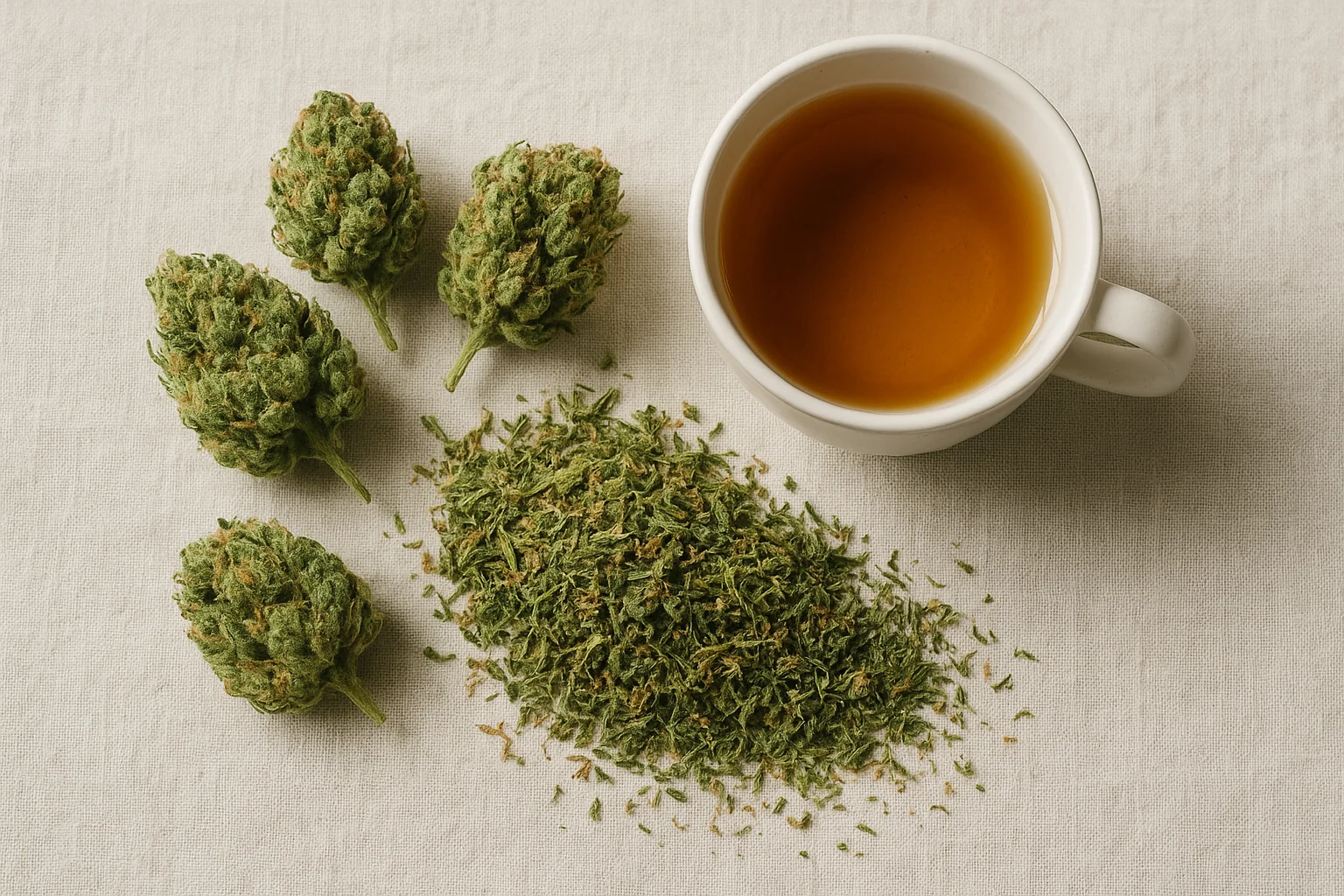

CBD flower: what it is, how to use it, and how it differs from marijuana
What is CBD flower and how does it differ from marijuana? How to use hemp flower – tea, vaporization – and what properties does it have? Check the facts and Polish regulations.
CBD flower is gaining popularity in Poland - and for good reason. It consists of dried flower buds of industrial hemp containing up to 20% cannabidiol (CBD) with trace amounts of THC below 0.3%. For many people, it is a more natural and comprehensive way to deliver CBD than oil - with a full spectrum of terpenes and flavonoids that enhance the effects of cannabidiol. But this raises the question: how does it compare to marijuana? And how should it be used? This article will answer both questions, step by step.
KEY INFORMATION
• Susz CBD pochodzi z odmian Cannabis sativa L. z <0.3% THC - legal throughout the EU under Regulation 1307/2013; no psychoactive effect.
• A review by Blessing et al. (Neurotherapeutics, 2015) analyzed 49 studies and confirmed the anxiolytic effects of CBD at doses of 25-75 mg.
• Tea made from CBD flower requires the addition of fat (oil, milk) - without it, CBD does not dissolve in water and remains in the sediment.
• Waporyzacja suszu CBD w temperaturze 185-205°C to najskuteczniejsza metoda wydobycia kannabidiolu bez spalania.
What is CBD flower and where does it come from?
CBD flower consists of dried flower buds and leaves of industrial hemp of the Cannabis sativa L. variety, selected for high CBD content and low THC (below 0.3%). It comes from certified strains registered in the European Catalog of Agricultural Plant Varieties - in the EU, varieties meeting the THC criterion are allowed. < 0.3%, such as Fedora 17, Futura 75, or Kompolti. The Polish market has adopted them very quickly: according to data GUS the area of hemp cultivation in Poland has increased from several hundred hectares in 2015 to over 5,000 ha in 2023.
This plant contains over 140 cannabinoids, but CBD - cannabidiol - dominates in technical strains. Besides CBD, hemp flower provides terpenes (linalool, myrcene, beta-caryophyllene), flavonoids, and chlorophyll, which interact with CBD in the entourage effect - the mutual enhancement of phytochemical activity. Russo (British Journal of Pharmacology, 2011) described the entourage effect in detail: the combination of CBD with terpenes acted more strongly anxiolytically than isolated cannabidiol at the same doses.
Terpenes are the key that distinguishes CBD flower from CBD oil. CBD oil - especially isolates - is purified and stripped of most terpenes. Full-spectrum flower retains them all. For those who want to benefit from the entourage effect, flower has a real advantage over extracted CBD isolate.
How does CBD flower differ from marijuana?
This is a question many people ask themselves and it is entirely valid - both plants look similar and belong to the same species. The key difference lies in genetics and THC content. CBD flower comes from cultivated strains of Cannabis sativa L. selected for low THC and high CBD. Recreational and medical marijuana are strains selected in the opposite direction - for high THC (10-30%), with little CBD.
THC (tetrahydrokannabinol) is responsible for psychoactivity: euphoria, altered perception of time and space, the "high" effect. CBD does not cause any of these effects - and with a THC content below 0.3%, CBD flower does not induce intoxication even at high doses. WHO (Expert Report ECDD, 2018) clearly stated that CBD does not exhibit addictive or psychoactive potential.
From a legal perspective, the difference is fundamental. In Poland, possession of marijuana (>0.3% THC) is a crime prosecuted under Article 62 of the Act on Counteracting Drug Addiction. CBD flower from certified industrial strains and THC <0.3% falls into the category of permitted hemp products - although their sale as smoking material is in a regulatory gray area in Poland. A safe purchase is flower described as "for aromatherapy" or "herb for brewing tea," with declared CBD and THC content on the label.
How to use CBD flower? Methods and their effectiveness
CBD flower can be used in several ways - each with different bioavailability, onset time, and level of cannabidiol extraction. The most important methods are tea, vaporization, and herbal baths. Each method meets different needs.
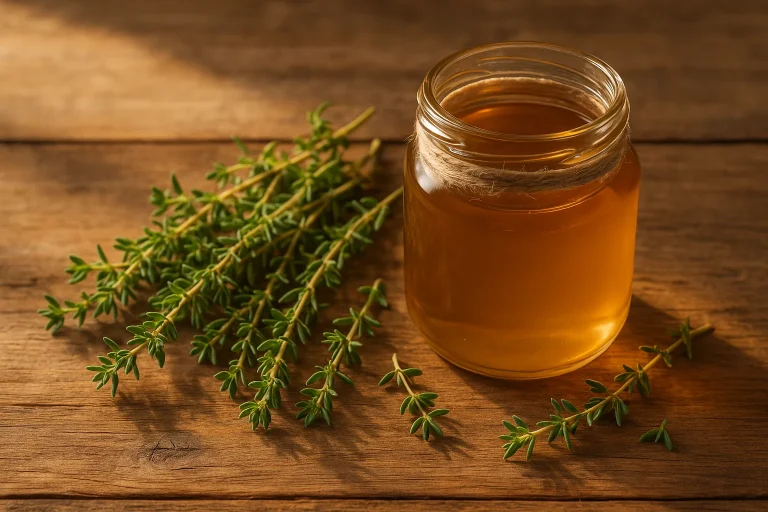
Herbata z suszu CBD is the simplest and most popular method. Two ingredients are required: the flower itself (1-2 g per cup) and a source of fat - because CBD is lipophilic and without an emulsifier, it hardly passes into the brew in water. A teaspoon of whole milk, coconut cream, or hemp oil is enough to significantly improve extraction. The water temperature should be 80-90°C (not boiling - higher temperatures may degrade CBD), steeping time 10-15 minutes under cover. Effects appear after 30-60 minutes and last 2-4 hours. Bioavailability with tea is estimated at 6-15% - modest, but sufficient for evening relaxation.
Detailed guidelines for hemp tea can be found in the article Hemp CBD tea - how to brew and when to drink.
Waporyzacja suszu CBD is the method with the highest bioavailability among all usage methods. A herbal vaporizer heats the flower to a temperature below the combustion point, extracting cannabinoids and terpenes in vapor form. The optimal temperature for CBD is 185-205°C - within this range, CBD reaches its boiling point and effectively transitions to vapor. Below 180°C, bioavailability decreases, above 210°C, thermal degradation begins. Vaporization provides bioavailability of 30-60% without harmful combustion products - significantly higher than tea. Effects begin within minutes and last 1-2 hours.
Our observations: People who have switched from tea to vaporizing CBD flower describe a clear difference in onset time - with tea, the relaxing effect is milder but lasts longer and has a less abrupt onset. Vaporization provides a quicker, more pronounced effect, making it better suited for acute stress or difficulties falling asleep, while tea fits better into an evening calming ritual.
Properties of CBD flower - what do studies say?
CBD - the main active ingredient in the flower - exhibits a wide range of biological activity documented in hundreds of preclinical studies and dozens of clinical trials. The three best-researched areas are anxiolytic (anti-anxiety), anti-inflammatory, and sleep-supporting effects.
Anxiolytic effects: A review by Blessing et al. (Neurotherapeutics, 2015) covered 49 experimental and clinical studies. CBD at doses of 25-75 mg showed significant anxiolytic effects in generalized anxiety disorder, social anxiety, and PTSD. The mechanism involves agonism of 5-HT1A receptors and modulation of the HPA axis (stress). Terpenes in the flower - particularly linalool and beta-caryophyllene - synergistically enhance these effects.
Anti-inflammatory effect: Beta-caryophyllene, one of the main terpenes in CBD flower, is an agonist of CB2 receptors - which means that full-spectrum flower has anti-inflammatory effects independent of CBD. Fernandes et al. (British Journal of Pharmacology, 2012) demonstrated that beta-caryophyllene reduces inflammatory markers comparably to low doses of ibuprofen in animal models.
Impact on sleep: CBD affects sleep by modulating the REM cycle and shortening sleep latency - effects noted at doses of 25-160 mg. A study Shannon et al. (The Permanente Journal, 2019) involved 72 patients with sleep disorders and anxiety - 66.7% reported improved sleep after the first month of using CBD. Drinking CBD flower tea in the evening, about 1-1.5 hours before sleep, works better in this context than morning tea - the effect appears in the appropriate time window.
CBD flower and the entourage effect - why does full spectrum matter?
One of the main advantages of CBD flower over isolated cannabidiol is the full spectrum of phytochemicals. In dried cannabis flowers, alongside CBD, you will find CBG (cannabigerol), CBN (cannabinol), CBC (cannabichromene), and CBDV (cannabidivarin) - minority cannabinoids that exhibit biological activity on their own and work synergistically with CBD. Terpenes - linalool, myrcene, beta-caryophyllene, pinene - are not just aromatic additives; they are biologically active compounds that influence the pharmacology of CBD.
Beta-caryophyllene, one of the most abundant terpenes in CBD flower, is unique: it is the only terpene that directly binds to endocannabinoid receptors (CB2). Gertsch et al. (PNAS, 2008) They were the first to describe beta-caryophyllene as a "dietary cannabinoid" - active at doses found in natural plant products. This means that brewing tea from CBD flower or vaporizing provides not only CBD but also an active CB2 agonist that enhances anti-inflammatory effects independently of cannabidiol.
Linalool - a terpene found in lavender and CBD cannabis - has a calming effect by modulating GABA-A receptors. Myrcene increases the permeability of the blood-brain barrier for other cannabinoids, potentially increasing the bioavailability of CBD in the central nervous system. This complex interaction of phytochemicals means that 25 mg of CBD from flower acts differently (and often more effectively) than 25 mg of CBD isolate in a capsule - this is the entourage effect described by Russo (2011) and confirmed by Ferber et al. (Trends in Pharmacological Sciences, 2020).
How to choose good CBD flower?
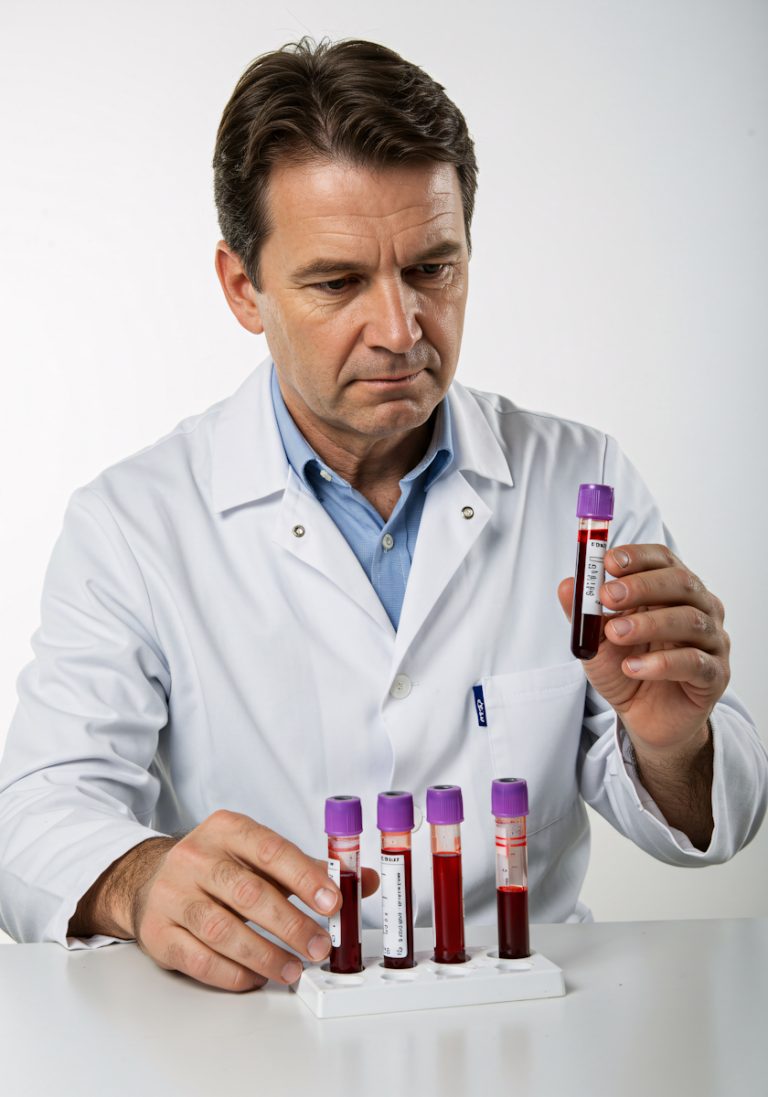
The quality of CBD flower depends on several key factors: the strain of the plant, growing conditions, drying methods, and - most importantly - laboratory certifications. Good flower should have publicly available laboratory analysis results (Certificate of Analysis, CoA) confirming CBD content, THC below 0.3%, and the absence of pesticides and heavy metals.
What to pay attention to when choosing:
- COA (certyfikat analizy): Require a report from an independent laboratory, not just the manufacturer's declaration. Legal laboratories certified in the EU are the standard for reliable suppliers.
- Strain and origin: Flower from European cultivation (Italy, Poland, Switzerland) is subject to strict THC content control. Products imported from outside the EU may not meet standards.
- Aroma and appearance: Fresh CBD flower has an intense herbal and floral aroma, is flexible, and does not crumble upon touch. Old or low-quality flower loses terpenes and has a hay-like smell - less effective.
- No artificial flavors: Flower flavored with synthetic fragrance substances (e.g., with "synthetic cannabinoids") is a completely different product and can be dangerous.
Dosage of CBD flower - how much to use for tea and vaporization?
The optimal amount of CBD flower depends on the method of use, the CBD content in the specific product, and individual sensitivity. It is advisable to start with lower amounts and observe the effects - the principle of "start low, go slow" applies here just as it does with CBD oils.
For tea: start with 1 g of flower containing 8-10% CBD per cup. This provides about 80-100 mg of CBD in the dried material, from which, with proper extraction (with fat, 90°C, 12 min), 10-15 mg of CBD is released into the brew. If the effect is insufficient after 2-3 attempts - increase to 2 g or extend the brewing time. With higher CBD content in the flower (12-15%), less material is needed for the same dose.
With vaporization, dosing is more straightforward, as the vaporizer is more efficient. A typical session with 0.3-0.5 g of CBD flower containing 10% CBD delivers 15-30 mg of CBD in the vapor. This is sufficient for relaxing effects and aiding sleep. With regular use, many people discover their "therapeutic window" - the amount and frequency at which effects are optimal without excessive drowsiness.
Important: CBD flower is a natural product with variable CBD content between batches. Always check the COA of the specific batch and account for deviations in your dosing routine.
Legal regulations in Poland - what you need to know
The legal status of CBD flower in Poland is formally complicated but practically stable for consumers. Cannabis sativa L. with THC <0.3% is industrial hemp - an agricultural plant protected in the EU and available for sale as a botanical product, herb, or aromatherapy article. The Act on Counteracting Drug Addiction (Journal of Laws 2005 No. 179 item 1485 as amended) refers to hemp with a higher THC content - technical flower with a limit <0.3% does not fall within the definition of a narcotic.
However, the sale of CBD flower "for smoking" or as an inhalable substance may raise concerns from law enforcement and is usually sold as an aromatherapy product, for brewing teas, or as a collector's item. From a legal standpoint: possession of small amounts of CBD flower with a THC certificate <0.3% is safe, although it's advisable to have or access the product certificate. Detailed information about brewing CBD flower tea and its use can be found in the article. CBD flower for tea - how to brew.
From our experience: When purchasing CBD flower, ask the seller for the COA before buying. Stores that do not have it or "will send it by email" are a red flag. The certificate should be available immediately, preferably with a QR code on the packaging leading to the laboratory's website.
Frequently Asked Questions
Czym jest susz CBD i czy jest legalny w Polsce?
CBD flower consists of dried flower buds of industrial hemp (Cannabis sativa L.) with THC content below 0.3%. According to Polish law and EU Regulation 1307/2013, it is an agricultural product, not a drug. It is legal to purchase and possess as a botanical article or product for aromatherapy and brewing hemp teas.
How much CBD does hemp flower contain and how does it compare to oil?
Typical CBD flower contains 3-15% CBD (30-150 mg/g). When making tea (1-2 g of flower with fat), about 10-30 mg of CBD is released per cup. A 10% CBD oil provides 5 mg of CBD per drop. Flower is an economical source of CBD, but the bioavailability when making tea (6-15%) is lower than with vaporization (30-60%).
How to brew tea with CBD flower?
Fill 1-2 g of CBD flower into a teapot, pour with water at 85-90°C, and steep for 10-15 minutes covered. Add a teaspoon of hemp oil, butter, or whole milk to the cup - CBD is lipophilic, and without fat, most of the cannabidiol remains in the sediment. Leson et al. (Journal of Analytical Toxicology, 2001) They confirmed that fat increases the extraction of CBD from hemp infusions by 3-4 times.
What temperature should be set on the vaporizer for CBD flower?
The optimal vaporization temperature for CBD is 185-205°C. Lower temperatures (170-180°C) produce lighter, aromatic vapors with terpenes. Higher temperatures (200-210°C) extract more CBD. Never burn the flower - combustion destroys cannabinoids and creates pyrolysis products. Information about herbal vaporizers from well-known manufacturers can be found on the pages Storz & Bickel or Arizer.
How does CBD flower differ from marijuana?
The fundamental difference is the THC content: CBD flower comes from Cannabis sativa L. with <0.3% THC - below the threshold of psychoactivity. Recreational marijuana contains 10-30% THC, causing a high effect. CBD flower can have 5-20% CBD, but with trace amounts of THC, it does not cause euphoria or addiction. WHO (2018) recognized CBD as safe and devoid of addictive potential.
Does CBD flower have a calming effect?
Yes, through a mechanism different from marijuana. CBD acts anxiolytically through serotonin receptors 5-HT1A and GABA modulation - without euphoria. Blessing et al. (Neurotherapeutics, 2015) They analyzed 49 studies and found a significant reduction in anxiety at doses of 25-75 mg of CBD. Combined with terpenes from the flower (linalool, myrcene), the relaxing effect is more pronounced than with CBD isolate alone.
How to store CBD flower?
Store CBD flower in a tightly sealed glass jar, in a dark, cool place (15-20°C), away from moisture. UV light and heat degrade CBD and terpenes. Properly stored flower retains its properties for 12-18 months. Avoid ziplock bags - they do not protect against light.
This article is for informational and educational purposes and does not replace consultation with a doctor. If you are pregnant, breastfeeding, taking medications, or have chronic conditions, consult the use of supplements or herbs with a specialist.
Author: Michał Waluk · Published: 2026-05-04 · Updated: 2026-05-04