
Yerba mate properties: caffeine without the jitters and why it's a better option than coffee
Yerba mate properties – mateine, L-theanine, theobromine, antioxidants higher than green tea. Dosage, IARC risk (65°C) and comparison with coffee. Guide 2026.
Half a billion people in South America drink yerba mate daily. In Poland, interest in this tea has been growing for several years, but many myths still exist - both enthusiastic ("better than coffee for everything") and alarmist ("carcinogenic"). The truth, as always, lies in the biochemical details. Yerba mate contains caffeine, but its effect differs from coffee due to the presence of L-theanine and theobromine. It has antioxidants higher than green tea, but it also has an IARC warning regarding brewing temperature. This article discusses both aspects - without exaggeration in either direction.
KEY INFORMATION
• Yerba mate contains higher concentrations of antioxidants than green tea Camellia sinensis - ORAC about 6600 µmol TE/g vs 5500 µmol TE/g (Heck and de Mejia, Journal of Food Science, 2007).
• Mateine = caffeine + L-theanine + theobromine - this xanthine profile provides a calmer, longer stimulation than caffeine from coffee without the sudden energy fluctuations.
• IARC (2016): beverages consumed above 65°C are classified as probably carcinogenic (Group 2A) - brew at 70-75°C or drink cold tereré.
• A standard serving of infusion (100 ml) contains 30-50 mg of caffeine - comparable to black tea, significantly less than espresso.
What is yerba mate and where does Ilex paraguariensis come from?
Yerba mate comes from Ilex paraguariensis - a tree from the holly family that grows endemically in the subtropical forests of South America: Paraguay, Argentina, Brazil, and Uruguay. The leaves are harvested by hand or mechanically, steamed or fire-blanched, dried, and ground into various fractions - from very fine (fine powder, stronger infusion) to coarse cut (coarse cut, milder flavor). The Guaraní cultures have been drinking mate for centuries before contact with Europeans; Jesuits popularized the custom across the continent in the 17th century.
Today, Argentina is the largest exporter, and Paraguay and Uruguay have the highest per capita consumption in the world - Uruguayans drink an average of about 8 kg of dry leaves per year per person. In comparison: the average coffee consumption in Poland is about 3.5 kg per year per person. In Poland, yerba mate has gained popularity mainly among students and creative workers as an alternative to energy drinks and a third cup of coffee.
Mateine - what is it and how does it differ from coffee?
The term "mateine" is marketing, not chemical - the substance is identical to caffeine. But the physiological effect differs because yerba mate contains caffeine, L-theanine, and theobromine simultaneously. Heck i de Mejia (Journal of Food Science, 2007) They cataloged the full xanthine profile of Ilex paraguariensis: caffeine 0.7-1.7% dry mass of leaves, theobromine 0.3-0.9%, theophylline trace amounts, L-theanine in variable concentrations.
How do these three compounds interact? Caffeine blocks adenosine receptors A1 and A2A - a classic stimulation mechanism. L-theanine (an amino acid) increases the activity of alpha EEG waves in the brain, which subjectively manifests as "focused calm" without sedation. It also alleviates tension and "heart palpitations" caused by pure caffeine. Theobromine (a methylxanthine from chocolate) acts more gently and longer than caffeine, dilating blood vessels and prolonging the stimulation effect. The net effect: longer concentration, less energy fluctuations, lower risk of a "crash" after a few hours.
Yerba mate and antioxidants - does it really beat green tea?
Yerba mate is considered one of the richest sources of antioxidants among plant-based beverages. Heck i de Mejia (2007) They conducted a comprehensive analysis of the phenolic composition of Ilex paraguariensis. The dominant compounds are chlorogenic acids (especially 5-caffeoylquinic acid and 3-caffeoylquinic acid), rutin, quercetin-3-rutinoside, and isomers characteristic only to yerba - absent in green tea.
Comparison of ORAC (Oxygen Radical Absorbance Capacity): yerba mate ~6600 µmol TE/g dry weight, green tea ~5500 µmol TE/g, arabica coffee ~4000 µmol TE/g (approximate values - depend on brewing conditions and variety). Yerba mate indeed wins this comparison, but the more important factor is the bioavailability of polyphenols after consumption, which depends on the brewing time and temperature.
Practical difference: the antioxidants in yerba mate are mainly hydroxycinnamic acids (chlorogenic) - a different type than the catechins predominant in green tea. Both types exhibit antioxidant and anti-inflammatory effects, but through different molecular pathways. For a full spectrum of antioxidant protection, both teas complement each other, rather than replace.
Esophageal cancer risk - IARC warning and what it really means
In 2016, IARC (International Agency for Research on Cancer) classified hot beverages consumed above 65°C as "probably carcinogenic" (Group 2A). This applies to coffee, tea, and mate - all hot drinks, not just yerba. Mechanism: chronic thermal burns of the esophageal mucosa increase the risk of esophageal squamous cell carcinoma.
Previous studies linking mate to esophageal cancer in South American countries are interpreted by IARC mainly through the lens of consumption temperature, not specific chemical substances. In Paraguay and Uruguay, mate is traditionally consumed very hot (85-90°C), which explains the higher rates of esophageal cancer in these populations. When IARC separated the temperature effect from the plant itself, the evidence for the chemical carcinogenicity of yerba was not sufficient for a higher classification.
Practical conclusions: brew yerba mate in water at 70-75°C (not boiling). Use a thermometer - it may seem trivial, but it really changes the risk. Alternatively, drink tereré - a traditional cold infusion of yerba popular in Paraguay. The cold drink completely eliminates thermal risk while retaining all phyto-compounds.
Our observations: Yerba mate brewed at 70°C instead of boiling water has a noticeably milder, less bitter taste and is subjectively more pleasant for those who are put off by the grassy bitterness of traditional preparation. The stimulating effect remains unchanged - brewing temperature does not significantly affect caffeine extraction. Therefore, it is worth lowering the temperature not only for safety reasons but also for taste.
Yerba mate a zdrowie serca i metabolizm
Clinical studies on yerba mate and the cardiovascular system show promising results. Gómez-Juaristi et al. (Food Research International, 2021) They conducted a 12-week RCT with 40 participants - supplementation with standardized yerba mate extract (3 g/d) improved the lipid profile (8.7% reduction in LDL, 6.2% increase in HDL) and reduced oxidative stress measured by isoprostane levels. These are not dramatic effects, but statistically significant with a small intervention.
It affects metabolism through several channels: caffeine-theobromine thermogenesis increases energy expenditure by an estimated 4-5% with regular consumption. Inhibition of pancreatic lipase (Martinet et al., 1999) reduces the digestion and absorption of fats from meals. These effects are real, but they will not replace a caloric deficit - yerba supports weight loss, it does not cause it on its own.
Check out other natural adaptogens with energizing effects
How to brew yerba mate and how to get started?
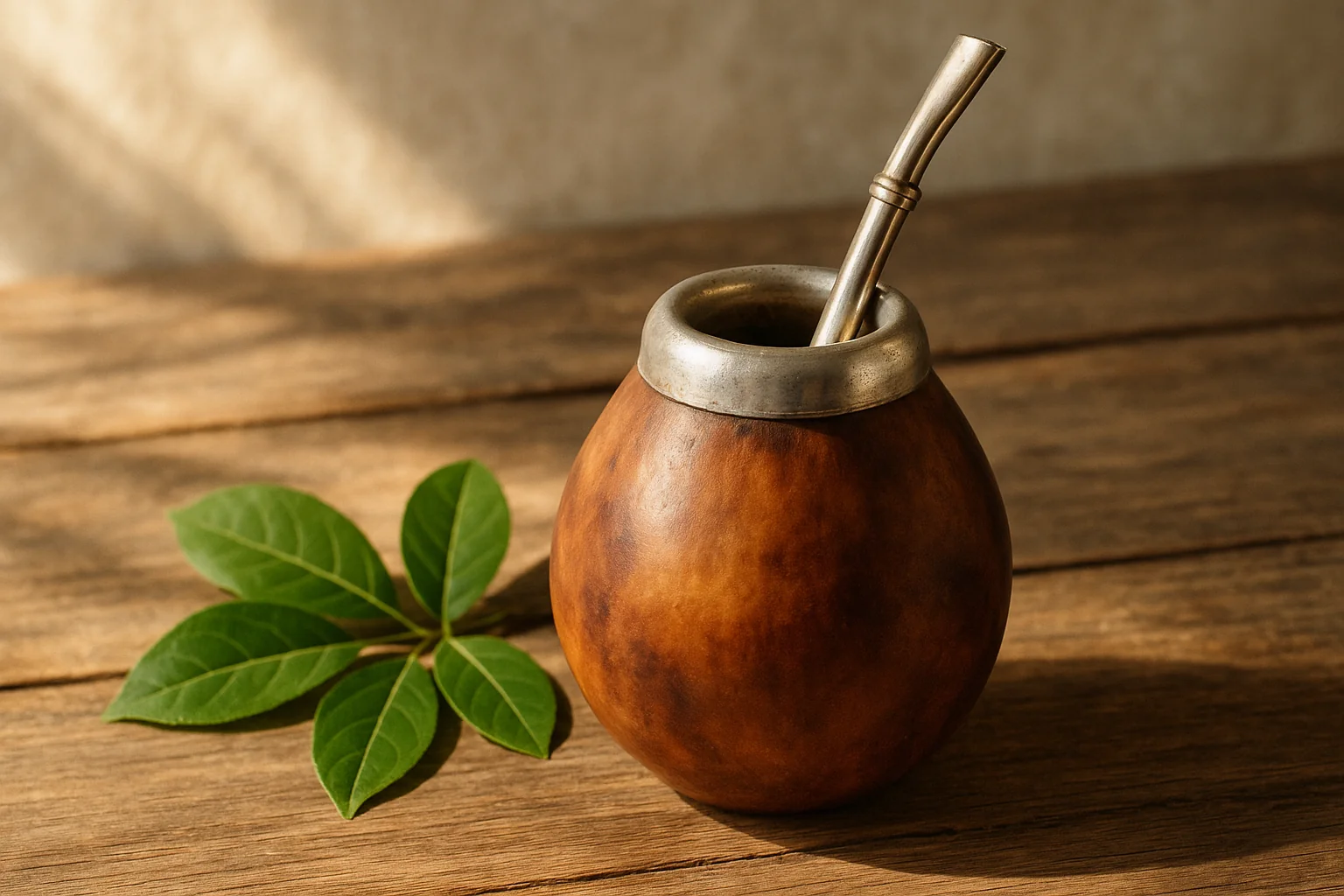
The traditional brewing method requires a gourd (calabash) or a vessel made of clay, wood, glass, or metal, a bombilla (metal straw with a filter), and the dried leaves. Standard serving: 40-60 g of dry leaves in a 300-500 ml vessel. Procedure: fill the vessel with leaves up to 2/3 of its volume, cover the mouthpiece of the bombilla with your thumb, turn it upside down and shake (this moves the powder to the bottom), return to the normal position, and insert the bombilla along the wall of the vessel.
Water temperature: 70-75°C. Pour water slowly into the corner of the vessel by the bombilla, not directly onto the leaves. Wait 3-5 minutes. You can drink and refill water multiple times - traditionally 10-15 times, before the leaves are "squeezed" (yerba blanca). Do not stir the bombilla after brewing yerba - you will clog the filter. On your first attempts, start with a smaller amount of leaves (30 g) and water at 70°C - a full serving may be too strong and cause nausea on an empty stomach.
Tereré - zimna wersja mate: In Paraguay, tereré (cold infusion of yerba mate) is the national drink. The vessel is filled with yerba, and then cold water, lime juice, or cold herbal infusion is poured in. The stimulating effect is the same as in hot yerba, and the thermal risk is zero. Tereré is especially recommended in summer and for people with esophageal issues. You can also brew yerba mate like tea - one tablespoon of leaves per glass of water at 70°C, strained after 5 minutes - this is "yerba mate infusion" convenient in the office without a bombilla.
Types of yerba mate and their taste and effects: There are hundreds of brands available on the market with different characteristics. Argentine yerbas tend to have a smokier and earthier flavor (fire roasting). Brazilian (chimarrão) are green, fresh, and milder - the leaves are less roasted. Paraguayan yerbas are intermediate. For the expression of stimulation, mateine has a higher concentration in verba fino (finely ground) than in yerba canchada (coarsely cut). For beginners: start with traditional Argentine yerba with a high proportion of stems (palo) - milder and less bitter.
Yerba mate and concentration and mental work - how does it actually work?
Among yerba users, there is a belief that it "provides focus without the jitters of coffee." Is this a myth or reality? The mechanism is real, but varies individually. Caffeine from yerba blocks A2A adenosine receptors - the same ones that coffee blocks. The difference lies in the rate of release and accompanying substances. L-theanine increases the amplitude of alpha waves (8-12 Hz) in the cerebral cortex, which translates to a subjective state of "calm alertness" - known to cognitive researchers as "alert relaxation." EEG studies show this effect at a caffeine to L-theanine ratio of about 1:2 (e.g., 50 mg caffeine + 100 mg L-theanine).
Does yerba mate achieve this ratio? Not always - the concentration of L-theanine is variable and often lower than in green tea, where L-theanine is particularly abundant. The effect of "calm energy" is real for many users, but not for everyone. People who are very sensitive to caffeine may experience the same jitters as after coffee, especially with large servings. Theobromine (the chocolate component of mate) acts more gently than caffeine and prolongs the stimulating effect for 5-7 hours, reducing energy spikes.
Practical comparison: espresso coffee gives an intense peak for 2-3 hours, followed by a noticeable "crash." Yerba mate (1 liter consumed over 2-3 hours with refills) provides a flat, continuous level of energy for 4-6 hours. For work requiring prolonged concentration, mate may be a better choice. For a quick energy boost before a presentation - coffee.
Who should be cautious with yerba mate?
Yerba mate is safe for healthy adults in reasonable amounts (1-2 servings per day). Several groups should exercise caution or avoid it:
Pregnant and breastfeeding women: Caffeine crosses the placenta and into breast milk. WHO recommends no more than 200 mg of caffeine per day during pregnancy. One full serving of yerba (500 ml) may contain 150-200 mg of caffeine - which is nearly the daily limit.
Osoby z zaburzeniami rytmu serca: Caffeine can trigger or exacerbate arrhythmias in predisposed individuals. In cases of atrial fibrillation or paroxysmal tachycardia, a cardiology consultation is essential before regular consumption.
Osoby na lekach: Caffeine from yerba interacts with fluvoxamine (CYP1A2 inhibitors), warfarin (may enhance anticoagulant effects), and antihypertensive medications. When on continuous pharmacotherapy, check for interactions with your doctor or pharmacist.
Osoby z refluksem: Yerba mate stimulates gastric acid secretion - similar to coffee. With GERD and peptic ulcer disease, it may exacerbate symptoms. Drink after meals, not on an empty stomach.
Przeczytaj o hibiskusie jako alternatywie bez kofeiny
Frequently Asked Questions
What is mateine and why does yerba mate not cause the same nervousness as coffee?
Mateine is the term for caffeine found in yerba mate, acting in the presence of L-theanine and theobromine. L-theanine alleviates tension and anxiety caused by caffeine, while theobromine prolongs and smooths out the stimulating effect. The result: longer, calmer concentration without a sharp spike and crash after a few hours.
How much caffeine does yerba mate contain compared to coffee?
A serving of yerba mate (1 l of infusion from 50 g of leaves) contains 150-200 mg of caffeine - comparable to 2 cups of filtered coffee. The concentration in 100 ml of infusion is about 30-50 mg of caffeine. Heck and de Mejia (Journal of Food Science, 2007) described the full xanthine profile of Ilex paraguariensis.
Does yerba mate have more antioxidants than green tea?
Yes - Heck and de Mejia (2007) showed that yerba mate contains higher concentrations of chlorogenic acids and derivatives of caffeic acid than green tea. The total antioxidant capacity ORAC is about 6600 µmol TE/g, while green tea reaches about 5500 µmol TE/g.
What are the risks associated with drinking hot yerba mate?
IARC (2016) classified beverages above 65°C as probably carcinogenic (Group 2A) due to the risk of esophageal cancer. This applies to any hot beverage. Solution: brew at 70-75°C or drink cold tereré - completely eliminates thermal risk.
How to dose yerba mate and how to brew it?
Standard serving: 40-60 g of leaves per 300-500 ml of water at 70-75°C. Maceration time 3-5 minutes. In a traditional vessel with a bombilla, you can refill water multiple times. Recommended daily serving: 1-2 kalebas (0.5-1 l). Avoid drinking on an empty stomach - it may cause nausea.
Czy yerba mate wspomaga odchudzanie?
Yerba mate may support weight loss through thermogenesis, inhibition of pancreatic lipase, and appetite reduction. The study by Gómez-Juaristi et al. (2021) showed improved lipid metabolism in a 12-week RCT. The effects are real but moderate - mate is a dietary support, not a standalone weight loss treatment.
This article is for informational and educational purposes and does not replace consultation with a doctor. If you are pregnant, breastfeeding, taking medications, or have chronic conditions, consult the use of supplements or herbs with a specialist.
Author: Michał Waluk · Published: 2026-05-04 · Updated: 2026-05-04