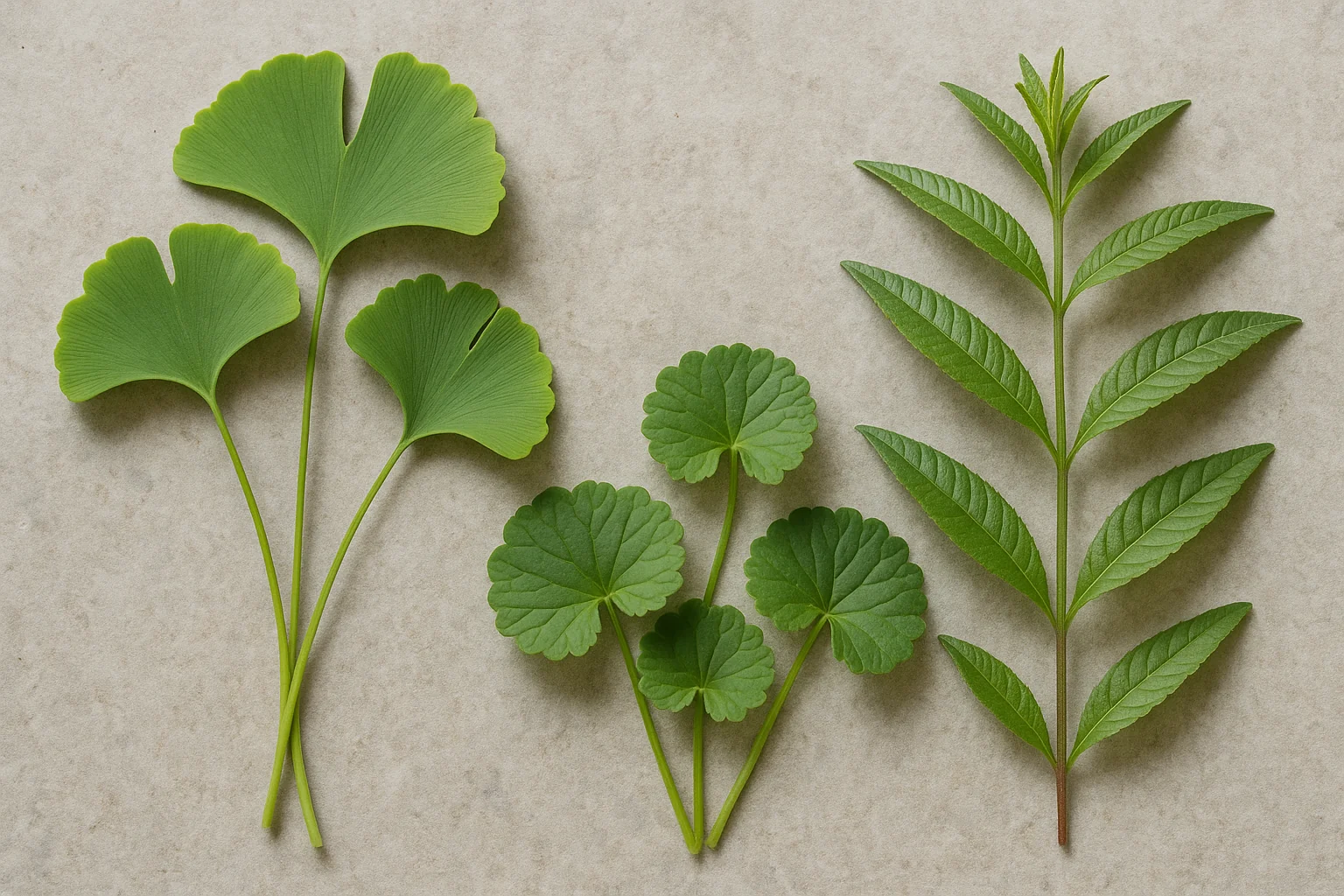

Herbs for concentration: ginkgo, gotu kola, verbena - what to choose and how to use
Herbs for concentration – ginkgo biloba, gotu kola, verbena, bacopa monnieri. Comparison table, mechanisms, dosing. What to choose: sharpness vs calm focus 2026.
The market for concentration supplements is full of products of questionable effectiveness, but among herbs, there are four that have solid research foundations: ginkgo biloba, gotu kola, bacopa monnieri, and medicinal verbena. The problem is that they work in different ways, on different pathways, and are effective for different types of concentration difficulties. Ginkgo improves blood flow in the brain - it works slowly but steadily. Bacopa rebuilds memory synapses - it requires months but provides lasting effects. Gotu kola supports microcirculation - faster and gentler than ginkgo. Verbena works by reducing anxiety - an indirect route, but very effective for a 'busy mind'. This article will help you choose the right herb for a specific concentration problem.
KEY INFORMATION
• Bacopa monnieri 300 mg (55% bacosides) improved memory, processing speed, and reduced anxiety in an RCT with 46 participants over 12 weeks (Stough et al., Psychopharmacology, 2001).
• Ginkgo biloba EGb 761: 120-240 mg daily - the only form with a good clinical basis; effects after 4-12 weeks.
• Stack 'sharpness': ginkgo + bacopa; Stack 'calm focus': lemon verbena or lemon balm + gotu kola.
• None of these herbs works like caffeine - the effects are cumulative and require regularity over weeks.
Ginkgo biloba - how does it really work on the brain?
Ginkgo biloba is the longest-used nootropic herb in the world and one of the most thoroughly researched. The standardized extract EGb 761 (24% flavonoid glycosides, 6% terpenoids) has a rich clinical basis, especially for cognitive disorders in older adults. Gauthier and Schlaefke (Dementia and Geriatric Cognitive Disorders, 2014) in a meta-analysis of 9 RCTs with 2404 participants, they showed that EGb 761 240 mg/d significantly improved cognitive functions and quality of life in patients with Alzheimer's and vascular dementia compared to placebo.
The mechanism of ginkgo involves three simultaneous pathways. First, the inhibition of platelet-activating factor (PAF) by ginkgolides improves blood flow through smaller cerebral vessels, oxygenating neurons. Second, flavonoids neutralize reactive oxygen species - particularly important for neurons, which are exceptionally sensitive to oxidative stress. Third, terpenoids affect synaptic plasticity and the density of cholinergic receptors, leading to better working memory and reaction time. The effects are subtle in healthy adults under 40, but more pronounced in those over 50, especially with vascular risk factors (high blood pressure, diabetes, smoking).
Important note: there are many ginkgo biloba products on the market with very different quality. Only the EGb 761 extract (produced by Schwabe, sold under the brands Tanakan, Tebonin, and others) has a confirmed clinical basis - other ginkgo extracts may contain different proportions of active ingredients and may not exhibit the same effects. When choosing a product, check if 'EGb 761' or 'standardized extract with 24% flavonoid glycosides and 6% terpenoids' is indicated on the packaging. Herbal preparations with 'ginkgo leaf' as the only description may be significantly less effective.
Gotu kola - tradycyjny nootropik Azji i nowe badania
Gotu kola (Centella asiatica) is a plant from Ayurvedic medicine and traditional Chinese medicine, used for thousands of years as a supporter of the mind and memory. Its active ingredients - asiaticosides, asiatic acid, and madecassoside - work through several mechanisms: stimulating collagen synthesis in blood vessels (improving the integrity of capillaries in the brain), modulating nerve growth factor (NGF) that supports neuron survival, and exhibiting anxiolytic effects by modulating GABA-A receptors.
Wattanathorn et al. (Journal of Ethnopharmacology, 2008) conducted an RCT with 28 participants over 65 years old using gotu kola extract for 2 months. Results: significant improvement in memory and cognitive performance in neuropsychological tests compared to placebo. Gotu kola acts faster than bacopa monnieri (effects after 4-8 weeks instead of 8-12), but its effects on deep long-term memory are weaker than those of bacopa. A good option for those seeking quick support for cerebral microcirculation without a long wait for effects.
An interesting property of gotu kola is its effect not only on the brain but also on blood vessels in the limbs - asiaticosides stimulate collagen synthesis in the vessel walls, reducing permeability and improving peripheral microcirculation. This makes gotu kola interesting for those who have both concentration issues and varicose veins, leg heaviness, or chronic lower limb fatigue - one herb, two applications. Dosage: 500-1000 mg of standardized extract (40% asiaticosides) daily in 2 doses. Infusion from dried herb: 2-4 g per cup, 2 times a day between meals.
Medicinal verbena - an indirect path to focus through anxiety reduction
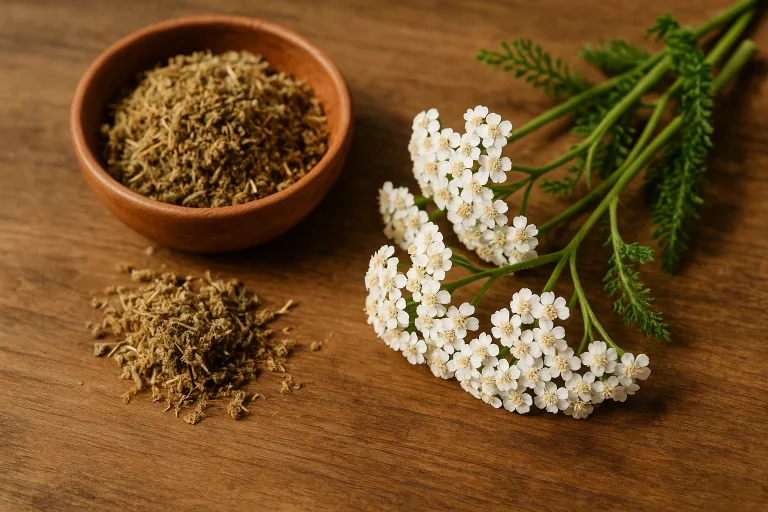
Medicinal verbena (Verbena officinalis) does not act directly on memory or blood flow in the brain - its mechanism of action is different. The active ingredients of verbena (verbenalin, aucubin, luteolin) exhibit anxiolytic and adaptogenic effects, reducing anxiety and nervous tension, which are among the main causes of concentration difficulties in healthy, professionally active adults.
Did you know that most concentration problems in healthy individuals under 40 do not stem from a lack of 'fuel for the brain', but from excessive stimulation of the nervous system? Anxiety, stress, racing thoughts, and inner turmoil block the prefrontal cortex - the part of the brain responsible for concentration, planning, and inhibiting distractions. Medicinal verbena, by acting anxiolytically, removes this blockage and allows the brain to focus - without caffeine stimulation and without sedation.
Our observations: Medicinal verbena works best for 'paralyzing perfectionism' and anxiety-induced procrastination - when you know what you need to do, but fear of making a mistake or feeling overwhelmed by the task prevents you from starting. This is a different profile than, for example, ginkgo, which helps someone who is actively working but loses the thread or has a slower reaction time. Matching the herb to the profile of the problem is more important than choosing the 'strongest' preparation.
Bacopa monnieri - the strongest herb for memory and learning
Bacopa monnieri deserves a separate article (and has one in this cluster), but in a comparative context, it is worth highlighting what distinguishes it from other herbs for concentration. Bacopa works through the mechanism of synaptic remodeling - bacosides (active triterpenoids) stimulate the synthesis of synaptodendritic proteins and the density of dendritic spines in the hippocampus. The effect: slower, but deeper than ginkgo or gotu kola.
Stough et al. (Psychopharmacology, 2001) demonstrated in an RCT with 46 participants that 300 mg of bacopa (55% bacosides) over 12 weeks significantly improved verbal and visuospatial memory and reduced anxiety compared to placebo. Key: the memory effect was greater after 12 weeks than after 6 - confirming the cumulative nature of the action. Bacopa is the best choice for students, those learning new skills, and professions requiring memorization of large amounts of information.
Read the detailed article on bacopa monnieri - dosage, mechanism, and effects
How to choose the right herb for your profile?
Instead of looking for the "best" herb for concentration, it is worth defining your problem profile. Below are practical tips for selection.
You are over 50, noticing a decline in memory and concentration, and want to start vascular prevention. - choose ginkgo biloba EGb 761, 120-240 mg daily. This is the only form with a good clinical basis for this population. For better effect, add gotu kola as support for microcirculation.
You are studying, preparing for exams, or mastering new skills that require memorization. - choose bacopa monnieri 300 mg (55% bacosides). Plan a 12-week course. Effects will appear gradually - do not give up after a month.
You have concentration problems caused by stress, anxiety, a fast-paced work environment, and distractions between tasks. - start with medicinal verbena or lemon balm to reduce nervous stimulation. Add gotu kola for microcirculation. You do not need a stimulant - you need to calm the prefrontal cortex.
You want general support for cognitive abilities without a specific problem. - consider gotu kola as a safe option for a wide range of effects (microcirculation + NGF + mild anxiolysis). Effects after 4-8 weeks. Lowest risk of side effects and drug interactions among the listed herbs.
Herbs for concentration vs. caffeine - the difference in mechanism
Many people reach for coffee or energy drinks when they need to improve concentration. This is understandable, as caffeine works quickly and distinctly - blocking adenosine receptors, inducing a state of alertness and stimulation. However, caffeine has significant limitations as a daily cognitive tool: it builds tolerance, disrupts sleep when consumed in the afternoon, and causes a rebound when discontinued. Herbs for concentration work quite differently.
Ginkgo, bacopa, and gotu kola do not work by blocking adenosine - they improve fundamental parameters of brain function: blood flow, synaptic plasticity, and antioxidant protection. This is an 'investment' in long-term brain performance, not a 'loan' of energy (like caffeine). Medicinal verbena, on the other hand, removes the obstacle (anxiety blocking the prefrontal cortex) without stimulation. An ideal combination for someone addicted to coffee as a concentration tool: verbena as a substitute on low-caffeine days, ginkgo or bacopa as a long-term base.
Does this mean that herbs can completely replace coffee for work requiring focus? For many people - yes, especially in creative work, where excessive stimulation from caffeine does more harm than good. For work requiring sensory alertness (e.g., night shifts) - caffeine is still irreplaceable. But as a daily base for focus, a combination of appropriate herbs may be a better solution than four coffees a day.
Safety and interactions - what not to combine
Ginkgo biloba has the most significant drug interactions among the herbs mentioned. By inhibiting PAF and platelet aggregation, it can enhance the effects of anticoagulants (warfarin, acenocoumarol) and antiplatelet drugs (acetylsalicylic acid, clopidogrel) - increasing the risk of bleeding. If you are taking these medications, monitor your INR and consult with your doctor before adding ginkgo. Ginkgo may also lower the seizure threshold - use caution with epilepsy.
Bacopa monnieri, with prolonged use, may lower T4 levels in individuals with Hashimoto's disease - monitor TSH. It may also enhance the effects of anticholinergic medications for the bladder or Parkinson's medications (due to its influence on acetylcholine). Lemon verbena and gotu kola have significantly fewer interactions - they are safe with most medications, but like any herb, avoid during pregnancy without medical consultation.
Practical dosing: take ginkgo EGb 761 in the morning or with a meal (it improves absorption), and bacopa in the evening with a fatty meal (bacosides are lipophilic, enhancing bioavailability). Gotu kola is not sensitive to the timing of intake. Verbena works best when you need focus - 30-60 minutes before a work or study session. When combining ginkgo with bacopa: start with ginkgo for 4 weeks, then add bacopa - it will be easier to assess which herb is providing an effect. Adding 3-4 herbs at once complicates the evaluation of effectiveness.
Check out ginkgo biloba - a detailed article about the Japanese ginkgo
Frequently Asked Questions
Which herb is best for concentration?
It depends on the issue. Ginkgo biloba (120-240 mg EGb 761) - best for those aged 50+ and with vascular causes of problems. Bacopa (300 mg 55% bacosides) - the strongest effect on memory and learning after 12 weeks (Stough et al. 2001). Gotu kola - faster effect (4-8 weeks), good microcirculation. Verbena - for anxiety blocking focus, quick and intermediate effect.
How quickly do herbs for concentration work?
Ginkgo - 4-12 weeks. Bacopa - 8-12 weeks (cumulative effect). Gotu kola - 4-8 weeks. Verbena - acutely (for current anxiety levels). None of these herbs works like caffeine. Regular use for at least 4 weeks is necessary to evaluate effectiveness.
Can herbs for concentration be combined?
Yes. Stack 'sharpness': ginkgo + bacopa. Stack 'calm focus': verbena + gotu kola. Stack 'full neurocognitive support': bacopa + gotu kola + ginkgo - but start one at a time, not all at once. Avoid combining ginkgo with anticoagulants, bacopa with thyroid medications without consultation. Start with 2 herbs, observe effects for 4-6 weeks before adding another ingredient.
Does ginkgo biloba work in healthy individuals?
Evidence in healthy adults under 40 is weaker than in those with vascular disorders or dementia. In individuals aged 40-50+ with subjective memory decline, the effect may be clinically noticeable. EGb 761 is the only standardized form with a good clinical basis - other ginkgo preparations may be less effective.
How to dose gotu kola for concentration?
Standardized extract at 40% ginkgolides: 500-1000 mg daily in 2 doses. Effects after 4-8 weeks. Infusion: 2-4 g of dried herb per cup, twice a day. Gotu kola is safe long-term for most adults - one of the rarer herbs without serious interactions at typical doses.
What is medicinal verbena and how does it differ from lemon verbena?
Lemon verbena (Verbena officinalis) is a European herb with active ingredients verbenalin and aucubin - it has anxiolytic effects and supports concentration by reducing anxiety. Lemon verbena (Aloysia citrodora) is another plant with a citral aroma - it mainly has relaxing effects. In the context of focus: medicinal verbena acts pharmacologically, while lemon verbena aromatherapeutically.
This article is for informational and educational purposes and does not replace consultation with a doctor. If you are pregnant, breastfeeding, taking medications, or have chronic conditions, consult the use of supplements or herbs with a specialist.
Author: Michał Waluk · Published: 2026-05-04 · Updated: 2026-05-04