
Supplements for stress and cortisol: what really lowers cortisol and when to take it
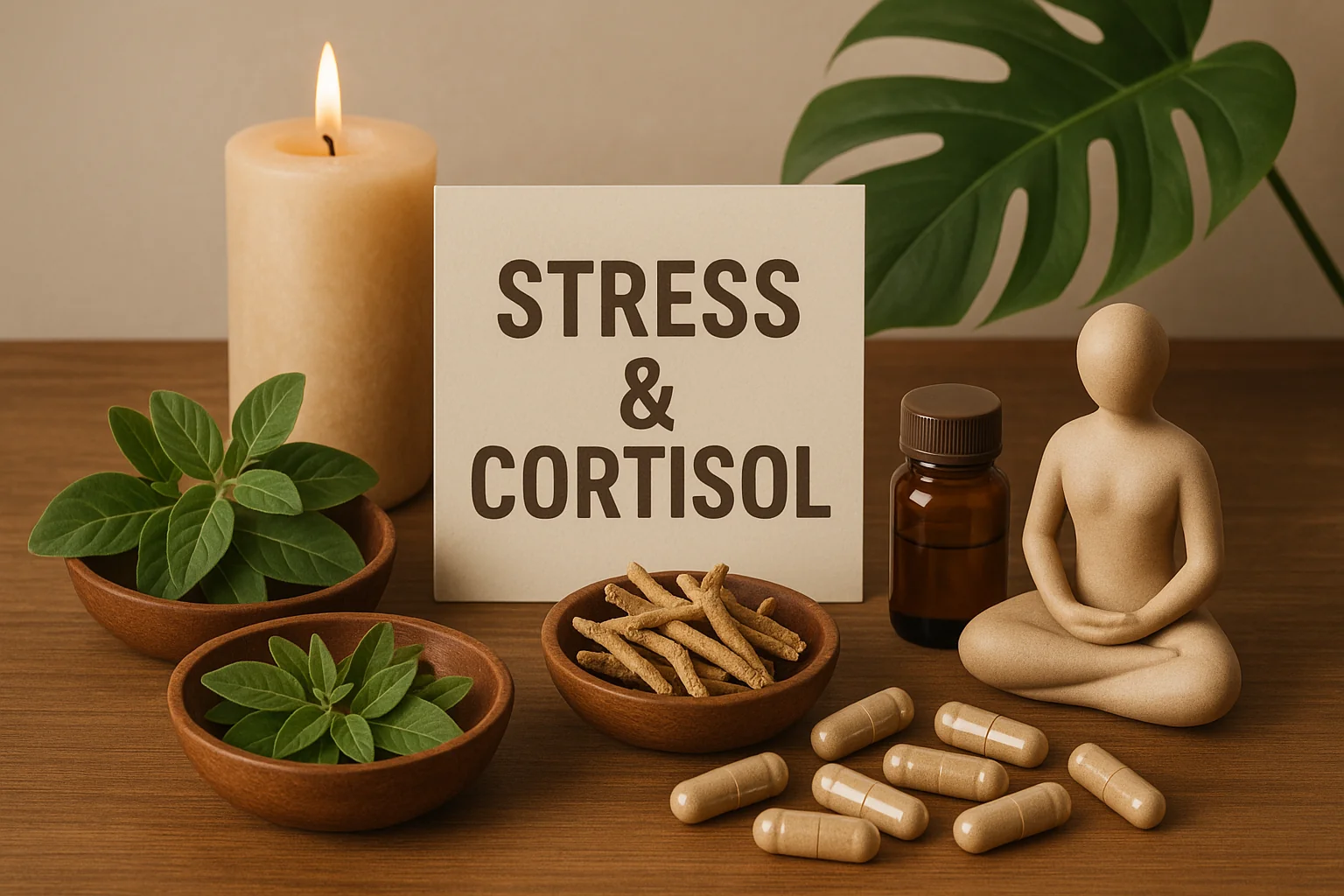
Supplements for cortisol and stress – ashwagandha KSM-66, rhodiola rosea, phosphatidylserine, magnesium, L-theanine, vitamin C. What really works and when to take it.
Cortisol is not the enemy. It is essential for waking up in the morning, mobilizing in the face of danger, and maintaining homeostasis. The problem arises when chronic stress causes a sustained increase in cortisol over days, weeks, and months. Consequences include sleep disturbances, weight gain (abdominal fat), weakened immunity, reduced insulin sensitivity, and worsened memory and mood. The supplement market offers dozens of products "for stress and cortisol" - some have solid scientific foundations with direct cortisol measurements in RCTs, while most do not. This article discusses the former.
KEY INFORMATION
• Ashwagandha KSM-66 300 mg 2x/day for 60 days reduced serum cortisol by 27.9% compared to placebo - Chandrasekhar et al. (Indian Journal of Psychological Medicine, 2012).
• Phosphatidylserine (400-800 mg/day) reduces cortisol after exercise and psychological stress by modulating ACTH in the pituitary - confirmed in several RCTs.
• Magnesium inhibits the HPA axis through NMDA receptors in the hippocampus - magnesium deficiency correlates with excessive cortisol reactivity.
• Coffee after 2:00 PM is one of the easiest causes to eliminate for elevated cortisol in the evening and sleep problems.
Cortisol - what it is, where it comes from, and when it becomes a problem
Cortisol is a glucocorticoid produced by the adrenal cortex under the control of the HPA axis (hypothalamus-pituitary-adrenal). A healthy diurnal rhythm of cortisol: peak around 8:00 AM (cortisol awakening response, CAR), gradual decline throughout the day, minimum around 12:00 AM. This rhythm synchronizes sleep, activity, and metabolism.
Cortisol has many important functions: it mobilizes glucose (hepatic gluconeogenesis), inhibits the inflammatory response (here's the paradox - acutely anti-inflammatory, chronically pro-inflammatory through the GR receptor in various tissues), regulates blood pressure and electrolyte metabolism, and affects mood and brain activation. Chronic stress disrupts the natural rhythm of cortisol: the morning peak may be lowered, and the evening "drop" is delayed or insufficient. The result: waking up tired, difficulty falling asleep, and chronic irritability.
Our observations: Many people seek supplements "for cortisol," not understanding that cortisol is not a constant value - it changes tenfold throughout the day. It is the rhythm of cortisol, not its absolute level, that disrupts health. Supplements work by normalizing the rhythm and amplitude of the cortisol response - not by "blocking" cortisol, which would be dangerous.
Ashwagandha KSM-66 - najlepiej zbadany adaptogen kortyzolu
Ashwagandha (Withania somnifera) is an Ayurvedic adaptogen used for thousands of years. Active ingredients: withanolides (withaferin A, withanolide D) - steroidal lactones modulating glucocorticoid receptors and adrenal enzyme activity. KSM-66 extract (Ixoreal Biomed) is the best-documented clinical form, standardized to ≥5% withanolides from ashwagandha root.
Chandrasekhar et al. (Indian Journal of Psychological Medicine, 2012) - 64 adults with chronic stress, RCT. KSM-66 300 mg 2x/day vs. placebo for 60 days. Results: cortisol reduction of 27.9% (p < 0.001), reduction of all stress and anxiety scales by 44%, improvement in sleep quality, reduction in CRP levels. The study by Lopresti et al. (Medicine, 2019) replicated the results in an independent center: KSM-66 600 mg/day for 60 days significantly reduced cortisol and improved energy.
Dosage: KSM-66 300 mg in the morning and 300 mg in the evening or 600 mg/day in one dose. Effects on cortisol after 4-8 weeks of regular use. Cycle: 8-12 weeks, then 2-4 weeks off (although data on the necessity of breaks is limited). Interactions: do not combine with thyroid medications without consultation (may alter T3, T4, and TSH levels), avoid during pregnancy and lactation, use caution with autoimmune diseases.
Phosphatidylserine - cortisol after exercise and psychological stress
Phosphatidylserine (PS) is a phospholipid crucial for neuronal membranes, particularly abundant in pituitary and hippocampal cells. It regulates the release of ACTH (adrenocorticotropic hormone) from the pituitary - ACTH stimulates the adrenal glands to produce cortisol. By inhibiting excessive ACTH, PS limits the cortisol response. An interesting finding is that PS works particularly effectively in the context of exercise-induced cortisol.
Clinical studies: Monteleone et al. (1990, Neuropsychobiology) showed that PS 800 mg/day for 10 days significantly reduced cortisol and ACTH after strength exercise. Starks et al. (2008, Journal of the ISSN) confirmed a 21% reduction in cortisol with PS 600 mg/day in men engaged in strength training for 4 weeks. Dosage: 400-800 mg/day - for sports activity, 400 mg 30 minutes before training. PS is safe, with no significant drug interactions. Naturally found in soy and sunflower lecithin, but higher doses are used in supplements.
Rhodiola rosea, L-teanina i witamina C
Rhodiola rosea (golden root) - extract standardized to 3% rosavin and 1% salidroside, 200-400 mg/day. It is an adaptogen that normalizes the HPA response - it does not directly lower cortisol but reduces the amplitude of the cortisol response to acute stress. Olsson et al. (Planta Medica, 2009) demonstrated in RCT a reduction in burnout and fatigue with rhodiola over 12 weeks. Rhodiola is particularly effective in cognitive stress and occupational burnout. Note: it may have a stimulating effect at doses above 600 mg - do not use in the evening.
L-theanine (100-200 mg/day or before stressful situations) - an amino acid from green tea that modulates GABA and NMDA receptors, increasing alpha waves in EEG (a state of calm attention). It reduces the cardiovascular response to psychological stress and lowers IgA levels in saliva (a stress marker). Particularly effective in the "focus without stress" protocol together with caffeine (100 mg L-theanine + 50-100 mg caffeine). Safe, with no drug interactions, short duration of action (30-60 minutes after consumption).
Vitamin C (1000-2000 mg/day) - the highest concentration of vitamin C in the adrenal glands among all tissues. Cortisol is synthesized with vitamin C as a cofactor. Paradox: excess vitamin C inhibits cortisol synthesis through competition - but this effect is documented mainly at doses above 1500 mg/day. Studies on marathon runners (Peters, 2001) showed that vitamin C supplementation significantly reduced cortisol after running. Under normal stress, the effect is smaller.
Magnez - fundamentalny „hamulec” osi HPA
Magnesium is a cofactor in the activation of NMDA receptors in the hippocampus. The hippocampus plays an inhibitory role in the stress response - it activates negative feedback in the HPA axis (telling the adrenal glands "stop producing cortisol"). Magnesium deficiency weakens this inhibition, leading to excessive cortisol reactivity and chronically elevated cortisol. The relationship is bidirectional: cortisol increases magnesium excretion through the kidneys - meaning stress depletes magnesium, and magnesium deficiency exacerbates stress.
Suplementacja magnezem (glicynian lub cytrynian, 200-400 mg/d wieczorem) jest fundamentalnym pierwszym krokiem przy problemach ze stresem i kortyzolem. Metaanaliza Barbagallo i Dominguez (Magnesium Research, 2011) showed a link between magnesium deficiency, elevated cortisol, and depression. Magnesium is also safe, inexpensive, and useful regardless of cortisol - which is why it is the first step in the protocol.
What to avoid - habits that increase cortisol in the evening
Coffee after 2:00 PM - caffeine blocks adenosine receptors, masking drowsiness and delaying the evening drop in cortisol. The peak of caffeine in the blood occurs after 30-60 minutes, but the half-life is 5-7 hours. Coffee at 3:00 PM still has half its effect at 8:00-10:00 PM - exactly when cortisol should be low and melatonin high. Moving the last coffee to 12:00-1:00 PM is one of the easiest interventions to improve sleep quality.
Intense physical exertion in the evening (after 6:00 PM) - strength training and HIIT significantly raise cortisol. With chronic stress, evening workouts can delay evening cortisol and complicate sleep. Options: move training to the morning or afternoon, evening yoga or stretching (activates PSNS and lowers cortisol). Lack of regular sleep - irregular sleep times disrupt the diurnal rhythm of cortisol, particularly CAR (cortisol awakening response). Regular sleep and wake times are a simple chronobiological intervention.
We also describe more about stress and mental well-being in the article spring equinox - how to overcome fatigue with natural supplements - ashwagandha and magnesium are common supplements for both protocols.
Supplement Protocol for Stress and Cortisol
Fundament (codziennie): magnez glicynian 300-400 mg wieczorem. Ashwagandha KSM-66 300 mg rano + 300 mg wieczorem (lub 600 mg/d jednorazowo) przez 8-12 tygodni.
Supplementation for specific situations: L-theanine 100-200 mg before stressful situations (presentation, exam, difficult conversation). Rhodiola rosea 200-400 mg in the morning for occupational burnout and chronic cognitive fatigue - NOT in the evening. Vitamin C 1000-2000 mg/day for intense physical exertion and extreme stress. Phosphatidylserine 400 mg before training for elevated post-exercise cortisol.
Lifestyle changes (priority over supplements): last coffee at 12:00-1:00 PM. Regular sleep times (±30 minutes). Exposure to natural light in the morning (regulates CAR). Training before 6:00 PM. Daily 10-20 minutes of calm activity (walking, meditation, yoga) - the most effective cortisol intervention among all, with no cost of supplements.
When does elevated cortisol require medical diagnosis?
Chronic stress and elevated cortisol have many similar symptoms to endocrine diseases that require diagnosis by a physician. Cushing's syndrome (hypercortisolism due to an adrenal or pituitary tumor) is characterized by distinctive central obesity with a "buffalo hump," wide skin striae (dark red), rounded face (moon face), proximal muscle weakness, hypertension, and hyperglycemia. This is a rare condition, but its symptoms are specific - if suspected, perform a dexamethasone suppression test (1 mg of dexamethasone in the evening, cortisol at 8:00 AM - with a value below 1.8 µg/dl, Cushing's syndrome is unlikely).
Adrenal fatigue ("adrenal fatigue") - a non-medical term, unconfirmed as a disease entity by endocrine scientific societies. The concept of "tired adrenals" has no basis in clinical research in individuals without documented Addison's disease. However, chronic stress does disrupt the rhythm of cortisol (without adrenal exhaustion) - and this is the mechanism that adaptogens address. True Addison's disease (primary adrenal insufficiency) is rare but serious - it manifests as chronic fatigue, nausea, skin darkening, hypotension, and hyponatremia. It requires immediate diagnosis.
Supplementary synergies - combining supplements for cortisol
Ashwagandha + magnesium = classic cortisol combination. Ashwagandha lowers cortisol peaks by modulating the HPA axis, magnesium enhances the effect through NMDA receptors in the hippocampus. Both substances have complementary, not redundant mechanisms. Safe together, with no interactions.
L-theanine + caffeine = "calm focus stack". L-theanine buffers the noradrenergic shock of caffeine, reducing the rise in blood pressure and heart rate while maintaining the pro-ergogenic and pro-cognitive effect. For those who want productivity without cortisol stimulation. Dosage: 100-200 mg of L-theanine for every 100 mg of caffeine.
Rhodiola + ashwagandha - a combination that is possible but cautious. Rhodiola is more stimulating (better in the morning), while ashwagandha is more tonifying (in the morning or evening). Combining them can be effective for burnout with simultaneous high stress, but it increases the risk of stimulating effects in evening dosing. Start with one preparation at a time for 4-6 weeks before adding the second.
Frequently Asked Questions
What really lowers cortisol?
The best-documented supplements: ashwagandha KSM-66 (27.9% reduction in cortisol in RCT, Chandrasekhar 2012), phosphatidylserine 400-800 mg/d (cortisol after exercise), magnesium glycinate 300-400 mg/d (inhibition of the HPA axis by NMDA), L-theanine (acute stress response), vitamin C 1000-2000 mg/d. Lifestyle: no coffee after 2 PM, regular sleep, morning exercise.
Does ashwagandha really lower cortisol?
Yes - Chandrasekhar et al. (2012) demonstrated a 27.9% reduction in cortisol with KSM-66 over 60 days in an RCT with direct cortisol measurement. Lopresti et al. (2019) confirmed the results independently. Effects after 4-8 weeks of regular use. Mechanism: modulation of the HPA axis by withanolides.
What is phosphatidylserine and how does it affect cortisol?
PS is a phospholipid of neuronal membranes in the pituitary and hippocampus. It regulates the release of ACTH (adrenocorticotropic hormone), limiting the cortisol response. In RCT, 400-800 mg/d significantly reduced cortisol after exercise and psychological stress. Safe, with no significant interactions.
Jak L-teanina pomaga przy stresie?
L-theanine (100-200 mg) increases alpha waves in EEG (calm attention without drowsiness), inhibits NMDA receptors, and modulates GABA. It reduces the cardiovascular response and IgA in saliva during acute stress. In combination with caffeine (50-100 mg), it provides a "calm focus". It acts quickly - effects after 30-60 minutes.
Czy rhodiola rosea pomaga na kortyzol?
Rhodiola normalizes the cortisol response to stress and reduces amplitude during acute stressors. Olsson et al. (2009) demonstrated a reduction in burnout and fatigue over 12 weeks. Particularly effective for burnout. Do not use in the evening (may have a stimulating effect).
Does magnesium lower cortisol?
Magnesium inhibits the HPA axis through NMDA receptors in the hippocampus - magnesium deficiency correlates with elevated cortisol. Supplementation of 300-400 mg/d normalizes the cortisol response in deficiency. Evening dosing synergizes with the pro-sleep and calming effect. A very safe supplement.
When should you avoid adaptogens and cortisol supplements?
Ashwagandha: avoid during pregnancy, do not combine with thyroid medications without consultation. Rhodiola: not in the evening, caution with bipolar affective disorder. Cortisol-lowering supplements may complicate endocrine diagnostics (cortisol test) - discontinue 2 weeks before testing.
This article is for informational and educational purposes and does not replace consultation with a doctor. If you are pregnant, breastfeeding, taking medications, or have chronic conditions, consult the use of supplements or herbs with a specialist.
Author: Michał Waluk · Published: 2026-05-04 · Updated: 2026-05-04