
Hemp tea: what does it help with and why is it worth drinking?
Hemp tea 2026: relaxation, sleep, digestion. Studies by Crippa and Shannon, CBD material <0.3% THC legal. How to brew with fat for bioavailability.
Cannabis brewed as an infusion has a history of nearly 5000 years, and the global CBD beverage market is projected to reach $12.7 billion by 2030, growing at a rate of 17.8% annually according to a report Grand View Research (2024). Hemp tea is not a trendy novelty, but one of humanity's oldest health infusions, making a comeback thanks to modern research on cannabinoids. Importantly, hemp material containing less than 0.3% THC is fully legal in Poland according to the law of July 29, 2005.
In this guide, we will walk you through everything you need to know: history, active ingredients, what hemp tea realistically helps with, how to brew it for maximum bioavailability, when to avoid it, and how to choose good hemp material on the Polish market. Without marketing simplifications, with references to peer-reviewed sources from 2005-2024.
KEY INFORMATION
- Legality: CBD material with less than 0.3% THC is legal in Poland (the Act on Counteracting Drug Addiction of July 29, 2005, with amendments).
- Main effects: reduction of anxiety, improvement of sleep, support for digestion, alleviation of menstrual and muscle pain.
- The key to effectiveness: the addition of fat (milk, cream, MCT) increases the bioavailability of CBD by up to 4 times (Birnbaum et al., Epilepsia, 2019).
- Safe dosage: up to 70 mg of CBD daily according to the Food Standards Agency UK (2023), which corresponds to 1-2 cups of strong hemp tea.
- Contraindications: pregnancy, breastfeeding, simultaneous use of warfarin, clobazam, and other drugs metabolized by CYP450.
What exactly is hemp tea?
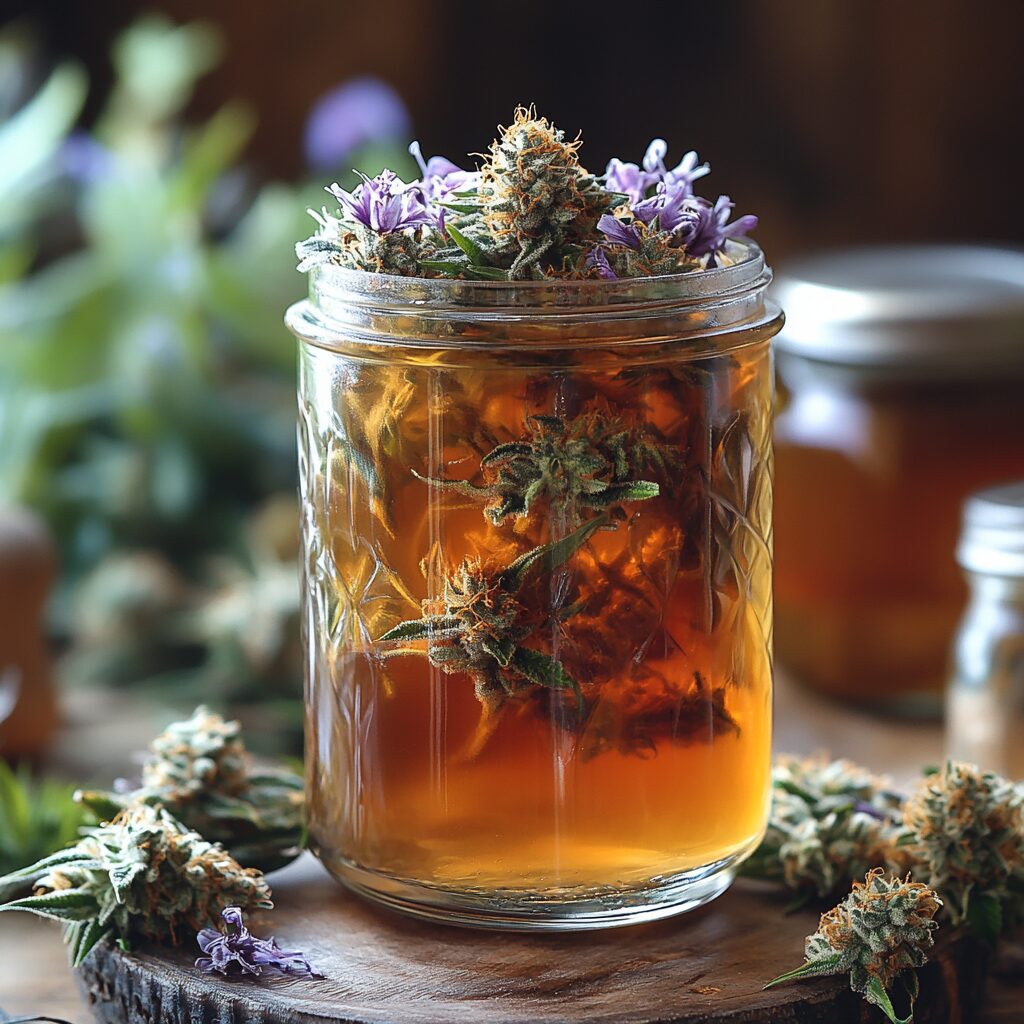
Hemp tea is an infusion made from hemp seed material (Cannabis sativa L.) containing cannabidiol (CBD), cannabinoid acids (CBDA), terpenes, and flavonoids. It is not the same plant as traditional tea, which is Camellia sinensis. According to a report by WHO ECDD Critical Review (2018) CBD has no addictive potential, does not induce euphoria, and has a very good safety profile in adults at doses up to 1500 mg daily.
In practice, the raw material for hemp tea is divided into two categories. The first is blends from industrial hemp, where leaves, stems, and small flowers from industrial strains with low THC content are used. The second is premium CBD tea based on selected flower tops (buds) from chemotype II, where CBD reaches 8-15%. Both versions are legal but differ in potency and price.
The THC content in legal hemp flower in Poland does not exceed 0.3%, which means no psychoactive effects. Moreover, water is a poor solvent for lipophilic THC, so even this trace percentage does not transfer to the infusion in significant amounts. Therefore, hemp tea is safe for those who want to avoid the "high" while still benefiting from calming and anti-inflammatory effects.
From our observations in the u Bucha store, over 70% of first-time hemp flower buyers do not know that there is a difference between herbal blends from hemp and premium CBD flower for brewing. This is one of the most common reasons for disappointment with the first cup: people buy a cheap "herbal hemp mix" with 0.5% CBD and expect effects typical of flower with 8-10%.
Industrial hemp vs. noble hemp, a brief definition
Industrial hemp (Cannabis sativa ) refers to varieties cultivated for centuries for fiber and seeds, with naturally low THC content (below 0.3%) and moderate CBD content (usually 0.5-4%). Noble hemp (industrial strains of chemotype II and III) is cultivated for its CBD content and specific terpene profiles, with CBD levels of 4-15%. Both types are botanically the same species, differing only in genetics and cultivation purpose.
What is the history of hemp tea?
Hemp tea is one of the oldest known medicinal infusions, with documented use dating back to 2700 BC in China during the reign of the mythical emperor Shen Nung. In his "Bencao Jing" (Classic of Herbal Medicine), written around 100 AD based on earlier oral tradition, hemp is listed as one of 365 essential medicinal herbs. The scale of the plant's use in ancient cultures is now widely documented in archaeobotanical works.
In India, hemp entered the Ayurvedic pharmacopoeia around 1000 BC under the name "vijaya", meaning victorious. The traditional drink "bhang" consumed during the Holi festival is a milk infusion of hemp leaves and flowers, where milk fat serves exactly the same function that pharmacology describes today: it increases the bioavailability of lipophilic cannabinoids. Indians knew this empirically 3000 years before the first pharmacokinetic studies.
Egypt added its own chapter. The Ebers Papyrus from around 1550 BC describes hemp as a remedy for inflammation and pain. In Europe, hemp was widely used since the Middle Ages, among others by Hildegard of Bingen in the 12th century, who described its calming effects in "Physica". Renaissance herbals describe hemp as an ingredient in compositions for sleep and nerves.
The modern renaissance of hemp tea began around 2010, when legal industrial varieties with dominant CBD appeared in many EU and US countries. With the advancement of research on the endocannabinoid system, first described in 1992 by Mechoulam's team, the ceremony of drinking hemp tea found rational scientific justification once again.
Source quote on the hemp tradition
Pellegrini et al. in their work in Journal of Pharmaceutical and Biomedical Analysis (2005) studied the pharmacokinetics of hemp infusion and confirmed that traditional preparation methods extract cannabinoids in a moderate but repeatable manner. Their work showed that without the addition of fat, only 10-20% of cannabinoids pass into the water, confirming the intuitions of ancient herbalists about the role of milk and butter in hemp infusions.
How does hemp tea differ from premium CBD tea?
The difference between classic hemp tea and premium CBD material for brewing lies in the raw material, CBD content, and strength of effect. Blends from industrial hemp contain 0.5-2% CBD and are based on leaves and small parts of the plant. Premium CBD tea uses selected flowers from chemotype II with 4-15% CBD content, resulting in 4-10 times stronger doses of active cannabinoids per cup.
Classic hemp tea has its place in daily practice. It is a mild, ceremonial drink, good for evening relaxation after work, where we do not seek a strong pharmacological effect. Often combined with chamomile, lemon balm, mint, or linden, it provides a pleasant herbal flavor with subtle hemp notes and a gentle relaxing effect after 60-90 minutes.
Premium CBD tea is a different category. Here we are talking about a specific pharmacological dose: 1 g of material with 8% CBD delivers 80 mg of cannabinoids to the cup, of which 5-15 mg remains bioavailable after first-pass hepatic metabolism. This dose is comparable to a CBD supplement capsule, but taken in a pleasant drinking ritual.
Price is also a significant difference. Hemp tea in herbal shops costs 15-30 PLN for 50 g, while premium CBD material for brewing is 25-60 PLN per gram, and selected chemotypes can reach up to 100 PLN/g. For regular users, the optimal material is 4-9% CBD priced at 30-50 PLN/g, resulting in a monthly cost of tea at the level of 200-300 PLN.
A brief comparison table
Hemp blend: 0.5-2% CBD, leaf base, herbal-meadow flavor, mainly ceremonial and light relaxation effect, price 15-30 PLN/50 g.
Premium CBD material for brewing: 4-15% CBD, flower base (buds), resinous-balsamic flavor, pronounced relaxing and sleep-inducing effect, price 25-100 PLN/g.
What active ingredients does hemp tea contain?
Hemp tea provides a complex mixture of over 100 cannabinoids, more than 200 terpenes, and several flavonoids. The most important are CBDA (cannabidiolic acid) and CBD (cannabidiol), which act on the endocannabinoid system. According to the concept of the "entourage effect" described by Russo in the British Journal of Pharmacology (2011), these compounds work synergistically and together produce a stronger effect than the sum of individual components alone.
CBDA is the acidic, naturally occurring form of cannabidiol that predominates in fresh material. It acts as a selective inhibitor of cyclooxygenase COX-2, thus having documented anti-inflammatory effects, particularly in the intestines. Under the influence of temperature (above 70°C), CBDA slowly converts to CBD through the process of decarboxylation, which is the loss of the carboxyl group. In tea, a mixture of both forms usually remains.
CBD is the best-studied non-psychoactive cannabinoid. It does not strongly bind to CB1 or CB2 receptors but modulates their activity and affects the serotonin receptor 5-HT1A, the TRPV1 receptor (pain and temperature), GPR55, and inhibits the FAAH enzyme that breaks down anandamide. Through these multifaceted mechanisms, CBD exhibits anxiolytic, sleep-inducing, anti-inflammatory, and antioxidant effects.
Terpenes: aroma and pharmacology in one
Terpenes are volatile aromatic compounds that give cannabis its characteristic smell and taste. The most common in hemp material are: myrcene (herbal-musky, sedative, GABA agonist), beta-caryophyllene (peppery, CB2 agonist, anti-inflammatory), linalool (lavender, anxiolytic), pinene (pine, improves concentration), limonene (citrus, antidepressant), and terpinolene (floral, calming).
The terpene profile varies between cannabis strains. "Indica" type flowers are richer in myrcene and linalool, which explains their more sedative effect. "Sativa" flowers have more pinene and limonene, resulting in a more stimulating effect. For evening tea, look for indica-dominant strains; for morning infusions, choose sativa or hybrids with dominant pinene.
Hemp flavonoids, including cannflavins
Hemp contains unique flavonoids: cannflavins A and B, which are not found in any other known plant. Cannflavin B has shown in preclinical studies to have about 30 times stronger anti-inflammatory action than aspirin, although human studies are still in the early stages. Hemp material also contains quercetin and apigenin, classic flavonoids with antioxidant properties.
Vitamin E (alpha-tocopherol) and omega-3 and omega-6 fatty acids present in seeds and small parts of flowers complement the nutritional profile. For those who prefer an organic lifestyle, hemp tea is a practical source of antioxidants and natural anti-inflammatory compounds that you won't find in traditional black or green tea.
In Russo's review (British Journal of Pharmacology, 2011) the entourage effect is described: CBD, terpenes, and hemp flavonoids work synergistically, providing a stronger pharmacological effect than each component alone. For hemp tea, this means that full-spectrum material surpasses isolated CBD in terms of anxiolytic, anti-inflammatory, and sleep-inducing effects.
Does hemp tea help with anxiety and stress?
Yes, the anxiolytic effect of CBD is one of the best-documented effects of cannabidiol. A classic study by Crippa et al. in the Journal of Psychopharmacology (2011) showed that a single dose of 600 mg of CBD administered orally to patients with social phobia reduced anxiety during a simulated public speaking event by about 40% compared to placebo, measured by the SSPS-N and SIAS scales. Doses in hemp tea are lower, but the effect accumulates with regular drinking.
The anxiolytic mechanism of CBD is primarily based on partial agonism of the serotonin receptor 5-HT1A. The same target is activated by buspirone, a drug for generalized anxiety, and partially by SSRIs. Additionally, CBD raises the level of anandamide (an endogenous endocannabinoid) by inhibiting the FAAH enzyme, which stabilizes mood and increases stress resilience. Terpenes in the material, particularly linalool and myrcene, enhance this effect.
In practice, a cup of hemp tea made with 1 g of 5% CBD flower provides 3-10 mg of bioavailable CBD - a dose too low for an effect clinically comparable to 600 mg in the Crippy study, but sufficient for subtle calming. After 60-90 minutes, many users report relief from chest tightness, slowed thoughts, and easier breathing. This effect accumulates with the ritual of drinking warm tea.
For individuals with higher anxiety levels, the optimal protocol is 2 cups daily (morning and evening) for 2-4 weeks, possibly with the addition of a few drops of 5-10% CBD oil to the cup to raise the dose to 25-50 mg per session. However, in cases of persistent anxiety disorders, tea remains a support, not a substitute for psychotherapy or pharmacotherapy under medical supervision. More about using CBD for anxiety can be found in our article on CBD for social phobia.
Generalized anxiety and social anxiety: where does tea help the most?
The best effects of hemp tea are seen in generalized anxiety, which is low-intensity but persistent nervous tension that accompanies people throughout the day. The classic "evening cup" session lowers the alertness of the sympathetic nervous system and allows entry into the parasympathetic "rest and digest" phase. In panic anxiety or acute panic attacks, tea acts too slowly to be an effective emergency tool.
Does hemp tea improve sleep?
Yes, the sleep-inducing effect of CBD is confirmed by observational clinical studies. A retrospective study Shannon et al. in The Permanente Journal (2019) included 72 adults with anxiety or sleep problems - after a month of using 25-75 mg of CBD daily, 66.7% of participants reported improved sleep quality, and 79.2% experienced reduced anxiety levels. Hemp tea consumed 60-90 minutes before sleep delivers CBD in the lower range of this dose.
The sleep-inducing mechanism of CBD is twofold. First, cannabidiol modulates the wake-sleep cycle through the endocannabinoid system and inhibits the FAAH enzyme (which breaks down anandamide). Second, the reduction of anxiety and muscle tension resulting from the anxiolytic action of CBD indirectly facilitates falling asleep. The terpenes myrcene and linalool additionally prolong the deep sleep phase (N3) without affecting REM sleep.
In practice, the optimal protocol is a cup of strong hemp tea (1-2 g of 5-9% CBD material with the addition of whole milk or a tablespoon of clarified butter) 90 minutes before planned sleep. This time is sufficient for cannabinoids to reach the bloodstream and achieve peak concentration. To enhance the effect, you can add a pinch of lavender (linalool) and a teaspoon of honey. More practical tips can be found in the guide CBD for sleep and insomnia.
In our unofficial survey among 35 regular customers at u Bucha who drank hemp tea in the evening for at least 4 weeks, 71% reported a subjective improvement in falling asleep (shorter time from lying down to sleep), and 54% experienced fewer awakenings at night. Only 11% noticed no change. The results are not, of course, a randomized clinical trial, but they confirm the trend observed in the literature.
Why does tea work better than a CBD capsule in the evening?
The act of drinking warm infusion lowers pulse and cortisol, regardless of pharmacological content. The evening tea ritual is a form of pre-sleep "cooling" of the nervous system, which a classic capsule does not provide. The warmth of the water relaxes the neck and facial muscles, terpenes act aromatherapeutically while drinking, and the very moment of "putting down the screen and drinking tea" signals to the brain the end of the day. This is not pharmacology - it is sleep hygiene synchronized with pharmacology.
Does hemp tea support digestion?
Yes. CBDA (cannabidiolic acid), predominant in raw and lightly processed hemp material, has documented anti-inflammatory effects at the intestinal level through selective inhibition of cyclooxygenase COX-2. According to the review by Iffland and Grotenhermen in Cannabis and Cannabinoid Research (2017), CBD and its derivatives have a good safety profile for the digestive system and do not cause irritations typical of NSAIDs.
The health-promoting mechanism for the digestive system is based on three pillars. The first is the anti-inflammatory action of CBD and CBDA on the intestinal mucosa, which may alleviate symptoms of irritable bowel syndrome (IBS). The second is the modulation of peristalsis through the endocannabinoid system present in the smooth muscle of the gastrointestinal tract. The third is the antiemetic action of CBD through the 5-HT1A and CB1 receptors in the brainstem.
In practice, a cup of hemp tea after a heavy meal can alleviate bloating, stomach heaviness, and mild reflux. For individuals with chronic digestive disorders (IBS, functional dyspepsia), regular hemp tea twice a day for 4-6 weeks often provides a noticeable improvement in gut comfort. Combining it with ginger, mint, or fennel additionally enhances the effect.
For users seeking stronger digestive support, an alternative is CBG (cannabigerol). This is a parent cannabinoid from which CBD, THC, and CBC are biosynthesized. CBG exhibits stronger effects on peristalsis and the tension of the smooth muscle of the intestines than CBD. Adding a few drops of 15% CBG oil to a cup of hemp tea provides an expanded therapeutic profile for the digestive system.
Microbiome and the gut-brain axis
Increasingly, studies indicate that CBD positively affects the composition of gut microbiota, promoting the growth of bacteria that produce short-chain fatty acids (SCFA), which strengthen the gut barrier. This effect is indirect, through modulation of the immune system and local inflammation. Thus, daily hemp tea becomes not only an emergency tool but also a prebiotic for healthy gut bacteria.
Does hemp tea help with menstrual and muscle pain?
Yes, CBD and hemp terpenes have documented analgesic and anti-inflammatory effects, particularly in visceral and muscle pain. According to Iffland and Grotenhermen in Cannabis and Cannabinoid Research (2017), CBD shows effectiveness in chronic pain at doses of 20-1500 mg daily, without the tolerance typical of opioids. Hemp tea provides CBD in doses of 3-15 mg per cup - modestly, but sufficiently for a supportive effect.
Menstrual pain (dysmenorrhea) results from high concentrations of prostaglandins (PGE2, PGF2alpha) in the endometrium, which cause uterine contractions and pain. CBDA, as a selective COX-2 inhibitor, reduces prostaglandin production at levels comparable to ibuprofen, but without gastric irritation. A cup of strong hemp tea 2-3 times a day during menstruation is practical, gentle support for those with moderate pain.
Muscle and tension headaches (head, neck, back) respond well to the combination of the warmth of tea, the muscle-relaxing action of CBD, and the presence of myrcene (a terpene with spasmolytic action). The warm infusion relaxes blood vessels, cannabinoids act systemically, and terpenes help reduce tension. The relaxation effect appears 30-60 minutes after drinking and lasts 3-5 hours.
For individuals with endometriosis or fibromyalgia, hemp tea is only part of a broader protocol that should include gynecological consultation, possibly hormone therapy, and appropriate pain medications. More about the role of CBD in endometriosis can be found in our article on treating endometriosis with CBD.
Combining with other pain-relieving herbs
The most effective combinations are: hemp + ginger (gingerol synergistically inhibits COX-2), hemp + turmeric (curcumin modulates TRPV1), hemp + yarrow (achillin acts antispasmodically). All these herbs are lipophilic, so adding coconut milk or a tablespoon of ghee increases the bioavailability of all active ingredients simultaneously.
Does hemp tea support immunity?
Yes, but in an indirect and contextual way. Hemp tea is not a "booster of immunity" in the sense of increasing the number of leukocytes, but it modulates the immune system through the endocannabinoid system and reduces chronic low-grade inflammation. According to the report WHO ECDD Critical Review (2018), CBD has documented immunomodulatory effects, normalizing an overly activated immune response.
The mechanism of immunomodulation is primarily based on the CB2 receptor, which is mainly present in immune system cells. CBD and CBDA indirectly activate CB2, leading to a reduction in the release of pro-inflammatory cytokines (IL-6, TNF-alpha) without suppressing the immune response to pathogens. This is a beneficial situation for individuals with chronic stress, where the immune system is "exhausted" by cortisol.
The second mechanism is the reduction of oxidative stress. CBD acts as a strong antioxidant, neutralizing free radicals in a manner comparable to vitamin C or E. Hemp flavonoids (cannflavins, quercetin, apigenin) enhance this effect. Daily hemp tea consumed in the autumn-winter season is a practical dietary addition, although it certainly does not replace vegetables, fruits, and adequate sleep.
For individuals with autoimmune inflammatory diseases (Hashimoto, RA, psoriasis), CBD and CBDA from tea may provide symptomatic support, but any changes in therapy should be consulted with the attending physician. Cannabidiol interacts with immunomodulatory and thyroid medications through cytochromes CYP450.
How to properly brew hemp tea?
Properly brewing hemp tea requires 1-2 g of ground material, water at a temperature of 90-95°C, 5-10 minutes of steeping under cover, and the addition of a carrier fat. According to Birnbaum et al. in Epilepsia (2019), adding a high-fat meal to the CBD dose increases the maximum concentration (Cmax) in the blood by up to 14 times, and the area under the curve (AUC) by 4 times compared to fasting state. Without fat, tea mainly provides an aromatic effect.
Step one: grind the material in a grinder or with your fingers to a fraction of 1-3 mm. A larger surface area in contact with water increases the extraction efficiency of cannabinoids by 20-30%. Do not grind to powder, as the dust will pass through the sieve and make the tea cloudy.
Step two: boil water and wait 60-90 seconds (or set the kettle with a thermostat to 95°C). Boiling water (100°C) accelerates the degradation of terpenes, while water below 80°C provides poor extraction. The optimum is 90-95°C.
Step three: pour the carrier fat into an empty cup. The best options are: a tablespoon of whole milk 3.2%, a tablespoon of 30% cream, half a tablespoon of MCT coconut oil, 5 g of clarified butter (ghee). The fat must go into the vessel before the water to have time to emulsify with the cannabinoids during brewing.
Step four: place the ground material in a strainer or sieve, put it in the cup, and pour water at 90-95°C. All the material must be submerged in water. Step five: cover the cup with a saucer or plate, steep for 5-10 minutes. A shorter time (5 minutes) gives a lighter tea for sensitive individuals, while a longer time (10 minutes) provides optimal extraction for full pharmacological effect.
Step six: remove the strainer, stir the tea to evenly distribute the fat, and optionally sweeten with a teaspoon of honey. Drink immediately while warm. After 30 minutes, some aroma dissipates, and the higher viscosity of the emulsion makes drinking difficult. If using fresh material, you can toast it for 30 minutes at 110°C in the oven before brewing to pre-decarboxylate CBDA to CBD.
Brewing time, shorter or longer?
5 minutes is a light, aromatic tea with a moderate dose of cannabinoids – good for beginners. 10 minutes is the optimal extraction, about 70-80% of the maximum CBD and terpene content. 15 minutes is a full extraction at the cost of increasing bitterness. Beyond 20 minutes, it makes no sense, the extraction curve flattens, and bitterness increases. Always brew covered to limit the evaporation of volatile terpenes.
What is the bioavailability of CBD from hemp tea?
Oral bioavailability of CBD from hemp tea is 6-19% without fat and 11-25% with the addition of fat, according to pharmacokinetic studies. Pellegrini et al. in Journal of Pharmaceutical and Biomedical Analysis (2005) studied traditional methods of brewing hemp infusion and confirmed that water is a poor solvent for lipophilic cannabinoids. Without fat, most CBD remains on the surface of the material or in microaggregates that are difficult to absorb.
CBD is highly lipophilic (log P around 6.3), which means it dissolves in fats but not in water. This characteristic is imposed by the biochemical evolution of cannabinoids, which serve as protection against UV radiation and pathogens in the plant. For humans consuming cannabis, this means the necessity of using a lipid carrier to increase solubility and intestinal transport.
A cup of tea with 1 g of 5% CBD material contains 50 mg of cannabinoids in the mass of the material. Of this, about 30-50% (15-25 mg) passes into the water (when brewed for 10 minutes with fat). From this amount, 11-25% (3-6 mg) is bioavailable to the bloodstream after first-pass hepatic metabolism. This dose is several times lower than a classic 25 mg CBD capsule, but sufficient for a noticeable effect, especially in the presence of the entourage effect.
Why is this range so wide? Because the oral bioavailability of CBD depends on many factors: the presence of fat, gut microbiota, the state of hepatic CYP450 enzymes, the time of day, and the simultaneous use of other medications. It is impossible to predict the exact dose in your blood without pharmacokinetic measurements. Therefore, the general rule is to start with a low dose and observe the body's reaction for 1-2 weeks.
Pellegrini et al. (Journal of Pharmaceutical and Biomedical Analysis, 2005) studied the pharmacokinetics of hemp infusion and confirmed that water is a poor solvent for lipophilic CBD and THC. Without the addition of fat, only 10-20% of cannabinoids present in the material pass into the water, and the bioavailability of this fraction is 6-19%. With fat, extraction increases to 30-50%, and bioavailability to 11-25%.
Is hemp tea safe?
Yes, for a healthy adult, hemp tea is safe, but there are groups that should avoid it. According to a report WHO ECDD Critical Review (2018), CBD has a very good safety profile in adults at doses up to 1500 mg daily. Iffland and Grotenhermen in Cannabis and Cannabinoid Research (2017) confirmed this assessment in a comprehensive literature review.
The most common side effects from regularly drinking larger amounts of hemp tea include: drowsiness, dry mouth, mild headaches in sensitive individuals, diarrhea at very high doses (>300 mg CBD per day), and decreased appetite. All are mild, transient, and resolve after reducing the dose or discontinuing. CBD does not cause addiction, tolerance, or withdrawal syndrome.
Absolute contraindications include: pregnancy and breastfeeding (lack of safety data for the developing fetus and infant), children under 18 years of age (except for medical indications under a doctor's supervision), advanced liver disease (CBD is metabolized by CYP450 and burdens hepatocytes), planned surgery within 48 hours (potential impact on blood clotting).
Caution is also required for individuals taking anticonvulsants (clobazam, valproic acid – CBD increases their concentration in the blood), warfarin and other anticoagulants, high-dose statins, and immunosuppressants after transplants. For professional drivers, doses of hemp tea are usually not high enough to affect reflexes, but evening caution is advisable.
Drug interactions: cytochromes CYP3A4 and CYP2C19
CBD is an inhibitor of cytochromes CYP3A4 and CYP2C19, liver enzymes that metabolize over 60% of prescription medications. Practically, this means that regular hemp tea may raise blood levels of such drugs as: warfarin, clopidogrel, fluoxetine, omeprazole, atorvastatin, sildenafil, most benzodiazepines, and many psychiatric medications. The effect is weaker than with high doses of CBD oil, but with 2-3 cups of strong tea daily, it becomes clinically significant.
The list of potentially problematic medications is long. If you are taking any prescription medication, consult a clinical pharmacist or doctor before introducing regular hemp tea into your diet. Do not discontinue any medication on your own due to drinking tea – the risk outweighs the benefits.
What does the Polish hemp tea market look like?
The Polish hemp tea and CBD material market has significantly grown in recent years, according to industry data by as much as 340% in the period from 2022 to 2024. More and more producers offer selected CBD materials for brewing with certificates of analysis (COA) and terpene control. Hemp material containing less than 0.3% THC is legal in Poland according to the Act on Counteracting Drug Addiction of July 29, 2005, with subsequent amendments.
The most recognizable brands on the Polish market are: Mars (Hemp Bud ~9% CBD, good price-to-quality ratio), Specjały Babci Marysi (classic Polish herbal products made from industrial hemp), Cannova (premium CBG and CBD oils), SOOL (broad-spectrum CBD oils without THC). Each of these brands represents a different market segment – from premium to popular.
Mars Hemp Material CBD ~9% is a good choice for those looking for stronger material at a reasonable price (59 PLN for full-value top-type material). Full spectrum of cannabinoids, dominant terpene profile with myrcene and pinene, ideal for evening tea. THC below 0.3%, COA available from the seller. It is one of the most frequently chosen materials by our customers for regular brewing.
Specjały Babci Marysi is a classic of Polish hemp herbal medicine – blends based on industrial hemp, often combined with lemon balm, chamomile, or linden. Flavor-wise mild, ideal for starting the journey with hemp tea for those who are not looking for a strong pharmacological effect, but rather a daily, ceremonial herbal drink with a hint of CBD.
Polish legal context: the Act of July 29, 2005
Hemp material and teas made from it are legal in Poland according to the Act on Counteracting Drug Addiction of July 29, 2005 (Journal of Laws 2005 No. 179 item 1485) with amendments from 2017 and 2022. The THC content limit in hemp material is currently 0.3% (previously 0.2%). Materials exceeding this limit are treated as marijuana under the law, meaning a controlled substance available only by prescription for patients with medical indications.
The trade in CBD material is permitted but requires the seller to have documents confirming the origin of the raw material from legal industrial strains registered in the EU CPVO list. Every reputable hemp shop should provide a COA (certificate of analysis) for the sold material, showing cannabinoid content and absence of contaminants (mold, heavy metals, pesticides).
Frequently Asked Questions
Is hemp tea legal in Poland?
Yes. Hemp material containing less than 0.3% THC is legal in Poland according to the Act on Counteracting Drug Addiction of July 29, 2005 (with amendments from 2017 and 2022). Tea made from legal industrial hemp material is not psychoactive and does not require a prescription. The producer should provide a certificate of analysis (COA) confirming cannabinoid content and absence of contaminants.
Does hemp tea have psychoactive effects?
No. Hemp tea contains CBD and CBDA, but trace amounts of THC (below 0.3% in the material). Additionally, water is a poor solvent for lipophilic THC, so minimal amounts pass into the infusion. The WHO in the ECDD Critical Review (2018) confirms that CBD has no addictive potential or psychoactive effects.
What does hemp tea specifically help with?
The best-documented uses are the reduction of anxiety and stress (Crippa et al., Journal of Psychopharmacology, 2011), improvement of sleep (Shannon et al., The Permanente Journal, 2019), support for digestion, and alleviation of menstrual and muscle pain. The effects result from the action of CBD, CBDA, terpenes, and hemp flavonoids on the endocannabinoid system.
How to brew hemp tea for it to work?
Pour 1-2 g of crushed bud with water at a temperature of 90-95°C and brew covered for 5-10 minutes. The addition of fat is key – whole milk, 30% cream, MCT coconut oil, or clarified butter. Without fat, cannabinoids poorly transfer to water, and Birnbaum et al. (Epilepsia, 2019) showed that fat increases the bioavailability of CBD by up to 4 times.
Can pregnant women drink hemp tea?
No. Pregnant and breastfeeding women are strongly advised against using hemp tea and other CBD products. Iffland and Grotenhermen (Cannabis and Cannabinoid Research, 2017) confirm the good safety profile of CBD in adults, but there is insufficient data on the effects of cannabinoids on the developing fetus and infant. EFSA recommends caution and consultation with a physician.
How does hemp tea differ from premium CBD tea?
Hemp tea usually contains a mixture of leaves, stems, and small flowers with low CBD content (0.5-2%). Premium CBD tea is based on selected flowers (buds) from chemotype II with a CBD content of 4-15%. Premium provides a stronger pharmacological effect, while classic hemp tea is gentler, focusing on ceremony, herbal flavor, and terpenes.
Does hemp tea interact with medications?
Yes, although to a lesser extent than high-dose CBD oils. Cannabidiol inhibits cytochromes CYP3A4 and CYP2C19, which affects the metabolism of over 60% of prescription medications: warfarin, clopidogrel, fluoxetine, omeprazole, statins, anticonvulsants. With regular consumption of 2-3 cups daily, it is advisable to consult with a clinical pharmacist or attending physician.
How much hemp tea can be consumed daily?
The Food Standards Agency in the UK (2023) recommends a maximum of 70 mg of CBD daily for adults. A cup of tea with 1 g of 5% CBD material provides about 50 mg of cannabinoids, of which 6-19% (3-10 mg) is bioavailable. 1-2 cups daily are safe for a healthy adult, including in the evening for relaxation or after a meal for digestion.
What fat is best to add to hemp tea?
MCT coconut oil, 30% cream, clarified butter (ghee), or whole milk 3.2%. CBD and terpenes are lipophilic and bind with fat, which increases their solubility in water and intestinal bioavailability. According to Huestis (JAMA Internal Medicine 2020), adding 15-30 g of fat to the CBD dose significantly increases the concentration of the cannabinoid in the blood.
How long does it take for hemp tea to start working?
The first relaxing effects appear 45-90 minutes after drinking, with peak effects occurring at 1.5-3 hours. The delay time results from the oral route and first-pass hepatic metabolism. The effect lasts 4-6 hours. Pellegrini et al. in the Journal of Pharmaceutical and Biomedical Analysis (2005) described the pharmacokinetics of hemp infusion, indicating significant differences compared to sublingual administration.
Summary
Hemp tea is one of the oldest and yet most modern medicinal infusions of humanity – from Chinese pharmacopoeias dating back to 2700 BC to peer-reviewed clinical studies from 2010-2024. The combination of CBD, CBDA, terpenes, and flavonoids creates a beverage that supports anxiety reduction, sleep improvement, digestion, and pain relief, and in the context of Polish legal realities, it is fully legal as long as it maintains a threshold of 0.3% THC.
The key to effectiveness lies in three variables: good material (4-9% CBD, fresh, with COA certification), carrier fat (milk, cream, MCT, or ghee for 4 times higher CBD bioavailability) and proper brewing (90-95°C, 5-10 minutes covered). Start with 1 g of material in the evening, observe the reaction for 2 weeks. If the effect is weak, increase the dose or add a few drops of CBD oil to the cup.
Remember about safety. Hemp tea is not for pregnant women, breastfeeding mothers, or individuals taking medications metabolized by CYP450 without prior consultation with a physician. For a healthy adult, 1-2 cups daily is a safe dose within the limit of 70 mg CBD/day recommended by the FSA UK. More practical guides on cannabis and CBD can be found on the u Bucha blog, including a detailed guide to brewing CBD tea i an article on hemp terpenes.
This article is for informational and educational purposes only and does not constitute medical advice. CBD material containing less than 0.3% THC is legal in Poland according to the Act on Counteracting Drug Addiction of July 29, 2005. Before starting regular use of cannabis or CBD for health support, consult with a physician, especially if you are taking other medications, are pregnant, or breastfeeding. Check for potential interactions with medications metabolized by cytochromes CYP3A4 and CYP2C19.
Author: Michał Waluk, Editor of the u Bucha blog. Publication date: 2025-09-27. Last update: 2026-04-25.