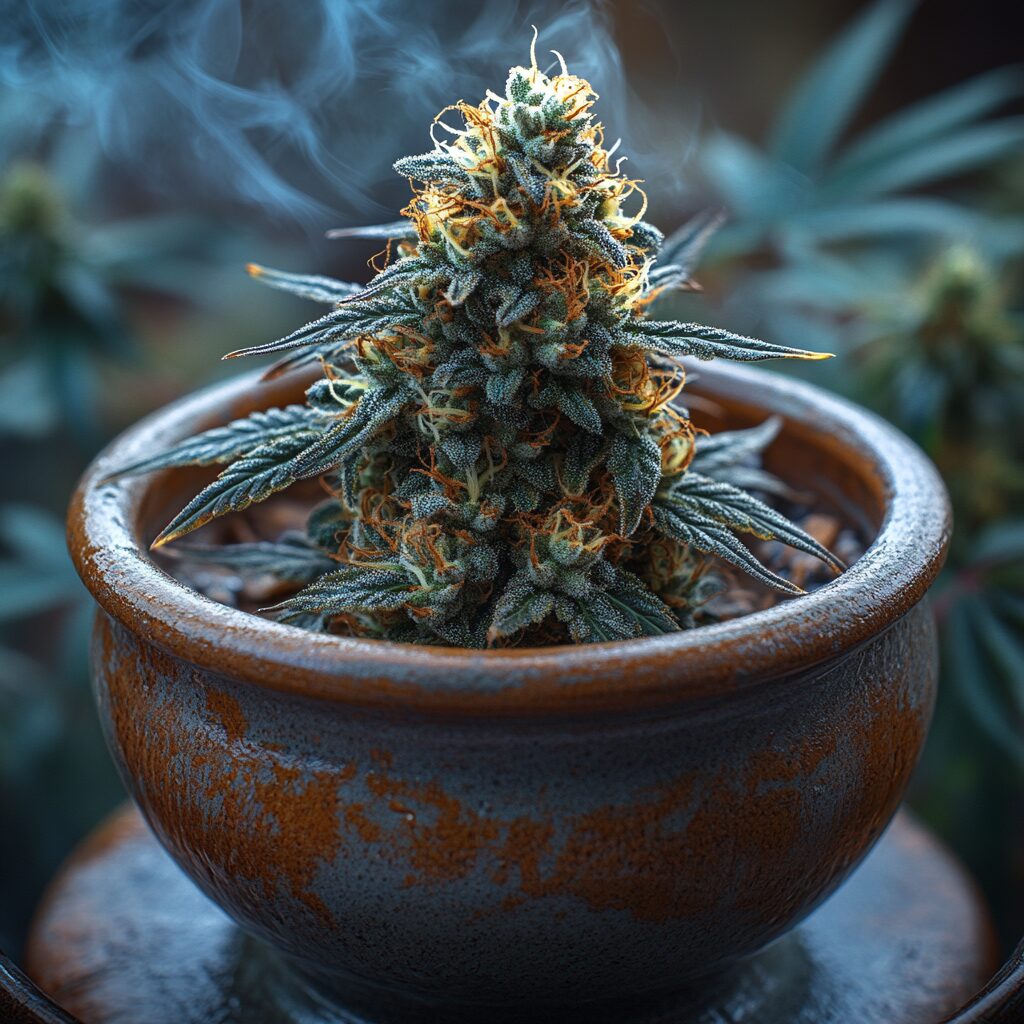

Cannabis Decarboxylation Step by Step – How to Decarboxylate Cannabis in the Oven, Sous-Vide, and in a Jar
A practical step-by-step guide to decarboxylating cannabis herb: oven, sous-vide, Mason jar, dedicated decarboxylator. Optimal temperatures, times, mistakes, and the Polish legal context.
Key information (TL;DR)
- Decarboxylation in 3 steps: grinding the herb into pieces of 3-5 mm, heating at a temperature of 110-130°C for 30-60 minutes, cooling in a closed container for about 30 minutes to condense the terpenes.
- The simplest home method: oven with convection set to 115°C, herb on parchment paper, 30-40 minutes for complete conversion of THCA to THC according to kinetic study (Wang et al., 2016).
- The most precise method: sous-vide in a vacuum bag at 95°C for 90 minutes, temperature deviation below 1°C, no loss of terpenes.
- Most common mistakes: overheating above 140°C causes loss of monoterpenes and conversion of THC to CBN, underheating below 100°C leaves acidic forms inactive on CB1 receptors.
- Polish legal context: Decarboxylation of cannabis with >0.3% THC remains illegal based on Act of July 29, 2005, on Counteracting Drug Addiction. Processing CBD herb up to 0.3% THC is allowed. This article is for educational purposes only.
Decarboxylation sounds like a process reserved for laboratories, but in reality, it comes down to precisely heating the herb for several dozen minutes in a home oven. This stage determines whether cannabis butter, oil capsules, or milk tea will work as expected. According to a kinetic study published in Cannabis and Cannabinoid Research, optimal conversion of THCA to THC requires maintaining a temperature of 110°C for 30-40 minutes with an efficiency of over 95% (Wang et al., 2016).
In this practical guide, we focus solely on step-by-step methods. We show how to decarboxylate herb in the oven, sous-vide, Mason jar, and dedicated decarboxylator. We discuss specific temperatures, times, grinding, layering, and cooling methods. We point out the most common mistakes that ruin the terpene profile and show what to do with decarboxylated herb to make butter, coconut oil, capsules, or tea. We skip the chemistry of the reaction, which we discuss in detail in a separate pillar article.
What does decarboxylation look like step by step in a home oven?
The oven method is the most popular home decarboxylation procedure. According to the kinetic study by Wang and colleagues, heating the herb at 110°C for 30 minutes ensures over 95% conversion of THCA to THC, with no significant generation of CBN (Wang et al., 2016). It only requires a convection oven, a probe thermometer, and parchment paper.
Step 1: Preparing the oven and accessories
Turn on the convection oven to 115°C and let it run for 15 minutes for even heating. Insert the probe thermometer into the middle part of the chamber at the height of the tray, as the panel readings often differ by 5-15°C from the actual temperature. Prepare a tray lined with parchment paper and a second portion of aluminum foil for later covering.
Choosing convection instead of top-down heating is a conscious decision. The fan forces air circulation and eliminates hot spots around the heater. In home measurements with a digital thermometer, the difference between panel settings and actual temperature typically reaches 5-15°C in regular household ovens. Without a probe thermometer, the risk of overheating or underheating is real.
Step 2: Grinding the herb into pieces of 3-5 mm
The herb should be ground into pieces of 3-5 mm, roughly the size of a pea. Too fine a powder with a fraction below 1 mm overheats and loses terpenes within the first 10 minutes. Too thick pieces above 8 mm decarboxylate unevenly, as the interior does not reach the reaction temperature.
It's best to use a manual grinder with medium grit, rather than an electric grinder, which generates additional heat and may cause micro-pyrolysis. After grinding, spread the herb evenly on the parchment in a layer no thicker than 1 cm. A thicker layer results in undercooked zones in the middle.
Step 3: Arranging on parchment and covering with foil
Parchment protects the herb from direct contact with the metal tray, which can locally overheat the material. Loose aluminum foil placed on top reduces air circulation around the herb, which retains terpenes that would otherwise evaporate. This simple step allows you to retain about 15-20% more monoterpenes.
Do not wrap the herb tightly with foil. This creates steam pressure, which can brew the material and turn it into a moist mass. The optimal solution is a loose dome of foil over the tray, uncovered on one side to allow slow steam escape from the herb.
Step 4: Baking for 30-40 minutes at 115°C
For THC herb, set the timer for 30-40 minutes at 115°C. For CBD herb, choose a higher temperature of about 130°C and extend the time to 45-60 minutes, as CBDA has a higher activation energy for the decarboxylation reaction than THCA. According to chromatographic analysis (Citti et al., 2018), CBDA requires about 30% more thermal energy for complete conversion than THCA.
Halfway through the process, after about 15-20 minutes, open the oven for 5 seconds and gently shake the tray. This evens out the temperature distribution and prevents the herb from clumping in one spot. Do not use a spatula or scraper, as mechanical contact with hot herb crushes the trichomes and accelerates the loss of terpenes.
Step 5: Cooling in a closed container for 30 minutes
After removing the tray from the oven, do not remove the foil immediately. Leave the herb covered for 5 minutes, then transfer it to a glass jar and seal tightly. Cooling in a closed container for about 30 minutes allows the terpenes to condense on the walls of the jar and return to the herb after the temperature drops.
This is often an overlooked step that significantly impacts the aromatic profile. According to observations from decarboxylation practitioners, cannabis cooled in a closed environment retains a distinctly richer terpene profile than cannabis left in the open air, where volatile compounds evaporate irretrievably. Once cooled, the cannabis is ready for further processing.
Citation Capsule: Decarboxylation in the oven is a five-step procedure: heating the device to 115°C, grinding the herb into pieces of 3-5 mm, spreading on parchment, baking for 30-40 minutes, cooling in a closed environment for 30 minutes. According to a 2016 kinetic study, this procedure ensures THCA conversion above 95% (Wang et al., 2016).
herb quality guide
How to decarboxylate herb using the sous-vide method step by step?
Sous-vide is the most precise method in terms of temperature control, with a deviation of less than 1°C throughout the volume of the water bath. Professional sous-vide circulators maintain a constant temperature of 95°C for 90 minutes, ensuring complete decarboxylation without the risk of overheating and preserving the full terpene profile (Veress et al., 1990).
Step 1: Preparing the herb for the vacuum bag
Grind the herb into pieces of 3-5 mm, just like in the oven method. Then place a portion of no more than 30-50 g in a vacuum packing bag with a minimum thickness of 90 microns. Thinner bags may burst during a long bath in hot water.
Vacuum bags should be made of food-grade polyethylene, marked as heat-resistant above 100°C. Kitchen zip bags are not suitable, as their closure loses airtightness above 80°C and may open during the process.
Step 2: Vacuum packing
Insert the bag into the vacuum sealer and suck out the air to achieve full vacuum. The absence of oxygen halts the oxidation processes of THC to CBN during heating. This is crucial, as contact with oxygen at 95°C for 90 minutes can convert even 5-10% of THC into CBN, resulting in a sedative effect instead of the typical psychoactive one.
If you do not have a vacuum sealer, you can use the immersion method. Place the herb in a zip bag, slowly submerge it in water with the closure open halfway, the water will push out the air, then close the closure below the surface. This method removes about 90% of the air but is less effective than mechanical vacuum.
Step 3: Water bath at 95°C for 90 minutes
Set the sous-vide circulator to 95°C and submerge the bag with the herb in water. The bag should be completely submerged, preferably weighted down with clips or a ceramic weight. The time for THC herb is 90 minutes, for CBD herb extend it to 100-120 minutes due to the higher activation energy of CBDA.
The temperature of 95°C is a conscious compromise. A higher value would accelerate the reaction, but the boiling point of water under normal conditions limits maximum heating to 100°C. A lower temperature requires significantly longer time, increasing the risk of lipophilic compounds dissolving in the water condensing inside the bag.
Step 4: Cooling and removing the herb
After 90 minutes, remove the bag from the bath and leave it on the countertop to cool at room temperature for about 20 minutes. Open the bag only after it has completely cooled. The herb will be slightly moist from the steam condensed inside the bag, so spread it on parchment and air dry for 1-2 hours.
Residual moisture can affect shelf life during longer storage. After drying, transfer the herb to a glass jar and store it in a cool, dark place. Sous-vide retains virtually all monoterpenes, as the process occurs in a closed vacuum space without contact with the atmosphere.
How does decarboxylation in a Mason jar work step by step?
The jar method is an oven variant that additionally protects terpenes by partially sealing them in a glass container. According to comparative tests with the Skunk Pharm Research group, a Mason jar retains 20-25% more monoterpenes than open parchment, as vapors condense on the walls and return to the cannabis after cooling.
Step 1: Choosing a jar and preparing the herb
Use a Mason jar with a capacity of 250-500 ml, made of borosilicate glass resistant to thermal shock. Classic canning jars are also suitable if they are in good condition and free of micro-cracks. The herb should be ground into pieces of 3-5 mm, just like in the oven method.
Fill the jar with herb to about one-third of its volume. Filling it completely blocks air circulation inside and causes uneven heating of the middle part. The remaining space acts as a thermal buffer, where terpene vapors circulate and condense on the walls.
Step 2: Loosely screw on the lid
Screw the jar lid on loosely, just to the resistance of your fingers without tightening. A tight seal generates an increase in steam pressure and can lead to glass breaking in the oven. A loose closure allows excess steam to escape while keeping the terpenes within the jar.
Some sources recommend covering the jar only with aluminum foil without a threaded lid. This is a safer option for older jars, but foil does not protect terpenes as effectively as a glass lid. For initial attempts, it’s worth starting with foil and then switching to a threaded lid.
Step 3: Baking at 115°C for 40 minutes
Place the jar in the preheated oven and bake for 40 minutes at 115°C. Every 15 minutes, remove the jar for 10 seconds, gently shake it, and put it back. Shaking evens out the distribution of the herb in the jar and prevents clumping at the bottom. The time is slightly longer than in the parchment method due to the thermal buffer of the glass.
For CBD herb, extend the time to 50-60 minutes at a temperature of 130°C. The jar should sit on a tray covered with parchment to protect it from direct contact with the metal of the oven tray. Some ovens have protruding heating elements at the bottom; in that case, place the tray at medium height.
Step 4: Cooling and opening the jar
After removing the jar from the oven, leave it on the countertop with the lid loosely placed for 20-30 minutes. During this time, the terpene vapors condense on the cool walls and return to the herb at the bottom. Open the jar only after it has completely cooled to prevent the compounds released during cooling from evaporating.
Upon opening, you will smell an intense aroma, significantly richer than with the parchment method. The herb in the jar can be stored directly in the same container after tightening the lid, eliminating the need for transferring and contact with air.
How does a dedicated decarboxylator like Ardent FX or Magical Butter work?
Dedicated decarboxylators automate the entire process and eliminate the risk of temperature error. Devices like Ardent FX cost around 1200-1400 PLN in Poland and maintain temperature with an accuracy of 1°C thanks to a closed thermal cycle. They are particularly useful for those who regularly prepare oils or cannabis butter and want consistent results.
Step 1: Loading the herb into the chamber
Open the silicone container of the device and place the ground herb in pieces of 3-5 mm. The maximum capacity of Ardent FX is about 28 g of herb per single cycle. Magical Butter MB2e decarboxylates already with the addition of oil or butter, so it acts simultaneously as an infusion device, not just for activation.
Herb in the chamber does not need to be laid in a thin layer, as the device has its own heat circulation system designed for layers several centimeters thick. This is the main advantage over the oven method, where the thickness of the layer is critical for even heating.
Step 2: Selecting program A1 for THC or A2 for CBD
Ardent FX offers two pre-installed decarboxylation programs. A1 is for THC herb, with a time of about 90 minutes and an automatic temperature profile rising from 100°C to 130°C. A2 is for CBD, with an extended time of about 110 minutes and higher final temperatures up to 138°C.
These programs include a soaking phase, the actual reaction phase, and a cooling phase within the device. The user simply selects the program with a button and waits for a message indicating the end of the cycle. This eliminates the need to monitor the clock or thermometer.
Step 3: Cooling cycle and removing the herb
After the heating phase is complete, the device automatically enters the cooling phase lasting about 30 minutes. Do not open the container during this time, as rapid cooling disrupts the condensation of terpenes. After fully cooling, remove the herb, which is ready for further infusion into oil or butter.
Levo II is an alternative that combines decarboxylation with infusion in one device. The decarboxylation cycle lasts 60 minutes at 113°C, then automatically transitions to infusion at 76°C for 1-10 hours depending on preferences. This is an all-in-one solution for those preparing herbal infusions.
What to do with decarboxylated herb? Practical applications
Decarboxylated herb is an intermediate product that needs to be further processed into a form suitable for consumption or application. According to a pharmacological review, the oral bioavailability of cannabinoids dissolved in fat is about 4-12 times higher than when consuming dry herb (Russo, 2011). Therefore, after decarboxylation, infusion into butter, coconut oil, or olive oil usually follows.
Cannabis butter (cannabutter) step by step
Melt 250 g of clarified butter in a thick-bottomed pot over low heat or in a water bath. Add 14 g of decarboxylated herb and maintain a temperature of 70-80°C for 2-3 hours, stirring every 15 minutes. The temperature should not exceed 90°C to avoid further degradation of cannabinoids and terpenes.
After infusion, strain the butter through a sieve lined with cheesecloth or a coffee filter into a glass jar. Gently squeeze the remaining herb, but do not grind it in the sieve, as this releases chlorophyll and gives a bitter taste. Cool the butter in the refrigerator. Once solidified, it is ready to use in baking or directly on bread.
Coconut oil with cannabis
Coconut oil has a high content of medium-chain triglycerides (MCT), which increase the bioavailability of cannabinoids. Melt 250 ml of coconut oil, add 14 g of decarboxylated herb, and infuse at 70°C for 2-4 hours. The longer the infusion, the higher the extraction of cannabinoids into the oil.
After filtering, the oil solidifies at room temperature into a butter-like consistency. It can be used for cooking, frying (up to 170°C), or as a base for gelatin capsules. Coconut oil with cannabis can be stored in the refrigerator for up to 6 months without significant loss of potency.
Oil capsules for dosing
Decarboxylated herb in the form of oil infusion can be sealed in empty gelatin capsules size 0 or 00. The standard dose is about 0.5-1 ml of oil per capsule, which corresponds approximately to 5-15 mg of CBD with infusion from 5% CBD herb in a 1:18 ratio. Capsules provide precise dosing and are convenient for travel.
To fill the capsules, use a syringe without a needle or a special filler available in laboratory supply stores for about 30-60 PLN. Store the capsules in a container in the refrigerator, as the oil remains liquid at body temperature, but solidifies at 4°C, ensuring product stability.
Cannabis tea with milk (cannamilk)
Cannabinoids are lipophilic, so classic tea made from hot water without fat extracts only trace amounts of active compounds. The traditional technique from the Indian subcontinent (bhang) uses whole milk as a solvent. Boil 250 ml of 3.2% milk, add 1-2 g of decarboxylated herb, and simmer on low heat for 15-20 minutes.
Strain through a sieve with cheesecloth and add to brewed black tea or rooibos. Animal fat binds cannabinoids and provides a bioavailability of 30-40%, significantly higher than water infusion. You can add spices (cardamom, cinnamon) to mask the characteristic taste of cannabis.
Mars Dry CBD 9% – 59 PLN, mild terpene profile, good base for hemp butter.
Cannova CBG 15% – 240 PLN, high CBG for those experimenting with infusions.
What are the most common mistakes in decarboxylation and how to avoid them?
According to data collected from community forums for home users, over 60% of failed decarboxylation cases result from three mistakes: too high temperature, too short time, and improper grinding. According to a kinetic study (Wang et al., 2016), even 145°C initiates significant degradation of THC to CBN, while 110°C maintains the full active profile.
Mistake 1: Too high temperature leads to loss of terpenes
The most common mistake of beginners is setting the oven to 150°C or higher, believing that faster is better. A temperature above 140°C triggers degradation of monoterpenes such as myrcene, limonene, or pinene, which are responsible for aroma and partially for therapeutic effects (entourage effect). According to Russo (2011), terpenes enhance the action of cannabinoids through synergy.
After overheating, the herb smells like burnt hay instead of the characteristic cannabis aroma. A sensory test is the simplest method of control. If the aroma after decarboxylation is weaker than before the process, the temperature was too high. Adjust the parameters in the next cycle by lowering the temperature by 10-15°C.
Mistake 2: Too low temperature results in underactivation
Some online instructions suggest temperatures of 80-100°C, believing that low temperature protects terpenes. This is a mistake, as below 100°C the decarboxylation reaction occurs so slowly that even several hours are not enough for complete conversion. According to a kinetic study, at 100°C the conversion of THCA is 60-70% after 30 minutes.
Underactivated herb leaves a significant portion of cannabinoids in acidic form, which does not bind to the CB1 receptor and does not produce the expected effect. The optimal minimum is 110°C for THC and 120°C for CBD; below these values, it is not worth starting the process.
Mistake 3: Improper grinding causes unevenness
Herb ground into fine powder overheats in the first minutes and loses terpenes, while large pieces do not decarboxylate in the center. Optimal pieces are 3-5 mm. It is best to use a manual grinder with medium grit, rather than an electric grinder or knife, which produce uneven fractions.
Another aspect is the thickness of the layer on parchment. A layer thicker than 1 cm causes the center not to reach the reaction temperature even after 60 minutes. It is better to do two cycles with a smaller portion than one cycle with a thick layer and incomplete decarboxylation.
Mistake 4: Lack of control over the real temperature of the oven
The thermometer built into the oven panel is often a reference thermostat, not a precise sensor. According to home measurements, the difference between the panel setting and the actual temperature typically ranges from 5-15°C in standard household ovens. Without a probe thermometer, the risk of overheating or underheating is real.
A digital readout probe thermometer costs 30-80 PLN and is the best investment for someone planning regular decarboxylation. Insert the probe into the middle part of the chamber at the height of the tray with the herb. Adjust the panel setting if the actual temperature deviates from the expected.
Citation Capsule: The four most common mistakes in home decarboxylation are: temperature above 140°C causing loss of terpenes, temperature below 100°C leading to underactivation, improper grinding of the herb, and lack of verification of the real oven temperature with a probe thermometer. According to Wang's 2016 study, 110°C for 30-40 minutes is optimal for THC (Wang et al., 2016).
How to properly store decarboxylated herb?
Decarboxylated herb is more prone to degradation than raw plant material, as the active forms of THC and CBD oxidize upon contact with oxygen, light, and moisture. According to cannabinoid stability studies, at temperatures above 20°C, a slow conversion of THC to CBN begins at a rate of about 5-10% per year (Citti et al., 2018).
Dark glass container
The best container for storing decarboxylated herb is a jar made of amber or brown glass. It filters UV radiation in the range of 300-450 nm, which is the main factor degrading cannabinoids. Amber jars with a capacity of 50-250 ml cost 5-15 PLN in herbal accessory stores.
Alternatively, transparent jars can be used if stored in a cupboard without light access. Plastic containers are not recommended, as lipophilic cannabinoids migrate into the material and reduce the potency of the herb after a few weeks. Metal containers are also problematic due to potential reactions with acids remaining in the material.
Storage temperature and humidity
Optimal conditions are a temperature of 4-15°C and relative humidity of 55-62%. A refrigerator with humidity control (vegetable section) works well, but the jar should be tightly sealed to avoid absorbing odors from other products. A freezer is not recommended, as ice crystals can damage trichomes and accelerate the loss of terpenes after thawing.
Boveda humidity control packets at 62% maintain a constant humidity inside the jar and are worth the investment. They cost 5-10 PLN per packet and last for 2-3 months. Their use extends the shelf life of decarboxylated herb from about 6 months to even a year without significant loss of potency.
Labeling and dating
Each jar of decarboxylated herb should be labeled with the date of the process, parameters (temperature, time), and type of herb (THC/CBD/CBG). This allows tracking the repeatability of results and identifying which batch works best for specific applications. After a year of storage, the potency of the herb decreases by 10-20%, which should be taken into account in dosing.
What is the Polish legal context of decarboxylating cannabis herb?
Polish law clearly distinguishes cannabis herb containing THC above 0.3% from CBD herb meeting this threshold. According to Act of July 29, 2005, on Counteracting Drug Addiction, possession and processing of THC herb without permission is a crime punishable by up to 3 years in prison. Decarboxylation of such herb falls under the definition of producing narcotic substances.
CBD herb up to 0.3% THC is legal for processing
Cannabis herb containing delta-9-THC below 0.3% from Cannabis sativa L. varieties listed in the EU catalog of agricultural varieties can be legally possessed and processed in Poland for non-food purposes. Decarboxylation of such herb is permissible, but the final products cannot be marketed as food without authorization as Novel Food.
According to the WHO ECDD critical report from 2018, pure CBD does not exhibit addictive potential or psychoactive effect, which forms the basis for its global deregulation in many jurisdictions (WHO ECDD, 2018). The European Commission confirmed in 2020 that CBD does not qualify as a drug under the 1961 UN Convention.
Medical status of THC in Poland
Medical marijuana has been available in Poland by prescription since 2017 after the amendment of the Act on Counteracting Drug Addiction. A patient with a prescription for medical herb containing THC can legally possess it, but its decarboxylation for home infusion purposes remains in a legal gray area. Most specialists recommend vaporization as a simpler and legally safer form of application.
Odor and neighbor issues
Decarboxylation in the oven releases an intense cannabis aroma that can be detectable throughout the apartment and in the stairwell. This is a practical issue, independent of the legal status of the herb. Turn on the kitchen fan to maximum power, open the window, and consider using odor absorbers. Some users choose the jar or sous-vide method for this reason, which generates significantly less odor.
Legal disclaimer: This article is for educational and informational purposes only. We do not encourage breaking Polish law. Decarboxylation of cannabis herb containing THC above 0.3% without the appropriate permits is illegal in Poland. Before any processing of the herb, ensure that it meets legal requirements and comes from a legal source.
SOOL CBD 5% – 76 PLN, ready-made oil produced in laboratory conditions.
SOOL CBD 10% – 99 PLN, higher concentration for experienced users.
Frequently asked questions (FAQ) about decarboxylation step by step
1. How long to decarboxylate herb in the oven?
THC herb decarboxylates for 30-40 minutes at a temperature of 110-115°C, while CBD herb needs 45-60 minutes at 130°C due to the higher activation energy of CBDA. According to the 2016 kinetic study, this time range ensures conversion above 95% without significant generation of CBN (Wang et al., 2016).
2. Can I decarboxylate herb in the microwave?
The microwave is strongly discouraged for two reasons. First, heating is extremely uneven due to standing waves in the chamber. Second, the lack of temperature control causes localized overheating, degrading both cannabinoids and terpenes. Even 30-second sessions yield unpredictable results.
3. How to tell if decarboxylation was successful?
Visually, the herb changes color from light green to golden-brown, and the texture becomes more brittle. Aromatically, intense notes of terpenes appear, significantly stronger than before the process. The ultimate confirmation is an HPLC laboratory test, but in home conditions, sensory and visual tests are sufficient indicators.
4. Does decarboxylation work on every type of cannabis herb?
Yes, the process occurs in all varieties of Cannabis sativa L., regardless of cannabinoid profile. Only the optimal parameters differ, as THCA, CBDA, and CBGA have slightly different activation energies. THCA decarboxylates the fastest (110°C), CBDA requires a higher temperature (130°C), and CBGA falls within the range of 115-125°C.
5. Can I re-decarboxylate herb after vaporization (AVB)?
AVB (already vaped bud) contains residual cannabinoids but is already partially decarboxylated by the vaporizer. Re-decarboxylation at 100°C for 15-20 minutes can complete the conversion of residual acids, but the efficiency depends on the original vaporization temperature. AVB is best used directly for infusion into butter or oil.
6. Is sous-vide decarboxylation really more precise?
Yes, the sous-vide circulator maintains temperature with a deviation of less than 1°C throughout the volume of the bath, while a home oven fluctuates by 5-15°C. This precision translates into repeatable results cycle after cycle, which is important for planned medical dosing or larger batches of raw material.
7. Can decarboxylated herb be eaten directly?
Theoretically yes, but the oral bioavailability of cannabinoids from dry herb is low, at around 4-6%. According to Russo (2011), dissolving in fat increases bioavailability 4-12 times due to the lipophilic nature of the molecules (Russo, 2011). Therefore, after decarboxylation, it is worth conducting an infusion into butter, coconut oil, or olive oil before consumption.
8. How long can decarboxylated herb be stored?
In a sealed jar of dark glass, in the refrigerator at a temperature of 4-10°C, the herb retains full potency for about 6 months. With a Boveda 62% humidity buffer, the shelf life extends to 12 months. After a year, gradual conversion of THC to CBN and a decrease in psychoactive effect of 10-20% are observed.
9. Does a Mason jar really retain more terpenes?
Yes, according to comparative organoleptic tests, a glass jar retains 20-25% more monoterpenes than an open tray with parchment. The mechanism involves the condensation of terpene vapors on the cooler walls of the jar and their return to the herb after cooling. The same applies to the vacuum bag in sous-vide.
10. Is a dedicated decarboxylator like Ardent FX worth 1400 PLN?
For someone preparing oils or cannabis butter once a month, an oven with a probe thermometer for 50 PLN is perfectly sufficient. A dedicated decarboxylator makes sense for those planning regular, repeatable cycles with larger portions of herb, where automation eliminates the risk of error and saves time. The investment pays off after about 2 years of intensive use.
Summary: decarboxylation step by step in five sentences
Decarboxylation of cannabis is a thermal procedure that transforms inactive cannabinoid acids (THCA, CBDA, CBGA) into active neutral forms (THC, CBD, CBG). The simplest and most popular home method is heating in the oven at 115°C for 30-40 minutes for THC or 45-60 minutes at 130°C for CBD. The most precise option is sous-vide at 95°C for 90 minutes, and the best method for preserving terpenes is the Mason jar. Dedicated decarboxylators like Ardent FX or Magical Butter automate the process, but an oven with a probe thermometer for 50 PLN gives comparable results once the technique is mastered. In the Polish legal framework, decarboxylation of CBD herb up to 0.3% THC is allowed, but processing THC herb above this threshold without permits remains illegal.
Author: Michał Waluk, editorial team at u Bucha. The article was updated on April 25, 2026, based on the latest kinetic studies on the thermal conversion of cannabinoids and the current Polish legal status.