

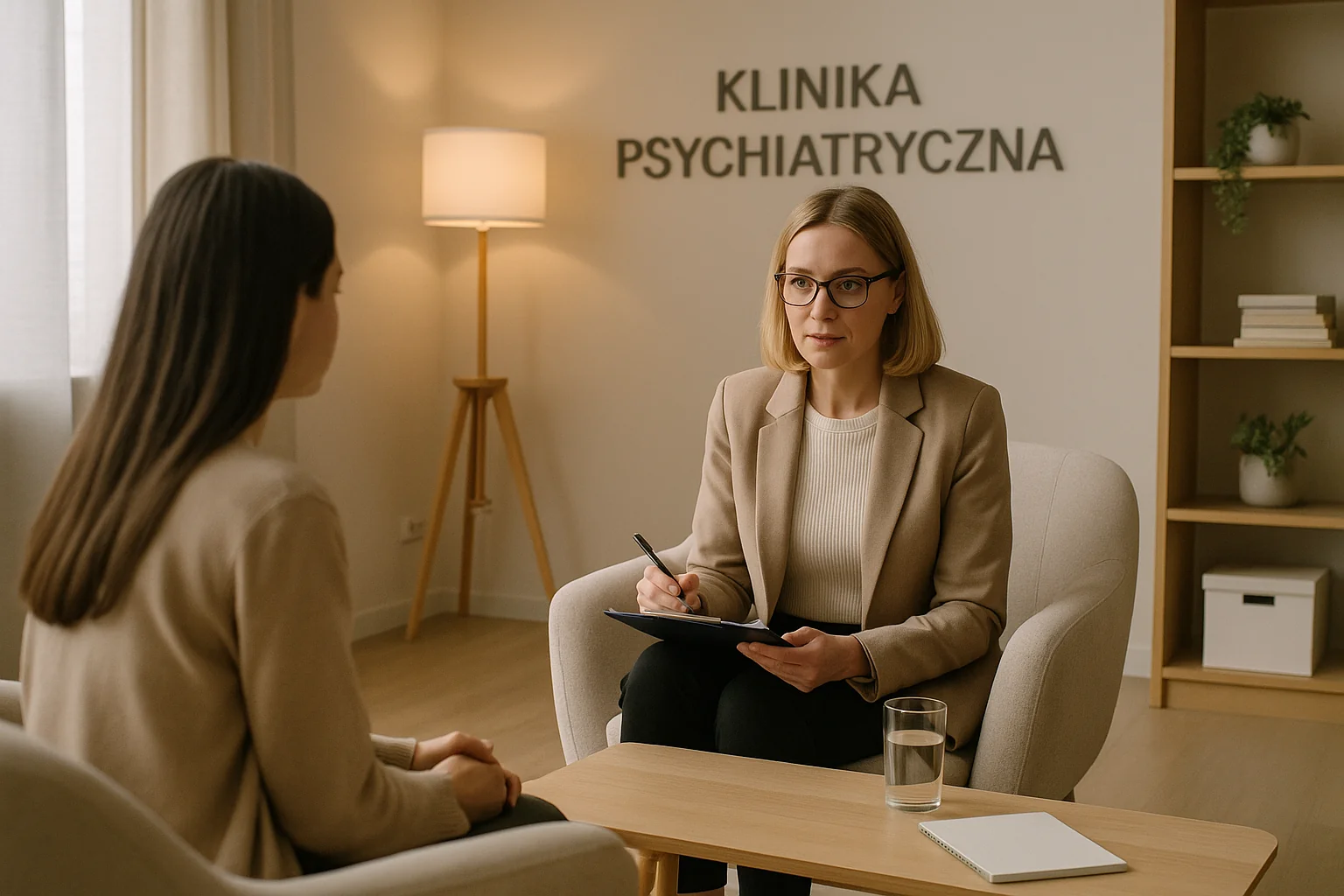

Ketamine therapy in Poland - how it works and for whom (legally)
Ketamine therapy in Poland — what it is, what studies say, and how to use it. u Bucha.
Polish psychiatry faces a growing problem: it is estimated that in 30-40% of patients with depression, standard antidepressants do not work sufficiently - we then refer to treatment-resistant depression (TRD). For this group, ketamine and esketamine have become a real alternative in recent years, now available in Poland as well. This is not an experimental therapy - esketamine has full EMA registration, and IV ketamine infusions are used off-label by qualified psychiatrists. In this article, we explain what ketamine therapy looks like in the Polish context, what studies say, who can benefit from it, and what the actual costs and availability are in 2026.
KEY INFORMATION
• 30-40% of patients with depression do not respond to two consecutive antidepressants - this is the definition of treatment-resistant depression (TRD), the main indication for ketamine (Popova et al., Lancet Psychiatry, 2019).
• Ketamine is a legal anesthetic drug in Poland; its use in psychiatry is off-label but permitted for qualified physicians.
• Esketamine (Spravato) has EMA registration for TRD and is available through selected NFZ centers in Poland.
• Cost of a private series of 6 infusions: 2,400-4,800 PLN; effect lasts 1-3 weeks without maintenance.
Status prawny ketaminy w Polsce - co jest legalne, a co nie?
Ketamine is a registered drug in Poland - it is listed in the Product Characteristics as an anesthetic and analgesic agent (Office for Registration of Medicinal Products, Medical Devices and Biocidal Products). As a substance from list II-P (a narcotic from group II, intended for medical use), it can only be prescribed and used by doctors. The use of ketamine in psychiatry - as therapy for treatment-resistant depression - is known as off-label use: legal, based on the doctor's decision and the best available scientific knowledge.
Intranasal esketamine (Spravato, Janssen) has full EMA registration (European Medicines Agency) for the treatment of treatment-resistant depression in adults, in combination with a standard antidepressant. In Poland, access through the NFZ is possible within the drug program, although the list of centers authorized to conduct it is limited. Esketamine cannot be used by the patient independently at home - each dose is taken under the direct supervision of medical staff for 2 hours after administration.
Recreational use of ketamine is illegal - as a substance from list II-P, its possession outside of a medical context is subject to the provisions of the Act on Counteracting Drug Addiction. This article concerns only legal, clinical use.
What Does Ketamine Therapy Look Like Step by Step?
The procedure varies depending on the form - IV infusion or intranasal esketamine - but in both cases involves several stages: psychiatric qualification, proper sessions, and maintenance. Below is a typical course for IV infusion.
Qualification includes a psychiatric interview confirming the diagnosis of TRD (lack of response to at least two antidepressants), exclusion of contraindications (active psychosis, uncontrolled hypertension, pregnancy, active addiction), and preliminary tests: ECG, blood pressure measurement, kidney function assessment. Some clinics also require an anesthesiology consultation, especially when deeper anesthesia is planned.
| Stage | IV Ketamine Infusion | Nasal Esketamine (Spravato) |
|---|---|---|
| Qualification | Psychiatrist + anesthesiologist; ECG; blood tests | Psychiatrist; TRD criteria according to the NFZ program |
| Acute Phase | 6 infuzji przez 2-3 tygodnie | 2×/week for 4 weeks (8 doses) |
| Session Duration | 40-60 minut infuzji + 1-2 h obserwacji | Administration 5 minutes + 2 hours of mandatory observation |
| Maintenance phase | 1 infuzja co 2-4 tygodnie (indywidualnie) | 1×/week for 4 weeks, then 1×/1-2 weeks |
| Driving a car | Prohibited on the day of infusion | Prohibited on the day of administration |
| Cost (private) | 400-800 PLN/session | NFZ reimbursement or private cost approx. 800-1200 PLN/session |
What do studies say about effectiveness - Polish realities vs. global data?
Global clinical data is robust. A meta-analysis of 24 RCTs showed an antidepressant response in 67% of patients after a single infusion, with a median time to response of 24 hours (Feder et al., JAMA Psychiatry, 2021). For intranasal esketamine, the TRANSFORM-2 study showed remission in 52.5% of patients vs. 31.0% with the antidepressant alone (Popova et al., Lancet Psychiatry, 2019).
Polish realities are more limited. There is still no national registry of ketamine therapy outcomes, and the experience of Polish private clinics is relatively short (since 2022). There is also a lack of comparative data considering the specifics of the Polish psychiatric population, comorbidity, and pharmacological environment. This does not undermine the effectiveness of therapy - but it means that patients should verify centers for compliance with protocols based on published standards.
We have noticed that in Polish private clinics using IV ketamine infusions, there is a significant variation in protocols - from centers strictly modeling after Hopkins protocols (with psychological preparation, music, and therapeutic care) to those using only the pharmacological component without psychological work. Data suggests that psychological integration increases the durability of effects - a purely pharmacological approach may be less effective in the long term.
Who is ketamine therapy suitable for - the profile of a qualifying patient?
A typical candidate for ketamine therapy is an adult patient diagnosed with major depressive episode (MDD) or depressive episode in the course of bipolar affective disorder (with caution), who has not achieved remission after at least two consecutive antidepressants used at appropriate doses for at least 6-8 weeks each. An additional indication is active suicidal risk requiring rapid intervention - here, ketamine can act as a 'bridge' before other treatments take effect.
The therapy is not indicated for patients with active psychosis, uncontrolled hypertension (systolic blood pressure above 180 mmHg), severe cardiovascular disease, history of uropathy or bladder disease, pregnancy and lactation, active substance use disorder (except for special addiction treatment protocols). Patients with bipolar affective disorder require individual assessment - ketamine may induce hypomania or mania.
From our editorial observation, more and more Polish psychiatrists are actively referring patients with TRD to ketamine centers, instead of continuing fruitless attempts with additional antidepressants. This is a change in attitude that was rarer just two years ago. The increasing availability of private clinics in Poland and the first Polish publications on ketamine therapy are changing the perception of this method among specialists.
Frequently Asked Questions
Is ketamine therapy legal in Poland?
Yes - ketamine is a registered anesthetic drug in Poland. Its use in depression therapy is off-label, legal for a physician with the appropriate qualifications. Intranasal esketamine (Spravato) has full EMA registration for the treatment of treatment-resistant depression and is available in Poland through selected psychiatric centers as part of the NFZ program.
How much does ketamine therapy cost in Poland in 2026?
The cost of one IV ketamine infusion in a private clinic usually ranges from 400 to 800 PLN. A standard series consists of 6 infusions - the total cost is 2,400 to 4,800 PLN. Intranasal esketamine may be reimbursed by NFZ for selected patients meeting TRD criteria, but access is very limited (Popova et al., Lancet Psychiatry, 2019).
How long does the effect of one series of ketamine infusions last?
The effect of one series of 6 IV ketamine infusions usually lasts 1-3 weeks without maintenance. With a maintenance protocol or in combination with psychotherapy and SSRIs, the remission time is extended. In the TRANSFORM-2 studies with esketamine, the effect lasted for 16 weeks in more than half of the patients (Popova et al., Lancet Psychiatry, 2019).
Which centers in Poland offer ketamine therapy?
In Poland, there are several private psychiatric clinics offering IV ketamine infusions, mainly located in Warsaw, Krakow, Wroclaw, Poznan, and the Tri-City area. Intranasal esketamine as part of the NFZ program is offered by selected academic clinics - the list is updated by NFZ. Before scheduling an appointment, it is advisable to confirm the qualifications and protocol used by the center.
Does ketamine therapy require discontinuation of current medications?
Not always. Unlike psilocybin protocols, ketamine infusions usually do not require discontinuation of SSRIs - ketamine acts through the NMDA receptor, not 5-HT2A. However, benzodiazepines may weaken the effect of the infusion. The decision to modify treatment rests solely with the psychiatrist conducting the therapy.
How to prepare for the first ketamine infusion?
Physical preparation is relatively simple: it is usually recommended to refrain from eating for 4-6 hours before the infusion (a standard requirement as before any procedure requiring light sedation), avoid alcohol for at least 24 hours, come with a companion (driving is not possible for several hours after the infusion), wear comfortable clothing, and bring headphones or an eye mask if the center recommends them.
Psychological preparation is equally important. It is worth considering your intention before the infusion - what you want to achieve, what you want to focus on. This is not a mandatory element of the ketamine protocol (unlike psilocybin, where working with intention is more structured), but it can help guide the process. Many patients describe the first infusion as surprising in terms of the intensity of dissociative effects - knowing what may arise reduces anxiety.
After a series of infusions, integration is equally important. The dissociative experience of ketamine sometimes brings insights and emotions that are worth processing with a therapist or psychologist. Clinical protocols recommend at least 1-2 sessions of conversation with a psychologist per week after a series of infusions - although this standard is not always implemented in Polish private clinics.
Long-term safety - what do we know about regular use?
The greatest long-term risk of regular ketamine use is ketamine-induced uropathy (ketamine cystitis) - an inflammatory condition of the bladder leading to its fibrosis and shrinkage. It is almost exclusively described in individuals using ketamine recreationally in high doses (on average several grams daily for many months). At therapeutic doses (0.5 mg/kg every few weeks), the risk is significantly lower, though not zero - especially with maintenance protocols used for years (Morgan et al., BJA, 2012).
The risk of addiction in a therapeutic context is monitored - ketamine centers usually maintain registers of session frequency and monitor signs of increasing tolerance or behaviors indicating seeking substances outside the protocol. This is not a zero risk, but in a supervised clinical context, it is significantly lower than with recreational use. Patients with a history of addiction require particularly careful observation.
This article is for informational and educational purposes and does not replace consultation with a doctor. If you are pregnant, breastfeeding, taking medications, or have chronic conditions, consult the use of supplements or herbs with a specialist.
Author: Michał Waluk · Published: 2026-05-04 · Updated: 2026-05-04