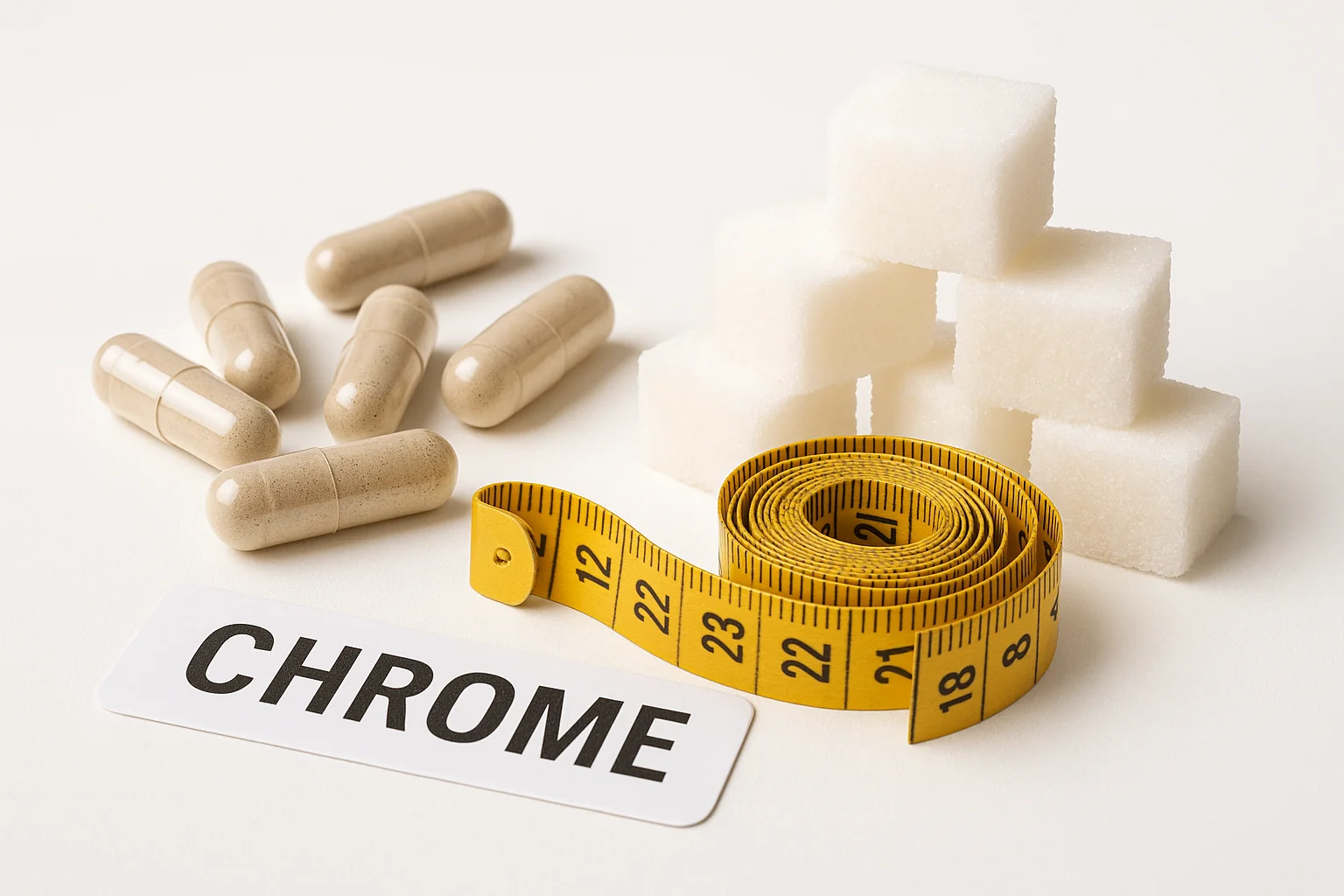

Chromium for appetite and blood sugar - does it work (FAQ)
Chromium for appetite and blood sugar: answers to frequently asked questions and practical tips. u Bucha.
Chromium is a trace element that has appeared in dietary supplement advertisements for years as "the one for sugar and appetite." EFSA - the European Food Safety Authority - has approved one health claim: chromium contributes to the maintenance of normal macronutrient metabolism and normal blood glucose levels (EFSA, 2010). But does this mean that chromium supplementation will actually reduce your sweet cravings? The reality is more complex. This article answers the most common questions about chromium without beating around the bush.
KEY INFORMATION
• EFSA confirmed that chromium supports normal glucose and macronutrient metabolism - this is the only approved health claim (EFSA, 2010).
• The effect on appetite is weak and mainly concerned individuals with atypical depression and compulsive eating - not the general population.
• Chromium picolinate is the best-absorbed form (bioavailability 2-5%) - far better than chromium chloride.
• The EFSA dose is 40 mcg/day; clinical studies used 200-1000 mcg.
• With antidiabetic medications and thyroid hormones: always consult a doctor before supplementation.
How chromium works in the body - mechanism in brief
Chromium acts in the body as a component of a protein called chromodulin (or LMWCr - low molecular weight chromodulin). Chromodulin enhances the insulin receptor signal inside the cell - when insulin binds to its receptor on the cell surface, chromodulin amplifies the intracellular response, effectively increasing glucose uptake by muscle and fat cells (Vincent, Biological Trace Element Research, 2004).
In simple terms: chromium does not "lower sugar" directly - it enhances the action of insulin, which does that for it. Therefore, the effects of chromium are more pronounced in individuals with insulin resistance or chromium deficiency in the diet than in healthy individuals with normal insulin sensitivity.
Where does chromium come from in the diet? The richest natural sources are brewer's yeast, meat (especially beef and turkey), whole grain products, broccoli, and nuts. Food processing drastically reduces chromium content - a diet based on processed foods and simple sugars may not provide sufficient amounts of this element.
A certain paradox: individuals consuming a lot of simple sugars excrete more chromium in urine, leading to its deficiency, which in turn worsens glucose metabolism. This creates a vicious cycle where a sugar-rich diet actively depletes the body of the mineral needed for its proper metabolism.
What science says - a review of key studies
A meta-analysis of 15 randomized clinical trials published in Diabetes Technology & Therapeutics (2014) showed that chromium supplementation (picolinate, chromium yeast, or chloride) reduced fasting glucose by an average of 0.6 mmol/l and HbA1c by 0.54% compared to placebo in patients with type 2 diabetes (Suksomboon et al., Diabetes Technology & Therapeutics, 2014). The effects were more pronounced in individuals with higher baseline glucose levels, suggesting that chromium helps those who need it most.
A meta-analysis by Tian et al. from 2013, published in Obesity Reviews, analyzed studies on chromium and appetite. The results were disappointing for those dreaming of a "hunger pill" - the effect on body weight was statistically significant but clinically small: the average difference in weight loss between the chromium group and placebo was only 0.5 kg over several months. A significant effect on reducing carbohydrate cravings was noted mainly in individuals with atypical depression with the symptom of excessive eating - not in the general population.
What does this mean in practice? Chromium is not a supplement that will "turn off" your sweet cravings nor will it independently reduce body weight. However, it is a sensible addition for people with insulin resistance, chromium deficiency, or difficulties in maintaining stable glucose levels after carbohydrate meals - especially when used in conjunction with a low glycemic index diet.
Chromium and insulin resistance - is it effective?
Insulin resistance is a condition in which cells respond poorly to insulin signals. Chromium - through its action on chromodulin, which enhances insulin receptor response - is theoretically a justified candidate for a supplement in insulin resistance. However, clinical practice is more cautious.
A meta-analysis of 15 clinical studies (Suksomboon et al., 2014) showed an improvement in fasting glucose and HbA1c in patients with type 2 diabetes, but the effects were more pronounced in individuals with confirmed chromium deficiency in their diet or elevated baseline glucose. In individuals with normal glucose levels, chromium supplementation did not provide statistically significant improvement. Therefore, chromium is not a supplement "for everyone with insulin resistance" - it is a supplement for those suspected of chromium deficiency or who consume a lot of simple sugars (which accelerates the excretion of chromium in urine).
When should you consider chromium for insulin resistance? When the diet is low in whole grains and high in processed carbohydrates (the main sources of chromium are yeast, meat, broccoli, whole grains), when insulin resistance coexists with compulsive cravings for sweets and difficulties in appetite control after meals, and when other first-line supplements (berberine, inositol, magnesium) have been ineffective or poorly tolerated. Dosage: 200-400 mcg of chromium picolinate daily, with meals containing carbohydrates.
When chromium is NOT a good choice
There are situations where chromium supplementation is unnecessary or requires special caution. First of all - if your blood glucose level is normal and you do not have insulin resistance or diabetes, there is no basis to believe that additional chromium will improve your glucose metabolism. EFSA does not approve chromium as a substance that "improves" proper metabolism - only as one that supports its maintenance.
Chromium can interact with several groups of medications. It enhances the action of insulin and oral antidiabetic drugs - increasing the risk of hypoglycemia. Levothyroxine (a medication for hypothyroidism) is absorbed worse when taken together with chromium - a recommended interval is at least 3-4 hours. Antacids may reduce chromium absorption.
We observe that the most common mistake in chromium supplementation is taking it once a day in the morning on an empty stomach in a large dose. Meanwhile, studies using a division into 2-3 smaller doses with meals yielded better absorption results and eliminated rare complaints of stomach discomfort. Smaller doses with each main meal also mimic the natural rhythm of glucose exposure, which is when chromium acts.
Frequently Asked Questions
Does chromium actually reduce cravings for sweets?
Clinical studies yield mixed results. A meta-analysis from 2013 (Tian et al., Obesity Reviews) showed a slight but statistically significant reduction in carbohydrate cravings with chromium supplementation - primarily in individuals with atypical depression and compulsive eating. The effect in the general population of healthy adults is weak and uncertain. Chromium is not an "appetite switch."
What form of chromium is best absorbed?
Chromium picolinate is the most studied and best-absorbed organic form - with a bioavailability of 2-5%, which significantly exceeds chromium chloride (an inorganic form, practically unabsorbed). Chromium yeast is a good alternative. EFSA indicates organic forms as preferred in supplementation (EFSA, 2010).
How much chromium should I take daily?
EFSA sets the appropriate daily intake of chromium at 40 mcg for adults - this level is sufficient to meet physiological needs. Clinical studies on its effect on blood sugar used higher doses: 200-1000 mcg of chromium picolinate daily. Doses above 400 mcg should be consulted with a doctor, especially when used concurrently with medications affecting glucose levels (EFSA, 2010).
Does chromium interact with medications?
Yes. Chromium can enhance the action of insulin and oral antidiabetic medications, increasing the risk of hypoglycemia. Levothyroxine requires a 3-4 hour interval from chromium supplementation, as chromium reduces its absorption. Antacids reduce chromium absorption. Individuals with diabetes, thyroid diseases, or those regularly taking medications should consult supplementation with a doctor before starting.
When is the best time to take chromium?
Most studies used chromium divided into 2-3 doses daily, taken with meals containing carbohydrates. Taking it with meals reduces potential irritating effects on the stomach and mimics the natural rhythm of the body's exposure to glucose, where chromium acts as an insulin cofactor. Taking the entire dose in the morning on an empty stomach is not an optimal regimen.
Does chromium help with type 2 diabetes?
A meta-analysis of 15 clinical studies (Suksomboon et al., Diabetes Technology & Therapeutics, 2014) showed that chromium slightly lowers fasting glycemia and HbA1c in patients with type 2 diabetes, particularly with chromium deficiency. The effects are moderate and do not replace pharmacological treatment. Supplementation is a decision to be made together with a diabetologist.
Is chromium safe long-term?
The long-term safety of chromium in supplemental doses up to 400 mcg daily is generally considered acceptable by EFSA. Studies lasting over 6 months did not show serious adverse effects at these doses. At higher doses (above 1000 mcg) or in cases of kidney and liver diseases, monitoring and medical supervision are recommended (EFSA, 2010).
Does chromium help with weight loss?
A meta-analysis in Obesity Reviews (2013) showed a statistically significant but clinically small difference in weight loss - about 0.5 kg more than placebo over several months. Chromium is not a weight loss agent. It may be a sensible addition to a reduction diet for individuals with insulin resistance or episodes of compulsive sweet cravings, but it does not replace the caloric deficit as the foundation of weight loss (Tian et al., Obesity Reviews, 2013).
This article is for informational and educational purposes and does not replace consultation with a doctor. If you are pregnant, breastfeeding, taking medications, or have chronic conditions, consult the use of supplements or herbs with a specialist.
Author: Michał Waluk · Published: 2026-05-04 · Updated: 2026-05-04