
Saw palmetto for prostate enlargement - what do studies say
Saw palmetto: a reliable answer based on research. u Bucha.
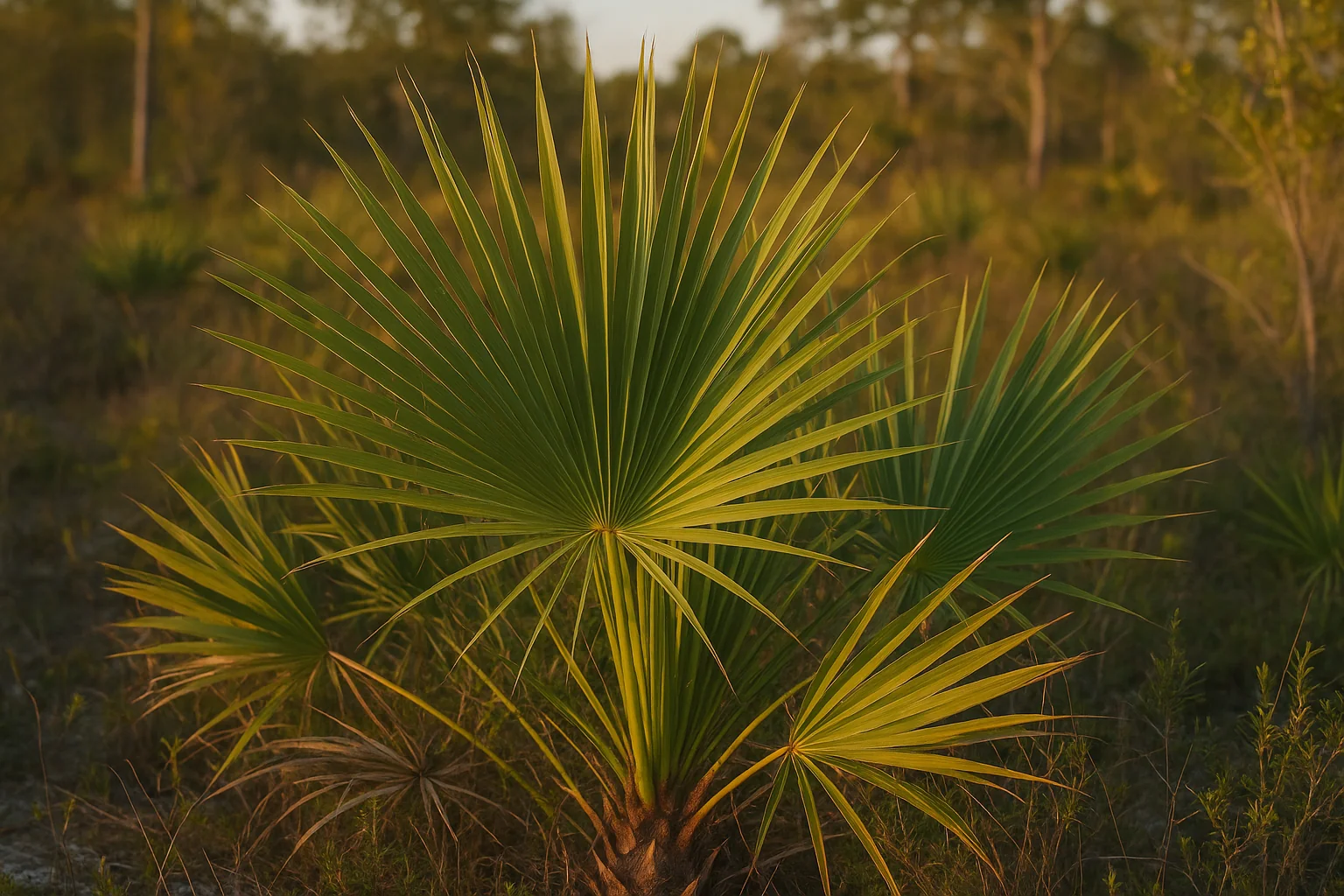
Saw palmetto (Serenoa repens, also known as saw palmetto, is one of the best-selling supplements in the world, especially among men with symptoms of benign prostatic hyperplasia (BPH). In the United States, annual sales exceed $100 million. For years, it has been promoted as a 'natural finasteride' - a supplement with effects similar to medications. Interestingly, it was for saw palmetto that some of the most expensive and well-designed herbal studies in history were conducted - funded by the National Institutes of Health. Their results surprised both proponents and opponents of herbal therapy.
KEY INFORMATION
• The STEP study (NIH, 2006, n=225) found no advantage of 320 mg/day of saw palmetto over placebo after 12 months (Bent et al., NEJM, 2006).
• The CAMUS study (NIH, 2011, n=369) tested doses up to 960 mg/day - none were more effective than placebo after 72 weeks (Barry et al., JAMA, 2011).
• The Cochrane Review (2012, 32 studies) did not confirm the effectiveness of saw palmetto in BPH.
• Saw palmetto lowers PSA by 5-10% - important when planning prostate cancer screening.
The history of research: from enthusiasm to skepticism
In the 1980s and 1990s, a series of European clinical studies (mainly from Germany and France) were published, showing improvement in LUTS symptoms in men using saw palmetto fruit extract. A meta-analysis by Wilt et al. from 1998, published in JAMA, analyzed 18 randomized studies and found a moderate improvement in urinary flow and a reduction in nocturia (Wilt et al., JAMA, 1998). Based on these results, saw palmetto gained a place in the guidelines of European urological societies as an option for mild BPH symptoms.
The problem was that these early studies were small (usually 40-200 participants), short (8-12 weeks), and used various preparations with different compositions. Wilt herself later acknowledged in the Cochrane update (2009) that the quality of evidence is low. Only large, NIH-funded studies tested the hypothesis with true methodological rigor.
Badanie STEP - pierwsza weryfikacja NIH
Sawmetto Treatment for Enlarged Prostates (STEP) was a randomized, double-blind study conducted at the UC San Francisco Medical Center. 225 men over the age of 45 with moderate BPH symptoms (IPSS 8-24) received a certified extract of saw palmetto 160 mg twice daily (320 mg/day) or a placebo for 12 months. Result: no statistically significant difference in IPSS change (−0.04 points vs −0.68 points in favor of placebo), urinary flow, prostate volume, or any other parameter (Bent et al., New England Journal of Medicine, 2006).
We noted that the STEP study was criticized for using a specific preparation (Indena) - critics argued that other extracts might yield different results. This is a difficult argument to verify, as evidence for 'better' preparations is anecdotal or based on small, unblinded studies. Science requires that proponents of a given therapy provide evidence of its effectiveness, not the other way around.
CAMUS Study - higher doses, same result
Complementary and Alternative Medicine for Urological Symptoms (CAMUS) was another NIH study designed to test whether the issue with saw palmetto lies in too low a dose. 369 men with moderate BPH symptoms were randomly assigned to groups using 320 mg, 640 mg, or 960 mg of saw palmetto extract or placebo for 72 weeks. Result: no dose showed a significant advantage over placebo at any time point or measure of effectiveness (Barry et al., JAMA, 2011).
The CAMUS study particularly struck at the hypothesis of dose-dependent effect - a popular argument among proponents of saw palmetto claimed that 320 mg is too little. 960 mg daily for over a year is a hard-to-challenge trial. Nevertheless, the results were clear. The placebo effect in both groups (STEP and CAMUS) was about 30-35% improvement in IPSS - a typical placebo response for subjective urological symptoms.
Cochrane Review and where we are today
The update of the Cochrane review by MacDonald and Rutledge from 2012 included 32 randomized clinical trials with a total of 5666 men. Conclusions: 'Serenoa repens does not improve LUTS symptoms or urodynamics compared to placebo in men with BPH.' However, the authors emphasized that studies conducted before 2000 may be inflated due to low methodological quality (MacDonald & Rutledge, Cochrane, 2012).
From our observations, many men report subjective improvement when using saw palmetto - and this should not be dismissed. Possible explanations include: the placebo effect (very strong for subjective urological symptoms), natural fluctuations in the severity of BPH symptoms, as well as the effect of accompanying lifestyle changes (diet, hydration, reduction of alcohol and caffeine). Clinical studies do not falsify this - they only show that the palm itself does not provide value beyond placebo.
PSA and prostate cancer - an important warning
The extract from saw palmetto fruits shows weak inhibitory action on 5-alpha-reductase, similar in mechanism to finasteride. A side effect of this activity is a reduction in PSA (prostate-specific antigen) levels by an estimated 5-10% with long-term use (Bent et al., NEJM, 2006). PSA is a key marker used in screenings for prostate cancer. A false reduction in PSA may cause early prostate cancer to be overlooked in laboratory tests.
Before a planned PSA test, you should inform your doctor about the use of saw palmetto. Similarly to the use of finasteride, the PSA result should be interpreted with consideration of the adjustment for the effect of the preparation. This is clinically significant information that many supplement manufacturers do not disclose on the packaging.
Saw palmetto vs other prostate supplements - evidence comparison
Saw palmetto is not the only plant studied in the context of BPH. It is worth comparing the level of evidence for several popular options to assess them in a broader context. Nettle root (Urtica dioica) - unlike saw palmetto - showed a statistically significant improvement in the Safarinejad study (2005, n=620), although the effect was moderate. Rye pollen (Cerniton extract) was studied in several smaller RCTs and showed improvement in IPSS, but the quality of these studies is low. Beta-sitosterol (isolated phytosterol) - a meta-analysis of 4 RCTs showed symptomatic improvement, but the products available on the market vary significantly in quality.
Could a combination of saw palmetto with other herbs be more effective? This is a popular question. The Melnikow study (2012) combining nettle and saw palmetto showed results comparable to tamsulosin. However, this study did not have a 'saw palmetto alone' group - it is unclear how much each plant contributed to the effect. It is possible that the effect mainly comes from the nettle root, and saw palmetto is a component with a weaker contribution.
Practical conclusion: if you are looking for herbal support for mild BPH symptoms, the available evidence more strongly supports nettle root than saw palmetto. Regardless of the choice - with moderate or severe BPH symptoms, elevated PSA, or suspicion of urinary retention, a urological consultation is necessary, not self-treatment with supplements.
Frequently Asked Questions
Does saw palmetto work for prostate enlargement?
Large, well-designed NIH studies - STEP (NEJM, 2006) and CAMUS (JAMA, 2011) - did not show an advantage of saw palmetto over placebo (Bent et al., 2006; Barry et al., 2011). The Cochrane Review (32 studies) confirms the lack of sufficient evidence of effectiveness. Earlier positive studies were smaller and methodologically weaker.
What dose of saw palmetto is used in studies?
The standard dose in studies is 320 mg of lipophilic extract daily (160 mg × 2). The CAMUS study tested 320 mg, 640 mg, and 960 mg - no dose was more effective than placebo after 72 weeks (Barry et al., JAMA, 2011). Argument „za niska dawka” jest zatem empirycznie obalony.
Why were older saw palmetto studies positive, while newer ones are not?
Older studies (1980s-90s) were smaller, shorter, and less well-blinded. Publication bias (more frequent publication of positive results) may have inflated estimates of effectiveness. Newer, larger NIH studies employed rigorous methodology and certified preparations, eliminating known sources of error (MacDonald & Rutledge, Cochrane, 2012).
Does saw palmetto have side effects?
Generally well tolerated. Possible: nausea, headaches, rarely abdominal pain. Key warning: saw palmetto lowers PSA by about 5-10%, which may falsely mask prostate cancer screening results. Inform your doctor about the use of the preparation before PSA testing.
How does saw palmetto work on the prostate?
Fatty acids and phytosterols from the fruit Serenoa repens inhibit in vitro activity of 5-alpha-reductase and show anti-androgenic effects. However, the strength of these in vitro effects does not translate into clinically significant results in large RCTs. The mechanism is similar to that of finasteride, but significantly weaker.
Is saw palmetto better than finasteride?
No. Finasteride has clearly proven efficacy: it reduces prostate volume by 20-30% after a year, reduces the risk of urinary retention and the need for surgery. Saw palmetto in large RCTs does not show an advantage over placebo. For BPH symptoms requiring pharmacological treatment, finasteride, dutasteride, or alpha-blockers have stronger evidence of effectiveness. Make decisions with a urologist.
This article is for informational and educational purposes and does not replace consultation with a doctor. If you are pregnant, breastfeeding, taking medications, or have chronic conditions, consult the use of supplements or herbs with a specialist.
Author: Michał Waluk · Published: 2026-05-04 · Updated: 2026-05-04