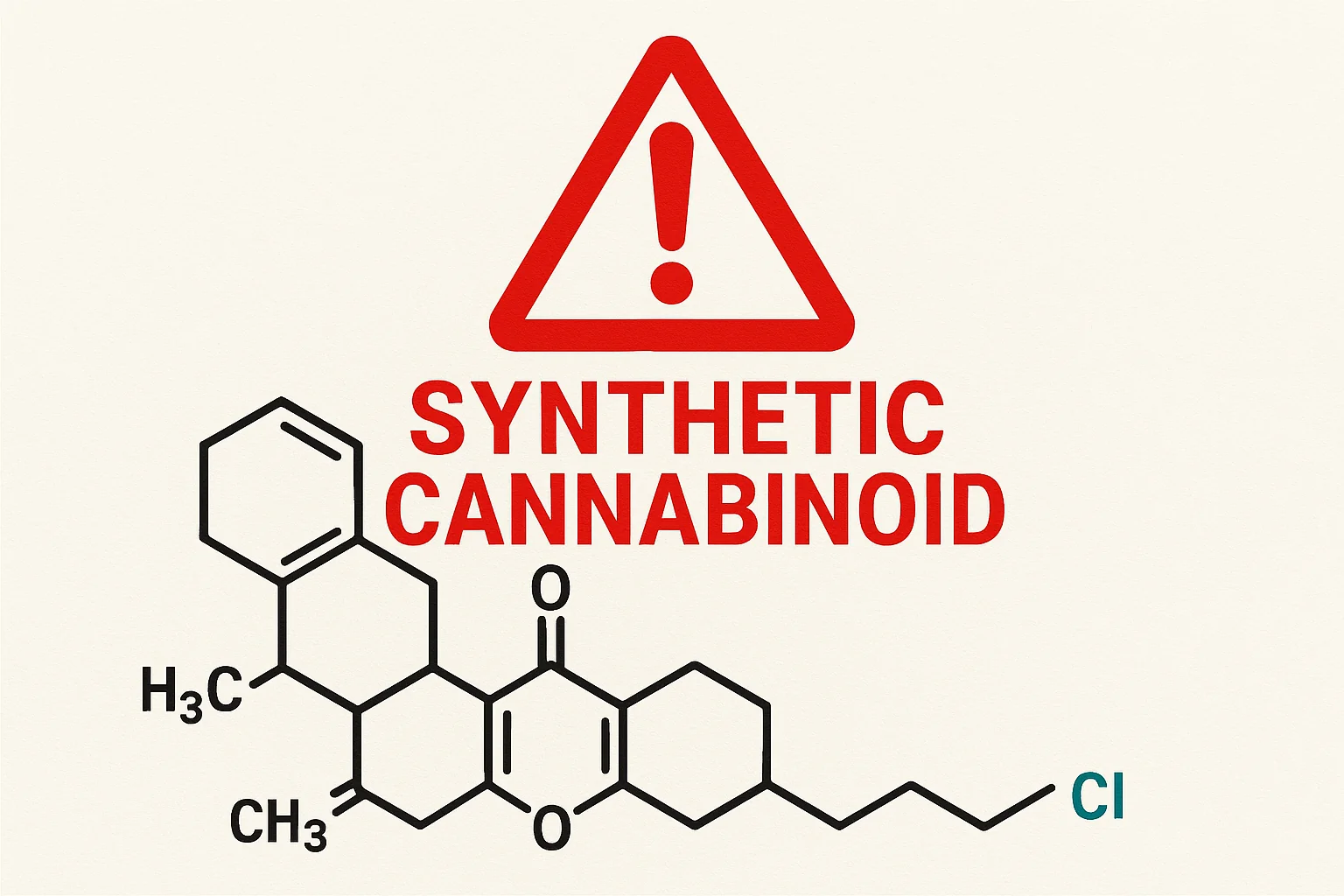

Synthetic cannabinoids - what are they, why are they dangerous, and how to recognize them
Synthetic cannabinoids: interactions, contraindications, and precautions in a clear table. u Bucha.
Since 2008, over 900 new psychoactive substances have been reported in Europe, with synthetic cannabinoids being the largest and fastest-growing group (EMCDDA, Drug Profile 2023). Behind catchy names like Spice, K2, or "herbal incense" are chemical substances sprayed on plant material. They are not "weaker marijuana". They are full agonists of CB1 receptors, acting many times stronger than natural THC, without any quality control or predictable dosage. This article explains the mechanism of danger, describes the symptoms of poisoning, and shows how to distinguish these substances from legal hemp material.
KEY INFORMATION
• Since 2008, the EMCDDA has recorded over 900 new psychoactive substances in Europe, with synthetic cannabinoids being the largest category (EMCDDA, Drug Profile 2023).
• Synthetic cannabinoids are full agonists of CB1 - THC is only a partial agonist, which explains their significantly greater toxicity.
• In case of suspected poisoning: call 112, place the person in the recovery position, do not leave them alone.
• Legal dried CBD hemp has a tested composition and contains less than 0.3% THC.
What are synthetic cannabinoids and where did they come from?
Synthetic cannabinoids are a broad group of chemical substances that bind to the same endocannabinoid receptors as THC. The first of these were synthesized in academic laboratories in the 1980s and 1990s for research on the endocannabinoid system (EMCDDA, Drug Profile 2023). No one planned to sell them as recreational drugs.
They appeared on the market after 2004, when chemists began applying these compounds to plant material and selling it as "herbal incense blends". This gave the products an apparently legal character, as the substances used were not yet included in drug laws. In Poland, the market for legal highs flourished particularly intensively between 2008 and 2010.
We noticed in available reports something that escapes most popular science articles: the problem with synthetic cannabinoids is not that one substance is "bad". Every year, dozens of new analogs appear, designed to circumvent the current list of banned compounds. It is a legislative race that users have no chance of winning.
Why are synthetic cannabinoids more dangerous than natural marijuana?
The key difference lies in the type of binding to the CB1 receptor. Natural THC is a partial a CB1 receptor agonist - it only partially activates it, which biologically limits the intensity of effects. Synthetic cannabinoids are full agonists: they bind to the receptor and activate it maximally (Fantegrossi et al., Toxicological Sciences, 2014). This is the fundamental mechanism of their greater toxicity.
In the natural cannabis plant, THC coexists with CBD and dozens of other phytocompounds. CBD acts as a partial antagonist of CB1, mitigating the effects of THC. In synthetic Spice products, there is no such buffer. The user receives pure, maximum stimulation of the CB1 receptor.
The third difference is the lack of dosage control. The substance is sprayed unevenly on the material. One batch may contain concentrations a hundred times higher than a neighboring one. The user has no way of predicting how much substance they have taken. This explains why sudden hospitalizations occur even among those with "experience" with these products.
What symptoms does poisoning with synthetic cannabinoids cause?
Symptoms of synthetic cannabinoid poisoning appear quickly, usually within a few to several minutes after exposure, and can be significantly more severe than with natural marijuana. A review of clinical cases published in the journal Clinical Toxicology indicates that the most common severe complications are tachycardia, acute psychosis, and seizures (Tait et al., Clinical Toxicology, 2014). The table below collects warning signals in one place.
| Symptom / warning signal | Health risk | What to do immediately |
|---|---|---|
| Tachycardia, heart palpitations, arrhythmia | Heart attack, sudden cardiac arrest | Call 112, do not let the person get up |
| Psychosis, hallucinations, severe anxiety, paranoia | Permanent mental disorders, risk of self-harm | Speak calmly, remove dangerous objects, call 112 |
| Seizures | Head injury, asphyxia, metabolic acidosis | Secure the head, do not put anything in the mouth, call 112 |
| Loss of consciousness | Aspiration of vomit, brain hypoxia | Place in the recovery position, do not leave alone, call 112 |
| Severe aggression or extreme agitation | Injuries, rhabdomyolysis, hyperventilation | Do not restrain physically, maintain distance, call 112 |
| Hypothermia or hyperthermia (extreme body temperature) | Organ damage, shock | Cover or cool depending on the symptom, call 112 |
| Vomiting, severe abdominal pain, pallor | Aspiration, dehydration, toxic kidney damage | Place on the side, do not give anything orally, call 112 |
Overarching principle: call 112 for any of the above symptoms. Do not leave the person alone, even if they seem to be regaining contact with reality. The condition can deteriorate rapidly.
How to recognize synthetic cannabinoids?
EMCDDA indicates several characteristic visual and packaging features that distinguish Spice products from legal hemp flowers. Knowledge of these signals can save lives, as external appearance is often the only available information before use (EMCDDA, Drug Profile 2023).
Packaging and Label
Spice products hit the market in colorful, eye-catching foil packaging with graphics reminiscent of energy drinks or supplements. Look for the phrase "not for human consumption" or "not intended for human consumption" - this is a legal trick allowing producers to evade responsibility for human use. This disclaimer does not make the product safe. On the contrary.
Appearance and Smell of the Dried Herb
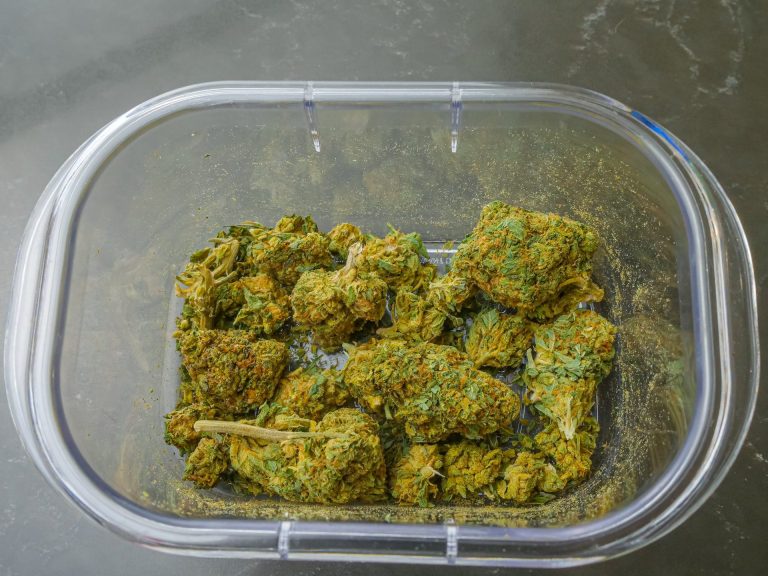
Natural hemp flower is covered with visible trichomes: sticky, silvery resin crystals. It has a characteristic, intense terpene aroma. Spice flower looks different: it is more uniform in color, often light green or brown, without trichomes. The smell can be chemical, sweet, or synthetic. A lack of smell is also a warning signal.
Composition and Certifications
Our observations indicate that many people purchasing legal highs never check the composition, as there is no list of active substances on the packaging or it only states "herbal blend". Legal hemp products have a defined cannabinoid profile with laboratory tests available upon request or published on the manufacturer's website. The lack of verification of the composition is the number one warning sign.
Legal aspects: are "legal highs" legal in Poland?
It is worth knowing that synthetic cannabinoids themselves are not a homogeneous group. EMCDDA has cataloged over 200 different compounds classified in this category. Each may have a different toxicity profile, different dosing window, and different duration of action. A person who has "survived" one product without serious effects has no guarantee that the next batch - even sold under the same name - will behave the same way. The composition changes without notifying the consumer.
In Poland, since 2010, there has been a law on combating drug addiction, which provides for a fast track to the delegalization of new psychoactive substances. The Ministry of Health can ban a given substance by regulation, without waiting for the full legislative procedure. Nevertheless, Spice manufacturers regularly modify the chemical molecule, introducing another analog that is not yet on the list.
Possession of substances from the category of new psychoactive substances (NPS) listed is punishable. Trading them is punishable by up to 3 years in prison, and in the case of acting for financial gain or against minors - more severely. The fact that a specific molecule is not yet on the list does not protect against criminal liability for trafficking.
Legal Dried Hemp as a Transparent Alternative
Legal industrial hemp with THC content below 0.3% is subject to strictly defined European standards. Cultivations with EU certification must come from varieties listed in the Common Catalogue of Varieties and undergo regular laboratory tests (EUR-Lex, Regulation 1307/2013). This is a completely different class of product than Spice.
The difference is not just about legality. Legal hemp contains natural phytochemicals and terpenes in the proportions produced by the plant. The composition is known and verifiable. There is no risk that one gram contains a dose ten times higher than the previous one. This predictability is a fundamental safety advantage.
Frequently Asked Questions
What are synthetic cannabinoids and why are they used?
Synthetic cannabinoids are chemical substances sprayed on plant material and sold under names like Spice, K2, or legal highs. They act on the same CB1 receptors as natural THC, but with many times greater potency. They are used because they are cheap and difficult to detect in standard drug tests (EMCDDA, Drug Profile 2023).
Why are synthetic cannabinoids more dangerous than natural marijuana?
Synthetic cannabinoids are full agonists of CB1 receptors - they bind to them more strongly than THC and activate them completely. THC is a partial agonist, which limits its toxicity. Synthetic products also lack natural CBD, which partially mitigates the effects of THC in the plant (Fantegrossi et al., Toxicological Sciences, 2014).
What to do if someone loses consciousness after using synthetic cannabinoids?
Immediately call 112. Do not leave the person alone. Place them in the recovery position to prevent choking on vomit. Do not administer any substances or medications. Rescuers need to know what was taken - relay this information to the emergency dispatcher.
How to recognize synthetic cannabinoids on a label or packaging?
Look for the warning "not for human consumption" or "not intended for human consumption". The packaging often resembles a herbal blend with colorful graphics. The material does not have visible trichomes or the characteristic smell of cannabis. It is often uniformly green or has a strange, chemical aroma (EMCDDA, Drug Profile 2023).
Are legal dried CBD hemp a safe alternative to legal highs?
Legal dried CBD hemp from certified European cultivations has a tested, transparent composition. It contains less than 0.3% THC and does not contain synthetic compounds. This is a completely different product: regulated, quality-controlled, free from unpredictable chemical substances that make Spice so dangerous (EUR-Lex, Regulation 1307/2013).
This article is for informational and educational purposes and does not constitute medical advice. Before starting to use cannabis or CBD for therapeutic purposes, consult a doctor, especially if you are taking other medications, are pregnant, or breastfeeding.
Author: Michał Waluk · Published: 2026-05-04 · Updated: 2026-05-04