
Bad trip - what it means, where it comes from, and how to cope
Bad trip — what it is, how it works, and what it helps with. An understandable guide from u Bucha.
Controlled studies using psychoactive substances indicate that undesirable anxiety reactions during the substance's effects occur in 22% of participants, and in non-laboratory conditions, this percentage is likely higher (Studerus et al., Psychopharmacology, 2011). A bad trip is neither a myth nor an exaggeration. It is a real episode of intense anxiety, panic, or paranoia that can affect any user of psychoactive substances, including cannabis. This guide explains what happens in the mind and body during such an experience, where it comes from, and what to do if you or someone nearby is experiencing it. Without judgment, with an emphasis on safety.
KEY INFORMATION
• In 22% of participants in controlled studies with psychoactive substances, strong anxiety reactions were recorded (Studerus et al., Psychopharmacology, 2011).
• A bad trip can occur after cannabis, especially at higher doses, among new users, and in stressful environments.
• Three keys to help: a calm environment, gentle reassurance ('this will pass'), no arguing with the person experiencing the episode.
• Call 112 immediately in case of: seizures, loss of consciousness, difficulty breathing, or persistent tachycardia.
What is a bad trip and when does it occur?
A bad trip is an episode of intense anxiety, panic, or paranoia during the action of a psychoactive substance. According to a review of clinical literature, Grof and colleagues described this state as 'an overwhelming experience of difficult emotions,' which may include a sense of loss of identity, time-space disorientation, and a belief in a real threat to life (Grof, Journal of Psychoactive Drugs, 1980 / PMC 2012 review). This is not just ordinary nervousness.
It most often occurs after substances that alter perception: classic psychedelics, cannabis at higher doses, as well as new psychoactive substances with unknown compositions. The duration depends on the substance and dose. An episode after cannabis usually passes within an hour or two. After long-acting substances, it can last for many hours.
From available accounts and harm-reduction reports, there is something that rarely appears in popular descriptions: a bad trip does not always start suddenly. It is often a gradual escalation of anxiety that the environment downplays as 'a bit of nervousness.' Recognizing early warning signs and responding before anxiety escalates yields much better outcomes than intervening at the peak of the episode.
The symptoms of a bad trip are divided into psychological and physical. On the psychological side: intrusive thoughts, feelings of persecution, disorientation, unpleasant emotional charge hallucinations, loss of sense of self ('ego dissolution' of a negative nature). On the physical side: tachycardia, sweating, trembling, nausea, feelings of breathlessness. Both dimensions feed into each other.
Where does a bad trip come from - causes and risk factors
The concept of 'set and setting' (mindset and environment) is the best-documented explanation of why some experiences end peacefully while others end in anxiety and panic. Studerus and colleagues in a meta-analysis of 34 studies with psychoactive substances showed that negative emotional mindset before taking the substance and a stressful environment are the two strongest predictors of difficult experiences (Studerus et al., Psychopharmacology, 2011). The substance amplifies what is present - both calm and tension.
'Set' means everything you bring with you: current emotions, stress level, trauma history, attitude towards the substance, fears. A person in a bad moment in life, entering the experience with anxiety, is much more susceptible to a bad trip than a calm person in a safe context. It doesn't matter whether it's the 'first try' or the tenth.
'Setting' refers to the physical and social environment. A crowd, loud music, unknown people nearby, lack of privacy, or the need to pretend normalcy in the company that does not know what is happening - these are conditions that favor the escalation of anxiety. In contrast, a calm, familiar place with trusted individuals significantly reduces the risk.
Other risk factors include the dose and potency of the substance, its purity, individual neurological susceptibility, young age, and a history of anxiety disorders. Substances with unknown compositions represent a separate category of risk.
Table: phase and symptom - what helps - what to avoid
The table below collects the most common phases of a bad trip in one place. In a crisis situation, there is no time to search for information. Print it out or save it on your phone as a reference.
| Phase / symptom | What helps | What to avoid |
|---|---|---|
| Anxiety / panic | A calm voice and eye contact, saying 'you are safe, this will pass,' slow deep breathing together with the person | Raising your voice, arguing, asking 'what did you take?', panicking along with the person. |
| Paranoia | Moving to a familiar, private place, limiting stimuli, ensuring there is no threat, the presence of a trusted person | Crowds, whispering near the person (increases suspicion), mocking, confronting with 'it's just the effect of the substance'. |
| Disorientation / derealization | Contact with simple stimuli (the touch of fabric, the taste of water, a cold window), calmly naming the surroundings 'this is a couch, here is a window', gentle questions instead of instructions. | Sudden changes in the environment, bright lights and loud sounds, leaving the person alone |
| Intensified hallucinations | Calm confirmation: 'I see you are going through something difficult', focusing attention on something neutral (background music, breathing), patient presence. | Engaging with the content of the hallucinations, confirming their reality, providing new stimuli that enhance perception |
| Physical agitation (trembling, tachycardia) | Lying or sitting position, a cool compress on the forehead, water to drink, calm touch contact (if the person agrees) | Coffee and other stimulating substances, forcing physical activity, leaving the person with a phone and screen |
| Loss of contact with reality | Immediate assessment of breathing and consciousness, placing in the recovery position, constant verbal contact, call 112 | Waiting for 'it to pass on its own', administering other substances, leaving the person unattended. |
Overarching principle: if the person does not respond to contact, loses consciousness, or has seizures - call 112 without delay.
How to help someone during a bad trip?
Harm reduction research indicates that the presence of a calm, trusted 'trip sitter' is one of the most effective factors in reducing the risk of serious complications during difficult experiences with substances (Studerus et al., Psychopharmacology, 2011). You don’t need to be a specialist. You need to be calm, present, and non-judgmental.
Step 1: assess safety
Before you say anything, check: is the person breathing, are they conscious, do they have any physical injuries? If there is any doubt about basic life functions, call 112 - do not try to manage the medical situation on your own. Calling an ambulance is not the same as reporting to the police.
Step 2: change the environment
Take the person (or stay with them) to a calm, familiar place. This will limit the number of stimuli that trigger anxiety. Dim the lights, lower the music or play calm, instrumental music. Remove any items from the surroundings that may be disturbing or dangerous. A few steps in adjusting the 'setting' can help alleviate the episode.
Step 3: provide calm verbal contact
Speak slowly and clearly, in a low voice. Proven phrases: 'You are safe. What you are feeling is the effect of the substance and it will pass.' Do not argue with what they are experiencing. Do not say 'it's not serious' or 'pull yourself together'. Acknowledge their emotions: 'I see this is difficult. I am here with you.'
Descriptions from individuals providing support in harm reduction environments indicate that the biggest mistake is trying to 'logically convince' a person in a bad trip. The nervous system in a state of acute anxiety does not process arguments. It responds to tone of voice, physical presence, and repeated, calm safety signals. Give the brain what it needs, not what seems sensible to you.
Step 4: grounding techniques
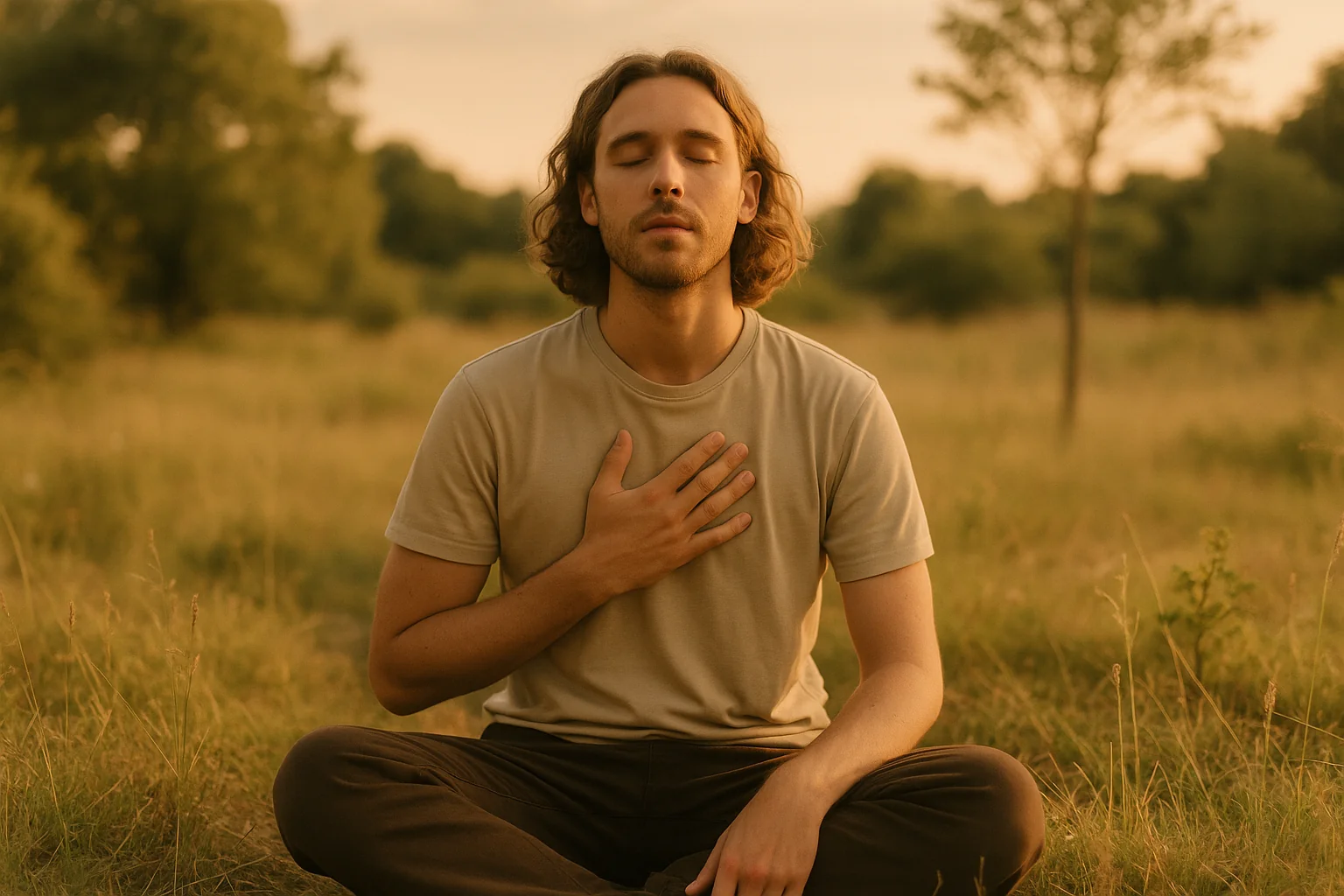
Grounding refers to techniques that restore the sense of presence in the body. Ask the person to feel the floor under their feet, hold something cold in their hand, and count out loud five things they see. Slow, deep breathing (4 seconds in, 4 seconds out) activates the parasympathetic system and physically lowers anxiety levels.
Step 5: hydration and calm
Offer water in small sips. No alcohol, no coffee, no other substances. A cool compress on the forehead or wrists can reduce the subjective feeling of heat and panic.
When to call for medical help - number 112?
Most bad trips are unpleasant but do not pose an immediate threat to life. However, there is a set of symptoms that require immediate medical intervention. European harm-reduction guidelines clearly indicate that delaying help in critical situations is one of the most serious risks associated with substance use (EMCDDA, Drug Profiles, 2023).
Call 112 immediately if any of the following symptoms occur:
- Seizures - do not try to hold the person down, secure their head, call 112.
- Loss of consciousness - place them in a stable side position, check their breathing, call 112.
- Difficulty breathing - gasping, apnea, bluish lips or nails - call 112.
- Persistent tachycardia over 120 beats per minute for more than a few minutes - call 112.
- Severe aggression with risk of injury yourself or others - call 112, maintain a safe distance.
- Lack of response to contact - if a person is unresponsive, does not react to voice, and cannot be awakened - call 112.
When speaking with the emergency dispatcher, calmly state what was taken and when. This information allows paramedics to prepare the appropriate assistance. Medical rescuers in Poland are bound by professional secrecy. Their job is to help - not to judge or inform the police.
Do not wait for symptoms to "pass on their own" if you have doubts. Calling for help when it is not needed is a far better outcome than failing to act when it is necessary.
Frequently Asked Questions
What is a bad trip and can anyone experience it?
A bad trip is an episode of intense anxiety, panic, or paranoia during the action of a psychoactive substance. It concerns not only hallucinogens - studies indicate that up to 22% of users of psychoactive substances experience a strong anxiety reaction (Studerus et al., Psychopharmacology, 2011). It can affect both inexperienced individuals and regular users at higher doses or in stressful environments.
What are the most common bad trip symptoms?
Symptoms include intense anxiety and panic attacks, paranoia and a sense of persecution, disorientation, loss of sense of time and place, and heightened unpleasant hallucinations. On the physical side, symptoms include: rapid heartbeat, sweating, trembling hands, and nausea. An episode lasts from several minutes to a few hours depending on the substance and dosage.
How to get through a bad trip - can the episode be shortened?
There is no way to immediately end an episode, but it can be alleviated: change the environment to a calm one, limit stimuli, apply grounding techniques and slow breathing. The presence of a trusted person shortens the duration and intensity of the experience. Do not take additional substances.
Does a bad trip from cannabis happen often?
Yes, cannabis is one of the more common causes of a bad trip, especially among new users and at high doses. Studerus and colleagues noted anxiety reactions in 22% of participants in cannabinoid studies (Studerus et al., Psychopharmacology, 2011). Products with unknown profiles and non-standardized active substance content increase this risk.
When does a bad trip require calling an ambulance?
Call 112 immediately in case of: seizures, loss of consciousness, difficulty breathing, sustained tachycardia above 120 beats per minute, severe aggression threatening safety, or lack of response to contact. Medical rescuers are bound by professional secrecy. Your duty is to call - do not wait.
This article is for informational and educational purposes and does not constitute medical advice. Before starting to use cannabis or CBD for therapeutic purposes, consult a doctor, especially if you are taking other medications, are pregnant, or breastfeeding.
Author: Michał Waluk · Published: 2026-05-04 · Updated: 2026-05-04