
Brazilian mushroom (Agaricus blazei) - properties and dosage
Pieczarka brazylijska — co to, jak dziala i na co. Przewodnik u Bucha.
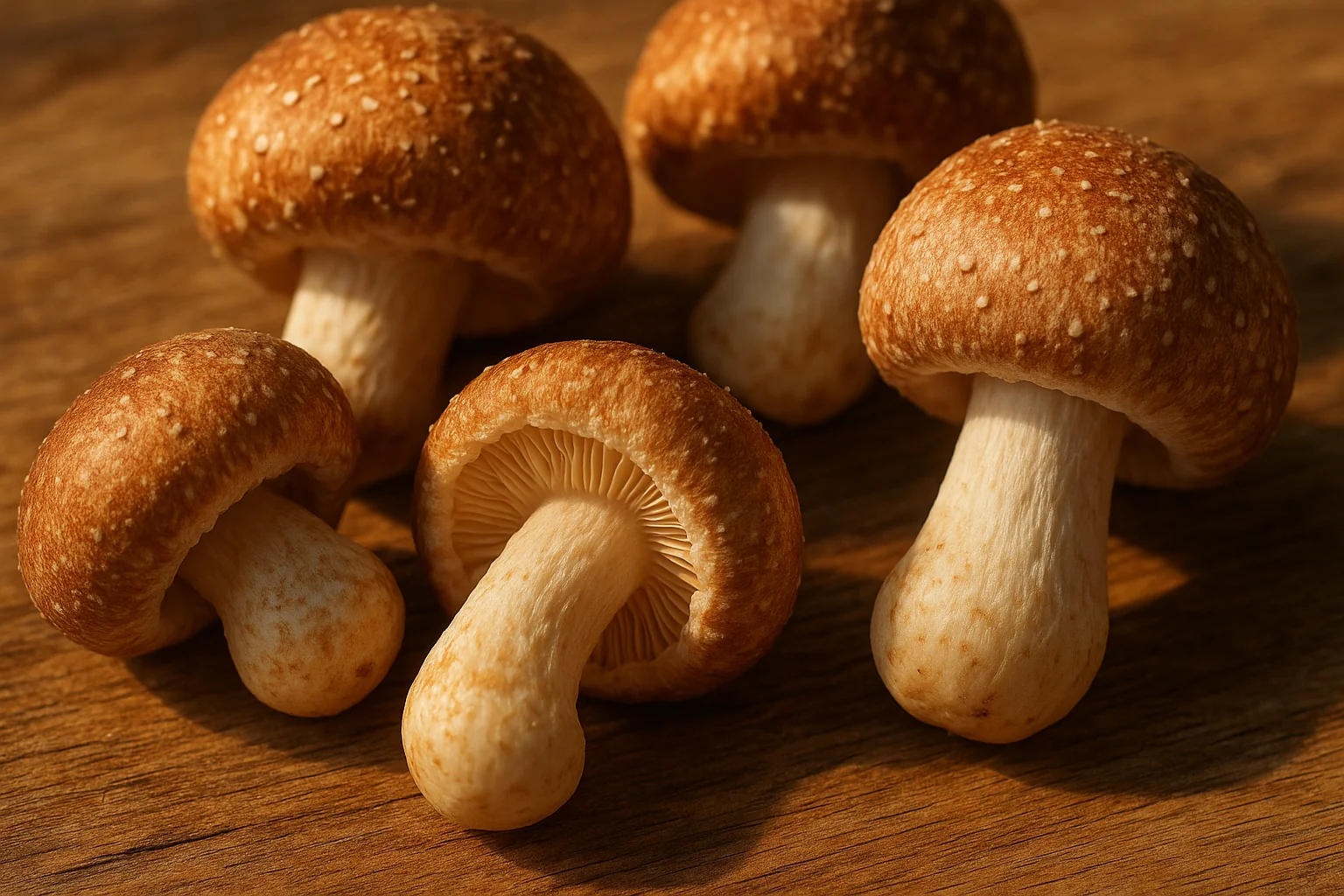
Brazilian mushroom (Agaricus blazei Murill) entered scientific research in a specific way: Japanese scientists noticed that residents of the Brazilian village of Piedade, where this mushroom was regularly consumed, lived exceptionally long lives and rarely suffered from cancer. This was in the 1960s. Since then, dozens of laboratory studies and several clinical trials have confirmed the richness of bioactive substances - primarily beta-glucans - and their impact on the immune system. This article explains what we know about Agaricus blazei, how to use it, and what to pay attention to when choosing a supplement.
KEY INFORMATION
• Agaricus blazei contains an exceptionally high concentration of beta-glucans (1→6)-β-D-glucan - strong immunomodulators (Hetland et al., Evidence-Based Complementary Medicine, 2011).
• Clinical studies indicate an improvement in insulin sensitivity in patients with type 2 diabetes with supplementation of the extract.
• The mushroom contains ergotioneine - a rare, strong antioxidant amino acid synthesized only by fungi and bacteria.
• Standardowa dawka suplementacyjna to 1,5-3 g ekstraktu lub 3-6 g suszonego owocnika dziennie.
• Contains agaritine - use only certified supplements from trusted manufacturers.
• Does not replace oncological or diabetological treatment.
Where does the Brazilian mushroom come from and what do we know about it?
Agaricus blazei Murill grows naturally in the mountainous regions of São Paulo state in Brazil, particularly around the town of Piedade. The species was first described by William Murrill in 1945, but its health significance was only recognized two decades later by Japanese researcher Takatoshi Fujimoto, who observed the local population regularly consuming the mushroom as a vegetable.
After bringing samples to Japan, local scientists began intensive research. In 1980, Ikezoe and colleagues published the first data on the immunological activity of the extract from Agaricus blazei. Since then, the mushroom has gained popularity, especially in Japan and Brazil, where it is now mass-cultivated and distributed as a dietary supplement under various trade names: himematsutake, cogumelo do sol, royal sun agaricus.
A systematic review published in Evidence-Based Complementary and Alternative Medicine in 2011 by Hetland and colleagues assessed the available scientific evidence and confirmed that beta-glucans from Agaricus blazei exhibit clear immunomodulatory activity in vitro and in vivo (Hetland et al., 2011). At the same time, the authors emphasized that there are still too few large randomized clinical trials to formulate solid clinical recommendations.
Active substances - what exactly does Agaricus blazei contain
The richness of its chemical composition distinguishes Agaricus blazei from other medicinal mushrooms. The main groups of bioactive substances:
| Substance | Biological role | Notes |
|---|---|---|
| Beta-glucans (1→6)-β-D | Activation of NK cells, macrophages, T lymphocytes | Main immunomodulator - high content vs. other mushrooms |
| Beta-glucans (1→3)-β-D | Support for nonspecific immunity | They act synergistically with (1→6)-β-D |
| Ergosterol | Prowitamina D2 - konwersja UV do D2 | Covers the demand for D with fresh mushrooms |
| Ergothioneine | Strong amino acid antioxidant | Synthesized only by fungi and bacteria; accumulates in tissues |
| Lectins | Modification of the immune response | Dose and form-dependent action |
| Agaritine | Compound with potential genotoxicity | In high doses in mice; amounts in the supplement are sub-threshold |
What do clinical studies say - immunity, glucose, and antioxidant effects
The most promising area of clinical research is the impact Agaricus blazei on glucose metabolism. A Japanese study published in Journal of Nutritional Science and Vitaminology in 2001 showed that patients with type 2 diabetes taking the extract from this mushroom for 12 weeks had significantly lower levels of glycosylated hemoglobin (HbA1c) and better insulin sensitivity compared to the control group. The mechanism is likely related to beta-glucans slowing glucose absorption and modulating the insulin receptor.
In the oncology field Agaricus blazei was studied as an adjunct - a supportive agent for standard therapies, not a replacement. A Brazilian pilot study from 2011 involved patients with cervical cancer undergoing chemotherapy; supplementation with the extract reduced selected symptoms of immunosuppression caused by treatment. These studies are promising, but too small to formulate clinical recommendations based on them.
The antioxidant action of ergotioneine is well described in the literature. Ergotioneine is called the "mitochondrial antioxidant" - it selectively accumulates in cells exposed to oxidative stress and protects mitochondria from damage. Epidemiological studies suggest that higher intake of ergotioneine (from mushrooms) correlates with a lower risk of neurodegenerative diseases, although a causal relationship has not been proven.
Dosage and forms of the supplement
The choice of dosage depends on the form of the product and the purpose of supplementation. General rule: standardized extract for beta-glucan content is more effective than non-standardized powder at the same weight. Powder from dried fruiting bodies requires a higher dose to achieve a comparable biological effect.
Doses from clinical studies: 1.5-3 g of extract daily in capsules or 3-6 g of dried fruiting body daily in powder. Treatment duration: a minimum of 4 weeks, optimally 3 months for immunomodulating effect. For glucose-related goals, studies lasted 12 weeks - the same duration should apply to self-observations of supplementation effectiveness.
The mushroom consumed as food (e.g., dried in soups) is safe and beneficial. Cooking deactivates agaritine (it is thermolabile), so cooked or roasted Agaricus blazei raises fewer controversies than raw water extract at room temperature.
Agaricus blazei and diabetes - what do studies say
One of the better-documented clinical applications Agaricus blazei is its impact on glucose metabolism. A randomized Japanese study published in Journal of Nutritional Science and Vitaminology included patients with type 2 diabetes who took extract from Brazilian mushroom for 12 weeks. The supplementation group observed a significant reduction in glycosylated hemoglobin (HbA1c) levels and improvement in HOMA-IR insulin resistance index compared to the placebo group.
The mechanism likely involves several complementary pathways: beta-glucans slow glucose absorption from the gastrointestinal tract (similar effect to soluble fiber), ursolic acid modulates insulin receptor activity in muscle and fat cells, and beta-sitosterol may influence insulin signaling at the cellular level.
Important clinical disclaimer: the hypoglycemic effect means that individuals with diabetes taking glucose-lowering medications (metformin, sulfonylurea derivatives, insulin) should monitor their glycemia particularly closely during supplementation and inform their healthcare provider. The potential risk of hypoglycemia from the combined effects of the drug and supplement is real, although minimal at typical supplement doses.
Agaritine - controversies and what you should know
Agaritine is a chemical compound from the group of aromatic hydrazones, naturally present in the genus Agaricus - both in Brazilian mushroom and in common button mushroom (Agaricus bisporus) consumed daily by millions of people. At high doses, agaritine has shown genotoxicity and carcinogenicity in rodent studies.
Key context: the amounts of agaritine present in the supplement at typical dosing (1.5-3 g of extract daily) are several times lower than the doses used in toxicological studies on mice. Additionally, agaritine is thermolabile - cooking and drying at high temperatures significantly reduce its content. Water and ethanol extracts, produced at elevated temperatures, contain less agaritine than raw, unprocessed mushroom.
For practical use: when choosing a supplement from Agaricus blazei, it is worth checking whether the manufacturer uses water or water-ethanol extraction (which reduces agaritine), provides a certificate of analysis (COA), and is transparent about the raw material processing method. Products from certified manufacturers in Japan or Brazil - where the market Agaricus blazei is largest and best regulated - are generally safer than anonymous powders from unknown sources.
How Agaricus blazei compares to other medicinal mushrooms
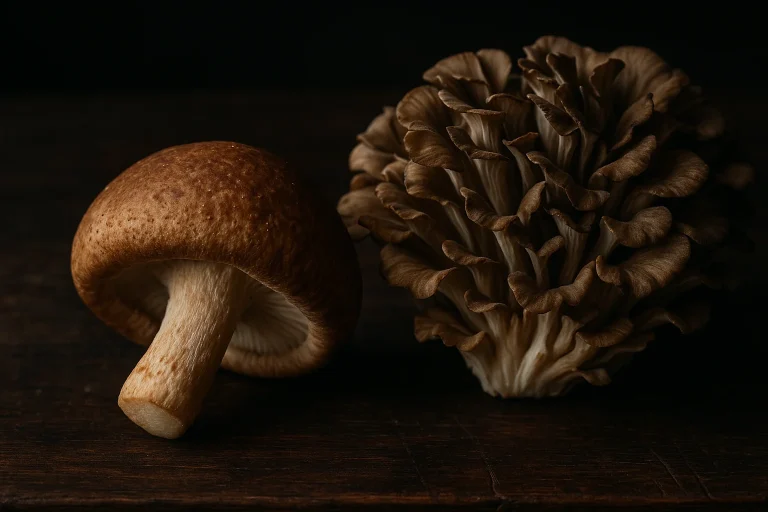
Against the backdrop of other popular medicinal mushrooms Agaricus blazei is particularly distinguished by a rich profile of beta-glucans - the concentration of (1→6)-β-D-glucans is higher than in reishi or shiitake. This makes it a valuable choice for immunological purposes. At the same time, it falls short of turkey tail in terms of the number of clinical studies: PSK from Trametes versicolor has decades of clinical research and drug registration in Japan, while Agaricus blazei mainly has preclinical studies and a few clinical trials.
In the area of glycemic modulation Agaricus blazei is one of the better-studied mushrooms - better than maitake for this specific indication. The ergotioneine it contains in significant amounts also makes it one of the better mushroom sources of this rare antioxidant. For those looking for a single medicinal mushroom with a broad profile of action, Agaricus blazei is a justified choice - provided that a product from a trusted manufacturer with specified standardization is selected.
Frequently Asked Questions
What is the Brazilian mushroom and where does it come from?
Brazilian mushroom (Agaricus blazei Murill) is an edible and medicinal mushroom originating from the mountainous regions of Brazil, particularly from the state of São Paulo. It was discovered in the 1960s when Japanese scientists became interested in the remarkably long lifespan and low cancer incidence of the residents of the village of Piedade, where this mushroom was regularly consumed. Today, it is cultivated industrially in Japan, Brazil, and China.
What active substances does Agaricus blazei contain?
Agaricus blazei is exceptionally rich in beta-glucans - especially (1→6)-β-D-glucan and (1→3)-β-D-glucan - which are the main immunomodulating substances. The mushroom also contains ergosterol (provitamin D2), ergotioneine (a strong antioxidant), lectins, and agaritine. Studies indicate that the beta-glucans in Agaricus blazei activate NK cells, macrophages, and T lymphocytes.
What does Brazilian mushroom help with - what do studies say?
The best-documented areas are immune system support through beta-glucans, modulation of glycemia (Japanese studies have shown improved insulin sensitivity in patients with type 2 diabetes), antioxidant effects through ergotioneine, and potential supportive properties in oncology therapy as an adjunct, not a treatment. The studies are promising, but still mainly preclinical or small clinical trials.
How to dose the Brazilian mushroom?
Doses used in clinical studies are usually 1.5-3 g of powdered extract per day. For dried fruiting bodies, the doses range from 3-6 g per day. It is best to take the supplement with a meal, divided into 2 portions. The treatment usually lasts 4-12 weeks. The effects of supplementation are visible as early as 4-6 weeks of regular use.
Is the Brazilian mushroom safe?
Agaricus blazei is generally safe at recommended doses. The mushroom contains agaritine - a compound that has shown genotoxicity in high doses in mice, but the amounts present in the supplement at typical dosing are significantly lower than the thresholds considered problematic. Individuals with autoimmune diseases, those taking immunosuppressive medications, and pregnant women should consult their doctor before use.
This article is for informational and educational purposes and does not replace consultation with a doctor. If you are pregnant, breastfeeding, taking medications, or have chronic conditions, consult the use of supplements or herbs with a specialist.
Author: Michał Waluk · Published: 2026-05-04 · Updated: 2026-05-04