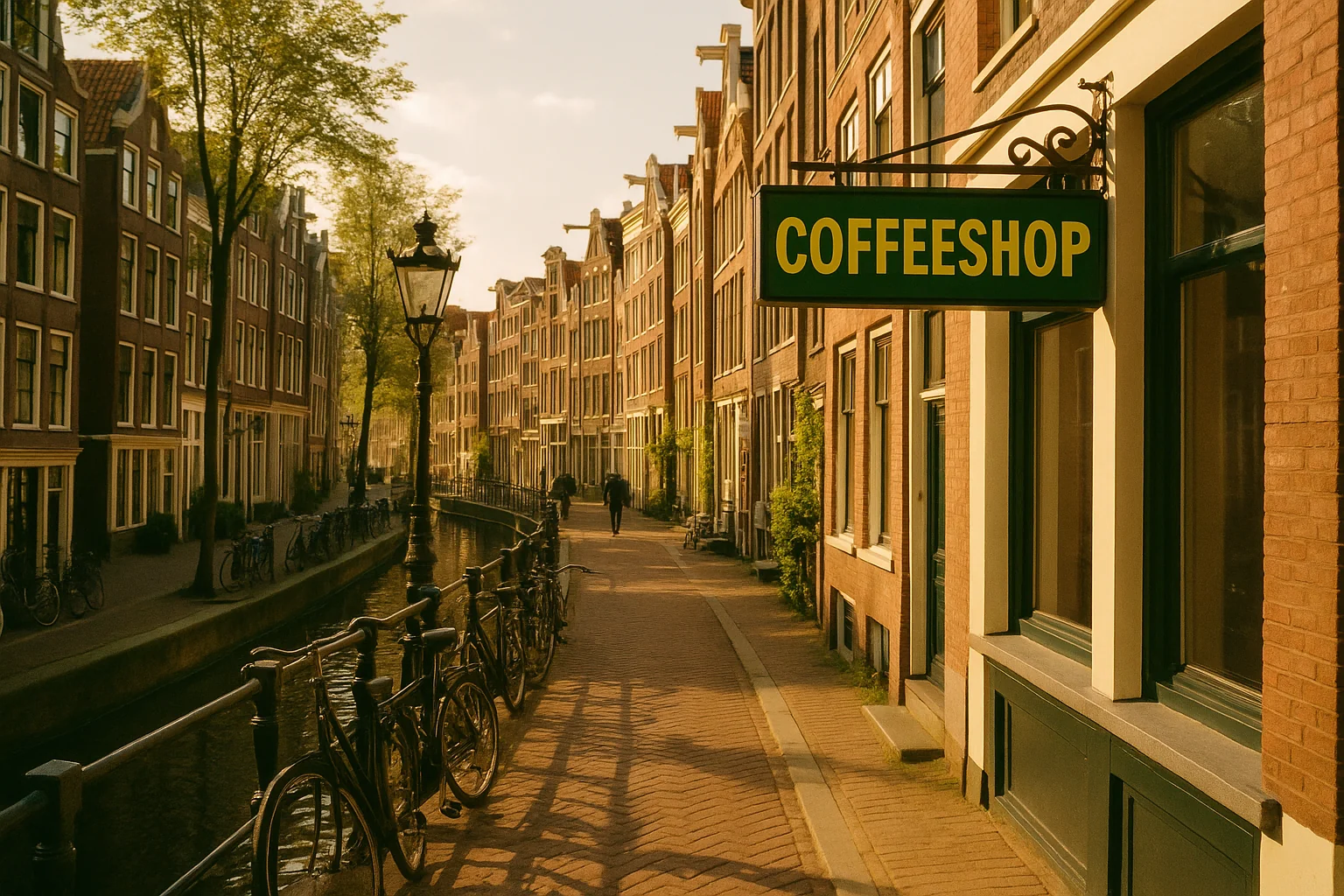

Coffeeshop in the Netherlands - how it works and what the rules are (FAQ)
Coffeeshop in the Netherlands: answers to frequently asked questions and what studies say. u Bucha.
The Netherlands has been synonymous with European tolerance policy towards cannabis for over 50 years. Coffeeshops have become part of Amsterdam's culture, attracting millions of tourists annually and inspiring political debate across Europe for years. However, the rules governing coffeeshops are changing - especially since 2023, when the Netherlands entered a new phase of cannabis cultivation regulation. This article answers the most common questions from visitors and explains the current legal status in 2026.
KEY INFORMATION
• Coffeeshops operate legally in the Netherlands under gedoogbeleid (tolerance policy) - the sale of cannabis is tolerated, not fully legalized.
• Purchase limit: 5 g per transaction; possession of up to 5 g is tolerated by the police.
• Since 2023, the pilot of the Wet gesloten coffeeshopketen has been ongoing - regulated cannabis cultivation for 10 pilot municipalities.
• Smoking marijuana on the street in downtown Amsterdam has been prohibited since May 2023 (fine of 100 EUR).
• Access for tourists: Amsterdam remains open in 2026, while other cities (Maastricht, Roosendaal) have closed access for non-residents earlier.
How coffeeshops work in the Netherlands - history and the gedoogbeleid system
The first coffeeshop in the Netherlands, Mellow Yellow, opened in Amsterdam in 1972. The system that allows their operation is called Canada: full commercialization - literally "tolerance policy". This means that the sale of cannabis is formally a crime under the Opiumwet (Dutch drug law), but the prosecution and police deliberately do not pursue it when the shop meets certain conditions. This is a legal paradox: simultaneously illegal and tolerated.
The conditions of tolerance (the so-called AHOJ-G criteria) include: no advertising (Affichering), no hard drugs for sale (Harddrugs), no sales to persons under 18 years of age (Jongeren), no public order disturbances (Overlast), and a limit of 5 g per transaction (Gram). The shop must also have a municipal license - the municipality has full authority to refuse or revoke the license. The number of coffeeshops in the Netherlands has decreased from over 1,500 in the 1990s to about 570 in 2026 - municipalities have gradually reduced their numbers.
Rules for purchasing and possessing cannabis in the Netherlands
The maximum purchase limit in one coffeeshop is 5 grams per transaction. Possession of up to 5 g for personal use is tolerated by the Dutch police and is not prosecuted as a crime. Larger amounts - even if legally purchased in several shops - may be treated as intent to distribute and subject to prosecution. This is a significant difference between "tolerance of possession" and legal purchase.
In 2026, you can buy in coffeeshops: dried cannabis flowers (sinsemilla), hash (cannabis resin), pre-rolled joints, and - in some shops - edibles (cookies, drinks). The sale of tobacco in coffeeshops has been prohibited since 2008 (anti-tobacco law). Staff are required to verify age with an ID - there is a "zero tolerance" policy for persons under 18 years of age.
| Rule | Detail |
|---|---|
| Minimum age | 18 years (ID required) |
| Purchase limit | 5 g per transaction |
| Tolerated possession | Up to 5 g on person |
| Alcohol | Prohibition on the sale of alcohol in coffeeshops |
| Hard drugs | Absolute prohibition |
| Smoking on the street (downtown Amsterdam) | Zakazane od maja 2023 - mandat 100 EUR |
| Exporting cannabis abroad | Illegal - including to EU countries |
Can tourists enter coffeeshops in 2026?
This question does not have a single answer for the whole of the Netherlands - regulations vary between municipalities. Amsterdam In 2026, it still serves tourists in coffeeshops. The city has repeatedly considered a ban for non-residents, but due to the scale of tourism and opposition from the industry, it has not been implemented so far. The debate continues - the mayor of Amsterdam has openly spoken about the need for "detouristification" of the city center, and coffeeshops are part of this discussion.
The situation looks different in cities in the south of the Netherlands, which have been dealing with so-called "drug tourism" from Belgium, France, and Germany for years. Maastricht closed coffeeshops to foreign tourists as early as 2012. Roosendaal i Bergen op Zoom have followed the same path. Before traveling, it is worth checking the current policy of a specific municipality on official websites - regulations may change.
Reform of the Wet gesloten coffeeshopketen - what changes in 2026?
The biggest change in the Dutch system is the gradual implementation of Wet gesloten coffeeshopketen (law on closed supply chains). Until now, the paradox was that the sale of cannabis in a coffeeshop was tolerated from the retail side, but delivery to the store was illegal. Shops sourced their supplies through the "back door" (achterdeur problem) from the gray market, which financed organized crime.
Since 2023, 10 pilot municipalities (including Breda, Groningen, Heerlen, Helmond, Nijmegen, Tilburg, Zaandam) can supply their coffeeshops from licensed, regulated cannabis producers. Producers have undergone rigorous verification and operate under state supervision. This is a historic change - for the first time in the Netherlands, the entire supply chain (from cultivation to sale) is legally regulated, at least in the pilot phase. Amsterdam is not part of the first pilot, but according to ministerial plans, the reform is expected to gradually cover the entire Netherlands by around 2028.
The paradox of the Dutch system has been known for 50 years as the "achterdeurprobleem" - the back door problem. Coffeeshops sold cannabis legally from the front (front door), but bought it through the back door from illegal suppliers. The Wet gesloten coffeeshopketen aims to resolve this paradox - and if the pilot is successful, the Netherlands will become the first country in the world with a fully regulated, legal cannabis market from cultivation to sale, although still within a specific "tolerance" system, rather than full legalization as understood in the USA or Canada.
What does a typical visit to a coffeeshop look like - a practical guide for first-timers
If you've never been to a Dutch coffeeshop, the first entry can be disorienting without basic knowledge of how they operate. Most shops have two windows or counters: one for purchasing cannabis (the menu written on a board or in the form of a menu card), the other for ordering non-alcoholic beverages. Alcohol is absolutely prohibited in coffeeshops - you can buy coffee, juice, tea, soft drinks. Many shops also sell "consume goods" like rolling papers, filters, tobacco (outside the shop, as tobacco has been banned inside since 2008) and smoking accessories.
When approaching the cash register, you may be asked to show identification - this is standard, not an exception. Staff have the right to refuse sales without giving a reason and regularly deny sales to individuals who are clearly intoxicated or behaving aggressively. The menu usually includes a dozen to several dozen strains of flower, several types of hashish, ready-made pre-rolled joints, and - in some shops - edible products. Strains are described with THC content, flavor, and effects. If you don't know what to choose, asking the staff for a recommendation is not only accepted but expected - most employees are enthusiasts with extensive product knowledge.
An important practical note for tourists: cannabis purchased in a coffeeshop cannot be legally taken outside the territory of the Netherlands - even to other EU countries. Crossing the border with cannabis, even in "personal" amounts, is a crime both on the Dutch side (export of a controlled substance) and on the side of the destination country. Police at the borders - especially at crossings to Belgium and Germany - conduct regular checks specifically targeting this type of smuggling. Don't take the risk: what you bought in Amsterdam, leave in Amsterdam.
Frequently Asked Questions
Are coffeeshops in the Netherlands legal?
Yes - coffeeshops in the Netherlands operate legally under the gedoogbeleid system (tolerance policy). The sale of cannabis is formally illegal under Opiumwet, but tolerated under strict conditions: municipal license, prohibition on sales to individuals under 18 years old, limit of 5 g per transaction, no alcohol or hard drugs. Since 2023, a pilot program for regulated cultivation has been ongoing.
How much can you buy in a coffeeshop in the Netherlands?
A maximum of 5 grams of cannabis in one transaction. Possession of up to 5 g for personal use is tolerated by the police. Purchasing from several shops on the same day to circumvent the limit is legally risky - staff may refuse to sell and notify the police.
Can tourists enter coffeeshops in the Netherlands?
It depends on the municipality. Amsterdam will still serve tourists in 2026, requiring only an ID confirming age ≥18 years. Other cities (Maastricht, Roosendaal, Bergen op Zoom) have closed access to tourists from outside the Netherlands earlier. Always check the current policy of the specific city before traveling.
How much does marijuana cost in a coffeeshop in the Netherlands?
Prices in Amsterdam's coffeeshops in 2026 range from about 8 to 18 EUR per gram of flower, depending on the strain and location. Hash usually costs 6-12 EUR/g. Shops in the tourist center of Amsterdam are more expensive than those on the outskirts of the city.
Is it allowed to smoke marijuana on the street in Amsterdam?
No - since May 2023, smoking marijuana on the street in the center of Amsterdam (Wallen/red-light district) is prohibited and carries a fine of 100 EUR. Smoking is only allowed inside coffeeshops or on private property with the owner's consent. The ban extends to other areas of the center.
What is the Wet gesloten coffeeshopketen and how does it change the market?
The Wet gesloten coffeeshopketen is a Dutch law on the closed supply chain of coffeeshops, implemented since 2023 in 10 pilot municipalities. It allows for the legal, regulated cultivation of cannabis directly for the needs of coffeeshops, eliminating the "back door problem" - the previous gray market on the supply side. Full nationwide implementation is planned for around 2028.
This article is informational and educational in nature. It contains internal links to products available in the u Bucha store. Prices and specifications may change - please check the current data on the product page before purchasing.
Author: Michał Waluk · Published: 2026-05-04 · Updated: 2026-05-04