
Cleaning bongs and accessories - step-by-step guide (FAQ)
Cleaning bongs and accessories: answers to frequently asked questions and what the research says. u Bucha.
A dirty bong is not just an aesthetic problem - standing water with smoke deposits is an environment conducive to the growth of bacteria, fungi, and mold. A study published in International Journal of Environmental Research and Public Health indicates that stagnant water in vessels used for inhalation can be a source of pathogenic microorganisms when shared (Saloner et al., Int J Environ Res Public Health, 2021). Regular cleaning eliminates this problem and significantly improves the taste and comfort of each session.
KEY INFORMATION
• Change the water in the bong after each session - standing water is a habitat for bacteria and fungi.
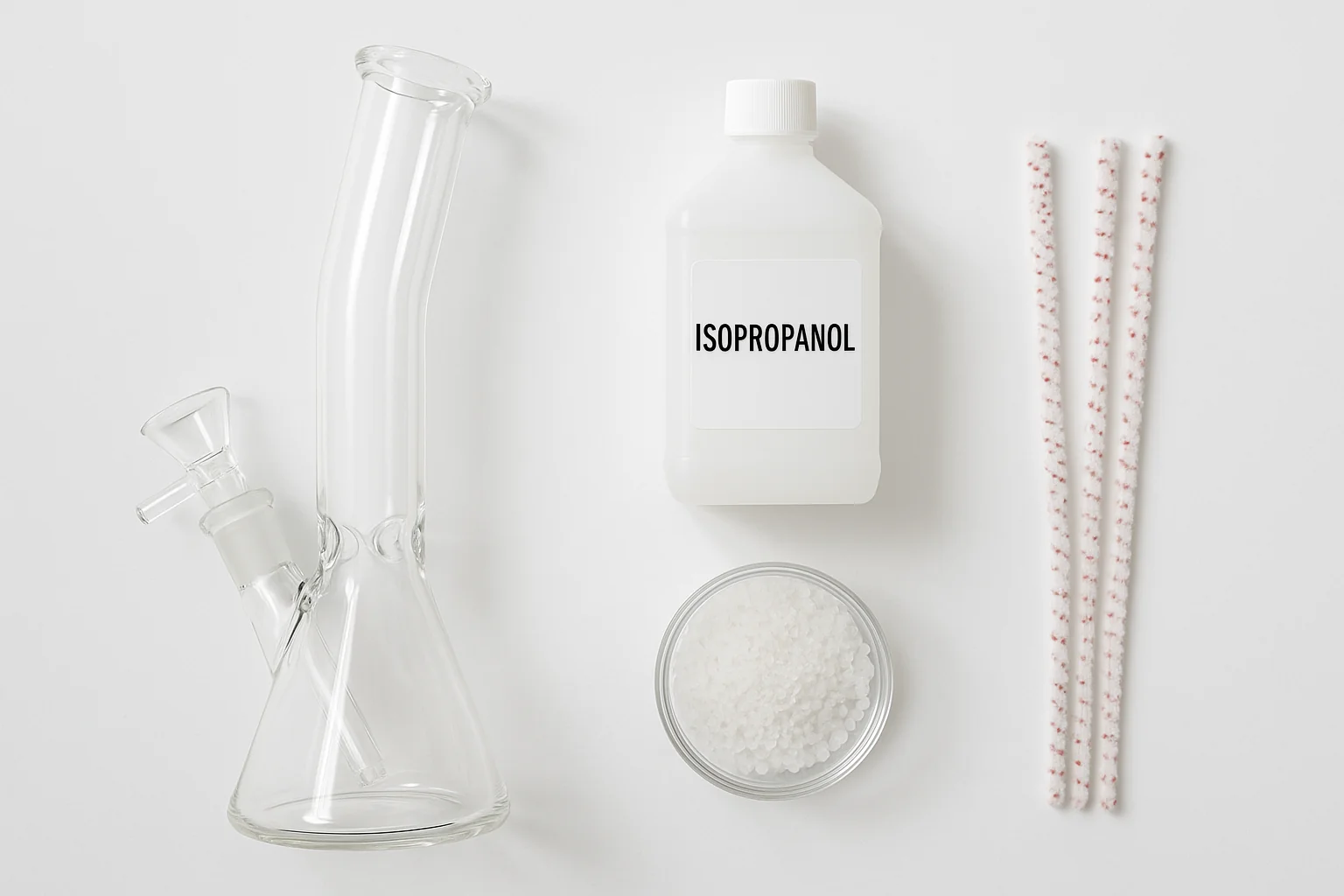
• Isopropanol 90-99% + coarse salt = the most effective method for cleaning resins.
• Residue from water (scale) is removed with vinegar or citric acid, not alcohol.
• Clean the tips and adapters separately - every 5-7 sessions to maintain airflow.
• Regular cleaning (once a week) is much easier than removing old, hard residues.
Why is cleaning your bong important?
Beyond the obvious hygiene aspect, a dirty bong affects the quality of the session. Resin residues on the glass walls and in the nozzles narrow the airflow, requiring a stronger inhale and providing a less pleasant taste. Old water in the water chamber has a characteristic, unpleasant smell that permeates the smoke. Meanwhile, mold developing on dried resins with occasional cleaning poses a real health risk when inhaling smoke passing through such an environment.
A clean bong also provides better flavor control - especially when using different strains of herb. Residues from previous sessions mix with fresh material and mask its own aroma. A regularly cleaned bong allows you to fully appreciate the terpene profile of the new herb.
What you need to clean a bong - shopping list
A basic bong cleaning kit is inexpensive and easily accessible. Izopropanol (IPA) 90-99% this is the main cleaning agent - available at pharmacies and chemical supply stores. Do not use 70% IPA (too diluted) or denatured alcohol (contains methanol, which is toxic and has an unpleasant smell). Coarse salt - kitchen or sea salt, unrefined. Fine salt does not work as well as an abrasive. Pipe cleaners - soft wire swabs with fibers, available at good accessory stores. Essential for cleaning tips, bowls, and narrow channels.
A useful addition: resealable bags of various sizes (for soaking small accessories), rubber stoppers or pieces of gloves to seal bong openings while shaking, and a bottle brush or dish brush for bongs with wide necks.
Step by step: cleaning your bong with IPA and salt
Krok 1 - Rozmontuj bong. Remove the nozzles (downstem), bowl, and any adapters. Clean each part separately. Pour out the old water from the chamber.
Step 2 - Add salt and pour in IPA. Pour 2-4 tablespoons of coarse salt into the bong. Pour in isopropanol - just enough to wet the salt well and cover it with a thin layer of IPA. You don’t need to fill the bong to the brim - half to ⅔ of the chamber height is usually sufficient.
Step 3 - Cover the openings and shake. Cover the mouthpiece with a finger or glove, cover the tip opening. Shake the bong vigorously for 2-5 minutes. The salt mechanically scrapes off residues, while the IPA dissolves them simultaneously. For fresh residues, a few minutes is enough; for old, hard ones - leave the solution for 30-60 minutes before shaking.
Step 4 - Pour out the solution and rinse. Pour out the dirty solution - you will see how dark it is after collecting the residues. Rinse the bong several times with hot water. Hot water removes IPA and salt residues better than cold. Repeat if the walls are still brown or sticky.
Step 5 - Check and dry. Check the walls of the bong against the light - they should be clear and clean. Leave the bong to dry with the mouthpiece facing down or wipe it with a paper towel. Do not use the bong with IPA residues - isopropanol releases unpleasant and potentially irritating vapors when heated.
| Type of contamination | Method | Soaking time | Effectiveness |
|---|---|---|---|
| Fresh resins from smoke | IPA 90% + salt | 0-5 min of shaking | Bardzo wysoka |
| Old, hardened resins | IPA 90% + salt + soaking | 30-60 min | High |
| Mineral (water residue) | White vinegar or citric acid | 15-60 min | High |
| Odor (bacteria in water) | Water change + IPA | After each session | High |
| Mixed residue | IPA + salt → vinegar after drying | 30 min + 30 min | Bardzo wysoka |
Alternative cleaning agents - what else works?
In addition to the classic duo of IPA + salt, the market offers dedicated cleaning agents for bongs and pipes. Products like Formula 420, Randy’s Black Label, or Grand Master Smoke are ready-made alcohol-based solutions with enzymatic activators or chelates that facilitate resin removal without the need for prolonged soaking. They are more expensive than pharmacy isopropanol, but more convenient - just pour, shake, and rinse.
Citric acid is a good, safe alternative to vinegar for removing limescale from water. Dissolve 2-3 tablespoons of citric acid in a glass of warm water, pour it into the bong, wait 15-30 minutes, then rinse. Citric acid is less irritating in smell than vinegar and equally effective against limescale.
Baking soda has limited effectiveness on resins by itself - it is a base, and resins dissolve better in alcohol or acidic agents. However, a mixture of baking soda with vinegar or citric acid (a chemical reaction producing CO2) can help mechanically with light limescale through the fizzing effect and gentle surface irritation. It is not a substitute for IPA on resins - consider it a supplement, not an alternative.
How to prevent your bong from getting dirty quickly?
A few habits significantly reduce the frequency of deep cleaning. First: change the water after each session. Fresh water does not collect residues as quickly as old water. Second: do not overload the bowl - material that falls into the tunnel or tip creates residues that block airflow faster. Third: use mesh screens in the bowl - they catch tiny particles of burnt material before they enter the channel. Fourth: clean the bong shortly after the session when the resins are still soft - it is much easier to remove them then than when they harden after a few hours.
Filtered or distilled water instead of tap water reduces limescale (calcium) buildup on the walls of the water chamber. If your water is hard (visible limescale in the kettle), consider this substitute - it will reduce the amount of white residues and extend the time between deep cleanings.
Cleaning downstems, bowls, and adapters
Clean glass tips (downstem) in a small container or ziplock bag filled with isopropanol and salt. Leave for 30 minutes, then wipe with a pipe cleaner and rinse with hot water. For hard residues in a narrow channel, a metal tip can be boiled for 5-10 minutes in water with a tablespoon of salt - boiling effectively softens resins and facilitates mechanical cleaning with a cleaner.
Clean bowls the same way as tips. Pay special attention to the hole at the bottom of the bowl - this is where burnt material residues that block airflow most often accumulate. A sharpened toothpick, thin cleaner, or special bowl-pushing tool (dab tool) will allow you to clean the hole without scratching the glass.
Clean adapters and joints like tips - soak in IPA with salt and use a cleaner. Silicone gaskets can be separated and washed with warm soapy water - do not use concentrated IPA on them for long periods, as strong alcohol can degrade elastomers.
Frequently Asked Questions
What is the best way to clean bongs?
The most effective method is 90-99% isopropanol with coarse kitchen salt. The salt acts as a mechanical abrasive, and isopropanol dissolves resins and smoke residues. Cover the openings of the bong, pour in the solution, shake vigorously for 2-5 minutes, rinse with hot water. For hard residues, soak for 30-60 minutes before shaking.
How often should you clean bongs?
Change the water in the bong after each session - standing water is a breeding ground for bacteria and fungi. Quick cleaning with alcohol every 3-5 sessions prevents residue buildup. Deep cleaning once a week with daily use or once every 2-4 weeks with occasional use. Regular cleaning is easier than removing hard residues after weeks of neglect.
Can you clean bongs with vinegar instead of isopropanol?
Vinegar is a weaker cleaning agent - it effectively removes mineral residues from water (limescale), but is less effective against smoke resins. It can be used to remove limescale in combination with baking soda. Isopropanol remains the preferred method for cannabis resins.
How to clean downstems and bong adapters?
Soak glass tips and adapters in a container filled with isopropanol and salt for 30-60 minutes. Then wipe with a pipe cleaner and rinse with hot water. Metal tips can be boiled for 5-10 minutes in water with salt. Regular cleaning of tips maintains full airflow.
How to remove water deposits (limescale) from a bong?
Water deposits (calcium/limescale) are removed with acid. Prepare a solution: warm water + white vinegar + baking soda. Pour into the bong, wait for the reaction, shake, and rinse. For hard limescale, soak overnight in vinegar or citric acid solution. Isopropanol is not effective on limescale.
This article is informational and educational in nature. It contains internal links to products available in the u Bucha store. Prices and specifications may change - please check the current data on the product page before purchasing.
Author: Michał Waluk · Published: 2026-05-04 · Updated: 2026-05-04