
Where the 0.3% THC limit came from - the history of an arbitrary boundary from 1976
Where did the 0.3% THC limit come from — the mechanism explained simply, based on research. u Bucha.
Every package of legal hemp flower carries the same number on its label: THC below 0.3%. But where does this limit come from? Is it the result of clinical research, a parliamentary decision, or perhaps the outcome of tedious pharmacological experiments? The answer is surprising: the number 0.3% comes from a taxonomic scientific work published in 1976 by two Canadian botanists who were looking for not a safety threshold, but a line separating plant species. In this article, we explain how an arbitrary botanical decision became the foundation of global drug law and what it means for the cannabis market in 2026.
KEY INFORMATION
• The 0.3% THC limit comes from the work of Small and Cronquist from 1976 (Small and Cronquist, Taxon, 1976) - wybranej jako punkt taksonomiczny, nie farmakologiczny.
• The authors of the work themselves noted that the boundary is arbitrary and lies in the natural gap of the sample distribution.
• The EU used to apply a lower threshold of 0.2% THC for many years; since 2023, harmonization has restored it to 0.3%.
• Poland implements EU regulations through the Act on Counteracting Drug Addiction and executive regulations.
Who was Ernest Small and what did he discover in 1976?
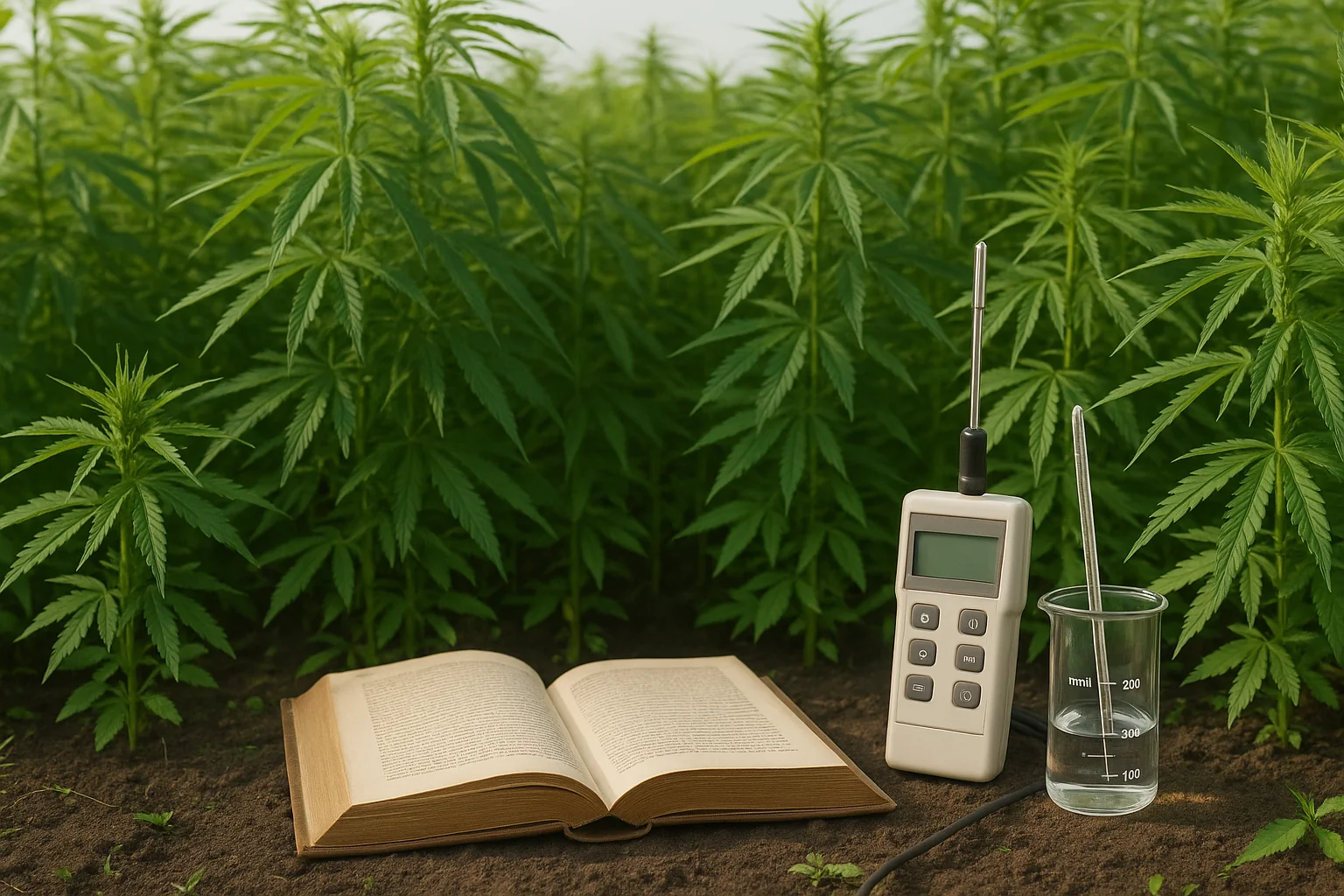
Ernest Small worked at the Canadian Department of Agriculture, while Arthur Cronquist was a botanist at the New York Botanical Garden. Together, they published an article in 1976 in the journal Taxon titled „A Practical and Natural Taxonomy for Cannabis” (Small and Cronquist, Taxon, 1976). Their goal was to resolve a botanical dispute: are hemp and marijuana one species or two different ones?
The researchers collected cannabis plant samples from around the world and measured their cannabinoid content. When they plotted the results on a graph, they saw something interesting: the distribution of THC content in the samples was not uniform. There was a clear gap between plants traditionally grown for fiber (low THC) and strains used as drugs (high THC). It was this gap that Small and Cronquist chose as the taxonomic boundary.
We noticed that the original work of Small and Cronquist is cited thousands of times in legal and scientific literature, but few people read its original text. The authors explicitly state that the 0.3% threshold is „arbitrary” and that „the boundary between groups is not sharp”. This formulation sounds completely different from „scientific proof of safety”, which is often used to describe this limit in regulatory discussions.
Small himself admitted in later interviews that he did not expect his botanical classification to become the basis of drug law in dozens of countries. He was right - no clinical studies were conducted in 1976 to check whether 0.3% THC causes intoxication or not. The botanical boundary and the pharmacological boundary are two different things.
How did the number from the botanical article make its way into law?
The journey from an academic article to legal regulations took several decades. The United States was the first to reference Small's work when, in the 1990s, they tried to define industrial hemp in the context of the Farm Bill. Canadians, having closer ties to Small's research, implemented the 0.3% THC limit in their agricultural law in the early 2000s.
The European Union took a cautious approach. Council Regulation (EC) No 1782/2003, followed by European Parliament and Council Regulation No 1307/2013 (EUR-Lex, Regulation 1307/2013) established limits for industrial hemp cultivated in the EU. For many years, a practical threshold of 0.2% THC was applied as an additional safeguard, and since 2023, harmonization has shifted it to 0.3% - returning to Small's original.
| Country/Region | Applicable THC Threshold | Legal basis |
|---|---|---|
| European Union | 0.3% (since 2023) | EU Regulation 2021/2115, EUR-Lex |
| Poland | 0.3% in dry mass | Act on Counteracting Drug Addiction, Journal of Laws. |
| USA | 0.3% (federal, Farm Bill 2018) | Agricultural Improvement Act 2018 |
| Switzerland | 1.0% (since 2022) | BetmG (Swiss drug law) |
| Canada | No THC threshold for legalization | Cannabis Act 2018 |
| Original work (1976) | 0.3% as a taxonomic point | Small and Cronquist, Taxon 1976 |
What went wrong with the arbitrary limit?
The biggest problem with the 0.3% THC limit does not lie in the number itself - it lies in the way it is applied. Small and Cronquist measured THC content in the dry mass of the whole plant. European law for many years referred this limit to selected parts of the plant, leading to interpretative discrepancies. EMCDDA has repeatedly pointed out the lack of harmonization in THC measurement methods in the regulations of different EU countries (EMCDDA, Cannabis Drug Profile).
The second problem is the genetic and environmental variability of hemp. The same strain can exceed 0.3% THC in a warm, dry summer, while remaining safely below the threshold in a cooler season. The plant does not know the law - it reacts to temperature, UV radiation, and water stress, all of which affect cannabinoid biosynthesis. European farmers are well aware of this problem, known as „hot crops” - hot yields that, despite certified seeds, exceed the THC threshold a few days before harvest.
The third issue is analytical methods. The precision of THC measurement at a concentration of 0.3% requires accurate chromatographic analyses. Laboratory studies conducted by EMCDDA and European customs agencies have shown that different laboratories measuring the same sample can obtain results differing by 0.05-0.1 percentage points. At a threshold of 0.3%, this difference separates a legal product from confiscated goods.
Scientific debate: is 0.3% the right threshold?
Many researchers point out that the 0.3% limit has no pharmacological basis. John McPartland, an expert on hemp botany and a scientific editor, has been frequently cited in articles indicating that the threshold does not stem from studies on psychoactive effects in humans. Switzerland conducted its own analysis and raised the limit to 1% THC in 2022, recognizing that even this value does not pose a real risk of intoxication with typical methods of consuming industrial hemp.
From our market observation, it appears that the growing consumer awareness regarding the history of the 0.3% THC limit does not diminish interest in products. On the contrary - customers who understand the context of this limit also better understand the Certificates of Analysis (COA) and actively inquire about laboratory results for specific product batches. This is a positive trend for the entire market.
The EMCDDA and the European Medicines Agency have repeatedly signaled in their analyses that the debate over the THC threshold should be based on current pharmacological data, not on taxonomy from the 1970s. Several EU countries have already made informal proposals to raise the threshold to 0.5% or even 1% THC for industrial crops. No decision has been made yet, but the topic is alive in regulatory discussions.
What does the 0.3% THC limit mean for CBD flower consumers in 2026?
For the average consumer buying legal hemp flower in Poland, the 0.3% THC limit is a daily reality - every product on the shelf must meet it to be legally sold. But understanding the context of this limit changes the way you look at the Certificates of Analysis (COA) attached to products. When you see a result of „THC: 0.21%” on a laboratory report, you now know that this number does not come from pharmacological safety studies - it comes from plant taxonomy from the 1970s.
The practical consequence of this knowledge: a COA certificate with a THC result is a document confirming compliance with regulation, not with a pharmacological safety threshold. A product with 0.29% THC and a product with 0.01% THC are both legal, although they differ chemically. When choosing hemp products, it is worth looking not only at the THC result but also at the CBD content, terpene profile, and analysis method - these are pieces of information that have a real connection to the product's effects.
Why does this story matter for the market? Because the debate over the THC threshold continues, and its outcome will affect the availability of hemp strains, cultivation costs, and the range of products legally available in Poland and Europe. European farmers could grow more CBD-rich strains without the risk of „hot crops” if the threshold were higher. Legal flower producers would have greater freedom in selecting strains with unique terpene profiles. As a consumer, you have a vested interest in understanding these mechanisms and tracking regulatory changes.
Finally: the arbitrariness of the 0.3% THC threshold does not mean that the law does not enforce it. It only means that the basis for this threshold is historical and taxonomic, not clinical. Law enforcement and customs authorities in Poland and Europe take exceeding the threshold seriously - regardless of its scientific roots. Understanding the history of the limit is educational knowledge, not an argument for ignoring the law.
Frequently Asked Questions
Where did the 0.3% THC limit for industrial hemp come from?
The 0.3% THC limit comes from the scientific work of Ernest Small and Arthur Cronquist published in 1976 in the journal Taxon (Small and Cronquist, Taxon, 1976). Researchers sought a morphological boundary separating industrial hemp from marijuana - they chose 0.3% as a taxonomic point, not as a pharmacological safety threshold.
Is the 0.3% THC limit scientifically justified pharmacologically?
Not in the pharmacological sense. Small and Cronquist themselves noted that the threshold is arbitrary - it was chosen because 0.3% lay in a natural break in the distribution of plant samples. No clinical experiment at that time showed that this value is the threshold for intoxication or safety. The threshold does not come from studies on humans.
How did the 0.3% THC limit make its way into European and Polish law?
The European Union adopted the 0.3% THC limit in regulations concerning industrial hemp. Poland implemented these provisions through the Act on Counteracting Drug Addiction and executive regulations. EUR-Lex (regulation 1307/2013) establishes this threshold for hemp plants cultivated in the EU.
Why did the EU use 0.2% for years instead of 0.3% THC?
For many years, the European Union applied a limit of 0.2% THC as an additional safeguard below Small's threshold. Since 2023, the harmonization of regulations has shifted the applicable threshold back to 0.3% - the value from the original taxonomic classification. This change facilitates the cultivation of strains with a naturally higher expression of CBD.
Can the 0.3% THC limit change in the future?
A change is possible. Switzerland is experimenting with a 1% THC threshold. Scientists, including experts EMCDDA, indicate that modern analytics show variability in THC content depending on harvesting conditions, temperature, and storage time. The debate over the threshold is ongoing in EU institutions and may result in a revision of regulations within the next decade.
This article is for informational and educational purposes and does not replace consultation with a doctor. If you are pregnant, breastfeeding, taking medications, or have chronic conditions, consult the use of supplements or herbs with a specialist.
Author: Michał Waluk · Published: 2026-05-04 · Updated: 2026-05-04