
Neuroplasticity and BDNF - why psychedelics are called psychoplastogens
Neuroplasticity and BDNF — what it is, what the research says, and the legal status in Poland. u Bucha.
Until recently, psychiatry assumed that the adult brain is essentially structurally unchangeable - that neurons and synapses, once lost or weakened, do not regenerate. The revolution in understanding neuroplasticity has shattered this view. It turns out that the brain retains the ability to form new synaptic connections and reorganize its networks throughout life. The discovery that psychedelics are among the strongest known stimulators of this plasticity has changed the trajectory of all neuropsychopharmacology. This article explains what psychoplastogens are, how they act on BDNF and synaptic structure, and why this discovery may have clinical significance far beyond psychiatry.
KEY INFORMATION
• A study by Molnár et al. (Nature, 2023) showed that psychoplastogens (psilocybin, ketamine, LSD, MDMA) directly activate the TrkB receptor - the neurotrophin receptor - independently of BDNF, causing an increase in synaptic spines within 24 hours (Molnár et al., Nature, 2023).
• Esketamina (Spravato) jest pierwszym zarejestrowanym psychoplastogenem - zatwierdzona przez FDA i EMA dla depresji lekoopornej.
• Neuroplasticity after psychoplastogens is structural (new spines, dendrites), not just functional as with SSRIs - which explains the durability of effects after a single dose.
• The therapeutic context (set and setting) determines which patterns will be reinforced in the open "plasticity window."
What is neuroplasticity and why is its loss associated with mental illnesses?
Neuroplasticity is the ability of the nervous system to change its structure and function in response to experiences, learning, and external stimuli. It occurs at many levels: from changes in gene expression (molecular plasticity), through the growth or shrinkage of dendrites and synaptic spines (structural plasticity), to the reorganization of entire neural networks (systemic plasticity).
Chronic stress, depression, and aging reduce structural plasticity in specific areas of the brain - particularly in the prefrontal cortex and hippocampus. Post-mortem studies and neuroimaging indicate that patients with depression exhibit reduced synaptic spine density in layer V of the prefrontal cortex, shortened pyramidal dendrites, and lowered BDNF levels (Duman et al., Nature Reviews Neuroscience, 2012). This suggests that depression is partially a disease of lost connections - not just a neurotransmitter disease, as the classic "serotonin model" assumed.
Restoring structural plasticity may therefore be a more fundamental therapeutic goal than merely balancing serotonin levels. This hypothesis has become a central justification for research into psychoplastogens.
What is BDNF and how is it related to depression?
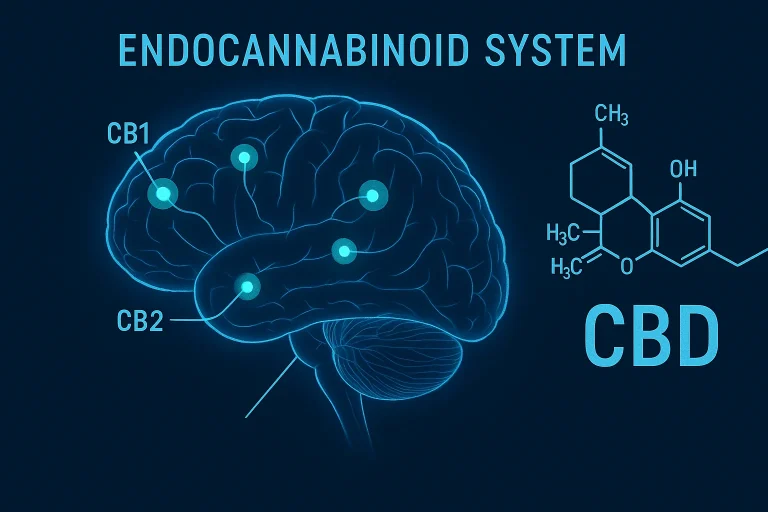
BDNF (Brain-Derived Neurotrophic Factor) is a protein from the neurotrophin family encoded by the BDNF gene on chromosome 11. It acts through two receptors: TrkB (a high-affinity receptor mediating most trophic effects) and p75NTR (a low-affinity receptor mediating apoptosis in the absence of TrkB). Actively secreted into the synaptic cleft during neuronal activity, BDNF strengthens synapses, elongates dendrites, and increases synaptic spine density (Bhattacharya et al., Progress in Neurobiology, 2004).
The relationship between BDNF and depression is repeatedly confirmed: serum and brain tissue BDNF levels are lowered in depression, BDNF levels increase with effective antidepressant treatment, and the genetic polymorphism Val66Met in the BDNF gene (common in about 25% of Europeans) reduces BDNF-dependent activity and correlates with a higher risk of depression. This does not mean that BDNF "is" depression - it is one of several pathways involved in pathophysiology.
| Substance | Neuroplastic mechanism | Time to effect | Clinical status |
|---|---|---|---|
| SSRIs (e.g., escitalopram) | Indirect through serotonin → BDNF | 2-6 weeks | Registered drug |
| Ketamine / esketamine | NMDA blockade → BDNF + TrkB | 1-3 hours | Registered drug (Spravato) |
| Psilocybin | 5-HT2A → BDNF + direct TrkB | 24-72 godziny | Phase 3 clinical trials |
| LSD | 5-HT2A → BDNF + direct TrkB | 24-72 godziny | Phase 2 clinical trials |
| MDMA | Multicellular (5-HT, DA, NE) + TrkB | 24-72 godziny | Badania kliniczne - FDA CRL 2024 |
We have noted that the discovery of the direct binding of psychoplastogens to TrkB (Molnár et al., Nature, 2023) is undervalued in Polish-language literature. This is a conceptual shift comparable to the discovery that aspirin does not work by "thinning the blood" (as was thought for decades), but by inhibiting COX. Psychedelics do not raise BDNF indirectly - they directly "squeeze" the neurotrophin receptor, bypassing the entire indirect cascade.
Breakthrough 2023: direct activation of TrkB
The groundbreaking article by Molnár and colleagues published in Nature in May 2023 (Molnár et al., Nature, 2023) changed the understanding of the mechanism of action of psychoplastogens. Using X-ray crystallography and structural studies via cryo-EM, the team demonstrated that psilocybin, ketamine, LSD, MDMA, and several other substances bind to the transmembrane domain of the TrkB receptor - an allosteric site, completely different from the BDNF binding site.
What is particularly important: this binding is sufficient to activate the TrkB signaling pathway and induce an increase in synaptic spines - without BDNF, without 5-HT2A, and without any other receptor. However, a condition is simultaneous synaptic activity: the TrkB receptor is "activity-gated" - binding of the psychoplastogen opens the gate, but the movement (neuronal activity) must pass through it. This explains why the context of the experience (psychotherapy, environment) is so significant for the durability of the effect.
The clinical implication is enormous: if TrkB is the target, substances can be designed to selectively activate this receptor without the psychedelic effects of 5-HT2A. This is precisely the direction of research into "non-psychedelic psychoplastogens" - next-generation drugs that would have the neuroplastic effects of psychedelics without the subjective psychedelic experience.
Neuroplasticity as a „window” - why context matters
Synaptic plasticity is not unconditionally good. It is a neutral tool - it strengthens those patterns of neuronal activity that are active during the open window of plasticity. In a therapeutic context: if during a psilocybin session the patient works with a therapist on dysfunctional beliefs, trauma reprocessing, or value reorientation - neuroplasticity can solidify these new, healthier patterns.
Outside of the therapeutic context: the same window of plasticity can reinforce anxiety, paranoid, or dissociative patterns if the experience is poorly managed. This is why clinical studies with psilocybin and MDMA emphasize preparation, professional support during sessions, and post-session integration so strongly. It is not just a formal requirement - it is a substantive condition for effectiveness.
From our experience in tracking the literature: the concept of „set and setting” (mindset and environment) comes from the psychedelic tradition of the 60s, but it has only gained full neurobiological justification in the era of research on psychoplastogens. Neuroplasticity is activity-gated - the brain solidifies what it is occupied with during the window of plasticity. This is both the most beautiful aspect of psychoplastogen therapy and the most important argument for why these substances require a specialized clinical context.
Clinical implications of psychoplastogenic neuroplasticity - what does it mean for the future of psychiatry?
The discovery of the TrkB pathway as a common denominator for ketamine, psilocybin, LSD, and MDMA has consequences that extend far beyond psychiatry. If structural neuroplasticity is a therapeutic mechanism, not a side effect, it fundamentally changes our understanding of how therapy for neurodegenerative diseases, addictions, and anxiety disorders should look.
In the context of addictions: preclinical studies and early clinical trials suggest that psychoplastogens can „rewrite” habitual response patterns to addictive stimuli - literally weakening entrenched reward circuits by opening a new window of plasticity. Two clinical studies with psilocybin in alcohol addiction (Bogenschutz et al., JAMA Psychiatry, 2022) and nicotine addiction (Johnson et al., American Journal of Drug and Alcohol Abuse, 2017) demonstrated impressive efficacy - although in small samples (Bogenschutz et al., JAMA Psychiatry, 2022).
In the context of neurorehabilitation: opening the window of critical plasticity has analogies to critical developmental periods in childhood when the brain is exceptionally plastic. Studies on animal models suggest that psychoplastogens can „reactivate” critical periods of plasticity for learning new motor and language skills after brain injury. This is completely new territory - no phase 2 clinical trials have yet been completed in this indication.
The biggest challenge for the future of this field is scaling: protocols requiring 6-8 hour sessions with two therapists are difficult to implement systemically. This is why research on non-psychedelic psychoplastogens - substances that activate TrkB without subjective effects - is so strategically important. If the therapeutic effect can be achieved without an immersive psychedelic experience, it paves the way for conventional forms of pharmacotherapy available to a much larger number of patients.
Frequently Asked Questions
What are psychoplastogens and how do they differ from classic antidepressants?
Psychoplastogens are substances that induce rapid, structural neuroplasticity: the growth of synaptic spines and dendrites. SSRIs work more slowly by regulating neurotransmission and require continuous use. Psychoplastogens create lasting anatomical changes after a single or a few doses. Esketamine (Spravato) is the first registered psychoplastogen in psychiatry (Molnár et al., Nature, 2023).
What is BDNF and why is it important?
BDNF (brain-derived neurotrophic factor) is a protein that supports neuron survival, dendrite growth, and synapse strengthening. Low BDNF correlates with depression, anxiety, and cognitive decline. Effective antidepressant treatment - regardless of the method - is associated with increased BDNF (Duman et al., Nature Reviews Neuroscience, 2012).
How does psilocybin affect BDNF and neuroplasticity?
Psilocybin acts through two parallel pathways: indirectly via 5-HT2A and glutamate (increasing BDNF) and directly through allosteric binding to TrkB independent of BDNF. This second mechanism, discovered in 2023, triggers an increase in synaptic spines in the prefrontal cortex within 24 hours (Molnár et al., Nature, 2023).
Why are the effects of psychoplastogens more lasting than those of SSRIs?
SSRIs create functional changes (neurotransmitter regulation) that reverse after discontinuation. Psychoplastogens create structural changes - new synaptic spines and strengthened dendrites - that are anatomically durable even after the substance is eliminated. It’s like the difference between adjusting the volume and reconstructing the acoustic system.
Is ketamine also a psychoplastogen?
Yes - ketamine works by blocking NMDA and activating TrkB (not through 5-HT2A like classic psychedelics). Esketamine (Spravato, intranasal) is an FDA (2019) and EMA (2019) approved medication for treatment-resistant depression. The increase in synaptic spines after ketamine occurs within 1-3 hours - faster than after psilocybin.
Is neuroplasticity induced by psychoplastogens always beneficial?
No - neuroplasticity strengthens active patterns, whether beneficial or not. The window of plasticity opened by a psychoplastogen can solidify both healthy patterns (in a therapeutic context) and anxious ones (outside of it). This is why set (mindset) and setting (environment) during sessions are a condition for therapeutic effectiveness - not just a formal requirement.
This article is for informational and educational purposes and does not replace consultation with a doctor. If you are pregnant, breastfeeding, taking medications, or have chronic conditions, consult the use of supplements or herbs with a specialist.
Author: Michał Waluk · Published: 2026-05-04 · Updated: 2026-05-04