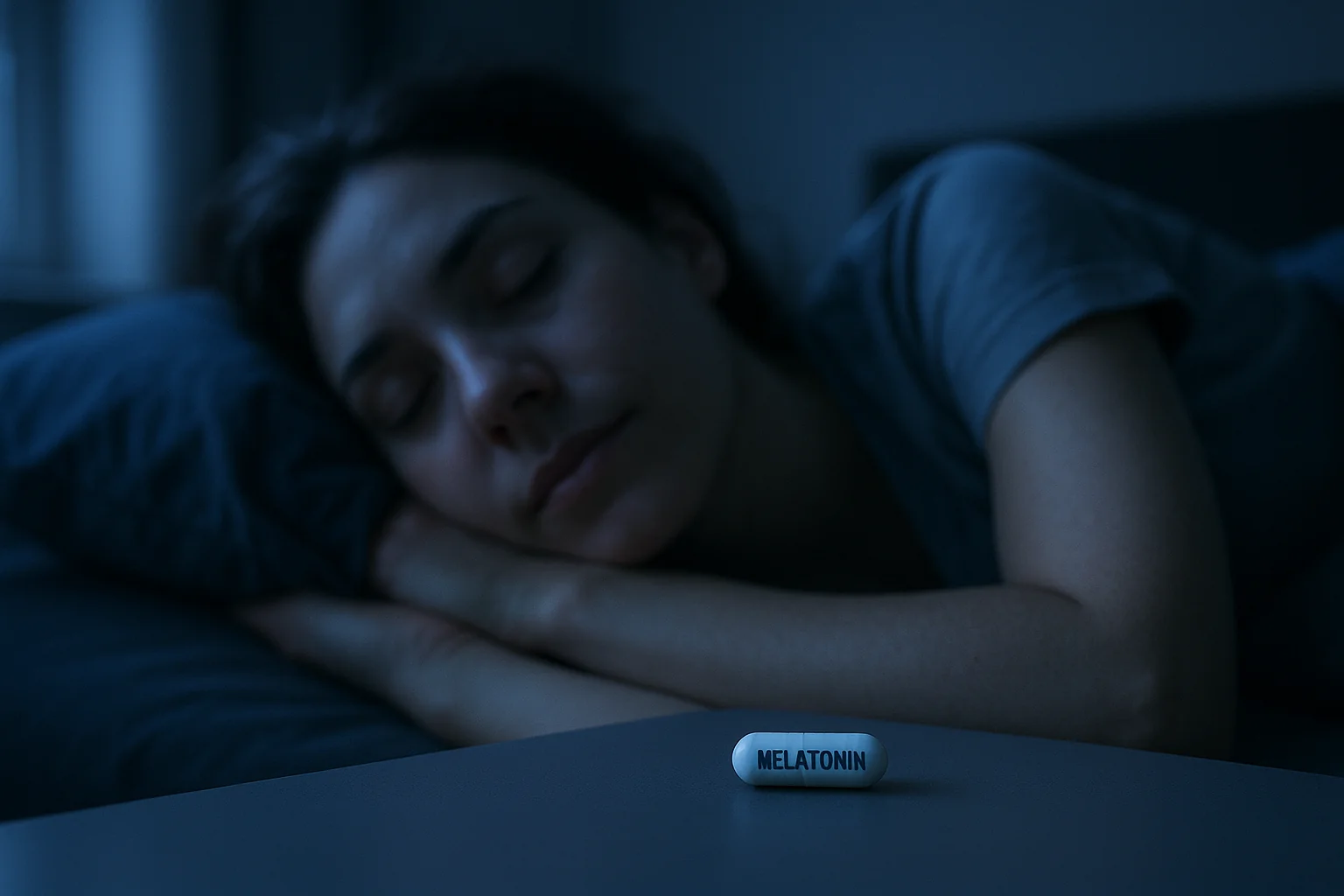

Melatonin for sleep: dosing, when to take it, and is it safe (2026).
Melatonin for sleep – optimal dosing is 0.3–1 mg, not 5–10 mg. When to take it, how it works, interactions with medications, and long-term safety. Check studies 2026.
Melatonin is one of the most commonly purchased sleep supplements in Poland - and one of the most frequently misdosed. OTC products usually contain 3-10 mg per tablet, while clinical studies show optimal effectiveness at 0,3-1 mg. Why do manufacturers pack so much more? Because higher doses are subjectively "felt" - they induce drowsiness like a sedative, although this is not the mechanism of melatonin. True melatonin works differently: it does not induce sleep forcefully but synchronizes the circadian rhythm. If you take 5-10 mg and wonder why you feel tired the next morning - this is where the answer lies. This article will explain the mechanism of melatonin's action, optimal dosing based on evidence, and when supplementation makes sense and when the problem lies elsewhere.
KEY INFORMATION
• A meta-analysis by Auld et al. (BMJ, 2017) showed that melatonin shortens sleep onset time by an average of 7 minutes and improves sleep quality at doses of 0.3-1 mg.
• Fizjologiczny szczyt melatoniny w organizmie wynosi 100-200 pg/ml - dawka 5 mg podnosi go do 3000-10 000 pg/ml (efekt przedawkowania, nie terapii).
• The half-life of melatonin in serum is only 30-60 minutes - which is why timing of administration is crucial.
• Interactions with warfarin, antihypertensive medications, and immunosuppressants require medical consultation before supplementation.
What is melatonin and how does it work in the body?
Melatonin is a hormone produced by the pineal gland (epiphysis) - a small structure in the brain - exclusively in darkness. Its synthesis is blocked by light, especially blue light emitted by screens and LED lighting. Its biological role is not to "put the body to sleep" but to signal the time of day: high levels of melatonin inform the body that night has come and it's time for regenerative processes - lowering body temperature, slowing metabolism, consolidating memory. Review by Pandi-Perumal et al. (FEBS Journal, 2006) described melatonin as the "hormone of darkness," whose concentration rises to a peak of 100-200 pg/ml about 2-3 hours after exposure to darkness.
Melatonin acts through two receptors: MT1 (involved in the rapid suppression of neuronal activity in the suprachiasmatic nucleus, which produces a drowsiness effect) and MT2 (modulation of the circadian rhythm and sleep phases). Supplementation mainly works through MT2, shifting the sleep phase to an earlier hour - which is why it is particularly effective in delayed sleep phase syndromes ("night owls") and jet lag, but it is not a strong sleeping aid for typical insomnia.
Our observations: Many users buy melatonin 5 mg or 10 mg and report effects similar to a mild sleeping pill - drowsiness after about 20 minutes, but also heaviness in the head and fatigue in the morning. This is not the correct effect of melatonin, but the effect of pharmacological exceeding the physiological threshold. Switching to a dose of 0.5-1 mg often eliminates morning fatigue while maintaining effectiveness in regulating the circadian rhythm.
Optimal melatonin dosage - what do studies say?
The question of melatonin dosage is one of those where the popularity of the OTC product drastically diverges from scientific evidence. Meta-analiza Auld et al. opublikowana w BMJ (2017) included 19 randomized controlled trials with a total of 1683 participants and showed that melatonin shortens sleep onset time (sleep latency) by an average of 7.06 minutes and extends total sleep time by 8.25 minutes. The authors found that doses above 1 mg did not yield better results than doses of 0.3-0.5 mg, and at higher doses, adverse effects intensified.
Clinical study Lewy et al. (Journal of Biological Rhythms, 2001) directly compared doses of 0.3 mg, 0.5 mg, 3 mg, and 10 mg of melatonin in the context of circadian rhythm synchronization. The dose of 0.5 mg provided the optimal chronobiotic effect with minimal adverse effects. Doses of 3 mg and 10 mg induced drowsiness more effectively (pharmacological effect), but were less precise in regulating the circadian rhythm and caused 'heaviness' the next morning. In other words: the higher the dose, the more melatonin acts like a sedative, and less like a chronobiotic.
When and how to take melatonin?
The timing of melatonin intake is as important as the dosage. Since the half-life of melatonin in serum is only 30-60 minutes, and its chronobiotic effect depends on interaction with MT2 receptors at a specific phase of the circadian cycle, the timing window matters. The optimal intake is 30-60 minutes before the planned bedtime.
A few important practical rules: after taking melatonin, stay in a dimly lit room - light (especially blue light from screens) blocks the action of melatonin through the SCN receptor (suprachiasmatic nucleus). Do not combine melatonin with alcohol - ethanol disrupts sleep architecture and negates the benefits of melatonin. Badanie Cajochen et al. (Journal of Sleep Research, 2003) confirmed that a warm room temperature above 22°C reduces the effectiveness of both endogenous and exogenous melatonin, as the body cannot lower its core temperature, which is a prerequisite for falling asleep.
With jet lag, the protocol differs: take melatonin for 3-5 days after arrival at a time corresponding to the local sleep time (not 'when you are tired'). Cochrane Review (Herxheimer, 2002) evaluated 10 RCTs and found that melatonin is highly effective in alleviating jet lag, especially when traveling eastward (across more than 5 time zones).
Melatonin interactions with medications - what you need to know
Melatonin is primarily metabolized by the CYP1A2 enzyme in the liver. Medications that inhibit or induce CYP1A2 can drastically alter its concentration in the blood. This is not a marginal issue - melatonin interactions with medications can be clinically significant.
The most important clinically documented interactions:
- Fluwoksamina (antydepresant SSRI): inhibits CYP1A2, raising melatonin levels even 17-krotnie (von Bahr et al., 2000) - ryzyko nadmiernej sedacji.
- Warfarin: melatonin may enhance the anticoagulant effect, increasing the risk of bleeding. INR monitoring is required when combining.
- Leki hipotensyjne: Melatonin lowers blood pressure at night - combining it with ACE inhibitors, beta-blockers, or sartans may lead to excessive hypotension.
- Immunosupresanty (cyklosporyna, takrolimus): melatonin exhibits immunomodulatory activity and may interfere with the action of these medications.
- Benzodiazepiny i zolpidem: Additive sedative effect - possible excessive psychomotor disturbances the next day.
If you are taking any of the above medications, consult your doctor or pharmacist before starting melatonin supplementation. This is not a recommendation 'just in case', but a requirement stemming from documented clinical interactions.
Is melatonin safe for long-term use?
The safety profile of melatonin for short-term use (up to 13 weeks) is well documented and positive. Adverse effects reported in RCT studies include: headaches (6-8% of participants), daytime sleepiness (especially at doses above 3 mg), dizziness, and nausea at higher doses.
Long-term data is rarer. EFSA (2010) It assessed the safety of melatonin and considered doses up to 0.5 mg as safe for regular use. The lack of RCT studies lasting longer than 6 months prevents definitive statements about the safety of long-term use. It is recommended to use in cycles: 4-8 weeks of treatment, followed by a break of 2-4 weeks.
Particular caution applies to children and adolescents. The pineal gland is hormonally active during puberty, and exogenous melatonin may interfere with the regulation of the GnRH-LH-FSH axis responsible for sexual maturation. Pediatric use of melatonin (e.g., for ADHD or autism with sleep disorders) requires medical supervision and specialized pediatric dosing. Pregnant and breastfeeding women should avoid melatonin due to a lack of safety studies in these groups.
How does melatonin affect sleep hygiene - practical usage tips?
Melatonin is a supportive tool, not a substitute for good sleep hygiene. Its effectiveness dramatically increases when used alongside a few simple behavioral rules. Without them, even the best dose of melatonin yields limited effects.
The most important combination: melatonin + control of light exposure. Sleep and wake hormones are primarily regulated by the light-dark cycle. Evening avoidance of blue light (screens, LEDs) for 1-2 hours before sleep can increase endogenous melatonin levels by 50-100% without any supplementation. Badanie Gooley et al. (Journal of Clinical Endocrinology and Metabolism, 2011) showed that exposure to artificial lighting within 1 hour before sleep shortens melatonin secretion time by nearly 90 minutes, which corresponds to a shift of the biological night by over an hour backward.
The temperature of the bedroom is equally important. The optimal sleep temperature is 16-19°C. Lowering core body temperature is one of the signals that trigger melatonin production. A warm bath or shower 1-2 hours before sleep paradoxically facilitates falling asleep, as heat quickly escapes from the skin's surface after leaving the water, accelerating core cooling. Combined with 0.5 mg of melatonin, this sequence may shorten sleep latency more than melatonin alone at doses of 3-5 mg.
Consistent sleep hours are a foundation that melatonin cannot replace. If you wake up at a different time each day, the rhythm of melatonin secretion is disrupted, and supplementation will only be a "band-aid" for an irregular lifestyle. Melatonin works best for individuals who have a consistent daily routine, but for some reason (shift work, jet lag, age), their circadian rhythm requires adjustment or reinforcement.
Melatonin and other sleep supplements - how do they compare?
Melatonin is not the only option for sleep issues - and it is not the best for every type of insomnia. It is worth understanding when it has an advantage and when other supplements may be more effective.
For insomnia with difficulty falling asleep (prolonged sleep latency) with a normal circadian rhythm: melatonin is the first choice. However, for insomnia with frequent awakenings at night (sleep fragmentation), melatonin is less effective than magnez glicynian or L-theanine. Badanie Nielsen et al. (Magnesium Research, 2010) It has been shown that magnesium in older individuals with insomnia increased total sleep time by 16% and sleep efficiency by 12%, mainly by reducing nighttime awakenings. For insomnia caused by stress and excessive mental activity before sleep - ashwagandha lub L-teanina may be a better choice due to their impact on the HPA axis and cortisol.
A comprehensive discussion of natural methods to improve sleep can be found in the article Insomnia - natural ways to sleep.
Who is melatonin really indicated for?
Melatonin has well-documented effectiveness in several specific situations - and weaker in others. It is important to know when it truly makes sense and when sleep issues require a different approach.
Wskazania z mocnymi dowodami: Jet lag (Cochrane: strong recommendation), delayed sleep phase syndrome (DSWPD - biological owls), shift work requiring adjustment of the circadian rhythm, age-related sleep disorders (in individuals over 55, natural melatonin levels drop by 50-70%, as documented by the review by Zhdanova and Wurtman, 1997), daytime insomnia resulting from disrupted circadian rhythm.
Weaker or unproven effectiveness: chronic primary insomnia (here, better results are achieved with CBT-I - cognitive-behavioral therapy for insomnia), insomnia caused by pain or chronic illness, sleep disorders related to anxiety or depression (here melatonin may be a supplement, not a primary therapy).
The relationship between magnesium and sleep - including a comparison of magnesium forms in insomnia - is discussed in the article Magnesium for stress and sleep - forms and selection.
Frequently Asked Questions
How much melatonin should I take for sleep?
Optymalna dawka to 0,3-1 mg, przyjmowane 30-60 minut przed snem. Meta-analiza Auld et al. (BMJ, 2017) It confirmed the effectiveness of physiological doses without the need for high OTC doses of 5-10 mg, which do not yield better results and increase morning fatigue.
When should melatonin be taken?
30-60 minutes before the planned bedtime, in a dimly lit room. With jet lag - at the local sleep time for 3-5 days. Cochrane Review (Herxheimer, 2002) confirmed the high effectiveness of melatonin for jet lag, especially when crossing more than 5 time zones eastward.
Does melatonin cause dependence?
Melatonin does not cause physical or psychological dependence and does not show tolerance. It is an endogenous hormone, whose supplementation complements or shifts the natural circadian rhythm. It is not a sedative, although high doses (5-10 mg) induce a sedative effect similar to mild sleeping pills.
Z jakimi lekami melatonina wchodzi w interakcje?
Key interactions: fluvoxamine (melatonin levels increase 17-fold), warfarin (risk of bleeding), antihypertensive medications (possible excessive hypotension), immunosuppressants, and benzodiazepines. Individuals taking these medications must consult their doctor before starting supplementation.
Is melatonin safe for long-term use?
Studies up to 13 weeks did not show serious adverse effects at doses of 0.5-3 mg. There is a lack of data from studies longer than 6 months. EFSA (2010) considered 0.5 mg a safe regular dose. Recommended cycles with breaks. Do not use alone in children without consulting a pediatrician.
What is the difference between endogenous and supplemental melatonin?
Natural melatonin from the pineal gland peaks at 100-200 pg/ml. A 5 mg tablet raises the level to 3000-10,000 pg/ml - that is, up to 50 times above physiology. A dose of 0.3 mg is closer to natural concentration and sufficient to synchronize the circadian rhythm without the side effects of high doses.
Does melatonin affect cortisol levels?
Yes - melatonin and cortisol act antagonistically. High levels of melatonin at night naturally correlate with low levels of cortisol (the stress hormone). Badanie Kostoglou-Athanassiou et al. (Neuroendocrinology Letters, 1998) It has been shown that exogenous melatonin administered in the evening reduced nighttime cortisol levels in healthy volunteers by about 20%, which may partially explain the improvement in deep sleep quality observed with supplementation. However, melatonin should not be used as a 'daytime anti-stress supplement' - taking it in the morning or afternoon disrupts the circadian rhythm.
Can melatonin be taken together with CBD?
The combination of melatonin and CBD is being analyzed in several observational studies. CBD reduces anxiety and inhibits the sympathetic nervous system, which facilitates relaxation before sleep, while melatonin synchronizes the circadian rhythm. The mechanisms complement rather than conflict. There are no documented serious pharmacokinetic interactions between CBD and melatonin. Practically: the combination of CBD 15-25 mg + melatonin 0.5 mg may yield better results than each supplement separately if the source of insomnia is a combination of delayed circadian rhythm and evening anxiety or excessive mental activation.
This article is for informational and educational purposes and does not constitute medical advice. Before starting to use cannabis or CBD for therapeutic purposes, consult a doctor, especially if you are taking other medications, are pregnant, or breastfeeding.
Author: Michał Waluk · Published: 2026-05-04 · Updated: 2026-05-04