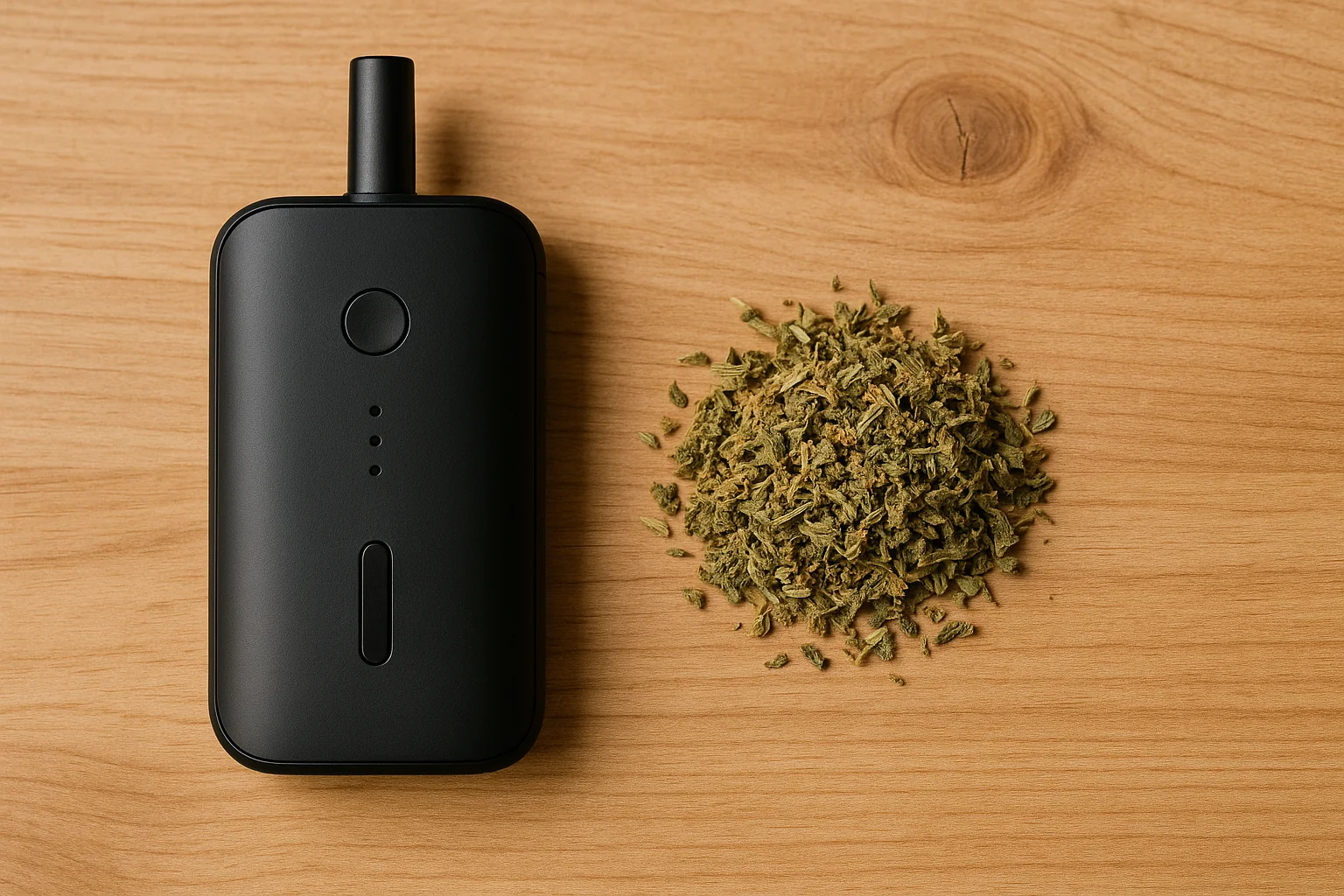

Herb vaporization: which herbs, what temperatures, and how to start safely
Herb vaporization – which herbs to vaporize, what temperatures to set, and how to start safely? Lavender, mint, lemon balm, CBD flower. Guide 2026.
Herb vaporization is a method of extracting active plant compounds without combustion - by heating dried material to temperatures between 130 and 220°C. In this range, volatile terpenes, flavonoids, and cannabinoids evaporate as white vapor, preserving their properties. This is a fundamental difference from smoking, where the temperature exceeds 700°C and destroys most active compounds, creating harmful pyrolysis products. This article explains which herbs to vaporize, what temperatures to set, and how to start safely - whether you have experience or are a complete beginner.
KEY INFORMATION
• Abrams et al. (Clinical Pharmacology & Therapeutics, 2007) showed that vaporization of Cannabis reduces exposure to combustion products (CO, benzopyrene) by over 95% compared to smoking.
• Optimal temperature ranges: lavender 130-150°C, mint 154°C, lemon balm 142°C, CBD flower 185-205°C.
• CBD vaporization provides a bioavailability of 30-60% vs. 6-15% for tea and 20-30% for sublingual oil (Millar et al., Molecules, 2019).
• Safety principle: vapor = white and cool; smoke = error, too high temperature or combustion.
Czym jest waporyzacja i dlaczego jest lepsza od palenia?
Vaporization (herb vaping) is heating dried plant material to temperatures below the ignition point (usually 150-220°C depending on the herb), where active compounds evaporate as vapor - but the plant material does not ignite or burn. This distinguishes herb vaping from e-cigarettes (where liquid is burned) and from smoking herbs (where plant material is burned).
Why does this matter? During combustion, the temperature of the plant material exceeds 700°C at the glowing point. Under these conditions, most terpenes and cannabinoids degrade or are destroyed, and instead, hundreds of harmful compounds are produced: carbon monoxide (CO), benzo[a]pyrene (a strong carcinogen), acrolein, aldehydes, and particulate matter (PM2.5). Abrams et al. (Clinical Pharmacology & Therapeutics, 2007) compared vaporization and smoking Cannabis in 18 study participants. Vaporization reduced CO concentration in exhaled air by over 95% and eliminated detectable benzopyrenes - while maintaining comparable bioavailability of the main cannabinoid.
For herbs like lavender, lemon balm, or mint, the situation is similar: vaporization releases active terpenes (linalool, myrcene, menthol) as pure vapor, without combustion products. Smoking these herbs would destroy a significant portion of the terpenes and produce carbon monoxide even during short sessions.
Which herbs can be vaporized - a list with temperatures
Not all herbs are equally suitable for vaporization. Key criteria include: the content of active terpenes and flavonoids with volatility appropriate for the vaporizer's temperature range, absence of toxic alkaloids when heated, and availability in properly dried form. Below is a list of herbs tested for vaporization.
Lawenda (Lavandula angustifolia) - 130-150°C: Rich in linalool and linalyl acetate - terpenes with strong relaxing and anxiolytic effects. Linalool activates GABA-A receptors, reducing neuronal excitability. The aroma is delicate, floral, and very pleasant. Excellent for evening sessions or after a stressful day. Low temperatures (130°C) provide the gentlest aroma; 150°C - a fuller effect. Start at 140°C.
Peppermint (Mentha piperita) - 154-170°C: The dominant active ingredient is menthol - a refreshing agonist of TRPM8 receptors, providing a cooling sensation. It acts as an expectorant in sinus and upper respiratory infections. The vapor of mint is clean, refreshing, and non-irritating. It pairs well with lavender and lemon balm. Lower temperatures (154°C) provide more intense menthol; higher temperatures yield warmer, more aromatic vapor.
Melisa cytrynowa (Melissa officinalis) - 142-160°C: Rich in geraniol, citronellal, and eugenol - terpenes with calming and mood-enhancing effects. Rosmarinic acid (non-terpene, but volatile in the vaporizer at higher temperatures) shows anxiolytic effects in studies. Kennedy et al. (Psychosomatic Medicine, 2004) They confirmed that lemon balm extract reduces anxiety and improves mood. The taste is citrusy-herbal, pleasant.
Rumianek (Matricaria chamomilla) - 125-150°C: Bisabolol and apigenin (a flavonoid with anxiolytic effects through benzodiazepine receptors) are the main active compounds. Apigenin at low temperatures (125-140°C) evaporates as gentle vapor. Effects: calming, anti-inflammatory (upper respiratory tract), antispasmodic. The taste is characteristic of chamomile, mild.
Sage (Salvia officinalis) - 180-190°C: Thujone and camphor as dominant terpenes - sage requires higher temperatures for full effect. Mind-clearing action, memory enhancement. Note: thujone in large amounts is toxic - limit sage sessions to short (2-3 breaths) and infrequent. Do not vaporize sage during pregnancy.
Susz CBD (Cannabis sativa L., THC <0,3%) - 185-205°C: Most widely used in herb vaporization. CBD, CBG, terpenes (beta-caryophyllene, myrcene, linalool) evaporate in the range of 185-210°C. Bioavailability when vaporizing: 30-60% - significantly higher than tea (6-15%) or sublingual oil (20-30%). Relaxation effect is quick (a few minutes), without psychoactivity. Start at 185°C, gradually increase to 195°C for a fuller CBD effect.
How to choose a vaporizer - convection vs. conduction
Herbal vaporizers are divided into two main categories: convection and conduction. The difference in heating mechanism has a real impact on vapor quality and extraction uniformity.
Waporyzatory kondukcyjne: The plant material is in direct contact with the heated surface (ceramic, metal). Faster temperature achievement, lower price, portability. Disadvantage: uneven heating - material at the walls may overheat, while the center of the chamber is cooler. Requires more frequent mixing of the material during the session for even extraction.
Waporyzatory konwekcyjne: Hot air flows through the plant material, heating it evenly without direct contact with the heating element. Better vapor quality, cleaner taste, more efficient extraction of active compounds. Higher price, often slower heating. Reputable manufacturers: Storz-Bickel (Mighty+, Volcano), Arizer (Solo 2, Air 2), Pax (Pax 3).
For beginners: a portable conduction vaporizer (Pax, Arizer Air) is a good start - lower price, ease of use. For those with more experience or seeking the best quality herbal extraction: convection desktop vaporizers (Volcano Digit or Mighty+) are quality standards in this category.
Our observations: The most common mistake beginners make is setting the temperature too high during the first session. Vapor at 200°C with lavender or mint is aggressively hot and can irritate the throat, even if the temperature technically falls within the 'safe' range for that herb. Always start at the lower end of the range and gradually raise it. The vapor should be cool or barely warm upon inhalation - not hot.
How to start herb vaporization - a guide for beginners
The first vaporization session requires some preparations that will determine the quality of the experience and safety.
Preparing the herbs: Use herbaceous material free from pesticides and plant protection products - this is more important than when brewing tea, as the vapor goes directly to the lungs. The herbs should be properly dry (moisture around 60-65%) - too moist herbs vaporize poorly, while too dry ones burn faster. Grind the herbs evenly (not too coarse, not too fine) - too fine grinding restricts airflow, while too coarse reduces the contact surface.
Filling the chamber: Do not overfill the chamber - the material should fill about 60-70% of its volume, without strong packing. Too tightly packed material blocks the flow of hot air and reduces the quality of vaporization. After filling, level the surface of the herb with a flat object.
Nagrzewanie: Turn on the vaporizer and set the temperature. Wait for it to fully heat up (usually 30-120 seconds, depending on the device). Some vaporizers signal readiness with an LED or vibration. Do not inhale before reaching the target temperature.
Technika wdechu: Inhale slowly and evenly for 5-8 seconds - too rapid an inhalation cools the air flowing through the chamber and reduces extraction. The herbal vapor should be comfortable - not burning. If you feel a burning sensation or cough, the temperature is too high or the inhalation is too abrupt.
Po sesji - czyszczenie: Empty the chamber of herbal residues while the device is still warm - it cleans more easily. Regular cleaning with isopropyl alcohol (91%+) prevents resin buildup and improves the taste of the session. Manufacturers like Storz-Bickel offer cleaning kits dedicated to their devices.
Herbal combinations for vaporization - synergistic blends
Vaporizing herbs is not limited to one herb per session - blends are one of the most interesting aspects of this practice. Appropriate combinations of herbs can synergistically enhance effects or complement each other.
Mieszanka relaksacyjna wieczorna: Lavender (60%) + lemon balm (30%) + CBD herb (10%). Temperature: 185-190°C (dominated by CBD herb). Effects: strong anxiolytic action with a GABAergic component (lemon balm), aromatherapeutic (lavender), and cannabinoid (CBD). This is one of the best-documented triptychs for reducing evening tension and improving sleep.
Respiratory cleansing blend: Mint (70%) + thyme (30%). Temperature: 155-165°C. Effects: menthol from mint acts as an expectorant and opens airways, thymol from thyme has antibacterial effects on the respiratory tract. A good session after a cold or with sinus issues.
Mieszanka koncentracji i skupienia: Rosemary (50%) + sage (50%). Temperature: 185-190°C. Rosemary (1.8-cineole, camphor) improves blood flow to the brain and concentration. Sage shows pro-cognitive effects in studies - acetylcholinesterase inhibition similar to Alzheimer's medications. Sessions that clear the mind before a challenging intellectual task.
With blends containing CBD herb: CBD herb can be combined with any of the listed herbs - CBD does not interact antagonistically with typical herbal phytochemicals. The best combination is CBD herb with lavender or lemon balm for maximum relaxing effect through the entourage effect.
Vaporization safety - what to avoid and when not to vaporize
Vaporizing herbs is a safe practice when using reliable devices and herbs free from contaminants. However, several situations require caution or exclude vaporization.
Lung and respiratory diseases: Asthma, chronic obstructive pulmonary disease (COPD), active pneumonia or bronchitis - consult a pulmonologist before vaporizing anything. Vapor, even without combustion products, can irritate sensitive airways.
Pregnancy and breastfeeding: Even terpenes from lavender and mint in inhalation can cross the placenta or enter breast milk in unknown amounts. Vaporizing herbs during pregnancy and breastfeeding requires consultation with a doctor.
Medicines: Some terpenes (1.8-cineole from eucalyptus and rosemary) can affect drug metabolism through the CYP450 enzyme. With regular pharmacotherapy - consult vaporization with a doctor or pharmacist.
Low-cost devices from China (without CE certifications): Uncertified vaporizers may have leaky heaters, plastics in the chamber, or faulty thermometers. Investing in a branded vaporizer (Storz-Bickel, Arizer, Pax) is an investment in safety, not just in flavor quality.
Vaporization of CBD herb - specifics and differences
CBD herb vaporizes slightly differently than light aromatic herbs. Here are some practical tips specific to cannabis.
CBD evaporates mainly in the range of 185-205°C. Lower temperatures (170-180°C) extract terpenes and lighter compounds - richer aroma, milder effect. Higher temperatures (195-210°C) extract more CBD, CBG, and other cannabinoids - stronger effect, but the vapor may be denser. Start at 185°C and gradually explore the range.
CBD herb is usually oilier and more resinous than dry aromatic herbs - it dirties the vaporizer chamber faster. Clean the chamber for CBD herb after every 2-3 sessions, do not wait for a 'thick layer'. Use 91% or higher isopropyl alcohol for cleaning - 70% solutions are too weak for cannabis resins.
The bioavailability of CBD vaporization (30-60%) is 2-5 times higher than with hemp tea. This means that the same amount of CBD herb delivers significantly more CBD to the bloodstream through a vaporizer than through an infusion. Plan your dose - for the first sessions, 0.2-0.3 g of herb is sufficient. More about CBD herb and its properties: CBD flower what it is how to use.
Frequently Asked Questions
Which herbs can be vaporized?
Suitable for vaporization: lavender (130-150°C), peppermint (154-170°C), lemon balm (142-160°C), chamomile (125-150°C), sage (180-190°C), thyme (155°C), and CBD herb (185-205°C). Key: herbs must be free from pesticides, properly dry, and evenly ground. Avoid herbs with additives or synthetic flavors - they go directly to the lungs in the vaporizer.
What temperature should be set on the herb vaporizer?
Ranges: lavender 130-150°C, mint 154°C, lemon balm 142°C, chamomile 125-150°C, sage 190°C, CBD herb 185-205°C. Always start from the lower end of the range. The vapor should be white and cool - when smoke or a burnt smell appears, the temperature is too high. Gradually increase after a few exploratory sessions.
What is the difference between vaporization and smoking herbs?
Vaporization heats plant material to 150-220°C - below the ignition point - extracting active compounds as vapor. Combustion (>700°C) destroys cannabinoids and terpenes, creating carbon monoxide, benzopyrene, and PM2.5 particles. Abrams et al. (2007) They demonstrated that vaporization reduces exposure to combustion products by over 95% compared to smoking.
How to clean a herb vaporizer?
After each session: empty the chamber while the device is still warm. Weekly cleaning: soak metal and glass parts in 91%+ isopropyl alcohol, wipe the inside of the chamber with swabs. Clean the mouthpiece with soap and water. Regular cleaning improves flavor and efficiency. Manufacturers like Arizer provide maintenance instructions.
Czy waporyzacja jest bezpieczna?
Vaporization is significantly safer than combustion in terms of exposure to pyrolysis products. It is not completely risk-free: excessively high temperatures can irritate the respiratory tract, and damaged devices may generate harmful compounds. Safe vaporization: a tested device (Storz-Bickel, Arizer, Pax), temperature control, regular cleaning, breaks between sessions. Do not vaporize with lung diseases without consulting a doctor.
How to start vaporizing herbs as a beginner?
Start with a portable vaporizer (Pax, Arizer Air) - simpler and cheaper than a desktop model. Buy quality, dried herbs free from pesticides (lavender, mint). Grind evenly. Start at 130-140°C and with a small portion (0.2 g). Inhale slowly for 5-8 seconds. Observe the effects over several sessions before increasing the temperature or amount. Also check out hemp tea as an alternative: CBD hemp tea effects how to brew.
This article is for informational and educational purposes and does not replace consultation with a doctor. If you are pregnant, breastfeeding, taking medications, or have chronic conditions, consult the use of supplements or herbs with a specialist.
Author: Michał Waluk · Published: 2026-05-04 · Updated: 2026-05-04