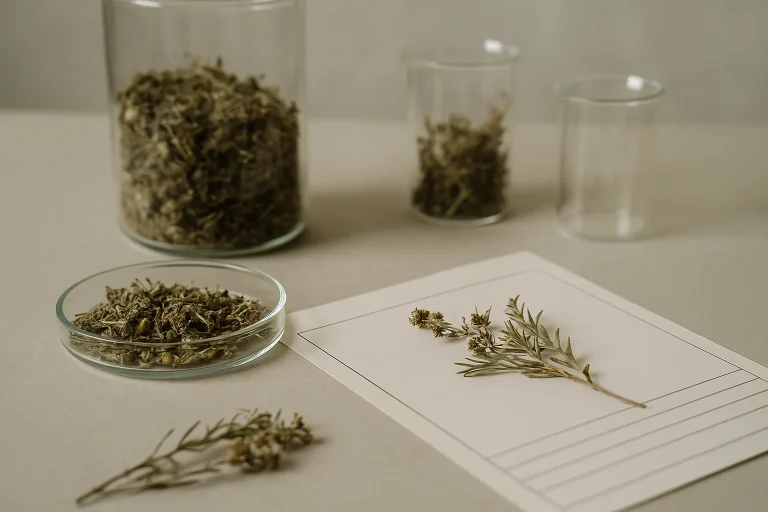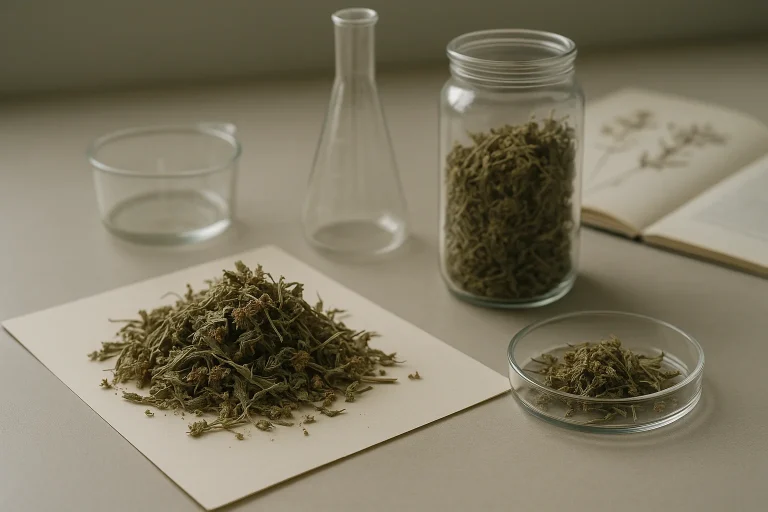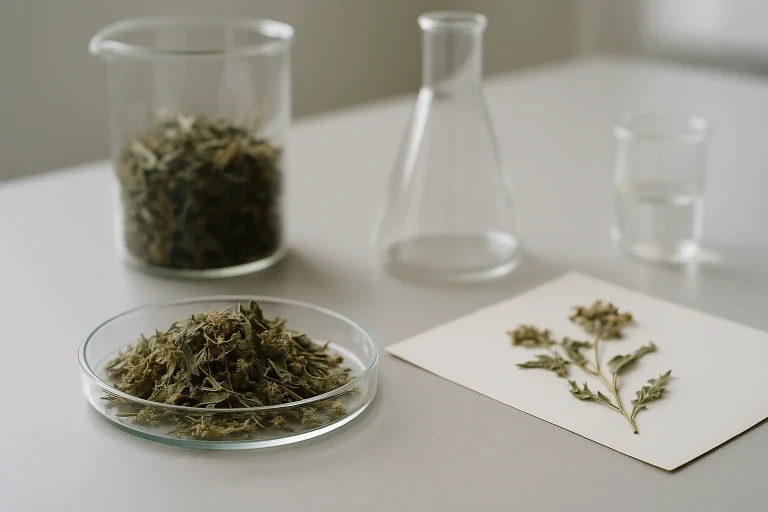

Frosted Lemon Angel (Cannabis flos PhytoPur Bio): lineage from Lemon Skunk and a single source
A hybrid of Lemon Skunk and Kosher Kush, supplied to Polish pharmacies by one producer. The terpene profile is described by only one database, and the two databases do not even agree on the type of plant.
What is Frosted Lemon Angel and where does this strain come from?
This is a hybrid with a well-established lineage: its parents are considered to be Lemon Skunk and Kosher Kush. It reaches Polish pharmacies as dried flower from a single producer, PhytoPur Bio. The lineage is confirmed by three independent descriptions of this entry, while its classification as a type of plant varies in the two databases that catalog it.
The lineage is not a guess based on the name. The term lemon is used in this context for strains of completely different origins, and the shared word does not prove kinship in any direction. The parent pair listed for this entry comes from three catalog descriptions that agree on it, so it stands in the text as a fact, not as a supposition.
Both sides of the pedigree are older than the Polish medical program and come from the recreational market. Lemon Skunk is currently available in Polish pharmacies as a separate entry, although no available source establishes its own parents. Kosher Kush does not appear at all in the Polish list, so the association of the offspring with this side of the lineage remains possible only on paper.
The type of plant is disputed. One database records this entry as a hybrid with an indica dominance, while the other simply lists it as a hybrid, without further specification. We do not resolve this for them: the division into indica and sativa describes more the growth habit of the plant and naming tradition than its composition, and with mixed plants for several generations, it can often be a commercial label.
Which manufacturer supplies this strain to Polish pharmacies?
One. The entire turnover of this strain in Poland is conducted by PhytoPur Bio and it does so in one pharmacy version, so there is nothing to compare between producers. The declared THC content falls within the range of 21.6-26.4% when considering tolerance, and the producer declares a maximum of one percent cannabidiol, which is a record from the registration name, not a measurement result of a single batch.
| Producer | Registered name | Form | THC content with tolerance | Pharmacy versions |
|---|---|---|---|---|
| PhytoPur Bio | Cannabis flos PhytoPur Bio | susz kwiatowy | 21,6-26,4% | one |
One producer means one place of variability and one documentation to refer to. There is no comparison of versions here, as there is nothing to compare. The differences that occur between producers for more popular strains occur here exclusively between successive batches of the same raw material, and these are only described by the document attached to the series.
Presence in the pharmacy is not a permanent state. The permit for the raw material expires after years, the wholesaler brings in batches irregularly, and the database from which the profile of this entry comes marked it as unavailable at the time of data collection. Therefore, we maintain the current status in one place, in the list of strains available in Polish pharmacies, instead of repeating it on every strain page.
There are no monetary amounts in this text for the same reason. Pharmacy rates change with delivery, and the strain description ages more slowly than the price list. A separate matter is dried flower available for mail order, which has nothing to do with the raw material dispensed on prescription and does not replace it in any application.
How does this strain smell and taste?
The catalog lists four notes: citrus, spicy, minty, and herbal. These are descriptors recorded by the database, not results of sensory evaluation conducted by a panel, so they speak about the direction of the scent, not about measurement. The aroma of the dried flower in the jar and the taste of the vapor can actually be quite different, as some compounds evaporate earlier than others.
The set of terpenes recorded for this strain includes bisabolol, humulene, caryophyllene, limonene, myrcene, pinene and terpinolen. The citrus side of the description has a counterpart in limonene, the spicy in caryophyllene and humulene, and the herbal in terpinolene. However, assigning a note to a compound is a conclusion from the chemistry of the compounds themselves, not a measurement made on this batch of dried flower.
The scent description is actually based on the same single entry as the composition. The second database cataloging this item does not provide either scent notes or the order of terpenes, so there is simply no comparison of two independent aroma descriptions. Where both sources describe the same strain, discrepancies can be significant: in this cluster, the composition agrees in three cases out of twenty-four.
There are no percentage shares given next to the names of the terpenes, and this is a decision, not an oversight. Polish databases publish such numbers without a denominator: the same sets sum up to forty-six, seventy-three, or eighty-three percent. A number that cannot be related to the whole, in a text about anxiety, appears to be a measurement, but it is not, so we provide only the composition.
How long does it take for the strain to take effect and how long does the effect last?
There is no measurement made for this strain, so the course can only be discussed at the level of the method of administration. With vaporization, the first sensations come within a few minutes, while with ingestion, it takes half an hour or longer. This difference is greater than any difference between the strains themselves, even those with similar compositions.
The route of administration determines the course more than the variety itself. After vaporization, the substance passes from the lungs to the blood almost immediately, so the first sensations appear after a few minutes, the intensity increases for another ten to thirty minutes, and the whole effect lasts for two to four hours. After ingestion, the raw material first passes through the intestine and liver, so the first sensations are awaited from half an hour to two hours, and the episode can last six, sometimes eight hours. Hence the most common mistake with oral administration: anyone who thinks nothing is happening after thirty minutes and takes another dose will receive both doses at once. The above ranges describe the route of administration, not this variety; pharmacokinetic studies for a single cultivar have not been published.
For this item, there is another misunderstanding. The high declared THC content, which, when considering tolerance, falls within the range of 21.6-26.4%, is often read as a promise of a quicker or stronger onset. It refers to the size of the dose determined by the attending physician, not to how long it takes for the dose to become noticeable.
What is known, and what is not known about the effects of this strain?
Nothing is known about the strain itself that comes from human studies. What is known is what has been shown for caryophyllene, the compound leading in the recorded profile, and separately what the catalog material states. These are two different types of claims, and mixing them is the most common mistake in strain descriptions.
The terpene profile of this item comes from a single source and cannot be compared with anything else. The second database cataloging the strain provides the registered name and cannabinoid content, but does not mention the order of terpenes at all. The seven-component set mentioned above therefore stands on a single catalog entry, and there is currently no way to confirm it with a second.
Caryophyllene itself has two studies behind it, both outside of humans. The Gertsch team studied the receptor mechanism in 2008 (PMID:18574142). (E)-caryophyllene selectively bound to the CB2 receptor (Ki = 155 nM) and inhibited carrageenan-induced paw swelling in wild-type mice, but not in CB2 receptor-deficient mice (Cnr2-/-), indicating a CB2-dependent mechanism; the study did not include any anxiety tests.
Six years later, the Klauke team shifted the question to pain models (PMID:24210682). Oral caryophyllene reduced the late inflammatory phase of pain in the formalin test in a CB2 receptor-dependent manner, with no effect on the early phase; in the neuropathic pain model, it alleviated thermal hyperalgesia and mechanical allodynia without developing tolerance with chronic administration.
The boundary between the two studies is clear. Neither of the two studies tested caryophyllene on humans or in inhaled form from dried flower; both studies concern oral or systemic administration in mice in pain and inflammation models, not sleep or mood.
The rest of the description is catalog material. The database assigns this strain a relaxing effect and describes it as balanced, without providing the method or number of people on which such a description would be based. Patient reports may be consistent with this record, but consistency is not evidence, only a repetition of the same label.
What side effects have been reported for this strain?
None under its own name. Public registers do not maintain a separate list of symptoms for Frosted Lemon Angel, as reports are not linked to the strain's trade name. The following paragraph therefore describes the material as a group, as nothing narrower exists for this item, and filling the gap with assumptions would be worse than acknowledging it.
Reports of adverse effects are collected for medicinal products with a batch number, not for the strain name, so the following pertains to hemp dried flower as a group of raw materials. The most frequently reported symptoms are dry mouth, red eyes, and increased heart rate. Dizziness upon rapid standing, daytime drowsiness, and temporary worsening of short-term memory are less frequently described, as well as anxiety that increases with dosage. A separate issue is medications taken concurrently, especially sedatives and those affecting coagulation: their assessment requires knowledge of the entire list of preparations, not just the description of the plant. We do not provide the frequency of these symptoms numerically, as public compilations for hemp dried flower in Poland do not separate them by individual products.
Additionally, there is the scale. One manufacturer and one pharmacy version mean a small volume in circulation, and the fewer packages that reach patients, the less likely it is that anything specific for this item will even emerge in reports. The lack of entries is therefore not evidence of better tolerance, but rather a consequence of the small number of cases.
At what temperature is this strain vaporized?
There is no specific temperature for the strain; there is only the working range of the equipment and the boiling points of individual compounds. The leading compound in this profile, caryophyllene, boils at atmospheric pressure only at 257.5 °C, which is above everything set on the vaporizer for dried flower, while lighter compounds from this set evaporate much earlier.
| Compound | Boiling point | Measurement conditions |
|---|---|---|
| pinene | 156.2 °C | atmospheric pressure |
| myrcene | 166.8 °C | atmospheric pressure |
| limonene | 177.8 °C | atmospheric pressure |
| terpinolen | 184.0 °C | atmospheric pressure |
| caryophyllene | 257.5 °C | atmospheric pressure |
| caryophyllene | 130 °C | pressure reduced to 14 mmHg |
| humulene | 99.5-100 °C | pressure reduced to 3 mmHg |
| bisabolol | no measurement | the collected data does not contain a record |
Two rows refer to the same compound, and this is not a flaw in the table. Caryophyllene measured under pressure reduced to fourteen millimeters of mercury boils at 130 °C, while at atmospheric pressure it is over a hundred degrees higher. The compilations circulating online mix both types of measurement without providing conditions, and this is where the contradictory tables come from.
Another thing that is not visible from such a compilation: the number set on the vaporizer describes the heater or chamber, not sam susz. The material in the chamber is cooler, and its temperature changes during a single inhalation, so releasing a compound with a high boiling point begins partially below the values in the table.
For this reason, we do not provide a single recommended setting. The choice of temperature is up to the physician conducting the therapy, not the description of the strain, and it changes along with the purpose of administration and the equipment the patient has.
Which strains are related to it?
None of those available in Polish pharmacies are its siblings. The pedigree chart maintained for this compilation does not find a single entry with the same parent pair. However, there is a closer relationship: one of the parents, Lemon Skunk, is itself available in pharmacies as a separate strain.
An empty sibling list is not a gap in the data, but a result of the adopted principle. We consider only strains sharing the same named parent pair as siblings. A common ancestor from a broad family style, such as Afghan or Haze, does not create siblings, as this is a breeding category, not a recognized individual plant.
The other side of the pedigree ends quickly. Kosher Kush does not appear in the Polish list, so comparisons of the offspring with the parent cannot be made on the available raw material. Lemon Skunk It is available in pharmacies, but its parentage is uncertain, so this branch ends after one step up.
A common producer does not imply kinship. PhytoPur Bio dostarcza do polskich aptek dwie inne odmiany, Big Purple Dragon and Gorilla Glue, and in both profiles, it leads the same terpene. However, caryophyllene leads in thirty out of eighty-five entries in this compilation, so it does not connect strains genealogically by itself.
Frequently Asked Questions about the Frosted Lemon Angel strain
Is Frosted Lemon Angel available over the counter?
No. Dried flower is a pharmaceutical raw material dispensed by a doctor's prescription in the Rpw category, so this strain cannot be purchased outside of a pharmacy and without a prescription. This text describes the current state of knowledge about the strain and does not replace a conversation with the attending physician.
How many pharmacy versions of this strain are in circulation in Poland?
One. The strain is supplied exclusively by PhytoPur Bio and exists in one registered variant, so the patient does not choose between manufacturers here. Availability can be intermittent, as batches arrive irregularly, and we maintain the current status in a collective overview of strains.
Why are there no percentage shares for the terpenes of this strain?
Because the denominator is unknown. The same sets sum up in Polish databases to forty-six, seventy-three, or eighty-three percent, so a number pulled from such a table would appear to be a measurement, which it is not. Therefore, we provide only the composition.
Is Frosted Lemon Angel related to the Lemon Skunk strain?
Yes, directly: Lemon Skunk is one of the two parents of this strain, and the other is Kosher Kush. There are no siblings, meaning another strain with the same parent pair, available in Polish pharmacies.
Is the THC content in this strain consistent?
No. The manufacturer declares a nominal value, from which the result of a single batch can deviate by ten percent in either direction, which is why we provide a range of 21.6-26.4% instead of a single number. The result of a specific series is included in the document attached to the packaging.
Is it known how this strain affects sleep?
It is not known. Both studies referenced in this text concern caryophyllene administered to mice in pain and inflammation models, not sleep in humans, and neither studied dried flower or the inhalation route. No clinical study has been published for this strain.
Editorial text of the service ubucha.pl, prepared by the editorial team of ubucha.pl. The material is informational in nature, describes the state of evidence, and does not replace advice from a doctor or pharmacist.