
Dziewanna - na kaszel i drogi oddechowe (FAQ)
Dziewanna: odpowiedzi na najczestsze pytania i co mowia badania. u Bucha.
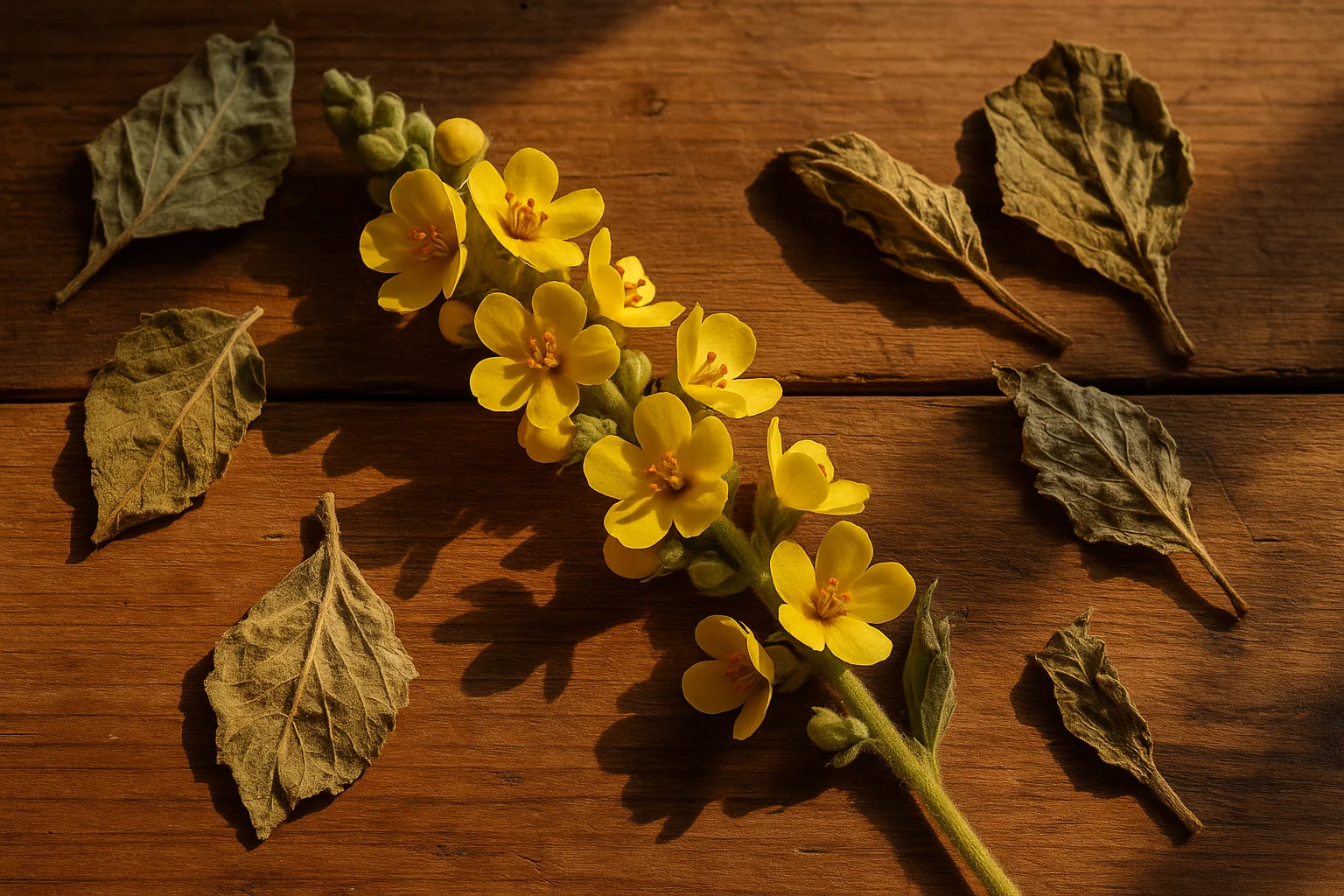
Mullein (Verbascum thapsus L.) is one of the most recognizable Polish weeds - everyone knows the tall flowering stems, but few realize that for centuries it has served as one of the primary herbs for cough and respiratory diseases. The flower and leaf of mullein contain triterpenoid saponins, mucilaginous polysaccharides, iridoids, and flavonoids, which work together to soothe cough, thin secretions, and have anti-inflammatory effects on the bronchial mucosa (PMC, 2020). This article answers the most common questions about mullein.
KEY INFORMATION
• Mullein contains saponins, mucilaginous polysaccharides, and flavonoids (apigenin, luteolin) with expectorant, coating, and anti-inflammatory effects (PMC, 2020).
• Key: always strain the infusion through a fine sieve or gauze - the hairs from the leaves can irritate the throat and mucous membrane of the mouth.
• In vitro studies show antiviral activity against influenza A and HSV-1, but there is a lack of large RCTs in humans.
• Safe for children over 4 years old in standard infusion doses.
• A cough lasting more than 3 weeks always requires medical diagnostics - mullein does not treat the cause.
What is hidden in mullein - active ingredients and their effects
The flower of mullein (Verbasci flos) contains 1.5-3% mucilaginous polysaccharides, including arabinogalactans and galacturonans, which act as a coating agent similar to marshmallow root. Triterpenoid saponins (verbascoside, acetylverbascoside) stimulate receptors in the respiratory epithelium to produce thinner secretions, facilitating their expectoration. Iridoids such as aucubin exhibit anti-inflammatory effects by inhibiting prostaglandins - this has been confirmed in in vitro studies (PMC, 2020).
Mullein flavonoids - apigenin and luteolin - have documented antispasmodic effects on the smooth muscles of the bronchi, which reduces airway resistance during coughing and facilitates breathing in bronchitis. In simpler terms: mullein not only 'calms' the cough by coating but also relaxes the airways and makes it easier to expel secretions. This explains why it is effective for both dry and wet coughs.
A separate compound worth noting is verbascoside (acteoside) - a phenylethanoid glycoside present in the flowers and leaves of mullein. It belongs to the group of phenylpropanoids and stands out among other components as it is the most widely studied in contemporary scientific research on mullein. Cell studies confirm its antiviral activity against enveloped viruses and its ability to inhibit pro-inflammatory cytokines, including TNF-α and IL-6 (PMC, 2020). Verbascoside also exhibits antioxidant activity comparable to quercetin in in vitro models, which may explain part of the observed protection of bronchial tissues during infections. It is not synthesized artificially on a pharmaceutical scale, so access to it is provided solely by plant materials, such as mullein.
An underrated aspect of mullein: the leaves contain mucopolysaccharides similar to those in marshmallow root, but mainly the flowers are used for teas - easier to collect, with better taste and fewer irritating hairs. However, leaves collected from young plants (spring), thoroughly strained through gauze, have a higher concentration of saponins and act more strongly as an expectorant. Traditional herbal recipes often combined flowers with leaves for this reason.
In Polish herbal tradition, mullein was used not only for cough but also for ear pain (oil from mullein flowers macerated in olive oil), skin diseases, and slow-healing wounds. Modern studies confirm its antimicrobial and anti-inflammatory effects against skin bacteria, including Staphylococcus aureus - but that is a topic for a separate article. For respiratory ailments, we are primarily interested in the flowers and leaves in the form of infusion or syrup.
Mullein for cough - how to use it safely
The most important rule with mullein: always strain the infusion through several layers of gauze or a very fine sieve. The leaves and flowers are covered with dense hairs (trichomes), which separate from the herb in the infusion and can irritate the throat, causing coughing and burning - the opposite effect of what is intended. This is not a myth - it is a real problem described by herbalists and patients. Unstrained mullein tea tastes and acts like drinking cactus.
Standard infusion: 1.5-2 g of dried flowers or leaves, 200 ml of boiling water, steep for 10-15 minutes covered, mandatory straining through gauze. Drink 3 times a day, preferably warm with a teaspoon of honey - honey enhances the coating effect due to its own polysaccharides and mild antiseptic action. The expectorant effect appears gradually - the first noticeable effects usually after 2-3 days of regular use. In cases of acute cough and infection, it is possible to drink 4-5 times a day for the first 2-3 days.
| Form | Adult dose | Children (over 4 years) | Note |
|---|---|---|---|
| Infusion from flowers | 1,5-2 g / 200 ml, 3× dz. | 1 g / 150 ml, 2× daily. | Always strain through cheesecloth. |
| Infusion of mixed flowers + leaves. | 2 g / 200 ml, 3× daily. | 1 g / 150 ml, 2× daily. | Leaves - higher concentration of saponins |
| Mullein syrup. | 1 teaspoon 3-4 times a day. | 0.5 teaspoon 2-3 times a day. | Ready syrups are safer for children. |
Data updated: May 4, 2026
Mullein and other herbs for cough - how does it compare to thyme and plantain?
Mullein, thyme, and plantain represent three different approaches to cough. Thyme is the strongest in terms of antibacterial and expectorant properties - thymol inhibits bacterial growth and actively thins secretions. Plantain contains aucubin and mucilage, which coat the mucosa and inhibit the cough reflex - great for dry, irritating cough. Mullein ranks in the middle: it combines mucilaginous action (like plantain) with expectorant action (like thyme), but is weaker in both dimensions.
In traditional herbal mixtures for cough, mullein, thyme, plantain, coltsfoot, and marshmallow were combined precisely because they complement each other's mechanisms. On its own, mullein works well for mild, irritating cough without intense secretions - that is, at the onset of a cold or after an infection when the cough persists despite the fever subsiding. In cases of severe bronchitis with high secretion production, thyme will be more effective.
The combination of mullein with marshmallow (Althaea officinalis). Both plants are rich in mucilaginous polysaccharides, and their simultaneous use maximizes the coating and soothing effect on the irritated mucous membrane of the throat and bronchi. Such a mixture is particularly effective for dry, bothersome nighttime cough that prevents sleep - marshmallow acts long after drinking, while mullein complements it with the action of saponins that facilitate the expectoration of residual secretions (PMC, 2020). An infusion of both herbs in a 1:1 ratio can be consumed in the evening before sleep without the risk of interactions.
Practical observation: mullein works excellently in mixtures with other cough herbs, especially when we want to alleviate the irritating effect of thyme or plantain in individuals with sensitive stomachs. Its mild flavor (slightly sweet, floral) makes infusions more acceptable for children than the distinctly bitter thyme. This is an important practical aspect when using pediatric herbs.
Frequently Asked Questions
How to prepare a mullein infusion for cough?
Pour 1.5-2 g of dried flowers or leaves of mullein with 200 ml of boiling water, cover, and steep for 10-15 minutes. Be sure to strain through a fine sieve or folded gauze - the hairs from the leaves can irritate the throat. Drink 3 times a day between meals. Sweeten with honey to enhance the coating effect on the mucosa. The expectorant effect appears after 2-3 days of regular use.
Does mullein work for dry or wet cough?
For both. In wet cough, saponins and polysaccharides thin the secretion and facilitate expectoration. In dry cough, the coating action soothes irritation of the mucosa and reduces the cough reflex. Flavonoids (apigenin, luteolin) exhibit antispasmodic effects on the bronchi, improving ventilation - beneficial for both types of cough (PMC, 2020).
Is mullein safe for children?
Yes, for children over 4 years old in infusions of standard concentration. There is no official EMA monograph indicating pediatric use, but the tradition of use in Europe is long. Always strain the infusion through gauze - the hairs irritate children more than adults. For children under 4 years: consult a pediatrician before administration.
Does mullein have antiviral properties?
In vitro studies have shown the activity of mullein extracts against the influenza A virus and HSV-1 - iridoids and phenylpropanoids inhibit the replication of viruses in cell cultures (PMC, 2020). However, clinical studies in humans are very limited. Mullein should not be considered an antiviral drug - it is an herb that supports symptoms, not one that treats infections.
How long can mullein be used?
In the case of a severe cough, it is usually used for 1-2 weeks. A cough lasting more than 3 weeks always requires a doctor's visit - it may be a symptom of asthma, COPD, an infection requiring antibiotics, or gastroesophageal reflux. Mullein alleviates symptoms but does not treat any of these causes. Long-term use of infusions in standard doses is safe but masks the necessary diagnostics.
Can mullein irritate allergies?
Mullein belongs to the Scrophulariaceae family, not Asteraceae (composites) - therefore, there is no basis for cross-reactivity with ragweed or chamomile pollen. The belief that people allergic to ragweed should avoid mullein due to cross-allergy is a common misconception, unconfirmed in allergological literature. True IgE-dependent allergy to mullein is rare. The real risk associated with this plant is local mechanical irritation: tiny hairs (trichomes) from the leaves and stems can irritate the mucous membranes of the throat or skin upon contact - which is not an allergic reaction but a physical irritation. The solution is always to strain the infusion through gauze before drinking.
This article is for informational and educational purposes and does not replace consultation with a doctor. If you are pregnant, breastfeeding, taking medications, or have chronic conditions, consult the use of supplements or herbs with a specialist.
Author: Michał Waluk · Published: 2026-05-04 · Updated: 2026-05-04