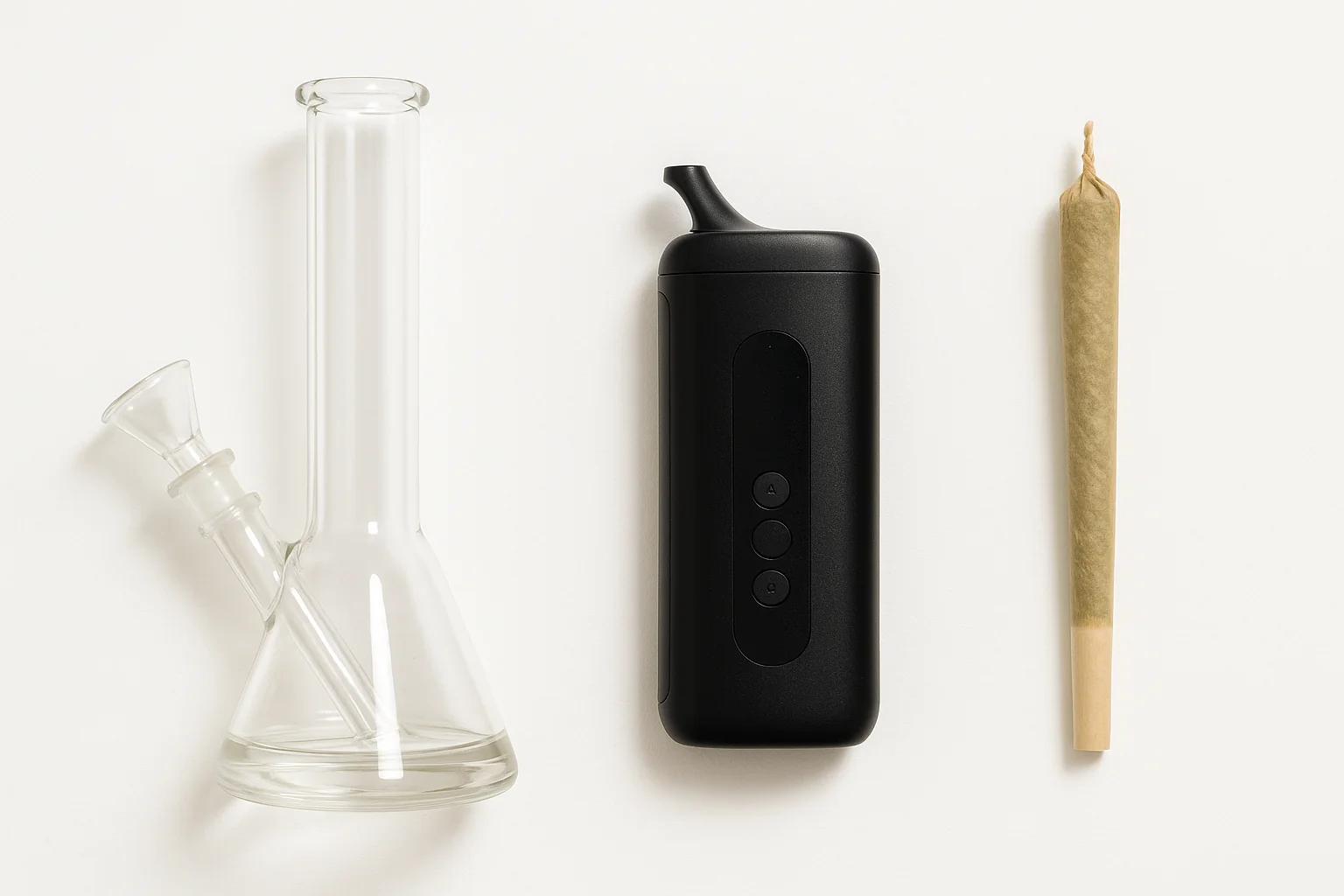

Bong vs waporyzator vs joint - co najmniej szkodzi (tabela)
Bong vs vaporizer vs joint: comparison, differences, and what to choose. Table from u Bucha.
This question is asked by many people using cannabis - both for recreational and therapeutic purposes. Comparing consumption methods is a topic within the realm of harm reduction (harm reduction): instead of moralizing, we provide data from research and allow readers to make an informed decision. A clinical study by Abrams and colleagues published in Clinical Pharmacology & Therapeutics showed that vaporization significantly reduces carbon monoxide levels in exhaled air compared to smoking at the same dose of material (Abrams et al., Clinical Pharmacology & Therapeutics, 2007). In this article, we present a neutral, fact-based analysis of three popular methods: joint, bong, and vaporizer.
KEY INFORMATION
• Any form of combustion (joint, bong) produces carbon monoxide and carcinogenic PAHs - vaporization does not produce them.
• Bong cools the smoke and filters some particles, but does not eliminate gaseous toxins from combustion (EMCDDA, 2023).
• Vaporization at temperatures of 170-210°C releases active ingredients without burning the material (Abrams et al., 2007).
• A joint with tobacco is the method with the highest harm profile - it adds nicotine and additional carcinogens.
• None of the methods is completely neutral for health - this article is informational and educational.
How a joint works - mechanism and harm profile
A joint (spliff) is the simplest and historically the most widespread method of consuming cannabis: the material is burned at temperatures exceeding 700-900°C, and the user inhales smoke containing both active substances and products of incomplete combustion. The smoke consists of thousands of chemical compounds, some of which are well-researched as harmful: carbon monoxide, benzopyrene, polycyclic aromatic hydrocarbons (PAHs), aldehydes, ammonia.
The European Monitoring Centre for Drugs and Drug Addiction (EMCDDA) indicates that cannabis smoke contains many of the same toxic substances as tobacco smoke, though in different proportions (EMCDDA, 2023). Regular smoking of joints is associated with an increased risk of bronchitis, coughing, and sputum production - these symptoms subside or decrease upon cessation of smoking.
A joint with tobacco has a higher harm profile than a joint made solely of cannabis. Tobacco adds: nicotine (a highly addictive substance), additional tar substances, carbon monoxide at higher concentrations, and many carcinogens characteristic of tobacco smoke. The EMCDDA notes that mixing cannabis with tobacco is a popular European practice that increases exposure to toxins compared to smoking cannabis alone.
How a bong works - mechanism and harm profile
A bong (water pipe) is a glass or acrylic device in which smoke from burning cannabis passes through water before inhalation. The water cools the smoke - the temperature of the smoke reaching the lungs is significantly lower than with a joint, which reduces thermal irritation of the mucous membranes. The water also filters some solid particles (dust, fine soot) and partially absorbs water-soluble irritating substances.
Key caveat: a bong does not effectively filter gaseous toxins, including carbon monoxide or volatile PAHs. Carbon monoxide is a gas that is insoluble in water - it passes through it without significant reduction in concentration. Studies cited by EMCDDA show that bong users inhale smoke for longer and often deeper than when smoking a joint, which partially negates the benefit of water filtration (EMCDDA, 2023).
A bong also has specific hygiene risks: standing water in the chamber is an environment conducive to the growth of bacteria and fungi if the device is not regularly cleaned. Dirty water in a bong is not only an unpleasant taste - it is a real vector for microorganisms when shared.
How a vaporizer works - mechanism and harm profile
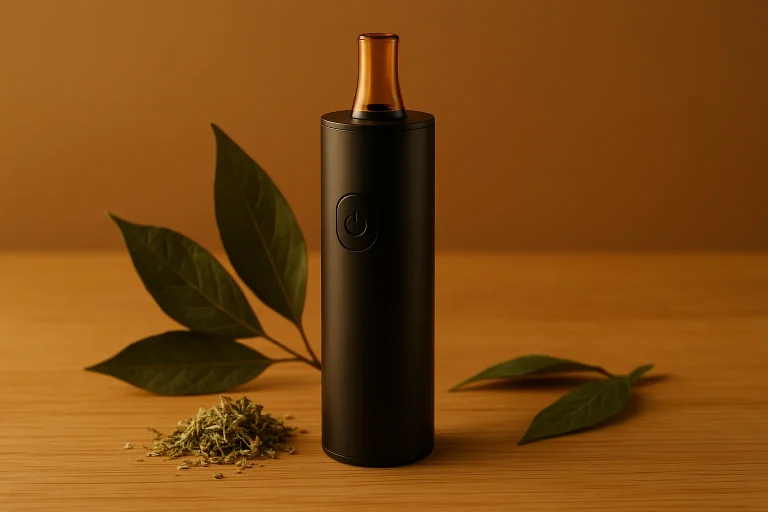
A vaporizer heats the material to a temperature below the combustion threshold (usually 170-220°C), releasing volatile active compounds - terpenes, phytochemicals - in the form of vapor, not smoke. There is no combustion reaction, so carbon monoxide or products of incomplete combustion are not produced. The vapor is chemically much cleaner than smoke.
The study by Abrams and colleagues (Clinical Pharmacology & Therapeutics, 2007) - one of the key clinical studies in this field - confirmed that vaporization provides comparable exposure to active ingredients with significantly lower levels of carbon monoxide in the blood and exhaled air. Participants in the study used the Volcano vaporizer (convection), and the results were measured using pharmacokinetic methods.
However, vaporization is not without any risks. Vapor from plant materials can irritate the respiratory tract with prolonged use. The choice of temperature matters - too high (above 230°C) can lead to thermal degradation of the material and the emergence of pyrolytic products. Additionally, the e-cigarette and synthetic liquid market (a different segment than dry herb vaporizers) has been linked to EVALI cases (vaping-related lung disease) - mainly due to vitamin E acetate in illegal THC liquids, not from vaporizing dry herbs.
Bong vs vaporizer vs joint - comparison table
The table below compares three methods based on parameters related to exposure to harmful substances, material efficiency, and practical use. The qualitative assessments refer to comparisons within this group of methods.
| Parameter | Joint | Bong | Vaporizer |
|---|---|---|---|
| Process temperature | 700-900°C (spalanie) | 700-900°C (spalanie) | 170-220°C (waporyzacja) |
| Carbon monoxide in smoke/vapor | High | High (water does not filter CO) | None (no combustion) |
| Polycyclic aromatic hydrocarbons | Present | Partially reduced | None at proper temp. |
| Filtration of solid particles | None | Partial (water) | High (no soot) |
| Irritation of the respiratory tract | High | Moderate (cool smoke) | Niskie-umiarkowane |
| Material efficiency | Low (combustion destroys ingredients) | Low-moderate | High (40-70% active ingredients) |
| Risk of tobacco addiction | High (if with tobacco) | Low (without tobacco) | None |
| Ease of use | Very simple | Simple | Requires temperature configuration |
| Entry cost | Lowest | Low-medium (30-300 PLN) | Medium-high (150-800 PLN) |
| Smell and discretion | Strong smell of smoke | Strong smell of smoke | Weaker smell of vapor |
What does science say about harm reduction in cannabis consumption?
The concept of harm reduction (harm reduction) in the context of cannabis means reducing health risks for individuals who have chosen to consume. A scientific approach to this issue is represented by EMCDDA and the World Health Organization - both institutions publish reports discussing consumption methods without moral judgment.
EMCDDA clearly indicates vaporization as a method with a lower harm profile compared to combustion, due to the elimination of incomplete combustion products (EMCDDA, 2023). At the same time, the agency emphasizes that the lack of long-term studies on large groups does not allow for definitive claims about the safety of vaporization in the long term.
Another conclusion from the scientific literature: the frequency of consumption matters regardless of the method. Daily use, even in the form of vaporization, is associated with a higher risk than occasional use through smoking. Changing to a less harmful method is a sensible step, but reducing frequency or dosage is an intervention of equal importance.
Impact on the respiratory system - what we know from research
Chronic cannabis smoking is associated with respiratory symptoms similar to bronchitis: cough, increased sputum production, wheezing. Longitudinal studies show that these symptoms are clearly related to smoking, not to cannabinoids themselves - users who switched to vaporization or oral forms reported a reduction in respiratory symptoms (Earleywine & Barnwell, Harm Reduction Journal, 2007).
A bong - contrary to popular belief - does not protect the respiratory system more effectively than a joint without a bong. Water filtration reduces irritating particles, but bong users often take deeper and longer breaths, which increases overall exposure to smoke. The net effect is similar or even worse with some usage techniques.
Vaporization eliminates smoke and soot, leading to a significant reduction in respiratory symptoms among users who have changed their method. However, it is not neutral: vapor from plant materials contains fine particles and can irritate sensitive airways, especially during intense sessions or at high vaporizer temperatures.
Material efficiency - economics of methods
Beyond the health profile, there is a purely practical argument for vaporization: material efficiency. During combustion, the temperature exceeds 700°C, and most volatile active compounds undergo thermal degradation before reaching the respiratory system. It is estimated that combustion destroys 40% to 60% of the available active ingredients in the material.
Vaporization at an optimal temperature of 185-205°C extracts 40-70% of active compounds from the same amount of material, with experiments showing that AVB (Already Vaped Bud - material after vaporization) still contains some amounts of active substances and can be further used, e.g., in cooking. When burned, the material after a session is completely sterilized and useless.
From a purely economic perspective: with comparable active ingredient content in the material, vaporization allows achieving the same effect with less dry herb. In the long run, the cost of a vaporizer pays off through savings on material - especially with regular use.
Edibles and other non-inhalation methods - an alternative beyond comparison
It's worth mentioning that joints, bongs, and vaporizers are not the only available methods of cannabis consumption. Edible forms, capsules, tinctures, and sublingual preparations do not require inhaling anything and completely eliminate the risk to the respiratory system. From a harm reduction perspective for the lungs, edibles are a solution that eliminates the problem rather than just limiting it.
The main difference is pharmacokinetics: inhalation (whether smoke or vapor) provides effects within minutes, while edible forms are metabolized by the liver and effects appear after 30-120 minutes, but last significantly longer - up to 6-8 hours. This is a completely different action profile, requiring a different approach to dosing. Many unpleasant experiences stem from edibles, where too much was consumed without waiting for the effect.
CBD oils and other products from industrial hemp are a separate category, legally available in Poland - they do not contain psychoactive THC above the threshold of 0.2%, which eliminates psychoactive effects but retains some of the plant properties. For those interested in cannabis-based health support without the risk of psychoactivity and without inhaling smoke, sublingual oils are a separate, convenient path.
Practical tips for those considering a change in method
People who have been smoking joints for years and are considering switching to a vaporizer should be aware of a few differences in the experience. First: the vapor from a vaporizer is thinner and cooler than smoke - the first sessions can be misleading because users feel less in their lungs and think the vaporizer isn't working. It works - but differently. It's worth waiting a few minutes and assessing the effect.
Second: temperature matters. At a low temperature (170-180°C), the vapor is gentle, rich in terpenes, and flavorful. At a higher temperature (195-210°C), it is denser and more quantitatively effective. A recommended approach when transitioning from smoking: start at 185°C and gradually experiment to find your preferred profile.
Third: grinding the material is more important with a vaporizer than with a joint. Coarsely ground herb does not vaporize evenly - hot air does not penetrate large pieces well. Too finely ground material may pass through the screen into the heating chamber or hinder airflow. The optimal grind is a consistency similar to granulated sugar - coarse but even.
Frequently Asked Questions
Is a vaporizer safer than a joint?
Research indicates that vaporization eliminates combustion products - carbon monoxide, soot, and polycyclic aromatic hydrocarbons - that are produced when smoking a joint. A clinical study by Abrams et al. (2007) showed significantly lower concentrations of carbon monoxide with vaporization. However, this does not mean there is no risk associated with vaporization as such.
Does a bong filter smoke more effectively than a joint?
Water in a bong cools and filters some solid particles from the exhaust, but does not eliminate carbon monoxide or most gaseous toxins. EMCDDA studies show that a bong reduces irritating particles but does not provide significant protection against carcinogenic compounds from combustion. Vapor from a vaporizer is cleaner than smoke from a bong.
Which is healthier: a joint without tobacco or with tobacco?
A joint without tobacco has a lower harm profile than a joint with tobacco. Tobacco adds nicotine (which is highly addictive), additional carcinogens, and a greater volume of smoke. EMCDDA notes that mixing cannabis with tobacco significantly increases exposure to harmful substances.
Can vaporization harm the lungs?
Vaporization at the correct temperature does not produce smoke or combustion products, which reduces known risks associated with burning. However, inhaling plant vapor can irritate the airways in some individuals. Scientific data indicate significantly lower exposure to harmful substances than with smoking, but vaporization is not completely neutral.
Which method provides the best efficiency from the material?
The vaporizer is most effective - extracting an estimated 40-70% of active ingredients from the material, while combustion destroys a significant portion due to temperatures above 700°C. A bong and a joint provide similar, lower efficiency. Vaporization is also more economically advantageous with regular use.
This article is for informational and educational purposes and does not replace consultation with a doctor. If you are pregnant, breastfeeding, taking medications, or have chronic conditions, consult the use of supplements or herbs with a specialist.
Author: Michał Waluk · Published: 2026-05-04 · Updated: 2026-05-04