
CBD oil and surgery and anesthesia - what to know before the procedure
Olej CBD a operacja i znieczulenie: odpowiedzi oparte na badaniach naukowych. u Bucha.
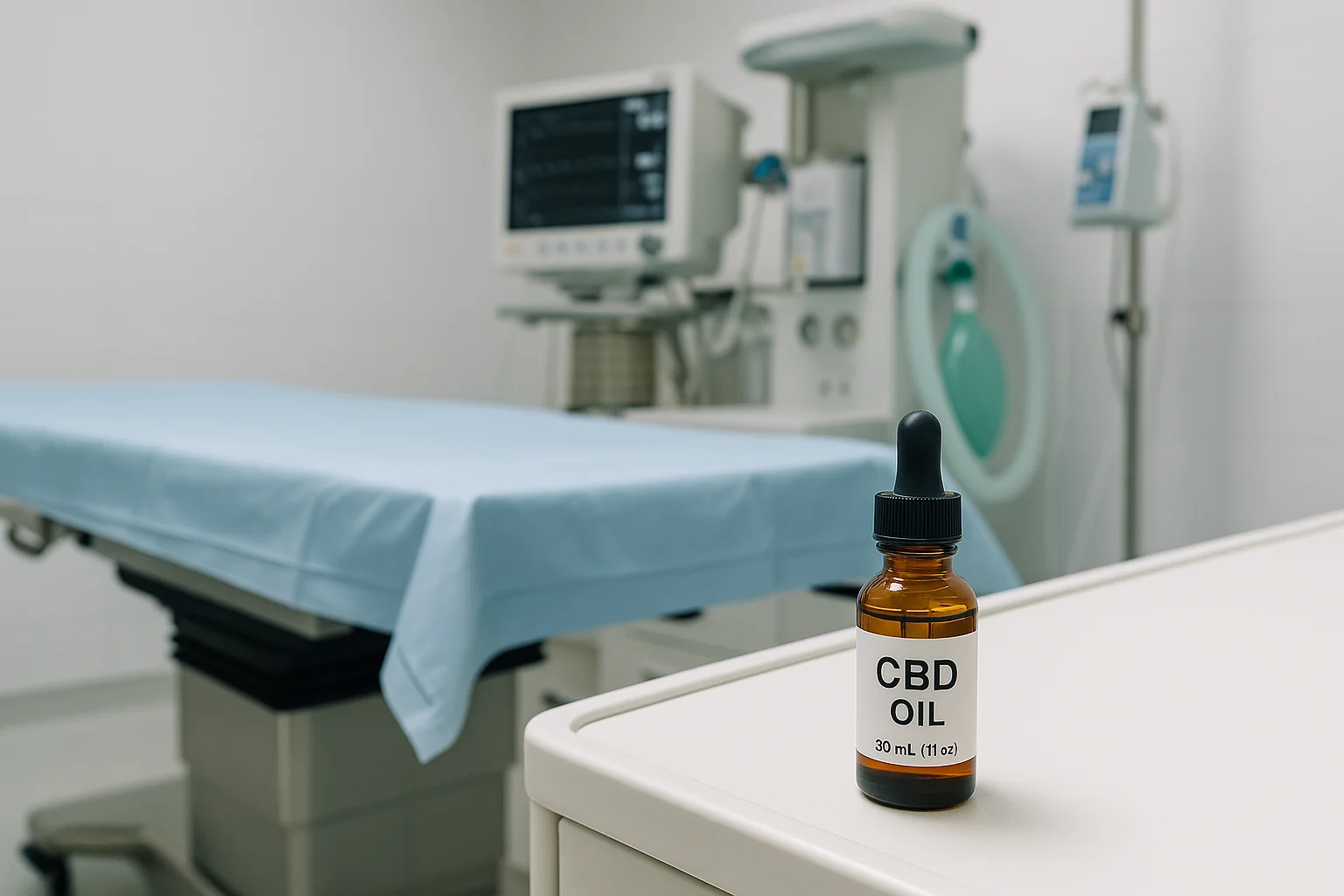
More and more patients using CBD regularly are faced with the question: what about CBD oil before surgery? This is a question worth asking much earlier than the day before the procedure. CBD interacts with the enzymes that metabolize anesthetics, can lower blood pressure, and affect the action of opioid painkillers. A study published in Anesthesiology showed that patients using cannabinoids before the procedure required adjustments in anesthetic doses compared to the control group (Twardowski et al., Anesthesiology, 2020). This article explains the mechanisms of these interactions and provides specific recommendations - when to stop CBD, what to tell the anesthesiologist, and when it is safe to return to supplementation.
KEY INFORMATION
• Patients using cannabinoids before surgery required higher doses of anesthetics (Twardowski et al., Anesthesiology, 2020).
• CBD inhibits the CYP3A4 and CYP2C19 enzymes, which metabolize propofol, opioid analgesics, and many inhaled anesthetics.
• Zalecany czas odstawienia CBD przed zabiegiem: minimum 1-2 tygodnie.
• CBD may lower blood pressure - risky in combination with anesthetic induction agents.
• Inform the anesthesiologist about the use of CBD before any procedure, regardless of the type of anesthesia.
Why can CBD interfere with anesthesia?
The mechanism is pharmacological and well described. CBD is an inhibitor of cytochrome P450 enzymes - specifically CYP3A4, CYP2C9, and CYP2C19. The problem is that these same enzymes metabolize key drugs used during general anesthesia: propofol (one of the most common induction agents), fentanyl, and other opioids, as well as many inhaled anesthetics. When CBD blocks these enzymes, anesthetic drugs may accumulate in the blood to higher concentrations than the anesthesiologist assumes - and act longer or more strongly (Huestis et al., Frontiers in Pharmacology, 2019).
The second mechanism is the effect on blood pressure. CBD exhibits vasodilatory properties - it dilates blood vessels and lowers blood pressure. This effect, while desirable in the context of wellness, becomes problematic during the induction of anesthesia. General anesthetic agents lower blood pressure on their own; when combined with the effect of CBD, the risk of hypotension increases. This is particularly significant in patients with cardiovascular diseases.
The third, less obvious mechanism: CBD affects the CB1 receptor in the central nervous system - modulating the response to pain and the level of sedation. This may change the pain threshold and response to postoperative analgesics in unpredictable ways.
What do clinical data say?
There are relatively few direct RCT studies on the interactions of CBD with anesthetics - this is an area that is just beginning to gain attention from researchers. However, observational data and case reports are alarming enough to take this risk seriously. A study by Twardowski and colleagues in 2020 retrospectively analyzed 29 patients using cannabinoids before surgery and found that they required an average of 14% higher doses of propofol and 20% higher doses of midazolam compared to patients who did not use cannabinoids (Twardowski et al., Anesthesiology, 2020).
Anesthesiologists from the Association of Anaesthetists of Great Britain and Ireland (AAGBI) issued guidelines in 2021 regarding patients using cannabis: they recommend routinely asking about CBD/THC use before any anesthesia and discontinuing it at least 1 week before a planned procedure. They emphasize that THC and CBD have different interaction profiles - CBD primarily acts through CYP inhibition, while THC acts directly on CB1 receptors - but both require disclosure.
Citation capsule (Twardowski et al., 2020): Patients using cannabinoids before the procedure required higher induction doses of propofol and midazolam. The authors recommend routine preoperative interviews that include questions about the use of CBD and cannabis and consideration of modifications to the anesthesia protocol for these patients (Twardowski et al., Anesthesiology, 2020).
When and how to stop using CBD before surgery?
Most anesthesiologists recommend discontinuing CBD for at least 1-2 weeks before a planned procedure. Why so long? The half-life of CBD is 18-32 hours after a single dose, but in individuals using CBD regularly for many weeks, it accumulates in fatty tissues. Pharmacokinetic studies have shown that after stopping regular CBD use, complete elimination from fatty tissue may take 2-5 weeks (Huestis et al., Frontiers in Pharmacology, 2019).
Practically, this means:
- Planned procedure (non-urgent surgery): stop using CBD at least 2 weeks before the date of the procedure.
- Urgent procedure (scheduled within a few days): inform the anesthesiologist as soon as possible - preferably by phone, without waiting for the preoperative visit.
- Emergency procedure (unplanned): inform the medical staff upon admission to the hospital or emergency room. This may require real-time modifications to the anesthesia protocol.
How to stop? There is no need to gradually reduce the dose of CBD - unlike opioids and benzodiazepines, CBD does not cause physical dependence or withdrawal symptoms. You can stop using it overnight.
What to tell the anesthesiologist?
During the preoperative visit, specifically say: I have been using CBD oil at a dose of X mg daily for the past Y months. I last took a dose on day Z. Provide the product name or its composition if you know it. The anesthesiologist needs this information to assess the potential impact on the demand for anesthetics and to select the appropriate protocol.
We have noticed that many patients are afraid to tell their doctor about using CBD - out of fear of judgment or misunderstanding. Meanwhile, anesthesiologists are not concerned with moral evaluation. They are interested in accurately dosing anesthetic agents. Withholding information about CBD does not protect the patient - it may expose them to unpredictable anesthesia behavior during the procedure.
When can you return to using CBD after surgery?
Returning to using CBD after the procedure is safe when two conditions are met: the attending physician has given consent and the patient is no longer taking opioid pain medications or other drugs metabolized by CYP450 with a narrow therapeutic window.
In practice: during the first 5-7 days after a typical procedure, most patients still take strong postoperative analgesics that interact with CBD. After switching to lighter medications (e.g., ibuprofen or paracetamol alone) and with the doctor's consent, CBD supplementation can be gradually resumed - starting with lower doses than before the procedure and observing the body's reaction.
CBD and regional anesthesia and procedural sedation
In addition to general anesthesia, it is worth discussing two other clinical situations where CBD may be significant. Regional anesthesia - peripheral nerve blocks, spinal or epidural anesthesia - involves the use of local anesthetics such as lidocaine or bupivacaine, which are metabolized by CYP1A2 and CYP3A4. CBD inhibits these enzymes, which may alter the duration of action and concentration of these drugs.
Procedural sedation - used during gastroscopy, colonoscopy, or cardiology procedures - often relies on midazolam and propofol, for which interaction with CBD is best documented. Twardowski's study showed a 20% increase in the demand for midazolam in patients using cannabinoids. This is not a large absolute value, but for the anesthesiologist conducting the sedation, it means a significant difference in calculating the induction dose.
Practical rule: any procedure requiring sedation or anesthesia - regardless of mode and extent - justifies informing the doctor about the use of CBD. Not only operations in the operating room but also outpatient procedures, endoscopies, and dental procedures with sedation.
Frequently Asked Questions
How long before surgery should I stop using CBD?
Most anesthesiologists recommend stopping CBD at least 1-2 weeks before the planned procedure. CBD is metabolized by the enzymes CYP3A4 and CYP2C19, which also process many anesthetics. With regular use, CBD may accumulate in fatty tissues and remain long after discontinuation (Huestis et al., Frontiers in Pharmacology, 2019).
Does CBD affect the action of general anesthesia?
Yes, potentially. CBD inhibits CYP450 enzymes that metabolize many anesthetics, including propofol and opioid pain medications. It may also lower blood pressure, which is risky when combined with anesthetic induction agents. Twardowski's study and colleagues showed higher demand for anesthetics in patients using cannabinoids (Twardowski et al., Anesthesiology, 2020).
Do I need to stop CBD before a procedure with local anesthesia?
The risk is lower than with general anesthesia, but it still exists. CBD may affect the metabolism of drugs used for sedation. Always inform your doctor and anesthesiologist about using CBD - regardless of the type of planned anesthesia.
When can you return to using CBD after surgery?
Not earlier than after stopping opioid pain medications and other drugs metabolized by CYP450. In practice, consult with your attending physician. Do not resume using CBD on your own in the first days after the procedure when you are still taking strong postoperative medications.
What are the risks if I don't tell the anesthesiologist about CBD?
Potentially unexpected behavior of the anesthetic: deeper or longer sedation, more difficult blood pressure control, delayed awakening. A clinical report described cases of patients whose regular use of cannabinoids affected the demand for anesthetics during the procedure (Twardowski et al., Anesthesiology, 2020).
This article is for informational and educational purposes and does not constitute medical advice. Before starting to use cannabis or CBD for therapeutic purposes, consult a doctor, especially if you are taking other medications, are pregnant, or breastfeeding.
Author: Michał Waluk · Published: 2026-05-04 · Updated: 2026-05-04