

Why edible CBD hits harder and later than flower - the 11-hydroxy metabolite
Why edible CBD hits harder and later than flower — what it is, how it works, and what to watch out for. u Bucha.
Someone eats a cookie with cannabinoids, after 45 minutes feels nothing, takes a second - and two hours later the effect is more intense than expected. This scenario is so common that it has a name in the scientific literature. Edible cannabinoid products (edibles) work differently than inhalation not through magic or because they 'contain more.' The difference arises from liver biochemistry: the first-pass effect and a metabolite called 11-hydroxy-THC. Understanding this mechanism allows one to predict when and how strongly edibles will take effect - and why the same dose when eating and when vaporizing is two completely different experiences.
KEY INFORMATION
• Cannabinoids taken orally pass through the liver before entering the bloodstream - this is the first-pass effect (first-pass metabolism), which converts THC into the active metabolite 11-hydroxy-THC (Grotenhermen, Clinical Pharmacokinetics, 2003).
• 11-OH-THC has a stronger or comparable affinity for the CB1 receptor than THC and better penetrates the brain through the blood-brain barrier.
• Onset of effects after consuming an edible: 30-120 minutes; peak concentration in the blood after 2-4 hours - inhalation peaks after 3-10 minutes.
• Fat in the meal increases the absorption of oral cannabinoids threefold (Birnbaum et al., 2017).
What is the first-pass effect and why does it matter?
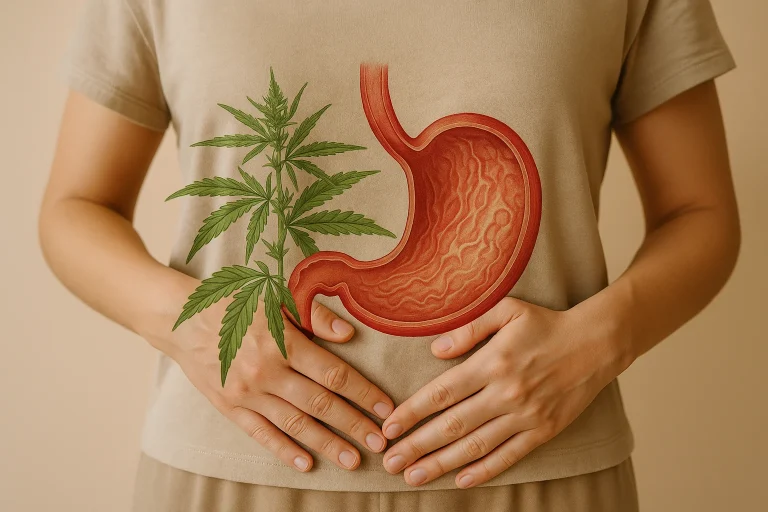
The first-pass effect (first-pass metabolism) is a phenomenon in which a substance absorbed through the gastrointestinal tract goes directly to the liver via the portal vein before entering the systemic circulation. In the liver, cytochrome P450 enzymes (mainly CYP2C9 and CYP3A4) metabolize the cannabinoid into various metabolic products - and some of these products are biologically active, while others are not.
With inhalation (vaporization, smoking), the cannabinoid enters the bloodstream directly through the lungs and reaches the brain within minutes, bypassing the liver. Blood concentration rises quickly and falls sharply - the peak lasts 3-10 minutes, and effects usually subside after 2-3 hours. With edibles, the entire pathway is reversed: absorption through the small intestine → portal vein → liver → systemic circulation → brain. Each stage takes time and alters the chemical composition of what ultimately reaches the receptors in the brain (Grotenhermen, Clinical Pharmacokinetics, 2003).
For CBD, the first-pass effect primarily means losses: the bioavailability of oral CBD is only 6-19%, while that of inhaled CBD reaches 31%. For THC, the effect is more dramatic, as the liver not only reduces the amount but also creates an active metabolite that changes the quality of the experience.
11-hydroxy-THC: a metabolite stronger than THC itself
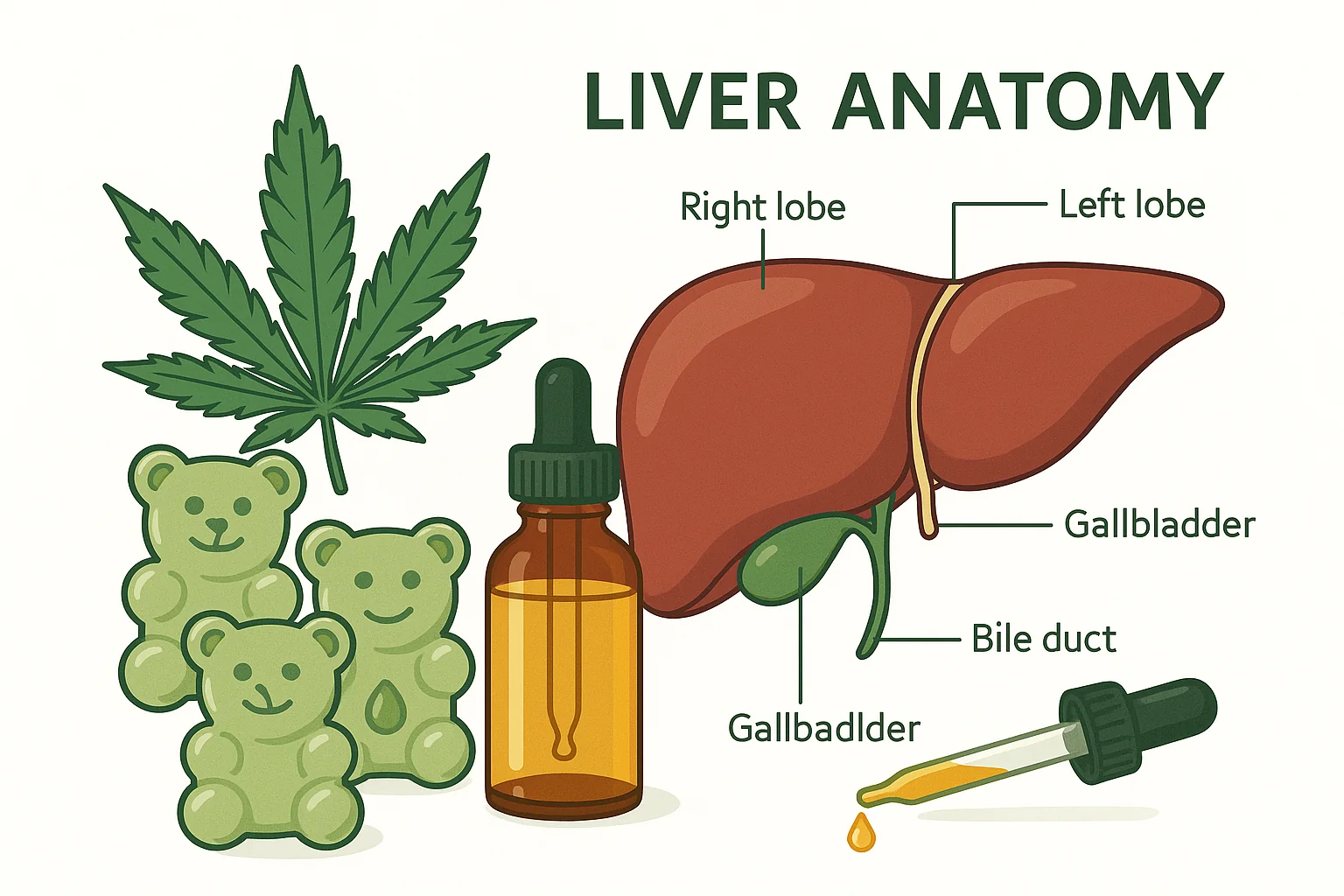
When THC reaches the liver, the CYP2C9 enzyme adds a hydroxyl group to carbon 11, creating 11-hydroxy-THC (11-OH-THC). This is not 'used' or 'weakened' THC - it is an active compound with pharmacological properties that may be stronger than the parent compound. In vitro studies and animal models indicate that 11-OH-THC has similar or higher affinity for the CB1 receptor than THC, and its lipophilicity makes it easier to cross the blood-brain barrier (Huestis, Chemistry and Biodiversity, 2007).
| Parameter | Inhalation | Edible (oral) |
|---|---|---|
| Route to blood | Lungs → arterial blood | Intestine → liver → blood |
| First-pass effect | None | Significant (liver CYP2C9) |
| Main active compound in the brain | THC | THC + 11-OH-THC |
| Time to effect (onset) | 3-10 minut | 30-120 minut |
| Duration of effect | 2-3 hours | 4-8 godzin |
| Bioavailability of THC | 10-35% | 4-20% |
| Bioavailability of CBD | 31% | 6-19% |
Why is the waiting time for the effect so unpredictable?
The time from consuming an edible to the onset of effects typically ranges from 30 to 120 minutes, but it can take up to 3 hours with slow gastric motility or a lack of fat in the meal. The variability between individuals is enormous: the same product may take 45 minutes to work for one person and 2.5 hours for another. What determines this difference?
The first factor is the fat content in the meal. Cannabinoids are lipophilic - they dissolve in fats, not in water. Birnbaum and colleagues demonstrated in a clinical study in 2017 that consuming CBD with a high-fat meal led to a 3-fold higher Cmax (peak blood concentration) and a 5-fold higher area under the curve AUC (overall exposure) compared to fasting administration (Birnbaum et al., Epilepsia, 2019). This is a dramatic difference - the same CBD capsule can provide five times higher exposure after a fatty breakfast than on an empty stomach.
We have noticed that this fat effect is one of the most underrated aspects of oral CBD dosing. People claiming that "CBD doesn't work for me" often take capsules or gummies on an empty stomach - this is when bioavailability is lowest. A simple change: consuming a CBD product with a spoonful of coconut oil or peanut butter can significantly improve effectiveness without changing the dose.
The second factor is the individual profile of cytochrome P450 enzymes. Genetic polymorphisms CYP2C9 and CYP3A4 cause some individuals to metabolize cannabinoids quickly ("fast metabolizers"), while others do so slowly. Slow metabolizers have higher and longer-lasting concentrations of both THC and 11-OH-THC, resulting in stronger and longer effects from edibles.
Is CBD from edibles also stronger than from inhalation?
With CBD, the mechanism is different than with THC. CBD does not create a strongly active metabolite analogous to 11-OH-THC - its liver metabolites (7-COOH-CBD and others) are biologically less active than CBD. Therefore, oral CBD is not "stronger" in the same sense as oral THC - it is rather slower and less bioavailable.
A key difference: CBD in sublingual oil partially bypasses the first-pass effect, being absorbed through the mucous membrane of the mouth directly into the bloodstream. This route provides higher and faster bioavailability than swallowing. Therefore, CBD usage instructions recommend holding the oil under the tongue for 60-90 seconds before swallowing - this is a significant difference, not an empty ritual. Studies confirm that sublingual bioavailability of CBD is clearly higher than oral (Grotenhermen, Clinical Pharmacokinetics, 2003).
Practical conclusions - how to use edibles safely?
Understanding the mechanism of 11-OH-THC and the first-pass effect translates into specific practical conclusions. First: always wait at least 2 hours before assessing the effect and possibly increasing the dose. Onsets of 30-45 minutes are not guaranteed - for many people, effects appear after 90-120 minutes, especially on an empty stomach or with slow gastric motility. Taking a second dose after 45 minutes "because I don't feel anything" is a classic mistake leading to unintended dose exceeding when summing the effects of both doses.
Second: fat matters a lot. Consuming oral CBD with a fatty product (oil, peanut butter, nuts) can increase its absorption by 3-5 times. For individuals using CBD therapeutically, this means the possibility of achieving the same effect at a lower dose if they change the timing or conditions of consumption.
Third: the duration of the effects of edibles (4-8 hours) is clearly longer than with inhalation (2-3 hours). This is due to slower absorption, prolonged peak blood concentration, and the time needed to metabolize 11-OH-THC into the inactive 11-COOH-THC. This length of effect is an advantage for nighttime use (pain, sleep), but requires conscious planning of activities.
Individual metabolic differences - why does the same dose of an edible affect different people differently?
Inter-individual variability in response to edibles is significantly higher than with inhalation, and has specific biological bases. The main cause is genetic polymorphisms in cytochrome P450 enzymes. CYP2C9, a key enzyme metabolizing THC to 11-OH-THC, exists in several allelic variants. Individuals with the CYP2C9*3 variant metabolize THC up to 5 times slower than carriers of the wild type variant (*1/*1), leading to higher and longer-lasting concentrations of 11-OH-THC in the blood (Sachse-Seeboth et al., Clinical Pharmacology and Therapeutics, 2009). Such "slow metabolizers" may experience more intense and longer-lasting effects from the same dose of an edible as someone else.
Another factor is gut flora. The gut microbiome participates in the metabolism of cannabinoids before their absorption - some bacteria can modify the availability of compounds for absorption. Research on the microbiome and cannabinoids is still in its early stages, but it is already known that individuals with gut dysbiosis or after antibiotic therapy may have altered kinetics of edible absorption compared to those with healthy bacterial flora.
Body weight and body composition affect the distribution of cannabinoids. Cannabinoids, being lipophilic compounds, accumulate in fatty tissue, which acts as a "reservoir." Individuals with a higher fat content may initially experience a weaker effect (cannabinoids accumulate in fat instead of circulating in the blood), but with regular use, this reservoir becomes saturated, and the effects become stronger and more predictable. This is the opposite situation compared to one-time use.
How does CBD compare with edibles versus sublingual CBD - when to choose which form?
The choice of CBD administration form depends on the therapeutic goal and user priorities. Sublingual oil held under the tongue for 60-90 seconds partially bypasses the first-pass effect - some CBD is absorbed through the mucous membrane directly into the bloodstream, with bioavailability higher than when swallowed. The onset is faster (15-45 minutes), and the effect is generally shorter (4-6 hours). This form is better for acute applications: acute anxiety, pain episodes, difficulty falling asleep.
Edibles (gummies, capsules, food products) have lower and more variable bioavailability, but a longer duration of action (6-8 hours or more). This is an advantage for applications requiring a constant cannabinoid background throughout the day: chronic pain, generalized anxiety, support for sleep throughout the night. Inconsistent bioavailability dependent on meals can be a disadvantage or an advantage - consuming with fat allows for a conscious increase in absorption without changing the dose on the label.
Comparison of bioavailability: with sublingual oil (sublingual absorption + swallowing the rest), the estimated bioavailability of CBD is 13-19%, with capsules and edibles on an empty stomach - 6-10%, with capsules with a fatty meal - even 30-35% according to Birnbaum's study. This means that the same labeled dose of 25 mg of CBD can effectively deliver from 1.5 to 8.7 mg of active CBD depending on the route of administration and consumption conditions (Birnbaum et al., Epilepsia, 2019).
Frequently Asked Questions
Why do edibles work stronger than inhalation?
Cannabinoids taken orally go to the liver through the portal vein (first-pass effect), where THC is converted by the CYP2C9 enzyme into 11-hydroxy-THC. This metabolite has a stronger or comparable affinity for the CB1 receptor and penetrates the brain better. With inhalation, THC enters the bloodstream directly, bypassing the liver (Grotenhermen, Clinical Pharmacokinetics, 2003).
What is 11-hydroxy-THC?
11-hydroxy-THC (11-OH-THC) is an active metabolite of THC formed in the liver. It has a similar or stronger affinity for the CB1 receptor than THC, and its concentrations in the blood after consuming edibles are proportionally higher than with inhalation. The effects of 11-OH-THC last longer due to slower metabolism further to the inactive 11-COOH-THC (Huestis, Chemistry and Biodiversity, 2007).
How long do you have to wait for the effect after consuming an edible?
The onset of effects after consuming an edible typically ranges from 30 to 120 minutes, depending on the fat content in the meal, individual gastric motility, and body weight. Peak cannabinoid concentrations in the blood occur after 2-4 hours. The biggest mistake is taking a second dose after 45 minutes "because I don't feel anything" - the effects may accumulate with a delay.
Does the first-pass effect also apply to CBD?
Yes, but to a different extent. CBD, when taken orally, undergoes hepatic metabolism, which reduces its bioavailability to 6-19% compared to 31% with inhalation. However, CBD does not create a strongly active metabolite analogous to 11-OH-THC - its metabolites are biologically less active than the parent compound (Grotenhermen, Clinical Pharmacokinetics, 2003).
How does fat in a meal affect the action of edibles?
Cannabinoids are lipophilic - they dissolve in fats, not in water. A study showed a 3-fold higher Cmax of CBD and a 5-fold higher AUC when administered with a high-fat meal compared to fasting administration (Birnbaum et al., Epilepsia, 2019). The same capsule can provide five times higher exposure after a fatty meal than on an empty stomach.
This article is for informational and educational purposes and does not replace consultation with a doctor. If you are pregnant, breastfeeding, taking medications, or have chronic conditions, consult the use of supplements or herbs with a specialist.
Author: Michał Waluk · Published: 2026-05-04 · Updated: 2026-05-04