
Na które suplementy naprawdę szkoda pieniędzy: ranking wg siły dowodów
Detoks, zielona kawa, CLA, echinacea, glukozamina i multiwitaminy pod lupą. Sprawdzamy w oryginalnych badaniach, na które suplementy naprawdę szkoda pieniędzy.
Suplementy diety kupuje 75 procent Polaków, a przeciętny konsument wydaje na nie ponad 200 zł rocznie (Rynek Zdrowia, 2025). Prognozy mówią o przekroczeniu 10 miliardów złotych do 2028 roku. Producent suplementu nie musi przy tym udowodnić, że preparat działa. Wystarczy powiadomienie złożone do Głównego Inspektora Sanitarnego. To zestawienie nie jest listą złych firm ani wezwaniem do odstawienia wszystkiego. To przegląd substancji, przy których rozjazd między budżetem marketingowym a bazą dowodową jest największy. Każdą pozycję sprawdziliśmy w oryginalnych publikacjach, nie w streszczeniach producentów. Dowiesz się, gdzie dowodów po prostu brakuje, gdzie są słabe, a gdzie duże badanie wprost pokazało brak efektu.
KLUCZOWE INFORMACJE
• Suplementy kupuje 75 procent Polaków, ponad 200 zł rocznie na osobę (Rynek Zdrowia, 2025).
• Producent wykazuje bezpieczeństwo, nie skuteczność: wystarczy powiadomienie do GIS (NIK, 2017).
• Zestawienie opiera się na przeglądach Cochrane, dużych badaniach z randomizacją i stanowisku USPSTF.
• Brak dowodów skuteczności i dowody braku efektu to dwie różne rzeczy, rozdzielone tu przy każdej pozycji.
Jak oceniamy siłę dowodów w tym zestawieniu?
O miejscu na liście decyduje najwyższy dostępny poziom dowodu dla konkretnego wskazania. Metaanaliza badań z randomizacją waży najwięcej, pojedyncze badanie randomizowane mniej, dane obserwacyjne jeszcze mniej, a wyniki z probówki lub z gryzoni same z siebie nie wystarczają. Drugie pytanie brzmi: kto badanie sfinansował.
| Kryterium | Waga | Co sprawdzamy |
|---|---|---|
| Jakość najwyższego dostępnego dowodu | 40% | Metaanaliza badań randomizowanych wyżej niż pojedyncze RCT, dane obserwacyjne niżej, badania in vitro najniżej |
| Wielkość efektu klinicznego | 30% | Czy różnica wobec placebo ma znaczenie dla pacjenta, nie tylko dla testu statystycznego |
| Spójność wyników między badaniami | 20% | Czy niezależne zespoły badawcze powtórzyły ten sam wynik |
| Niezależność finansowania | 10% | Czy badanie opłacił producent, czy instytucja publiczna |
Jedno rozróżnienie przewija się przez cały tekst. Brak dowodów skuteczności znaczy, że nikt porządnie nie sprawdził, a nie że sprawdzono i wyszło zero. Dowody braku efektu to sytuacja odwrotna: duże, dobrze zaplanowane badanie porównało preparat z placebo i różnicy nie znalazło. Pierwsza sytuacja może się zmienić po kolejnych badaniach. Druga zmienia się rzadko.
Które suplementy mają najsłabsze dowody?
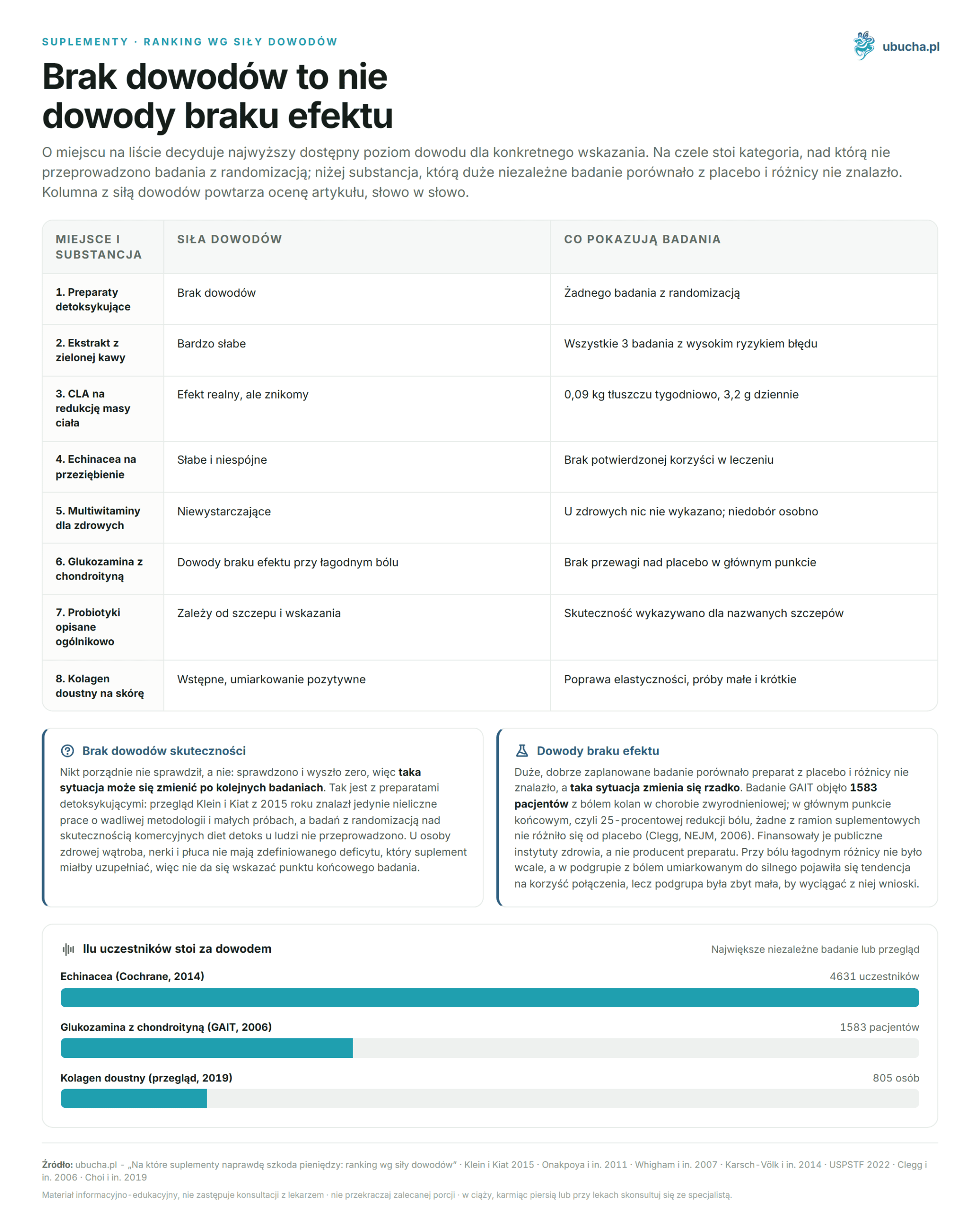
Najsłabszą bazę ma cała kategoria preparatów detoksykujących, bo nie stoi za nią ani jedno badanie z randomizacją. Tuż za nią plasują się dwa preparaty odchudzające: ekstrakt z zielonej kawy oraz CLA. Środek listy zajmują substancje popularne, lecz zbadane niespójnie, od echinacei po probiotyki opisane ogólnikowo.
| Miejsce | Substancja | Obietnica marketingowa | Co pokazują badania | Siła dowodów |
|---|---|---|---|---|
| 1 | Preparaty detoksykujące | Usuwają toksyny, oczyszczają wątrobę | Nie przeprowadzono żadnego badania z randomizacją nad komercyjnymi programami detoks (Klein i Kiat, 2015) | Brak dowodów |
| 2 | Ekstrakt z zielonej kawy | Przyspiesza spalanie tłuszczu | Metaanaliza objęła 3 badania, wszystkie o wysokim ryzyku błędu; jedno z nich później wycofano (Onakpoya i in., 2011) | Bardzo słabe |
| 3 | CLA na redukcję masy ciała | Spala tłuszcz, chroni mięśnie | Metaanaliza: 0,09 kg tkanki tłuszczowej tygodniowo przy dawce 3,2 g dziennie (Whigham i in., 2007) | Efekt realny, ale znikomy |
| 4 | Echinacea na przeziębienie | Skraca przeziębienie i mu zapobiega | Cochrane, 24 badania, 4631 uczestników: brak potwierdzonej korzyści w leczeniu (Karsch-Völk i in., 2014) | Słabe i niespójne |
| 5 | Multiwitaminy dla zdrowych dorosłych | Chronią przed chorobami serca i nowotworami | USPSTF 2022: dowody niewystarczające; beta-karoten oraz witamina E w tym wskazaniu odradzane | Niewystarczające |
| 6 | Glukozamina z chondroityną | Odbudowuje chrząstkę, uśmierza ból kolan | Badanie na 1583 pacjentach: brak przewagi nad placebo w głównym punkcie końcowym (Clegg i in., 2006) | Dowody braku efektu przy łagodnym bólu |
| 7 | Probiotyki bez wskazania szczepu | Wzmacniają odporność, regulują florę | Skuteczność wykazywano dla nazwanych szczepów przy nazwanych wskazaniach, nie dla preparatów opisanych ogólnikowo | Zależy od szczepu i wskazania |
| 8 | Kolagen doustny na skórę | Wygładza zmarszczki w kilka tygodni | 11 badań, 805 osób: poprawa elastyczności skóry, ale próby małe i krótkie (Choi i in., 2019) | Wstępne, umiarkowanie pozytywne |
Ostatnia pozycja jest przypadkiem granicznym i celowo stoi na końcu. Kolagen trafił na listę nie dlatego, że badania pokazały brak efektu, tylko dlatego, że baza dowodowa jest znacznie skromniejsza, niż sugeruje cena półkowa i sposób reklamowania tych preparatów. To różnica, którą warto zapamiętać przed czytaniem kolejnych sekcji.
Dlaczego detoks jest pojęciem marketingowym, a nie fizjologicznym?
Bo w piśmiennictwie klinicznym nie ma ani jednego randomizowanego badania komercyjnego programu detoks. Przegląd Klein i Kiat z 2015 roku znalazł jedynie nieliczne prace o wadliwej metodologii i małych próbach, a autorzy napisali wprost, że badań z randomizacją nad skutecznością komercyjnych diet detoks u ludzi nie przeprowadzono (Klein i Kiat, Journal of Human Nutrition and Dietetics, 2015).
Fizjologia tłumaczy, dlaczego takich badań nie ma czego mierzyć. Wątroba przetwarza ksenobiotyki nieprzerwanie, przez reakcje I i II fazy metabolizmu. Nerki filtrują krew i usuwają produkty przemiany materii. Płuca wydalają dwutlenek węgla. U osoby zdrowej te narządy nie mają zdefiniowanego deficytu, który suplement miałby uzupełniać, więc nie da się wskazać punktu końcowego badania. Producent nie deklaruje, o ile spadnie stężenie czego, bo żadnej takiej wielkości nie podaje.
Zauważyliśmy, że słowo detoks funkcjonuje w dwóch zupełnie różnych światach i to jest źródło całego nieporozumienia. W medycynie klinicznej detoksykacja oznacza leczenie zatrucia konkretną substancją, prowadzone w szpitalu, często z użyciem odtrutki, z mierzalnym stężeniem we krwi. W marketingu suplementowym detoks jest metaforą oczyszczenia bez zdefiniowanego mechanizmu i bez punktu końcowego. Dwa różne pojęcia brzmią tak samo i jedno pożycza wiarygodność od drugiego.
Co naprawdę pokazują badania nad kolagenem doustnym?
Przegląd systematyczny z 2019 roku objął 11 badań z randomizacją i 805 uczestników. Autorzy uznali wyniki za wstępnie obiecujące: peptydy kolagenowe poprawiały elastyczność oraz nawilżenie skóry, bez zgłoszonych działań niepożądanych (Choi i in., Journal of Drugs in Dermatology, 2019). Zastrzeżenie dotyczy skali, nie kierunku efektu.
Dobrze widać to na przykładzie badania, które przegląd cytuje. Proksch i współpracownicy podali 69 kobietom w wieku 35-55 lat 2,5 g albo 5 g hydrolizatu kolagenu dziennie przez 8 tygodni. Elastyczność skóry poprawiła się istotnie statystycznie w obu grupach wobec placebo, natomiast nawilżenie i przeznaskórkowa utrata wody progu istotności nie osiągnęły (Proksch i in., Skin Pharmacology and Physiology, 2014). To dobrze wykonane badanie, tylko bardzo małe i bardzo krótkie jak na obietnicę odwrócenia procesu starzenia skóry.
Zauważyliśmy, że pytania o kolagen trafiają do nas najczęściej od osób oczekujących widocznej zmiany w miesiąc. Uczciwa odpowiedź brzmi tak: przy takim horyzoncie prawdopodobnie się rozczarujesz, bo cytowane wyżej badania trwały 8 tygodni i mierzyły elastyczność aparaturą, a nie wygląd w lustrze. Jeśli traktujesz suplementację jako element dłuższego planu, obok ochrony przeciwsłonecznej, dane wyglądają rozsądniej. Sama cena porcji bywa jednak wielokrotnie wyższa od kosztu dobrego filtra UV.
Dlaczego glukozamina z chondroityną nie wypadła lepiej od placebo?
Badanie GAIT objęło 1583 pacjentów z bólem kolan w chorobie zwyrodnieniowej i porównało pięć ramion: glukozaminę, siarczan chondroityny, obie substancje razem, celekoksyb oraz placebo. W głównym punkcie końcowym, czyli 25-procentowej redukcji bólu, żadne z ramion suplementowych nie różniło się od placebo (Clegg i in., NEJM, 2006).
Waga tego wyniku bierze się z konstrukcji badania. Finansowały je publiczne instytuty zdrowia, a nie producent preparatu, próba była duża, a zaślepienie pełne. W podgrupie pacjentów z bólem umiarkowanym do silnego pojawiła się tendencja na korzyść połączenia obu substancji, lecz podgrupa była zbyt mała, by wyciągać z niej wnioski. Przy bólu łagodnym różnicy nie było wcale. To rzadka sytuacja, w której mówimy o dowodach braku efektu, a nie o braku dowodów.
Czy multiwitaminy dla zdrowych dorosłych mają sens?
US Preventive Services Task Force uznał w 2022 roku dowody na multiwitaminy w profilaktyce chorób sercowo-naczyniowych oraz nowotworów za niewystarczające, przyznając im stanowisko I. Ten sam dokument odradza beta-karoten i witaminę E w tym samym wskazaniu, z oceną D, czyli zaleceniem przeciw stosowaniu (USPSTF, JAMA, 2022).
Te dwie oceny znaczą co innego i mylenie ich jest częstym błędem. Niewystarczające dowody to informacja o stanie wiedzy, nie o szkodliwości: przy typowych dawkach multiwitamina pozostaje bezpieczna, po prostu nie wykazano, żeby coś dawała zdrowej osobie na urozmaiconej diecie. Ocena D przy beta-karotenie jest mocniejsza, bo opiera się na badaniach, w których ryzyko w grupie suplementowanej okazało się wyższe. Zupełnie osobną sprawą pozostaje suplementacja celowana: potwierdzony laboratoryjnie niedobór konkretnej witaminy albo ograniczone wchłanianie u osób starszych. Tam nie mówimy już o profilaktyce w populacji zdrowej, tylko o uzupełnianiu zmierzonego braku, a to inne pytanie i inne dowody. Praktyczny wniosek jest prosty: zanim kupisz multiwitaminę, sprawdź morfologię i stężenie witaminy D, bo wynik badania powie Ci więcej niż deklaracja na opakowaniu.
Co mówią przeglądy o echinacei i ekstrakcie z zielonej kawy?
Przegląd Cochrane z 2014 roku objął 24 badania z podwójnie ślepą próbą i 4631 uczestników. Żadne z 12 porównań profilaktycznych nie wykazało istotnej statystycznie różnicy w liczbie osób, które przeszły co najmniej jedno przeziębienie, a spośród siedmiu badań leczniczych skrócenie objawów wykazało jedno (Karsch-Völk i in., Cochrane Database of Systematic Reviews, 2014). Autorzy nie wykluczyli słabej korzyści z niektórych preparatów, ale korzyści w leczeniu nie potwierdzili. Osobnym problemem jest brak standaryzacji: preparaty różnią się gatunkiem rośliny, użytą częścią oraz formą, więc wyniki jednego badania nie przenoszą się automatycznie na produkt z półki.
Ekstrakt z zielonej kawy ma jeszcze węższą podstawę. Metaanaliza z 2011 roku zebrała trzy badania i policzyła średnią różnicę masy ciała na 2,47 kg na korzyść ekstraktu, natomiast wszystkie trzy oceniono jako obciążone wysokim ryzykiem błędu, a wniosek autorów brzmiał: potrzebne są rygorystyczne badania (Onakpoya i in., Gastroenterology Research and Practice, 2011). Jedno z tych badań, głośny eksperyment krzyżowy z 2012 roku, zostało później wycofane z piśmiennictwa.
Zauważyliśmy powtarzalny wzorzec, który łączy większość pozycji z tej listy. Niewielkie badanie z pozytywnym wynikiem trafia do mediów jako przełom, producenci cytują je przez lata, a kolejne, lepiej zaplanowane prace albo nie potwierdzają efektu, albo mocno go skalują w dół. Sprostowanie nigdy nie ma takiego zasięgu jak pierwsza publikacja. Dlatego przy sprawdzaniu substancji sensowniej jest patrzeć na przegląd systematyczny niż na pojedyncze badanie, które akurat wyszło korzystnie.
Jak kupować suplementy, żeby nie marnować pieniędzy?
Zacznij od wskazania, nie od nazwy produktu. Preparat opisany jako wzmacniający albo oczyszczający nie ma wskazania, więc nie da się sprawdzić, czy działa. Potem sprawdź, czy efekt wykazano u ludzi, w jak licznej próbie i kto badanie opłacił. Badania finansowane przez producenta częściej kończą się wynikiem korzystnym dla sponsora (Lexchin i in., BMJ, 2003).
Warto też wiedzieć, czego etykieta nie może obiecywać. Rozporządzenie 1924/2006 dopuszcza wyłącznie oświadczenia zdrowotne wcześniej zatwierdzone i wpisane do unijnego rejestru (EUR-Lex, rozporządzenie 1924/2006). Reszta przekazu, czyli nazwa handlowa, grafika i opis na stronie sklepu, podlega luźniejszym regułom. Do tego dochodzi kontrola samego wejścia na rynek: NIK ustalił, że przy około połowie z 6 tysięcy powiadomień z lat 2014-2016 procesu weryfikacji w ogóle nie rozpoczęto (NIK, 2017).
Ten tekst nie omija asortymentu naszego własnego sklepu. Kolagen, glukozamina z chondroityną, probiotyki oraz preparaty z detoksem w nazwie są u nas w sprzedaży i mimo to stoją na powyższej liście, bo o miejscu decyduje siła dowodów, a nie zawartość magazynu. Uznaliśmy, że czytelnik ma prawo wiedzieć, gdzie dowody są mocne, a gdzie ich brakuje, nawet jeśli dotyczy to półki, z której sami sprzedajemy.
Najczęściej zadawane pytania
Jak sprawdzić, czy suplement ma dowody naukowe?
Zacznij od baz PubMed i Cochrane Library. Szukaj metaanaliz oraz przeglądów systematycznych dla konkretnej substancji i konkretnego wskazania, a nie dla ogólnego hasła w rodzaju wzmocnienia odporności. Sprawdź, czy efekt wykazano u ludzi w badaniu z randomizacją i zaślepieniem, w jak licznej próbie i kto je finansował.
Czy suplementy naturalne są zawsze bezpieczne?
Nie. Naturalne pochodzenie nie mówi nic o bezpieczeństwie. Dziurawiec osłabia działanie wielu leków, w tym cyklosporyny, tabletek antykoncepcyjnych i części leków stosowanych w zakażeniu HIV (NCCIH, NIH). Suplement wprowadzany do obrotu w Polsce musi spełnić wymogi prawa żywnościowego, a nie farmaceutycznego.
Które suplementy mają najmocniejsze dowody?
Najlepiej wypadają preparaty o wąskim, mierzalnym wskazaniu: witamina D przy potwierdzonym laboratoryjnie niedoborze, kwasy omega-3 przy podwyższonych triglicerydach, kreatyna dla siły mięśniowej, melatonina przy zaburzeniach rytmu dobowego. Wspólna cecha to jeden konkretny punkt końcowy, który da się zmierzyć, a nie ogólne wzmocnienie organizmu.
Czy kolagen doustny w ogóle działa?
Przegląd 11 randomizowanych badań z udziałem 805 osób uznał wyniki za wstępnie obiecujące: peptydy kolagenowe poprawiały elastyczność i nawilżenie skóry, bez zgłoszonych działań niepożądanych (Choi i in., 2019). Zastrzeżenie dotyczy skali, bo próby były małe, krótkie i prowadzone przy różnych dawkach.
Czy warto brać suplementy profilaktycznie?
Zależy od substancji i od tego, co ma być profilaktyką. USPSTF uznał w 2022 roku dowody na multiwitaminy w profilaktyce chorób serca i nowotworów za niewystarczające, a beta-karoten oraz witaminę E w tym wskazaniu odradził (USPSTF, 2022). Suplementacja przy potwierdzonym niedoborze to zupełnie inna sytuacja.
Dlaczego suplementy bez dowodów są legalne?
Bo podlegają prawu żywnościowemu, a nie farmaceutycznemu. Producent zgłasza produkt Głównemu Inspektorowi Sanitarnemu i wykazuje bezpieczeństwo, nie skuteczność. NIK ustalił, że przy około połowie z 6 tysięcy powiadomień z lat 2014-2016 w ogóle nie rozpoczęto weryfikacji (NIK, 2017). Zatwierdzenia wymagają wyłącznie oświadczenia zdrowotne na etykiecie.
Czy echinacea ma potwierdzone działanie?
Przegląd Cochrane z 2014 roku objął 24 badania z podwójnie ślepą próbą i 4631 uczestników. Żadne z 12 porównań profilaktycznych nie wykazało istotnej statystycznie różnicy w liczbie osób z co najmniej jednym przeziębieniem, a spośród siedmiu badań leczniczych efekt wykazało jedno (Karsch-Völk i in., 2014).
Jeśli chcesz porównać składy i wskazania na własną rękę, przejrzyj kategorię suplementy w sklepie u Bucha, gdzie stoją także witaminy i preparaty ziołowe, i sprawdź przy każdym z nich, czy da się wskazać mierzalny efekt, o którym mówi etykieta.
Artykuł ma charakter informacyjno-edukacyjny i nie zastępuje konsultacji z lekarzem. Jeśli jesteś w ciąży, karmisz piersią, przyjmujesz leki lub masz schorzenia przewlekłe, skonsultuj zastosowanie suplementów lub ziół ze specjalistą.
Autor: Michał Waluk · Opublikowano: 2026-07-31 · Aktualizacja: 2026-08-08