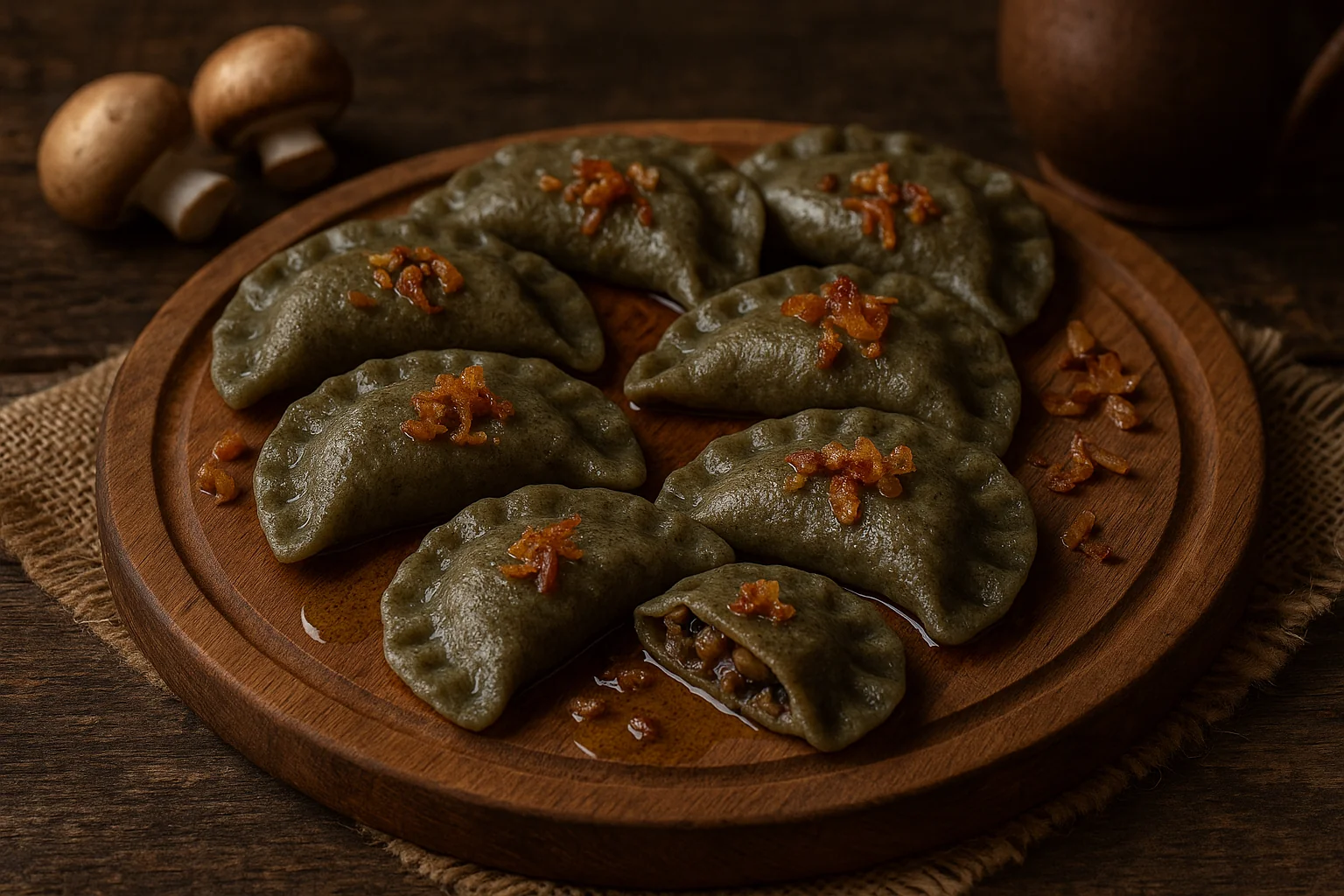

Hemp flour dumplings with mushroom filling
Hemp flour dumplings with mushroom filling – a traditional recipe with a hemp twist. The dough made from hemp flour is rich in protein and fiber. Step by step.
Dumplings are one of those recipes where changing the dough must be justified by flavor, not just nutritional values. Hemp flour adds a nutty depth to the dough that pairs phenomenally with forest mushrooms – two earthy flavors enhance each other rather than compete. Additionally, hemp flour contains about 30% protein and 28% fiber, with a naturally gluten-free profile. The dough has a characteristic gray-green color and is more crumbly than wheat flour – I will show you how to roll and seal it without frustration.
KEY INFORMATION
• Hemp flour contains about 30% protein and 28% fiber – significantly more than wheat flour (10% and 3%) (Mattila et al., Journal of Food Composition and Analysis, 2018).
• Hemp flour is naturally gluten-free with a GI below 35 (Siano et al., Food Chemistry, 2019).
• In dumpling dough, hemp flour is used in a ratio of about 1:2.3 with other gluten-free flours for optimal elasticity.
• 100 g of hemp flour provides about 330 kcal, 30 g of protein, 11 g of fat, and 28 g of fiber (USDA FoodData Central, 2023).
Why does hemp flour change dumplings?
Traditional dumpling dough consists of wheat flour, water, egg, and salt. Wheat flour provides elastic dough thanks to gluten. Hemp flour is gluten-free, which means a different approach to structure – but not inferior. Mattila et al. (Journal of Food Composition and Analysis, 2018) confirm that hemp flour contains about 30% protein and 28% dietary fiber – values three times higher than wheat flour. Fiber binds water and helps maintain the structure of gluten-free dough.
Flavor is as strong an argument as nutrition. Hemp flour has a nutty, slightly earthy aftertaste that, when combined with dried forest mushrooms, creates a harmony rarely found in traditional dumplings. Siano et al. (Food Chemistry, 2019) indicate that the low GI of hemp flour (below 35) means that hemp dumplings raise blood sugar levels more slowly than classic wheat dumplings – a benefit particularly important for those managing glycemia.
We noticed in tests that dough with hemp flour sticks better when it is slightly warm – a temperature of about 35–40°C makes it more pliable. Therefore, it is worth kneading the dough with warm water and sealing the dumplings right after resting, when the dough has not yet completely cooled down. Cold hemp dough cracks when sealing the edges.
Nutritional values – what does this serving provide?
Five dumplings made from hemp dough (about 50 g of hemp flour per serving) and filled with mushrooms provide about 280–320 kcal, 12 g of protein, 6 g of fat, and 44 g of carbohydrates. The fiber from hemp flour and cabbage (if you use it) is about 8 g per serving. Dried mushrooms contribute beta-glucans, vitamin D, and selenium with minimal calories (about 22 kcal/100 g).
Ingredients – what do you need?
Proportions for about 30 dumplings (4–5 servings). Preparation time: 30 minutes. Cooking time: 30 minutes. Dough resting time: 20 minutes.
Hemp dough:
- 150 g of hemp flour
- 200 g of buckwheat flour (or rice flour)
- 100 g of wheat flour or additional buckwheat flour (gluten-free version)
- 180–200 ml of warm water
- 1 tablespoon of vegetable oil
- 1/2 teaspoon of salt
Mushroom filling:
- 30 g of dried forest mushrooms (porcini, boletus)
- 1 large onion
- 2 tablespoons of butter or oil
- optional: 200 g of cooked sauerkraut (drained)
- salt, pepper, dried marjoram
How to prepare hemp flour dumplings – step by step?
Dough made with hemp flour requires a bit more patience when rolling, but the technique is the same as with traditional dumplings. The key is the right flour ratio and warm dough.
Step 1. Prepare the filling. Pour boiling water (about 300 ml) over the dried mushrooms and soak for 30 minutes. Drain, reserving the broth, and finely chop the mushrooms. In a pan, sauté the finely chopped onion in butter for 7 minutes until golden. Add the mushrooms and fry for 5 minutes. Optionally, add the drained sauerkraut. Season with marjoram, salt, and pepper. Set aside to cool.
Step 2. Prepare the dough. In a large bowl, mix hemp flour, buckwheat flour, and rice or wheat flour. Add salt. Gradually pour in warm water and oil, kneading with your hands. Knead for 5–7 minutes – the dough will be firmer and less elastic than wheat dough, but it should be moldable. Cover with a damp cloth and let it rest for 20 minutes.
Step 3. Roll and cut. Divide the dough into 3 parts. Roll each part on a well-floured surface to a thickness of about 2 mm. Cut out circles using a glass (8 cm). Hemp dough cracks if rolled too thin – 2 mm is the minimum.
Step 4. Shape the dumplings. Place a flat teaspoon of filling in the center of each circle. Fold in half. Pinch the edges firmly, using your thumb and index finger. Hemp dough requires stronger sealing than wheat dough – go along the entire edge twice. Place on a floured board.
Step 5. Cook and fry. Bring a large pot of salted water to a boil. Drop the dumplings in batches of 10–12. Cook for 4–5 minutes after they float to the surface. Remove with a slotted spoon. Optionally, fry in butter for 2 minutes on each side. Serve with sautéed onions and sour cream.
Tips and variations
Cheese and potato filling. Instead of mushroom filling, use the classic Russian filling: boiled potatoes + white cheese + sautéed onion. The nutty flavor of the hemp dough balances the creamy sweetness of the cheese.
Cabbage filling. Sauerkraut with mushrooms is a Christmas tradition – here it gains a new dimension thanks to the hemp dough. Proportions: 300 g of sauerkraut + 15 g of dried mushrooms + onion + marjoram.
Version with sweet filling. Hemp dough also pairs well with a filling of cottage cheese, vanilla, and sugar – sweet dumplings with a hint of hemp flavor make for an unexpected but delicious combination. Serve with sour cream and powdered sugar.
Also check out our recipe for Hemp flour gnocchi with cheese sauce – another traditional Polish recipe with hemp flour.
Frequently Asked Questions
Why is the dough for hemp flour dumplings darker?
Hemp flour contains chlorophyll and green pigments from the seeds, giving the dough a gray-green color. This is natural. The dough darkens slightly after cooking. The color is a characteristic feature of hemp dumplings, not a flaw. Hemp flour has a glycemic index below 35 (Siano et al., Food Chemistry, 2019).
Can hemp flour dough be rolled out like regular dough?
Hemp flour is gluten-free and less elastic than wheat flour. The key is to mix it with other flours in a ratio of 1:2.3 and add a tablespoon of oil. Hemp flour contains about 30% protein (Mattila et al., 2018). Roll out to about 2 mm thickness – not thinner.
How much protein do hemp flour dumplings have?
Five dumplings made with about 50 g of hemp flour per serving provide about 8–11 g of protein from the dough and filling alone. Hemp flour contains about 30% protein per 100 g (USDA, 2023) – significantly more than wheat.
Can hemp dumplings be frozen?
Freeze raw dumplings before cooking. Arrange in a single layer on a floured tray, freeze until firm, then transfer to bags. Cook from frozen for 6–7 minutes. Hemp dough retains its structure after freezing without significant loss of quality.
This article is for informational and educational purposes and does not replace consultation with a doctor. If you are pregnant, breastfeeding, taking medications, or have chronic conditions, consult the use of supplements or herbs with a specialist.
Author: Michał Waluk · Published: 2026-05-04 · Updated: 2026-05-04