
Stroke and hypoxia - neuroprotective effects of cannabis in ischemia models
Udar i niedotlenienie — mechanizm wyjasniony prosto, w oparciu o badania. u Bucha.
Ischemic stroke is the third leading cause of disability and the second leading cause of death worldwide - affecting about 15 million people each year (WHO, 2020). Available methods for treating acute stroke are time-limited: thrombolysis works only within a 4.5-hour window. Therefore, researchers have been searching for neuroprotective substances for years - protecting neurons from the cascade of damage caused by hypoxia and reperfusion. CBD and other cannabinoids are gaining increasing interest here, as their mechanisms - antioxidant, anti-inflammatory, and modulation of excitotoxicity - directly address the main damaging processes in the brain after a stroke. The Hayakama study and colleagues showed that CBD administered after induced ischemia in rodents significantly reduced the area of ischemic necrosis and improved neurological outcomes (Hayakawa et al., Journal of Neurochemistry, 2007). This article explains the mechanisms of this action and fairly sets the boundary between preclinical data and what pertains to patients.
KEY INFORMATION
• CBD reduced the area of ischemic necrosis and improved neurological outcomes in animal models (Hayakawa et al., 2007).
• Main neuroprotective mechanisms: antioxidant action, anti-inflammatory (CB2/PPAR-gamma), reduction of glutamate excitotoxicity, and modulation of adenosine.
• Available data is mainly preclinical - there is no approved clinical protocol for using CBD after a stroke.
• CBD may have a broader therapeutic window than thrombolysis - it was effective in rodents when administered up to 6 hours after ischemia.
• Any use of CBD by a patient after a stroke requires consultation with the attending neurologist.
What happens to the brain during ischemia?
Understanding the neuroprotective potential of cannabis requires an understanding of the cascade of ischemic damage. When blood flow to a part of the brain is interrupted, a sequence of processes is triggered, each of which destroys neurons:
In the first minutes, neurons in the center of ischemia (the so-called core) die due to a lack of oxygen and glucose. Around this area, a penumbra forms - a zone of temporarily dysfunctional neurons that are potentially salvageable. It is this penumbra that is the target of therapeutic interventions.
After blood flow is restored (reperfusion) - paradoxically - a second phase of damage is triggered. Massive production of reactive oxygen species (ROS), release of glutamate from damaged neurons (excitotoxicity), activation of microglia, and infiltration of inflammatory cells occur. This process can last for hours and days after a stroke - and it is this phase that seems amenable to neuroprotective interventions (Moskowitz et al., Nature Reviews Neuroscience, 2010).
Mechanisms of the neuroprotective action of CBD
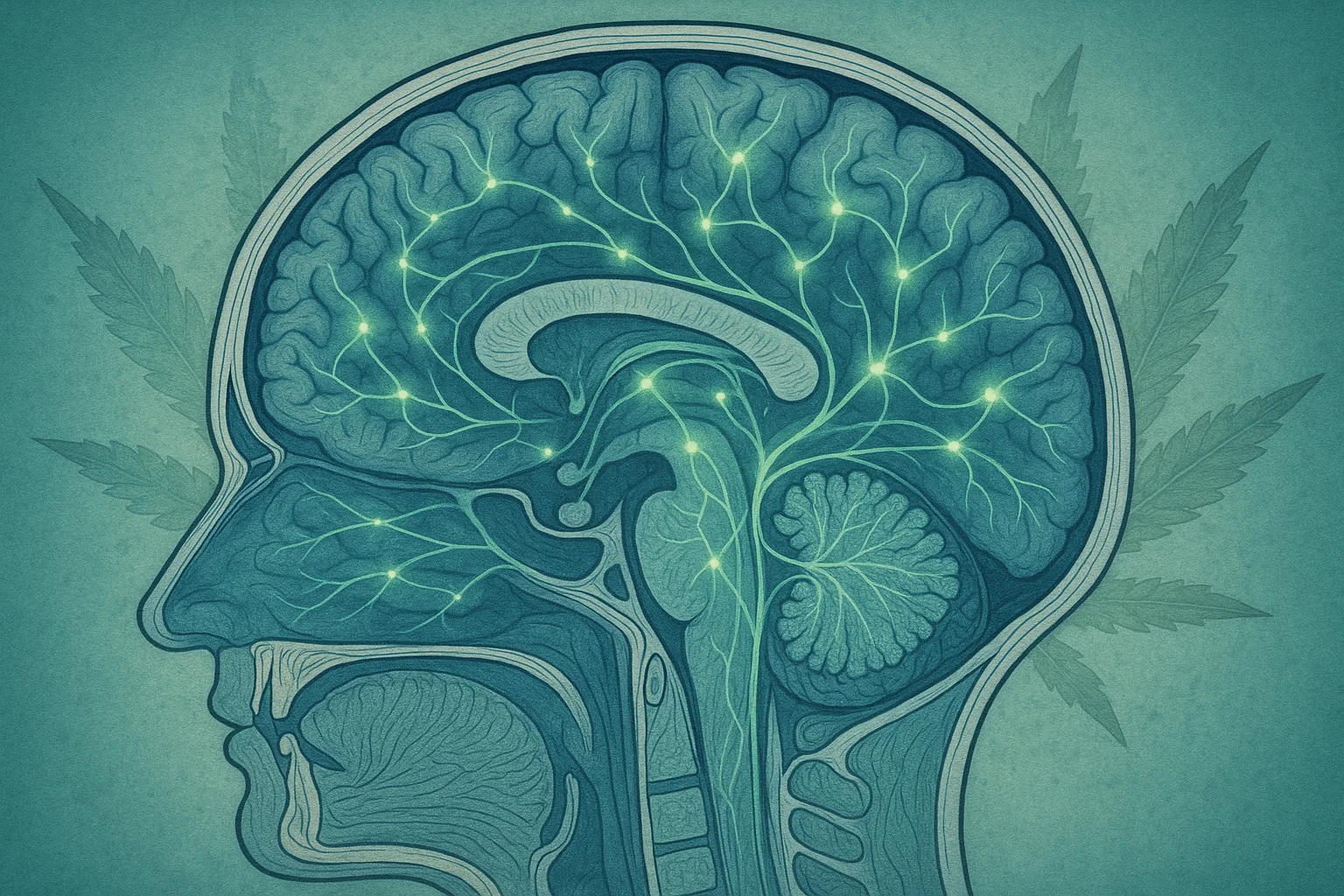
CBD interacts with the ischemic cascade through several parallel mechanisms - making it an exceptionally interesting neuroprotective candidate. None of these mechanisms are exclusively "cannabinoid" - CBD acts through receptors and pathways unrelated to CB1 and CB2.
Antioxidant action. CBD is a strong neutralizer of ROS - free radicals produced massively during reperfusion. In vitro studies have shown that CBD protects neurons from oxidative stress more effectively than vitamin C and vitamin E, although its antioxidant mechanism is partially receptor-independent (Hampson et al., PNAS, 1998). In the context of ischemia, where ROS are one of the main mediators of damage, this property has potential clinical significance.
Anti-inflammatory action through CB2 and PPAR-gamma. CBD activates the CB2 receptor in microglial cells, limiting their pro-inflammatory activation. It also inhibits the production of inflammatory cytokines (TNF-alpha, IL-6, IL-1beta) and reduces neutrophil infiltration into the ischemic area. A study by Martín-Moreno et al. showed that CBD reduced microglial activation in an experimental model of ischemia, which correlated with a reduction in the area of necrosis (Martín-Moreno et al., British Journal of Pharmacology, 2011).
Reduction of excitotoxicity. After a stroke, neurons release glutamate in massive amounts - an excitatory neurotransmitter that, in excess, destroys neurons through excessive activation of NMDA receptors (excitotoxicity). CBD may limit this process by inhibiting ionotropic glutamate receptors, although the mechanism is not fully understood.
Modulation of adenosine. CBD inhibits the reuptake of adenosine - a nucleoside with strong protective and anti-inflammatory effects in the brain. Elevation of adenosine levels after ischemia activates A1 and A2A receptors, which limit the release of glutamate and reduce excitotoxicity (Hampson et al., PNAS, 1998).
Citation capsule (Hayakawa et al., 2007): CBD administered intravenously 30 minutes and 3 hours after induced occlusion of the middle cerebral artery in rats significantly reduced the volume of the infarct, limited excitotoxicity, and improved neurological outcomes on day 3. The authors noted that "CBD may have therapeutic significance in the treatment of brain ischemia" (Hayakawa et al., Journal of Neurochemistry, 2007).
What do animal models say - and what are their limitations?
Most data on the neuroprotective effects of CBD comes from middle cerebral artery occlusion (MCAO) models in rodents. This is the most common stroke model in preclinical research. The results are consistent: CBD administered after induced ischemia reduces the area of necrosis, limits neuroinflammation, and improves neurological outcomes in behavioral assessments.
However, animal models have fundamental limitations. First: the rodent brain is structurally different from the human brain - the proportions of white matter to gray matter, vascular organization, and immune response are different. Second: MCAO models use a homogeneous group of animals without comorbidities, which does not reflect the realities of stroke patients (diabetes, hypertension, atrial fibrillation). Third: over 1000 substances have shown neuroprotective effects in MCAO models, but almost none have proven effective in clinical trials - indicating a systemic difficulty in translating results.
We have noted that discussions about CBD and stroke often lack this warning: the history of clinical neuroprotection is a history of spectacular disappointments. Substances antagonizing NMDA, free radical scavengers, caspase inhibitors - hundreds of compounds effective in rodents have failed in clinical trials. CBD may be an exception, but this needs to be proven in clinical studies, not just preclinical.
The therapeutic window of CBD - what do preclinical studies suggest?
One of the interesting properties of CBD in stroke models is its potentially broader therapeutic window than that for thrombolysis. Hayakawa and colleagues demonstrated the neuroprotective effect of CBD administered up to 3 hours after occlusion. Other studies suggest a protective effect when administered up to 6 hours - compared to 4.5 hours for tPA (tissue plasminogen activator) (Hayakawa et al., Journal of Neurochemistry, 2007).
This is a clinically significant observation - as a significant portion of patients arrive at the hospital after the thrombolysis window has passed and do not qualify for any acute treatment. A substance effective in a broader therapeutic window could potentially help this group. But - once again - the data is preclinical and requires confirmation in controlled clinical studies involving humans.
State of clinical research - where are we in 2025?
The ClinicalTrials.gov registry lists several early clinical studies evaluating CBD or cannabinoids in the context of neuroprotection. Most are phase I or II studies, primarily assessing safety and tolerance, not clinical efficacy. No completed phase III study has provided sufficient evidence for the registration of CBD as a neuroprotective drug after stroke.
It should be emphasized that the area of neuroprotection in stroke is burdened with an exceptionally poor history of translation. Glutamate antagonists (selfotel, aptiganel), free radical scavengers (NXY-059), adenosine receptor antagonists - hundreds of substances that reduced the area of necrosis in animal models have failed in large clinical trials involving humans. The main reasons: biological differences between rodents and humans, the presence of comorbidities in patients, delays in drug administration, and difficulty in precisely replicating the ischemia model (Moskowitz et al., Nature Reviews Neuroscience, 2010).
CBD may be an exception - it has a multifaceted action profile, a good safety profile, and a low cost compared to biological drugs. However, claiming that CBD "protects the brain after a stroke" would be premature today. A fair summary of the state of knowledge is: the mechanism is biologically justified, preclinical data is promising, clinical data does not yet exist in the required quantity and quality. For stroke patients and their families, this boundary has practical significance - CBD may be considered as an adjunct to rehabilitation, but only after consultation with the attending neurologist and never as a substitute for established clinical procedures.
Frequently Asked Questions
Can CBD protect the brain after a stroke?
Preclinical data from animal models of brain ischemia is promising - CBD reduced the area of ischemic necrosis and improved functional outcomes in rodents. However, human studies are still in the early stages. Extrapolating animal results to clinical application in humans requires great caution.
Through what mechanisms does CBD act neuroprotectively?
Four main mechanisms have been identified: antioxidant action (neutralization of ROS after reperfusion), anti-inflammatory action through CB2 and PPAR-gamma (limiting microglial activation), reduction of glutamate excitotoxicity, and modulation of adenosine - elevating its protective level by inhibiting reuptake (Hampson et al., PNAS, 1998).
Is CBD clinically used in patients after a stroke?
No - there is no approved clinical protocol for using CBD in patients after ischemic stroke. Existing evidence comes from animal models. Any use of CBD by a patient after a stroke must be consulted with the attending neurologist.
What is the therapeutic window in stroke and how does CBD fit into it?
The therapeutic window is the time during which the intervention is effective - for thrombolysis, it is 4.5 hours. Preclinical studies suggest that CBD may act neuroprotectively when administered even 3-6 hours after ischemia in rodents (Hayakawa et al., Journal of Neurochemistry, 2007). This is an interesting observation that requires confirmation in clinical studies.
Do CBG or THC also have neuroprotective effects?
Yes - both show neuroprotective effects in preclinical models. CBG acts through CB1 and has antioxidant properties. THC in low doses reduced the area of necrosis through CB1 in rodent studies, however, its risk profile and psychoactive properties complicate potential clinical applications.
This article is for informational and educational purposes and does not constitute medical advice. Before starting to use cannabis or CBD for therapeutic purposes, consult a doctor, especially if you are taking other medications, are pregnant, or breastfeeding.
Author: Michał Waluk · Published: 2026-05-04 · Updated: 2026-05-04