
What is a one-hitter and how to use it (discreet, economical)
What is a one-hitter and how to use it — what it is, how it works, and what to watch out for. u Bucha.
A one-hitter is one of the simplest and most economical forms of smoking herbs - a small pipe with a narrow bowl that literally holds just enough for one puff. Research on herb consumption patterns indicates that users who take smaller, controlled doses (so-called microdosing) consume on average 40-60% less material while achieving a comparable subjective effect than those using joints or large pipes (Morgan et al., PMC, 2010). This article explains what a one-hitter is, its types, how to use it properly, and why it is gaining popularity among economical and discreet users.
KEY INFORMATION
• A one-hitter is a small pipe with a narrow bowl that holds 0.05-0.1 g of material - significantly less than a regular pipe or joint (Morgan et al., PMC 2010).
• The format is discreet, compact, and easy to clean - a good choice for those who want to control their dosage.
• Dugout (skrzyneczka) to klasyczny zestaw z one-hitterem - nabijanie jednym ruchem, przechowywanie w jednym miejscu.
• Metal one-hitters are the most durable; glass ones provide the purest flavor.
Co to jest one-hitter - definicja i historia
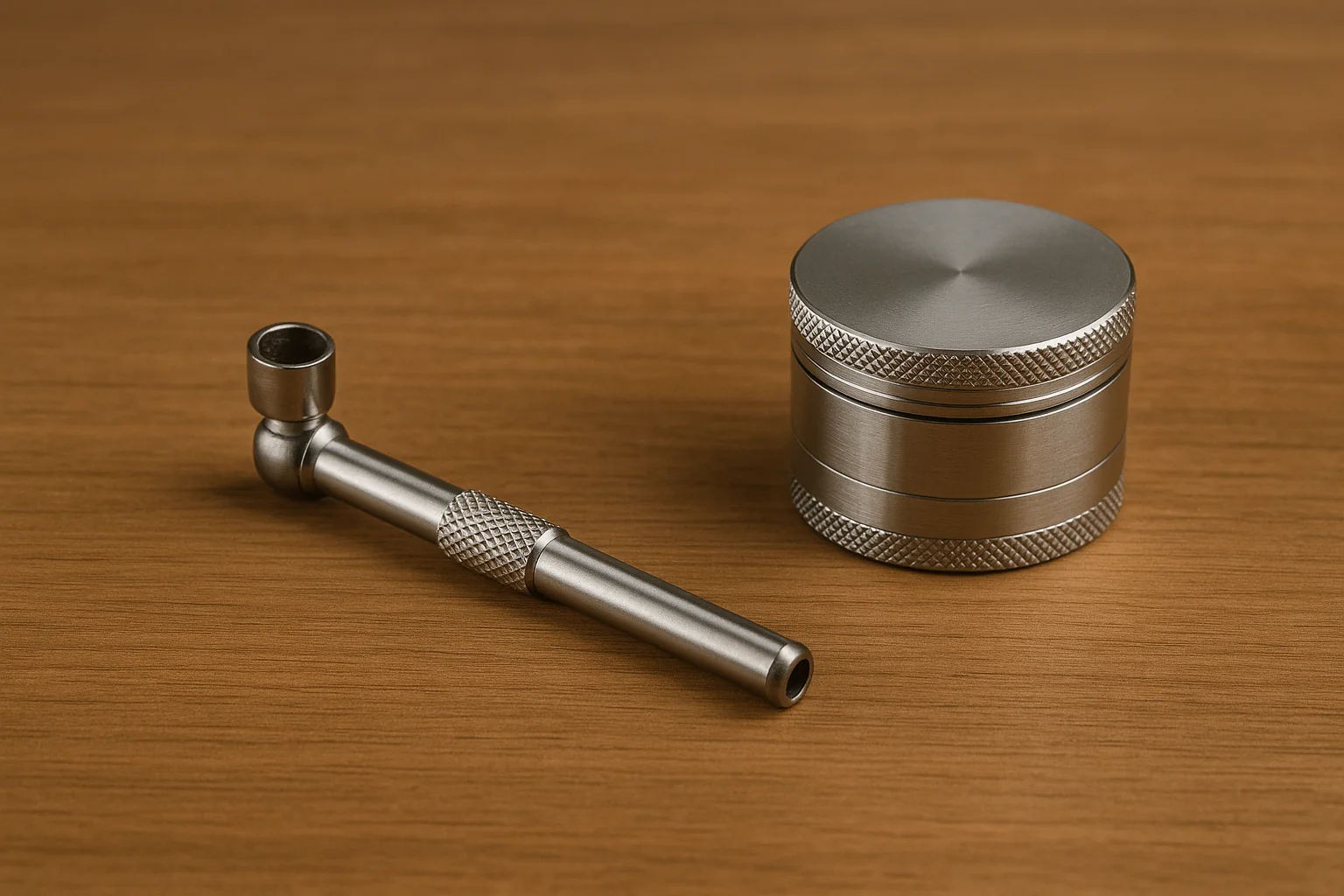
A one-hitter (from English: "one hit") is a small smoking pipe with a narrow bowl designed to hold exactly enough material for one, or at most two, draws. A typical one-hitter is 5-10 cm long and has a bowl diameter of 3-6 mm, which holds 0.05-0.1 g of ground material. For comparison: a standard joint contains 0.5 to 1 g, and a regular pipe holds 0.3-0.5 g in one load.
The one-hitter format originates from the tradition of chillums - simple clay or stone pipes used by yogis and sadhu in India for centuries. The modern one-hitter is a simplified, compact version made of metal, glass, or ceramic, adapted for discreet use in urban settings. The popularity of the one-hitter has grown since the 1990s in the USA, mainly due to material savings and the possibility of discreet use.
Types of one-hitters - metal, glass, ceramic
One-hitters are divided into several categories based on material and shape. Metal (aluminum, stainless steel, brass) is the most common choice due to its durability - a metal one-hitter is hard to break and is not sensitive to temperature. The downside is that metal can affect the taste, especially when contaminated with resin.
Borosilicate glass is the material that provides the purest taste - it does not chemically react with smoke and does not alter the aroma of the material. Glass one-hitters are often transparent, allowing you to see when they need cleaning. The downside is their sensitivity to dropping - one strong hit against a hard surface and the pipe can break.
Ceramics are heat-resistant, do not alter flavor, and have an interesting aesthetic. Ceramic one-hitters are slightly heavier than glass and metal ones, but very durable with normal use. They are often produced in more decorative shapes than their metal or glass counterparts.
| Material | Shelf life | Taste purity | Price | Weight |
|---|---|---|---|---|
| Metal (aluminum/steel) | Bardzo wysoka | Good (when clean) | 15-50 zł | Light |
| Borosilicate glass | Low (fragile) | Best | 20-80 zł | Light |
| Ceramics | High | Very good | 30-100 zł | Medium |
How to properly use a one-hitter?
The technique for using a one-hitter is simple, but a few details matter. Step one: the material must be well-ground - a uniform, medium-fine powder. If the material is ground too finely, it will clog the bowl and prevent drawing. If the piece is too thick, it will fall into the pipe or fall out when turned upside down.
Step two: packing. The simplest way is with a dugout - a small box with a compartment for ground material. You press the one-hitter bowl into the material a few times, gently rotating it until the bowl is evenly filled. Alternatively, you can pack the material directly with your fingers, but this requires some skill to avoid spilling. Do not pack too tightly - a clogged bowl will not allow air to flow through.
Step three: lighting. Hold the one-hitter vertically or at a slight downward angle (the bowl lower than the mouthpiece). Heat the edge of the material, not the center - this ensures more even burning. One deeper draw (2-3 seconds) should use up all the material in the bowl. If one hit does not achieve the desired effect, pack it again.
Step four: emptying. After burning, wipe the bowl with the end of the one-hitter against the edge of the container or gently blow from the mouthpiece side to push out the ash. Metal one-hitters sometimes have a screw-out design - the bottom part unscrews, making cleaning easier.
We have noticed that one of the most common mistakes when using a one-hitter is packing the material too tightly, which leads to clogging. Optimal filling is 70-80% of the bowl's capacity - the material should be pressed but not compressed. The analogy to espresso is fitting: coffee is tamped under the right pressure, not "to the max" - over-tamping blocks airflow.
What is a dugout and is it worth buying?
A dugout is a small box - usually made of wood or plastic - with two chambers: a larger one for ground material and a smaller, cylindrical one for the one-hitter. The dugout + one-hitter set is a classic, compact storage and discreet use system. It is one of the oldest forms of discreetly carrying accessories - popular in the USA since the 1970s.
The dugout closes with a latch or magnet. When you want to use it, you turn the one-hitter with the bowl down, press it into the material a few times (twisting), take it out, light it, and you're ready. The whole system fits in your hand and looks from the outside like a small jewelry box or snuff box. This largely contributes to the format's popularity among those who value discretion.
How to clean a one-hitter?
Regular cleaning is crucial for the taste and airflow of the pipe. With daily use, a one-hitter should be cleaned every 2-3 days - resin builds up quickly in the narrow channel and restricts airflow. A dirty one-hitter burns worse, tastes unpleasant, and clogs completely faster.
Cleaning protocol with isopropyl alcohol (70-99%): place the one-hitter in a ziplock bag or small container, cover it with alcohol, and let it sit for 15-30 minutes. Alcohol dissolves resin without damaging the metal or glass. After soaking, push through with a pipe cleaner (a thin cleaner with wire and cotton) or a cotton swab. Rinse with warm water and dry before the next use.
An alternative method is salt and alcohol - pour a teaspoon of coarse sea salt into a tightly sealed container and cover with alcohol. The salt acts as an abrasive that helps detach hard resin from the walls. Shake vigorously for 1-2 minutes, rinse, and dry. This method works better for heavily soiled pipes.
One-hitter vs chillum vs pipe - what are the differences?
One-hitter and chillum are closely related formats, often used interchangeably, but technically different. A classic chillum is usually slightly longer (10-15 cm), has a conical bowl at one end, and is used vertically - the material is packed from the top and burns vertically toward the mouthpiece. A one-hitter is shorter and often allows for packing with the bowl down (as with a dugout). Both hold similar amounts of material.
A regular pipe has a distinctly larger bowl (holds 0.3-0.7 g) and usually has a carb - a small hole on the side that is covered with a thumb to control airflow. A one-hitter does not have a carb because all the material burns in one draw without the need for adjustment. This simplifies operation but limits control over the intensity of the session. In terms of cleaning, the one-hitter is definitely the simplest of all formats - a simple pipe without branches can be cleaned in a few minutes, while pipes with twisted channels require multiple pushes and much longer soaking in isopropyl alcohol.
Frequently Asked Questions
What is the difference between a one-hitter and a regular pipe?
A one-hitter holds 0.05-0.1 g of material for one draw. A regular pipe has a larger bowl (0.3-0.7 g) and allows for several draws. A one-hitter is more discreet, more economical, and easier to clean, but is limited to one controlled dose per session.
How to properly pack a one-hitter?
Most conveniently with a dugout: press the bowl into the ground material a few times, gently rotating until it is evenly filled. Filling 70-80% of the bowl's capacity is optimal - the material should be pressed but not compressed. Over-packing blocks airflow.
Is a one-hitter good for budget-conscious users?
Yes. A one-hitter limits the amount of material to one draw (0.05-0.1 g) and does not have an open flame between draws that would waste material like a joint. Users practicing microdosing consume 40-60% less material with comparable effects (Morgan et al., PMC 2010).
What are one-hitters made of?
Most commonly made from metal (aluminum, stainless steel, brass), borosilicate glass, or ceramic. Metal is the most durable, glass provides the purest taste, and ceramic is heat-resistant and does not alter the flavor. The choice depends on usage style and priority: durability vs. taste.
How to clean a one-hitter?
Soak in isopropyl alcohol (70-99%) for 15-30 minutes, push through with a pipe cleaner or swab, rinse with water, and dry. For heavy soiling, add coarse sea salt to the alcohol and shake - the salt scrapes off hard resin. Clean every 2-3 days with daily use.
What is a dugout and why use it?
A dugout is a small box with two chambers: for the supply of ground material and for the one-hitter. With it, you can pack the one-hitter in one motion - press the bowl into the material, pull it out, and you're ready. The whole set fits in your hand and is discreet for transport.
Can a one-hitter be used with a vaporizer?
No - a one-hitter is a smoking device (combustion), not for vaporization. A vaporizer heats the material without combustion, at temperatures of 160-220°C. These are fundamentally different formats. For vaporization, you need a dedicated device.
This article is for informational and educational purposes and does not replace consultation with a doctor. If you are pregnant, breastfeeding, taking medications, or have chronic conditions, consult the use of supplements or herbs with a specialist.
Author: Michał Waluk · Published: 2026-05-04 · Updated: 2026-05-04