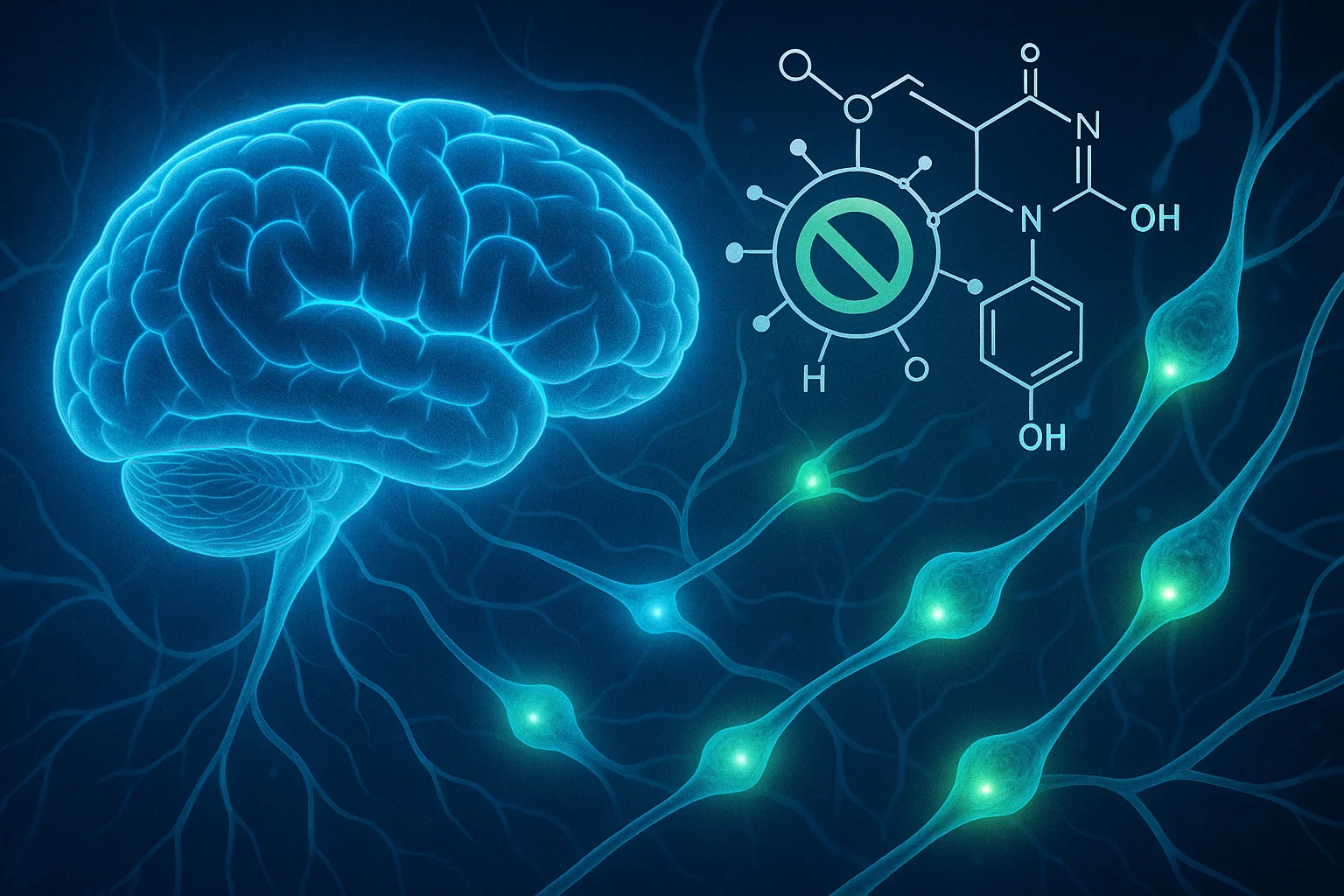

Inhibition of the FAAH enzyme and neuroinflammation - how to raise anandamide levels in the brain
Hamowanie enzymu FAAH a neurozapalenie — mechanizm wyjasniony prosto, w oparciu o badania. u Bucha.
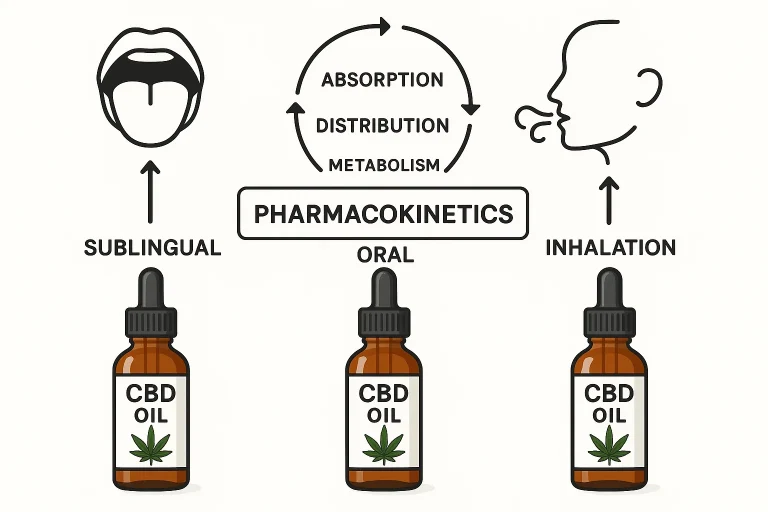
Anandamide - the "bliss molecule" - is synthesized on demand and immediately broken down. Its lifespan in the synapse is a few seconds to a few minutes, and one enzyme is responsible for this: FAAH. If FAAH did not exist, anandamide would act much longer and stronger. This is why FAAH inhibitors have become one of the hottest areas in neuropharmacology - and CBD, which inhibits this enzyme even without a prescription, is available as oil on every pharmacy shelf. Understanding the FAAH mechanism is key to understanding why CBD does not need to bind to CB1 to have a real effect on the ECS.
KEY INFORMATION
• FAAH breaks down anandamide with a half-life of 5-15 minutes - by inhibiting the enzyme, CBD prolongs the AEA signal without direct CB1 agonism (Cravatt et al., PNAS 2001).
• Neuroinflammation increases FAAH expression by up to 3 times, creating a feedback loop that reduces the natural anti-inflammatory effects of AEA.
• The synthetic FAAH inhibitor (BIA 10-2474) caused tragic effects in 2016 - a reminder that inhibiting FAAH is not pharmacologically "simple."
• Natural FAAH inhibitors (CBD, kaempferol, echinacea alkamides) are less effective than synthetic ones but have a significantly better safety profile.
What exactly does FAAH do and why does it matter?
FAAH (fatty acid amide hydrolase) is a serine enzyme anchored in the endoplasmic reticulum membrane of postsynaptic neurons. Cravatt and colleagues in PNAS (2001) They bred mice with a deletion of the FAAH gene and showed that in these mice, the level of anandamide is 15 times higher than normal - confirming that FAAH is the main mechanism that "turns off" the anandamide signal.
The hydrolysis of anandamide by FAAH follows a catalytic triad mechanism involving Ser241, Ser217, and Lys142. The reaction is irreversible for the substrate - once cleaved, anandamide yields arachidonic acid (AA) and ethanolamine. Arachidonic acid is then available for COX-2 and LOX, enzymes that produce prostaglandins and leukotrienes - mediators of inflammation. Ironically, the breakdown of anandamide may paradoxically provide substrates for pro-inflammatory pathways.
FAAH breaks down not only anandamide but a whole set of N-acylethanolamines: PEA (palmitoylethanolamide), OEA (oleoylethanolamide), and NEA (N-arachidonoylethanolamine, or AEA). PEA and OEA have their own PPAR-alpha and GPR119 receptors - thus, inhibiting FAAH raises the entire "kind" of anti-inflammatory lipid mediators simultaneously.
Neuroinflammation and FAAH - a loop that needs to be broken
Neuroinflammation is not a simple "inflammation in the brain" - it is a complex response of microglia and astrocytes to damage or pathogens, involving the release of cytokines (TNF-α, IL-1β, IL-6), reactive oxygen species, and activation of NF-κB. The review by Lu and Mackie in the British Journal of Pharmacology (2019) It documents that pro-inflammatory cytokines - particularly TNF-α and IL-1β - stimulate FAAH expression through the activation of NFκB and MAPK.
The result is a loop: inflammation → increased FAAH → faster breakdown of anandamide → less inhibition of inflammation by CB2 → more inflammation. This is the mechanism through which chronic neuroinflammation (as in depression, Alzheimer’s disease, or after head injuries) becomes self-sustaining. FAAH becomes a "valve" that prevents the ECS from effectively extinguishing the fire.
Studies in glioma and demyelination models have shown that FAAH inhibition breaks this loop: higher anandamide activates CB2 on microglia, inhibiting NF-κB and reducing cytokine release. Fernandez-Ruiz et al. (European Journal of Pharmacology, 2015) showed that FAAH inhibition reduces demyelination and microglial activation in mouse models of multiple sclerosis.
Jak CBD hamuje FAAH - mechanizm na poziomie molekularnym
CBD is not a classical FAAH inhibitor in a structural sense - it lacks the carbamoyl group typical of strong synthetic inhibitors. Its inhibitory action is mixed: competitive and allosteric. Leweke and colleagues in Translational Psychiatry (2012) They demonstrated in vivo in humans that CBD (150-600 mg) raises anandamide levels in serum and cerebrospinal fluid, which is indirect evidence of FAAH inhibition.
The IC50 of CBD for FAAH is ~15-30 µM in vitro, which is weaker than for specific inhibitors (URB597: IC50 ~3 nM). However, in tissues where CBD accumulates (brain, adipose tissue), its concentrations may be higher than in blood, making the effect biologically significant. An additional mechanism is the inhibition of the FAAH-2 enzyme by CBD (an isoform mainly present in humans, not rodents - explaining why the effects of CBD on AEA are stronger in humans than would be suggested by mouse models).
CBD also inhibits MAGL (monoacylglycerol lipase) - the enzyme that breaks down 2-AG, the second main endocannabinoid. The result is a double elevation of endocannabinoid tone: through AEA (FAAH inhibition) and through 2-AG (MAGL inhibition). Together they create "enhanced signaling" of the ECS without direct receptor activation - which is one reason why the action profile of CBD is so diverse.
Tragedia BIA 10-2474 - dlaczego selektywne hamowanie FAAH jest ryzykowne
In 2016, a Phase I clinical trial of the synthetic FAAH inhibitor - BIA 10-2474 by Bial was conducted in Rennes, France. One participant died, and four suffered permanent neurological damage. An analysis published in the New England Journal of Medicine (2016) It was shown that BIA 10-2474 was not a pure FAAH inhibitor - it had "off-target" effects on other neural lipases, leading to toxic lipid accumulation in neurons.
This tragedy does not disqualify the strategy of inhibiting FAAH as such, but it shows its pitfalls. Lipolytic enzymes in the CNS create a complex metabolic network, and non-specific inhibition of them can have cascading effects. CBD, acting weaker and less selectively on FAAH than BIA 10-2474, is paradoxically safer - the "off-target" effects are distributed and do not lead to toxic accumulation.
From our experience in educating about CBD, many users do not understand why CBD oil raises anandamide levels when CBD "does not bind to CB1." The FAAH-inhibiting mechanism explains this apparent contradiction: CBD acts like a "signal extender" - it does not turn on the switch but slows down its turning off. This is a subtle but important difference for understanding why the effect of CBD is slower and milder than that of THC.
Natural ways to raise anandamide through the FAAH system
Beyond CBD, there are several natural strategies for modulating FAAH. Kaempferol - a flavonoid found in apple peels, black tea, and cabbage - inhibits FAAH at micromolar concentrations (IC50 ~9 µM in vitro). Chu and colleagues in the Journal of Natural Products (2010) It was shown that kaempferol raises AEA in nerve cells. OEA from olive oil is both a substrate and a subtle FAAH inhibitor (the phenomenon of "product inhibition").
Physical exercise raises anandamide levels - but not by inhibiting FAAH. Fuss and colleagues in PNAS (2015) showed that intense aerobic exercise (running) increases serum AEA levels two to four times. The mechanism is enhanced synthesis from NAPE (N-arachidonoyl-phosphatidylethanolamine) by phospholipase D, not FAAH inhibition. Intermittent fasting increases CB1 receptor expression, which may indirectly enhance the response to anandamide even without changing its baseline level.
There is also a pharmacological direction that completely bypasses FAAH: modulation of AEA synthesis. Studies in animal models suggest that glucocorticoids inhibit AEA synthesis via NAPE-PLD, which partially explains why chronic cortisol stress lowers endogenous cannabinoid tone. This observation is supported by population data - individuals with dysregulation of the HPA axis (hypothalamus-pituitary-adrenal) show lower levels of AEA and 2-AG with the same FAAH genotype. Interventions that reduce cortisol (meditation, adaptogens, sleep) may therefore indirectly raise AEA by decreasing the inhibition of synthesis, not solely through FAAH.
| Method to raise AEA | Mechanism | Strength of evidence | Availability |
|---|---|---|---|
| CBD (oil) | FAAH + MAGL inhibition | High (clinical studies) | Available OTC |
| Physical exercise (aerobic) | Increased AEA synthesis | High (RCT) | No cost |
| Kaempferol (apples, tea) | FAAH inhibition | Moderate (in vitro) | Diet |
| Echinacea Alkamides | FAAH + CB2 Inhibition | Moderate (in vitro) | Supplement |
| Intermittent fasting | Increased CB1 expression | Low (models) | Diet |
Frequently Asked Questions
Is FAAH inhibition by CBD permanent or reversible?
Inhibition of FAAH by CBD is reversible - when CBD is metabolized (by CYP3A4 and CYP2C19 in the liver), the level of inhibition decreases and FAAH returns to normal activity. The half-life of CBD in serum is 18-32 hours after oral administration, so the effect on AEA lasts for a similar time after the dose.
Why is FAAH higher in individuals with anxiety disorders?
Research by Hariri et al. in Nature Neuroscience (2009) showed that the FAAH gene polymorphism (C385A, rs324420) leads to lower enzyme expression, higher AEA levels, and reduced reactivity to threat in fMRI studies. Individuals with the wild-type gene (C/C) have higher FAAH, lower AEA, and stronger anxiety reactivity - this is a genetic link between FAAH and predisposition to anxiety disorders.
Is there a difference between FAAH inhibition and using anandamide directly?
The administration of external anandamide is impractical - it is hydrophobic, rapidly degraded, and poorly penetrates the blood-brain barrier. Inhibition of FAAH raises the level of endogenous AEA where it is produced (locally in synapses), which is more physiologically precise than exogenous administration. This is a key advantage of the inhibitory strategy over AEA administration.
What is the risk of continuous FAAH inhibition?
In mice with FAAH deletion, no toxicity or serious side effects are observed under normal conditions - the animals have a higher pain threshold and lower anxiety reactivity. However, under extreme stress or infection, the cytokine profile may change (less AEA → less modulation of inflammation). The long-term consequences of chronic FAAH inhibition in humans are unknown.
Does CBD raise anandamide levels equally in everyone?
No. The mentioned C385A (rs324420) polymorphism of the FAAH gene alters the baseline activity of the enzyme. Individuals homozygous A/A naturally have low FAAH and high AEA - for them, the effect of CBD on AEA may be smaller (the enzyme is already low in activity). Individuals C/C with high FAAH may experience a stronger increase in AEA after CBD supplementation.
This article is for informational and educational purposes and does not replace consultation with a doctor. If you are pregnant, breastfeeding, taking medications, or have chronic conditions, consult the use of supplements or herbs with a specialist.
Author: Michał Waluk · Published: 2026-05-04 · Updated: 2026-05-04