
Tulsi (holy basil) - an adaptogen for stress: dosing (FAQ)
Tulsi: answers to frequently asked questions and what studies say. u Bucha.
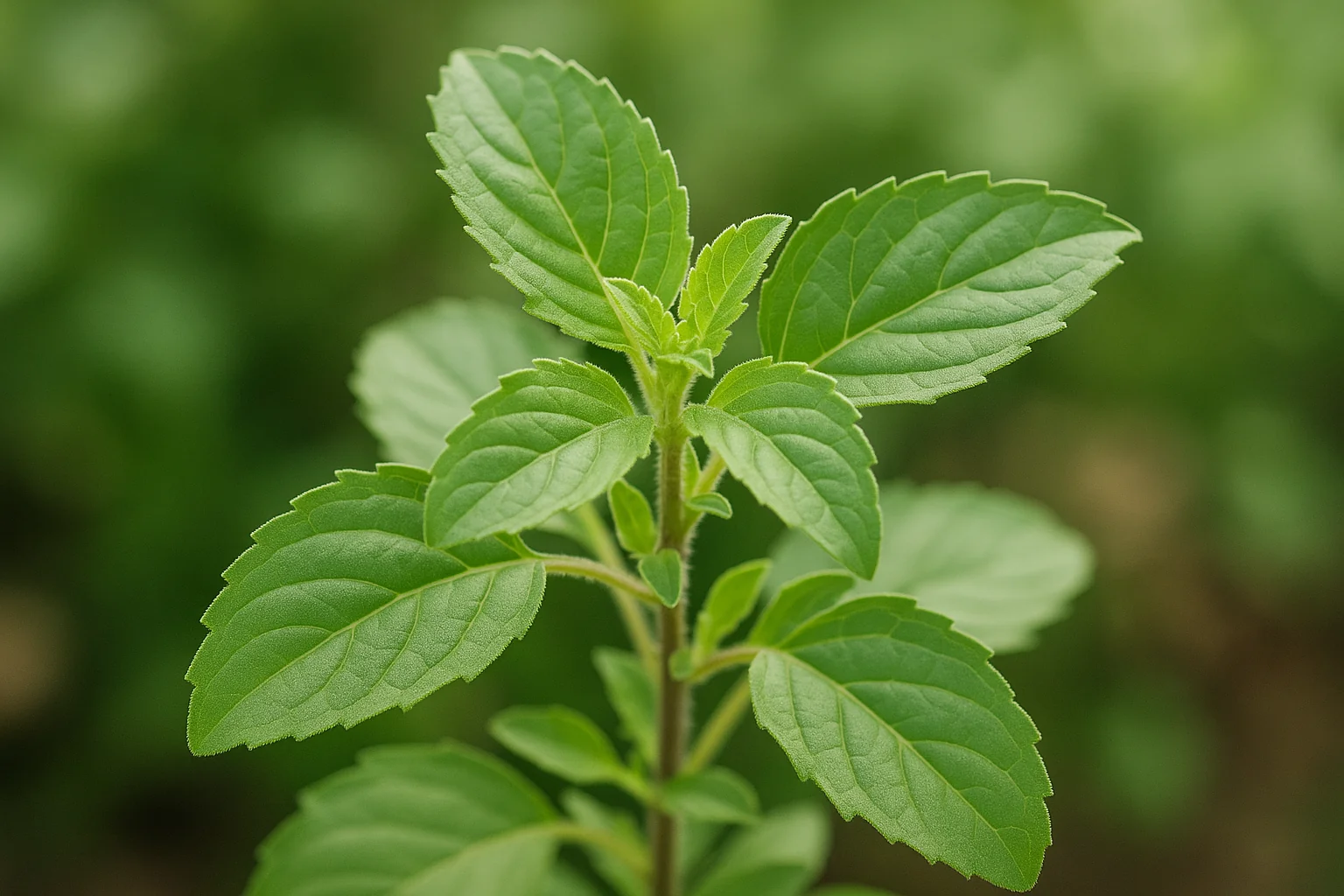
Tulsi, or holy basil (Ocimum tenuiflorum), it is a plant used in India for over 3000 years - as a medicinal herb, ceremonial plant, and daily beverage. Ayurveda describes it as rasayana: a life-prolonging agent and an adaptogen that restores the body's balance. Modern phytotherapy and pharmacology confirm some of these properties: clinical studies indicate the effect of tulsi on cortisol levels, cognitive functions, and inflammatory markers. This article answers the most common questions - how tulsi differs from regular basil, how and when to use it, what dose to take, and who might benefit from its regular supplementation.
KEY INFORMATION
• Tulsi (Ocimum tenuiflorum) is an Ayurvedic adaptogen with documented effects on stress and cognitive functions (Jamshidi, Cohen, Journal of Ayurveda and Integrative Medicine, 2017).
• Contains eugenol, ursolic acid, linalool, and vitexin - substances with adaptogenic and anti-inflammatory effects.
• Does not contain caffeine - can be consumed daily, including in the evening.
• Standard dosing of the extract: 300-600 mg/day for 4-12 weeks.
• Caution with diabetes medications (hypoglycemic effect) and anticoagulants (eugenol).
• Is not a substitute for culinary basil - it is a different species with a different composition.
What is tulsi and how does it differ from Italian basil?
Tulsi (Ocimum tenuiflorum, formerly O. sanctum) and Italian basil (Ocimum basilicum) are related plants belonging to the same mint family, but with distinctly different chemical compositions and action profiles. Italian basil is primarily a culinary herb - rich in linalool and methylchavicol, with a sweet, anise-like aroma. Tulsi has a more intense, clove-like scent due to its higher eugenol content and a much broader profile of adaptogenic substances.
In Hinduism, tulsi is a sacred plant - dedicated to Vishnu and considered an earthly manifestation of the goddess Tulasi. It is planted at the entrances of homes and temples, used in rituals, and consumed as a daily tea known as kadha. This religious and cultural role has led to the accumulation of empirical knowledge about its effects over millennia, which in turn has attracted the attention of contemporary researchers.
There are three main varieties of tulsi used medicinally: Rama (green leaves, mild), Krishna (purple leaves, more intense, higher eugenol concentration) and Vana (wild, the strongest). Supplements available in Poland most often contain standardized extract from the Rama strain or a blend of strains.
Active substances of tulsi and mechanisms of action
The adaptogenic properties of tulsi arise from the synergy of several groups of substances. Eugenol - the main component of the essential oil - acts anti-inflammatory by inhibiting COX-2 and NF-κB, a mechanism similar to ibuprofen, although much weaker. Ursolic acid has shown antioxidant, hepatoprotective, and glycemic-modulating effects in preclinical studies. Vitexin and orientin are flavonoids with adaptogenic and neuroprotective effects.
Review published in Journal of Ayurveda and Integrative Medicine in 2017 by Jamshidi and Cohen analyzed 24 clinical studies on tulsi and summarized the evidence of its effects (Jamshidi, Cohen, 2017). The authors found that tulsi has clinically confirmed properties in: reducing symptoms of stress and anxiety, improving working memory and reaction time, lowering fasting glucose levels in people with prediabetes, and exhibiting antimicrobial activity. The quality of evidence was rated as moderate - the studies were small but consistent in results.
| Area of action | Level of evidence | Responsible substance |
|---|---|---|
| Stress reduction / cortisol | Moderate (a few RCTs) | Vitexin, orientin, essential oil |
| Cognitive functions / memory | Moderate (a few RCTs) | Vitexin, linalool |
| Anti-inflammatory effect | Good (in vitro + in vivo) | Eugenol, ursolic acid |
| Glycemic modulation | Preliminary (clinical pilot studies) | Ursolic acid, beta-sitosterol |
| Antimicrobial action | Good (in vitro) | Eugenol, linalool, thymol |
How to use tulsi - tea, extract, dosage
Tulsi can be used in several forms, each with a slightly different profile of action. Tea is a traditional and easily accessible form - just 1-2 g of dried leaf per cup, steep for 5-10 minutes. Essential oils are better extracted at slightly higher temperatures, but steeping too long results in a bitter brew. You can drink 1-3 cups daily as a functional beverage.
A standardized extract in capsules provides a precise dose and convenience. Doses from clinical studies ranged from 300-2000 mg daily when used for 4-12 weeks. In practical supplementation, recommended doses are 300-600 mg/day. Adaptogenic effects (stress reduction, improved concentration) require regular use for at least 4 weeks.
The best time for tulsi is in the morning or afternoon - its gently energizing properties (from essential oils, not caffeine) suit active hours. Evening tulsi tea is possible, but for sleep purposes, it’s better to choose lemon balm or ashwagandha as an addition.
Tulsi for stress and cortisol - a review of clinical studies
The best-documented effect of tulsi is its impact on the HPA axis (hypothalamus-pituitary-adrenal) and cortisol levels - the stress hormone. A randomized double-blind study published in Journal of Ayurveda and Integrative Medicine 2012 involved 158 patients with general stress symptoms. Participants taking standardized tulsi extract (300 mg twice daily) for 6 weeks showed significant reductions in subjective stress symptoms, improved concentration and working memory, and normalization of metabolic parameters (blood glucose, lipid profile) compared to placebo (Jamshidi, Cohen, 2017 - review).
The mechanism of tulsi's adaptogenic action is multifaceted. Eugenol blocks COX-2 and NF-κB - the same inflammatory pathways activated by chronic stress. Vitexin and orientin act on GABA-A receptors - the same receptor as benzodiazepines, but in a much milder way and without the risk of addiction. Linalool, present in tulsi essential oil, exhibits anxiolytic effects in animal models.
A significant difference between tulsi and pharmaceutical anxiolytics: tulsi does not cause sedation or addiction. The adaptogenic effect involves normalizing the stress axis - tulsi helps the body respond better to stress rather than suppressing it. This makes it a safe supplement for long-term use in daily stress management for healthy adults.
Tulsi w kuchni i herbacie - tradycja jako punkt startowy
Daily tulsi tea (kadha) is a health practice in India passed down through generations. It is usually brewed with ginger, black pepper, and honey - creating a beverage that traditional Ayurvedic medicine treats as a preventive measure against infections and an immune booster. The combination of tulsi with ginger (gingerol) and pepper (piperine) may enhance the bioavailability of active substances through piperine's effect on intestinal absorption.
In Poland, tulsi tea is available in the form of dried leaves or tea bags. When brewing from dried leaves, it’s worth remembering that essential oils are best extracted at temperatures of 80-90°C for 5-8 minutes - too short brewing at too low a temperature results in a drink with a weaker aroma and lower concentration of bioactive substances. Fresh tulsi leaves, if available, can also be added to salads and smoothies.
Frequently Asked Questions
What is tulsi and how does it differ from regular basil?
Tulsi (Ocimum tenuiflorum) is a plant from the mint family, distinct from the popular Italian basil (Ocimum basilicum). It originates from India, where for thousands of years it has been a sacred plant in Hinduism - hence the name holy basil. It differs from culinary basil with a more intense clove-like aroma (higher eugenol content), a profile of bioactive substances, and adaptogenic effects. They are not interchangeable plants.
What does tulsi affect - what do studies confirm?
Clinical and preclinical studies indicate several documented areas: lowering cortisol levels and alleviating the stress response, supporting cognitive functions and concentration, anti-inflammatory effects through eugenol and ursolic acid, modulation of glycemia (pilot studies), and antimicrobial effects. The strongest evidence pertains to the adaptogenic influence on stress and cognitive functions.
How to dose tulsi - tea or extract?
Tulsi tea: 1-3 cups daily (1-2 g of dried leaf per cup). Standardized extract in capsules: usually 300-600 mg daily, according to the manufacturer's recommendation. Doses from clinical studies ranged from 300-2000 mg/day with the extract, used for 4-12 weeks.
Is tulsi safe for long-term use?
Tulsi consumed as tea or supplement in typical doses is considered safe for healthy adults. It may lower blood glucose levels - individuals with diabetes taking hypoglycemic medications should monitor their glucose levels. Eugenol in high doses may have anticoagulant effects - caution with blood-thinning medications. Consultation with a doctor is recommended during pregnancy.
How does tulsi compare to ashwagandha as an adaptogen?
Ashwagandha has stronger clinical evidence for reducing cortisol and improving physical endurance. Tulsi is better studied for cognitive functions and antimicrobial effects. Ashwagandha is more of an evening tonic, while tulsi is a more energizing daytime tea. Both can be used simultaneously without known interactions.
Where can you buy tulsi in Poland?
Tulsi is available in Poland in the form of tea (dried leaf or tea bags) in tea and health food stores, as well as in the form of extract in capsules in supplement stores. When choosing, it is worth checking whether the species Ocimum tenuiflorum and standardization of the extract are provided.
Does tulsi help with sleep?
Tulsi may indirectly support sleep quality through its adaptogenic action - lowering cortisol levels in the evening and reducing stress tension facilitate falling asleep. However, tulsi is not a classic sleeping aid and does not contain directly sedative ingredients. If you are looking for a plant strictly for sleep, ashwagandha or lemon balm would be a better choice.
Does tulsi contain caffeine?
No. Tulsi (Ocimum tenuiflorum) does not contain caffeine - it is a plant from the mint family, entirely distinct from tea (Camellia sinensis). It can be consumed in the evening without the risk of caffeine stimulation. The mild energizing effect of tulsi comes from eugenol, linalool, and essential oils, not from caffeine.
This article is for informational and educational purposes and does not replace consultation with a doctor. If you are pregnant, breastfeeding, taking medications, or have chronic conditions, consult the use of supplements or herbs with a specialist.
Author: Michał Waluk · Published: 2026-05-04 · Updated: 2026-05-04