
Sage for sweating: how to use it and does it help
Sage for sweating: doses from the EMA monograph, research results on hot flashes, and a mandatory warning about thujone and the limit of 6 mg per day.
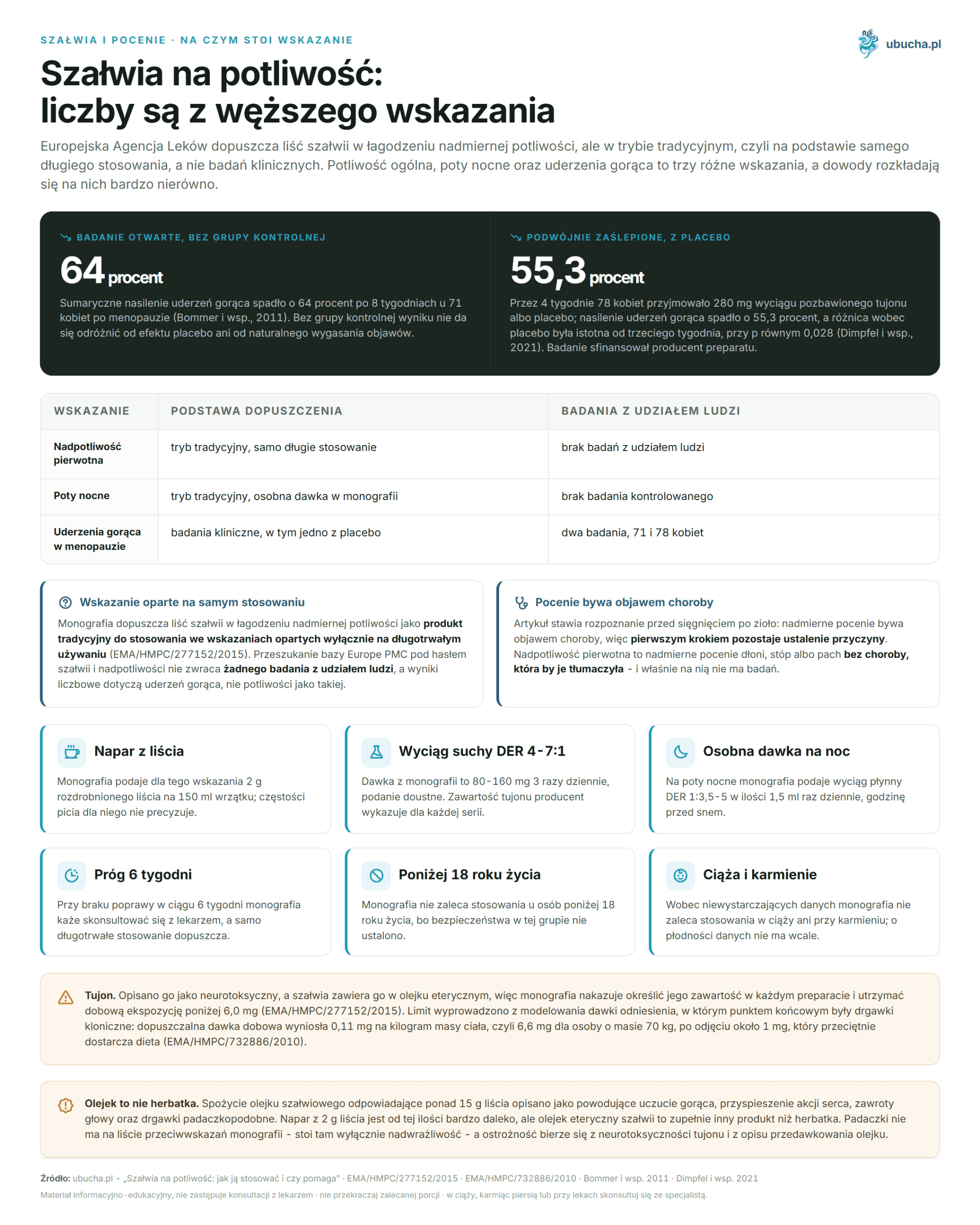
Sage (Salvia officinalis) is one of the few herbs for which the answer is yes, but with a caveat. The European Medicines Agency allows sage leaf for alleviating excessive sweating, but in a traditional manner, based solely on prolonged use rather than clinical studies. Hard numerical results pertain to something narrower: hot flashes in postmenopausal women. General sweating, night sweats, and hot flashes are three different indications, and the evidence is unevenly distributed among them. Excessive sweating can also be a symptom of a disease, so the first step remains to determine the cause rather than reaching for the herb. Below you will find dosages directly from the monograph, sample sizes from both studies, and a warning about thujone, which cannot be overlooked with this herb.
KEY INFORMATION
• The EMA monograph allows sage leaf for alleviating excessive sweating as a traditional product, based solely on long-term use (EMA/HMPC/277152/2015).
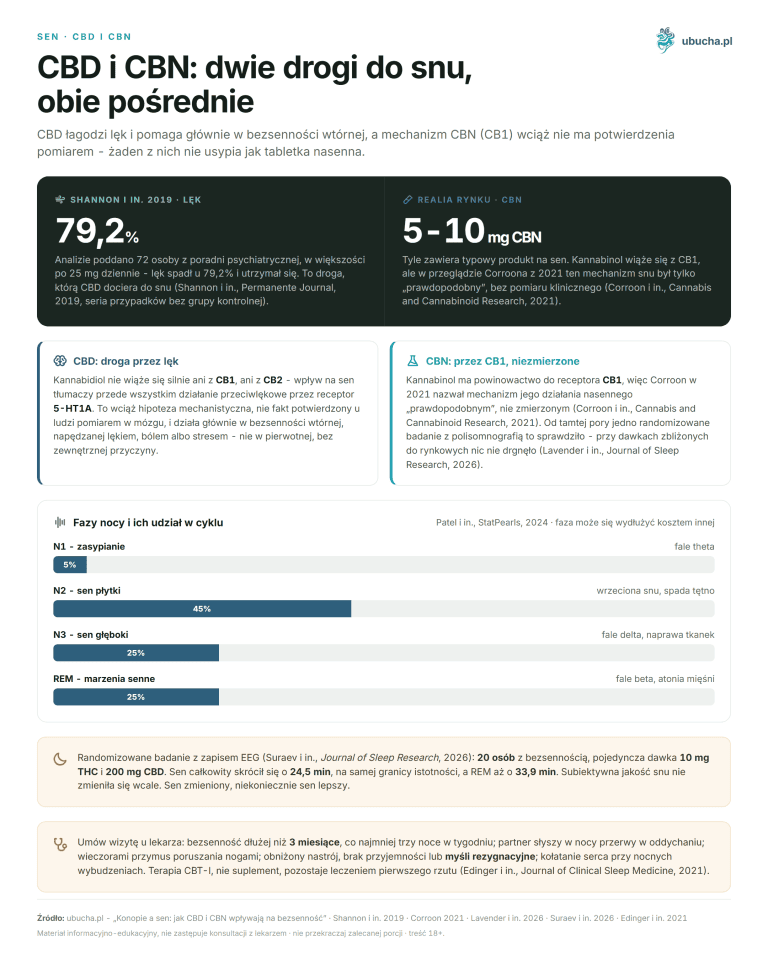
• The dosage from the monograph for an infusion is 2 g of crushed leaf per 150 ml of boiling water.
• Dry extract DER 4-7:1 is dosed at 80-160 mg three times a day, and for night sweats, the monograph specifies a liquid extract DER 1:3.5-5 in the amount of 1.5 ml one hour before sleep.
• If symptoms do not improve within 6 weeks of use, the monograph advises consulting a doctor.
• In an open study involving 71 women, the overall severity of hot flashes decreased by 64 percent after 8 weeks, but the study did not have a control group (Bommer et al., 2011).
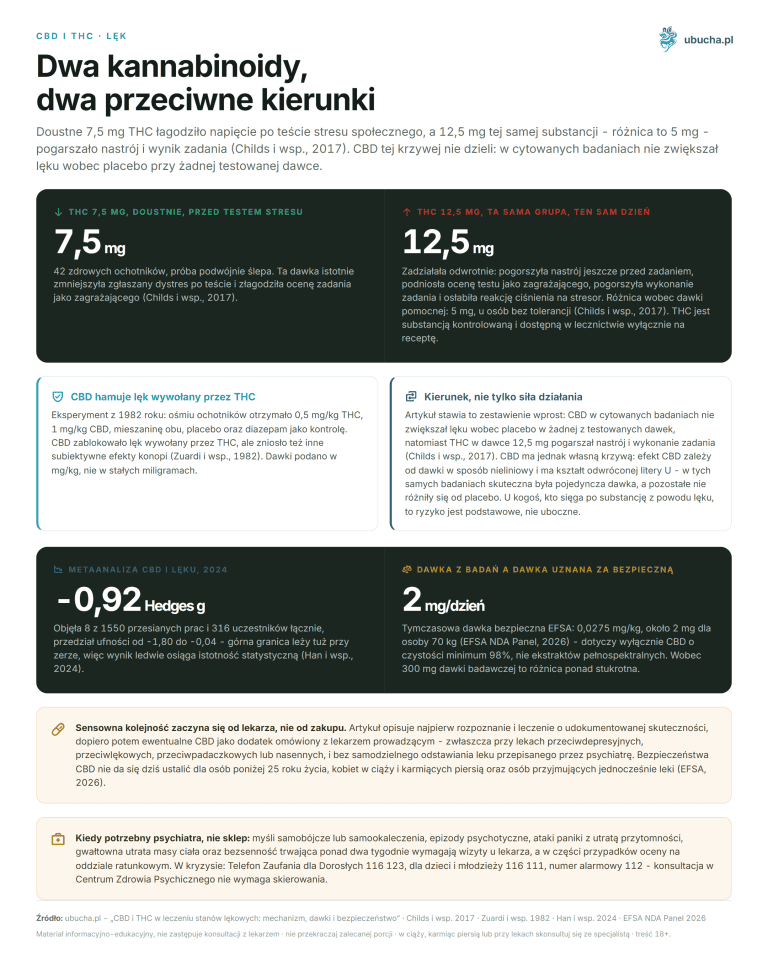
• Daily exposure to thujone from the product must be less than 6.0 mg (EMA/HMPC/277152/2015).
Does sage really reduce sweating?
It depends on which type of sweating you are asking about. There are clinical studies on hot flashes during menopause, including one with a placebo. For night sweats, the EMA monograph provides separate dosing, but without a study to confirm it. For primary hyperhidrosis not related to menopause, I found not a single clinical study.
Distinguishing these three situations is more important here than usual, because in commercial descriptions they merge into one term about sweating, while the state of knowledge for each of them looks different.
Primary hyperhidrosis is excessive sweating of the hands, feet, or armpits without a disease that would explain it. Searching the European PMC database under the terms sage and hyperhidrosis does not return any studies involving humans. The indication from the monograph is based solely on the tradition of use, which the monograph states directly: a traditional product for indications based solely on long-term use.
Night sweats have their own dosage in the monograph, given one hour before sleep, which in itself indicates intended use. However, the basis for approval remains the same traditional mode, without a controlled study.
Hot flashes during menopause are the only one of these indications for which there are numerical results, and these are often stretched in advertising to all the others.
What studies support sage for hot flashes?
Two, of distinctly different strength. The first was open, without a control group. The second had randomization and a placebo, but it was funded by the manufacturer of the studied product. Both pertain to postmenopausal women, not sweating as such.
In the open study, conducted in eight Swiss practices, 71 women participated, and 69 were included in the analysis. The average age was 56.4 years, and the condition for participation was at least five hot flashes per day. Participants took one tablet of fresh sage leaf extract daily for 8 weeks. The overall severity score of hot flashes decreased by 50 percent after 4 weeks and by 64 percent after 8 weeks, with p below 0.0001 (Bommer et al., Adv Ther, 2011). The lack of a control group means that this result cannot be distinguished from the placebo effect or from the natural resolution of symptoms.
The second study was double-blind and placebo-controlled. The analysis according to the intention-to-treat included 78 women aged 48 to 65, who took 280 mg of thujone-free extract or placebo for 4 weeks. The score on the hot flash severity scale decreased by 55.3 percent in the sage group, and the difference compared to placebo was significant from the third week, with p equal to 0.028. A decrease of at least half was achieved by 59.1 percent of women in the sage group compared to 26.9 percent in the placebo group (Dimpfel et al., Heliyon, 2021). The study was funded by the product manufacturer, and one of the co-authors is an employee of the company, which must be taken into account when evaluating the result.
How to use sage for sweating?
The dosages are provided by the EMA monograph and this is the only place where they are more than just customary. For the indication of excessive sweating, the monograph lists an infusion, dry extract, and two liquid extracts, each with its own dosage and method of administration. All are taken orally.
| Form | Single dose | Frequency | Note |
|---|---|---|---|
| Infusion of crushed leaf | 2 g in 150 ml of boiling water | the monograph does not specify for this indication | podanie doustne |
| Dry extract DER 4-7:1 | 80-160 mg | 3 times a day | podanie doustne |
| Liquid extract DER 1:3.5-5 | 0.5-1 ml in liquid | 3 times a day | podanie doustne |
| Liquid extract DER 1:3.5-5, night sweats | 1.5 ml in liquid | once a day, an hour before bedtime | separate entry in the monograph |
| Liquid extract DER 1:4.5 | 2 ml | 3 times a day | podanie doustne |
The monograph does not recommend use in individuals under 18 years of age. If there is no improvement within 6 weeks, it is advised to consult a doctor, although prolonged use for this indication is permitted (EMA/HMPC/277152/2015). We have gathered dried sage and other brewing materials in the category herbs.
Why is there a warning about thujone with sage?
Because thujone is described as neurotoxic, and sage contains it in its essential oil. The EMA monograph requires determining the thujone content in each preparation and keeping daily exposure below 6.0 mg. It is also recommended to choose chemotypes with low levels of this compound.
Where did the 6 mg limit come from? The Committee on Herbal Medicinal Products based it on modeling the reference dose from a long-term toxicity study, where the endpoint was clonic seizures. The calculated acceptable daily dose was 0.11 mg per kilogram of body weight, which equals 6.6 mg for a person weighing 70 kg. About 1 mg, which is typically provided by diet, was subtracted from this value, resulting in the exposure limit from the medicinal product (EMA/HMPC/732886/2010).
Previous findings were stricter. For preparations made from sage leaves, there was a limit of 5 mg per person with a maximum duration of use of 2 weeks. The 2016 monograph did not maintain this time limitation for the indication of sweating: it allows for prolonged use and only sets a threshold of 6 weeks for consultation if there is no improvement. The rigor shifted from time to the composition of the preparation.
That thujone is not a theoretical threat is evident in the monograph's section on overdose. Consumption of sage oil corresponding to over 15 g of leaves has been described as causing a feeling of heat, increased heart rate, dizziness, and seizure-like convulsions. An infusion made from 2 g of leaves is far from this amount, but sage essential oil is a completely different product than tea and should not be confused.
Who should not use sage for sweating?
Pregnant and breastfeeding women, individuals under 18 years of age, and those allergic to the raw material. The EMA monograph formally lists one contraindication, which is hypersensitivity to the active substance, while other restrictions are noted as a lack of recommendation due to insufficient data.
Safety during pregnancy and breastfeeding has not been established, so due to insufficient data, the monograph does not recommend use during these periods. There is no data on the impact on fertility at all. Use in children and adolescents under 18 years of age has also not been established for the same reason.
Epilepsy requires a separate statement, as it is sometimes listed as a contraindication without citing a source. It is not on the list of contraindications in the monograph; only hypersensitivity is mentioned there. The basis for caution is something else: the neurotoxicity of thujone and the description of sage oil overdose with seizure-like convulsions. The public position on thujone adds that for sensitive groups, including pregnant women and children, there is a lack of studies to assess the effects of exposure, so their exposure should be minimized. In the case of diagnosed epilepsy, leave the decision to the doctor instead of relying on the label.
If you are looking for a comparison with other plants used for hot flashes, check, what Cochrane says about the grapevine and what studies show about flaxseed. A broader action plan for menopause is outlined in our post about menopause supplements.
Frequently Asked Questions
Does sage help with non-menopausal sweating?
There are no clinical studies on this. The EMA monograph includes the indication for alleviating excessive sweating, but in a traditional manner, based solely on prolonged use. The numerical results pertain exclusively to hot flashes in postmenopausal women.
How to brew sage for sweating?
The EMA monograph recommends 2 g of crushed leaves per 150 ml of boiling water, prepared as an infusion. The frequency of consumption for this indication is not specified in the monograph, unlike for digestive issues, where it indicates three times a day.
How long does it take for sage to start working on sweating?
The monograph sets a threshold of 6 weeks: if symptoms do not improve within this time, it advises consulting a doctor. In an open study on hot flashes, the overall severity decreased by half after 4 weeks (Bommer et al., 2011).
Can sage be used long-term?
The EMA monograph allows for long-term use for this indication, referring to warnings. The condition remains to keep daily exposure to thujone below 6.0 mg, and the manufacturer must demonstrate its content for each batch of the product.
Does sage help with night sweats?
The monograph provides a separate dosage for night sweats: a liquid extract with a ratio of 1:3.5-5 in the amount of 1.5 ml an hour before sleep. The basis remains the tradition of use, as studies with randomization concerned hot flashes, not the night sweats themselves.
Is sage safe during pregnancy and breastfeeding?
Its use is not recommended. Safety during pregnancy and breastfeeding has not been established, and the EMA monograph, due to insufficient data, advises against use during both periods. There is no data on its impact on fertility.
What are the risks of thujone found in sage?
Thujone has been described as neurotoxic. The basis for the limit of 6 mg per day was modeling based on clonic seizures in a long-term study, with a calculated acceptable dose of 0.11 mg per kilogram of body weight (EMA/HMPC/732886/2010).
Is sage safe for epilepsy?
The EMA monograph does not list epilepsy among contraindications, as only hypersensitivity is on that list. Caution arises from the neurotoxicity of thujone and from reports of sage oil overdose, which can lead to seizure-like convulsions.
The article is informational and educational in nature and does not replace consultation with a doctor. If you are pregnant, breastfeeding, taking medications, or have chronic conditions, consult the use of supplements or herbs with a specialist.
Author: Michał Waluk · Published: 2026-08-24 · Updated: 2026-08-24