


Flaxseed for cholesterol and menopause symptoms - what studies show
Flaxseed for cholesterol and menopause symptoms: a reliable answer based on research. u Bucha.
Flaxseed is one of those products that gained a reputation as a "superfood" before science could confirm it - but in this case, research has indeed supported popular beliefs. Solid meta-analyses regarding blood lipids and promising data for menopause symptoms back flaxseed. It is not a miracle cure, but it is a food product with documented biological effects at the appropriate dose and form of administration. In this article, we discuss what has been scientifically confirmed and what remains in the realm of hypotheses.
KEY INFORMATION
• A meta-analysis of 28 randomized studies showed that flaxseed reduced LDL cholesterol by an average of 0.10 mmol/l, and the effect was stronger with whole/ground seeds than with isolated oil (Pan et al., American Journal of Clinical Nutrition, 2009).
• Flaxseed lignans (SDG) as phytoestrogens reduced the frequency and severity of hot flashes by about 20-30% in clinical studies (Cornish et al., Menopause, 2009).
• Effective dose for cholesterol: 30-50 g of ground seeds daily - whole seeds are significantly less bioavailable.
• EFSA approved a health claim for 10 g of flax fiber for proper bowel function.
How flaxseed lowers cholesterol - three mechanisms
The meta-analysis by Pan and colleagues from 2009, which included 28 randomized clinical trials and 1539 participants, is the most comprehensive data compilation on flaxseed and blood lipids. The result was statistically significant: flaxseed lowered LDL cholesterol by 0.10 mmol/l and total cholesterol by 0.10 mmol/l compared to control (Pan et al., American Journal of Clinical Nutrition, 2009). The effect was stronger in postmenopausal women and in individuals with initially higher cholesterol. A key observation was that whole or ground seeds worked significantly better than isolated flaxseed oil - suggesting that the lipid effect is due not only to omega-3 fatty acids but primarily to fiber and lignans.
The fiber mechanism is the best documented. Flax mucilage (a mixture of soluble polysaccharides) in the small intestine binds bile acids, preventing their reabsorption into the bloodstream. The liver, to replenish the pool of bile acids, must synthesize new ones from cholesterol - which lowers its level in the blood (Kristensen et al., European Journal of Clinical Nutrition, 2012). This is the same mechanism through which ion-exchange resin drugs (cholestyramine) work.
The lignan mechanism is more complex. SDG (secoisolariciresinol diglucoside) is converted by gut bacteria into enterodiol and enterolactone - compounds with weak estrogen-like activity that may modulate LDL receptor expression in the liver and increase LDL clearance from the blood. The third mechanism is ALA (alpha-linolenic acid omega-3), which through the synthesis of EPA and DHA can modulate the lipid profile, although the conversion of ALA to EPA is inefficient in humans (below 10%).
Flaxseed and menopause - lignans as phytoestrogens
Hot flashes are one of the most troublesome symptoms of menopause, affecting about 75% of women during the transition period. The mechanism is complex - it involves destabilization of thermoregulation at the hypothalamic level with a sharp drop in estrogen. Phytoestrogens, which are plant compounds with weak estrogen-like activity, have been studied for years as an alternative to hormone replacement therapy.
Flaxseed lignans become enterolactone and enterodiol after intestinal metabolism - phytoestrogens from the lignan group. Cornish and colleagues conducted a randomized controlled trial in 2009 on 87 postmenopausal women and showed that 40 mg of SDG extract daily for 3 months reduced the frequency of hot flashes by 28% and their severity by 26% compared to placebo (Cornish et al., Menopause, 2009). This is a moderate effect - less than with hormone replacement therapy (HRT), but significant for women who cannot use HRT.
We noted that the phytoestrogenic effect of lignans is significantly weaker than that of soy isoflavones - lignans exhibit about 100-1000 times weaker activity on estrogen receptors than estradiol, while soy isoflavones are about 100-10,000 times weaker. Nevertheless, their clinical effect is measurable, likely due to a selective estrogen receptor modulator (SERM-like effect) - blocking ER-alpha receptors and activating ER-beta, which provides a different spectrum of action than endogenous estrogen.
| Ingredient | Action | Strength of evidence |
|---|---|---|
| Fiber (flax mucilage) | Binding of bile acids → lowering LDL | Silna - meta-analiza RCT |
| Lignans (SDG) | Phytoestrogens → hot flashes, LDL | Umiarkowana - kilka RCT |
| ALA (omega-3) | Modulation of lipid profile | Weak - low conversion to EPA/DHA |
| Flaxseed protein | Effect on blood pressure | Preliminary - small studies |
Dosage and form - whole, ground, or oil?
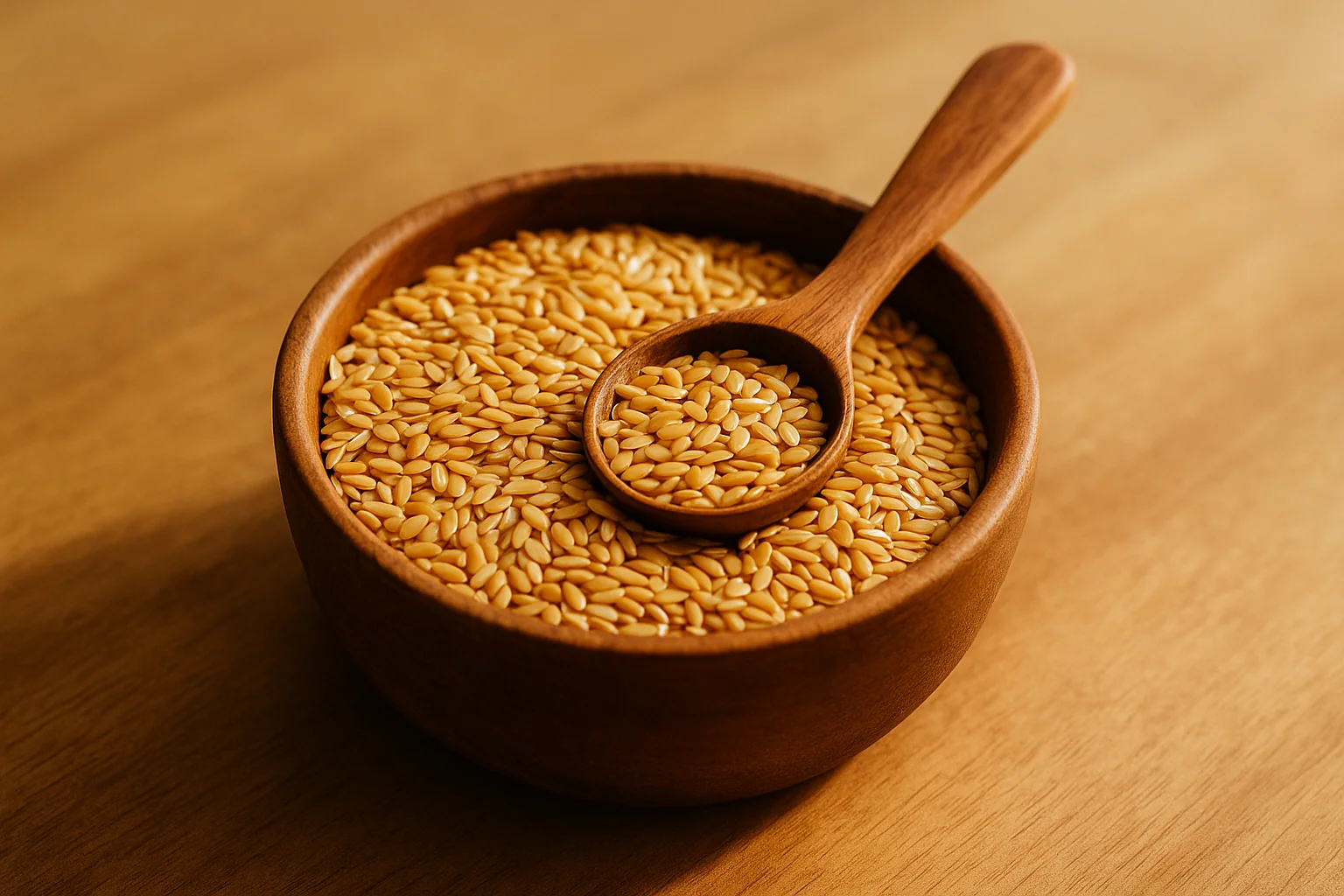
The form of flaxseed administration is fundamental to the effect. The flaxseed hull is resistant to digestive juices - whole seeds pass through the intestine almost without releasing lignans and internal fiber. Ground seeds expose the flesh to digestive enzymes, which significantly increases the bioavailability of both fiber and SDG.
Clinical studies on cholesterol used 30-50 g of ground seeds daily - about 3-5 tablespoons. This dose is clearly higher than that used by most consumers. For comparison: a tablespoon (10 g) of ground seeds added to oatmeal does provide some fiber and lignans, but may not reach the dose threshold visible in RCTs. For the effect on hot flashes, the Cornish study used an extract corresponding to about 25-30 g of seeds daily.
Ground flaxseed oxidizes quickly after being crushed due to its high ALA content - a polyunsaturated fat. It should be ground just before consumption or stored ground in an airtight container in the refrigerator for no longer than 7 days. Flaxseed oil retains ALA but contains virtually no fiber or lignans - and that is why in Pan's meta-analysis it showed a weaker effect on LDL than whole seeds.
Frequently Asked Questions
Does flaxseed really lower cholesterol?
Yes - a meta-analysis of 28 randomized clinical trials showed that flaxseed significantly reduced LDL cholesterol by an average of 0.10 mmol/l and total cholesterol compared to placebo. The effect was stronger when using whole or ground seeds than with isolated flaxseed oil (Pan et al., American Journal of Clinical Nutrition, 2009).
What component of flaxseed lowers cholesterol?
The main mechanisms are soluble fiber (flax mucilage) binding bile acids in the intestine and lignans (SDG). Fiber forces the synthesis of new bile acids from cholesterol in the liver. Flax fiber has received EFSA approval for normal intestinal function at 10 g daily (Kristensen et al., European Journal of Clinical Nutrition, 2012).
How much flaxseed should be eaten daily to lower cholesterol?
Clinical studies used 30-50 g of ground seeds daily as an effective dose. Ground seeds show higher efficacy than whole ones - the intact hull limits the absorption of lignans and internal fiber. A tablespoon (10 g) daily is a good start, but may not reach the dose threshold from RCT studies.
Does flaxseed help with hot flashes during menopause?
Flaxseed lignans as phytoestrogens reduced the frequency of hot flashes by about 28% and their severity by about 26% in a randomized clinical trial. The effect is moderate - less than with hormone replacement therapy, but clinically significant for women for whom HRT is not indicated (Cornish et al., Menopause, 2009).
Whole or ground flaxseed - which works better?
Ground seeds show higher absorption of lignans and fiber than whole ones. The flaxseed hull is resistant to digestion - whole seeds pass through the intestine with limited release of active ingredients. Flaxseed should be ground just before consumption or stored ground in the refrigerator, as ALA quickly oxidizes after being crushed.
Is flaxseed safe with hypothyroidism?
Clinical studies using 30-50 g daily did not show significant changes in TSH or fT4. Caution is advised with very high doses (above 60 g) or simultaneous use of thyroid medications - it is best to maintain a 4-hour interval between the medication and flaxseed, due to possible delays in absorption caused by fiber.
Can flaxseed be eaten daily long-term?
Yes - clinical studies lasting up to 3 months with doses of 30-50 g per day did not show serious adverse effects. Gastrointestinal discomfort (bloating, diarrhea) may occur with a sudden introduction of large amounts of fiber - it is recommended to gradually increase the dose over 2 weeks. EFSA has not established a tolerable upper intake level (UL) for flaxseed.
Does flaxseed interact with medications?
Flaxseed fiber may slow the absorption of medications taken simultaneously. Flaxseed should be consumed at least 2 hours before or after oral medications. Special caution applies to diabetes medications, anticoagulants (ALA has weak anti-aggregating effects), and thyroid medications (Pan et al., American Journal of Clinical Nutrition, 2009).
This article is for informational and educational purposes and does not replace consultation with a doctor. If you are pregnant, breastfeeding, taking medications, or have chronic conditions, consult the use of supplements or herbs with a specialist.
Author: Michał Waluk · Published: 2026-05-04 · Updated: 2026-05-04