
Motherwort for the heart and nerves - how to use (FAQ)
Leonurus cardiaca for the heart and nerves: answers to frequently asked questions and what studies say. u Bucha.
Common motherwort (Leonurus cardiaca L.) is one of the few herbs that have confirmed effects on both the cardiovascular and nervous systems - hence its Latin name, literally "lion's heart". It contains the alkaloid leonuryna, iridoids, and flavonoids with calming, antiarrhythmic, and moderately hypotensive effects. The European Medicines Agency has granted Leonurus cardiaca the status of "well-established use" for mild symptoms related to the heart and nervousness (EMA, Leonuri cardiacae herba). This article answers the most common questions about Leonurus cardiaca - how to use it, when it works, and for whom it is contraindicated.
KEY INFORMATION
• Leonurus cardiaca has an EMA monograph of "well-established use" - one of the best-documented herbs for heart palpitations related to stress and anxiety (EMA).
• Leonuryna (alkaloid) acts on GABAergic receptors and slows the heart rate - a calming effect on the central nervous system.
• Absolutely contraindicated in pregnancy - stimulates the uterus and may cause miscarriage.
• Interactions with digoxin, beta-blockers, and warfarin - when taking cardiological medications, use only under medical supervision.
• EMA recommends use for a maximum of 4 weeks without consultation; for longer use or heart diseases - a mandatory medical visit.
Leonurus cardiaca - what works in it and how?
The herb of Leonurus cardiaca collected during flowering contains several classes of active compounds. The alkaloid leonuryna (0.01-0.04% dry weight) is the key component responsible for its effects on the heart and nervous system - it exhibits agonistic activity at GABA-A receptors, which explains its calming effects similar to valerian, but with a different chemical profile (PubMed, 2011). Leonurine also exhibits tocolytic effects (inhibits uterine contractions in non-pregnant women) and moderately hypotensive effects by relaxing the smooth muscles of blood vessels.
Ikarydyna and stachydryna (betaine) have cardiotonic and antiarrhythmic effects - studies on isolated hearts have shown that the alkaloid fractions of Leonurus cardiaca stabilize the rhythm and reduce the hyperreactivity of the sinoatrial node. This mechanism is different from that of Cinnamomum used for the heart in Eastern tradition, but complementary to the action of beta-blockers in stress-related palpitations.
A rarely described feature of Leonurus cardiaca: it acts more slowly than valerian in acute stress but more durably with regular use. Valerian provides a "fire extinguishing" effect - quick, short. Leonurus cardiaca used for 2-3 weeks gradually reduces the baseline level of nervous system arousal, leading to fewer episodes of heart palpitations during the day. This herb is for "regular mode", not for immediate relief.
The flavonoids of Leonurus cardiaca - rutin, isorhamnetin, quercetin - have antioxidant and endothelial protective effects. Animal studies have shown that the extract of Leonurus cardiaca reduces cardiac muscle hypertrophy in hypertension and reduces markers of oxidative stress in cardiac tissue. These effects are not confirmed by large RCTs in humans, but they create a biologically plausible model of cardioprotective action.
Stachydrine (proline betaine), an iridoid alkaloid present in motherwort, has been studied for cardioprotection in models of myocardial ischemia. In a study on rats, stachydrine administered before experimental myocardial infarction reduced the size of the necrotic zone and lowered levels of cardiac injury markers (CK-MB, troponin I) compared to the control group. The mechanism involves inhibiting cardiomyocyte apoptosis via the Bcl-2 pathway and limiting calcium influx during reperfusion (PMC3603279). These results pertain to animal models and do not directly translate to human myocardial infarction treatment, but they biologically justify the traditional use of motherwort in heart diseases.
How to use motherwort - dosage in infusion, tincture, and capsules
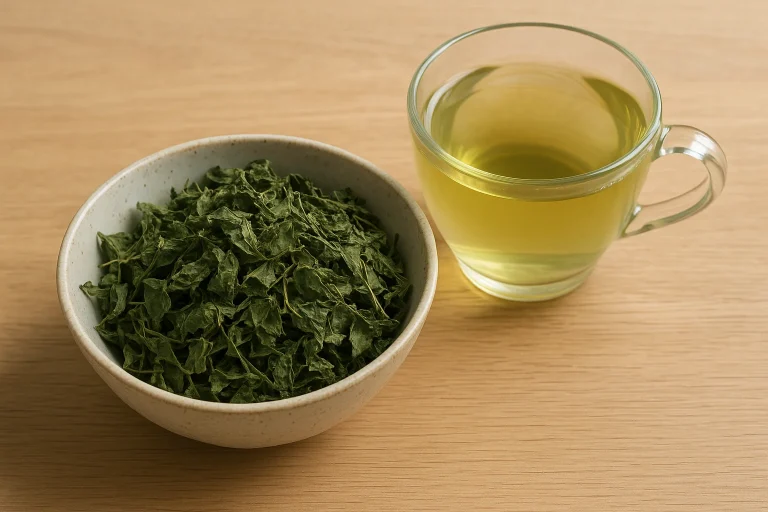
The EMA monograph specifies three approved forms of using motherwort. Infusion of the herb: 1.5-2 g of dried flowering tops in 200 ml of boiling water, steep covered for 10-15 minutes, 2-3 times a day between meals. The infusion has a bitter, earthy taste - it can be sweetened with honey. Tincture (1:5, 45% alcohol): 2-4 ml twice a day, diluted in a small amount of water. Dry extract in capsules: 100-300 mg of dry extract corresponding to 1.5-2 g of the herb, 2-3 times a day.
| Form | Daily dose | Frequency | Notes |
|---|---|---|---|
| Herbal infusion | 3-6 g (w 2-3 porcjach) | 2-3× dz. | Bitter taste; sweeten with honey |
| Tincture 1:5 | 4-8 ml (w 2 porcjach) | 2× daily. | Dilute in water |
| Capsules (dry extract) | 200-600 mg of extract | 2-3× dz. | Check standardization for leonurine |
| Duration of use | Up to 4 weeks without consultation | - | Przy chorobach serca - zawsze z lekarzem |
Data updated: May 4, 2026
Motherwort vs. other herbs for stress and heart - how do they compare?
Valerian is the first association when it comes to herbs for nerves, but motherwort occupies a different niche. Valerian acts stronger and faster in cases of acute anxiety and insomnia - effect after one dose. Motherwort builds its effect over 2-3 weeks of regular use and is indicated for a combination of symptoms: palpitations + anxiety + tension-type headache. It does not cause morning grogginess (an effect that valerian can cause in some individuals at higher doses).
Hawthorn (Crataegus) is the second herb with documented cardiological effects. It acts more strongly in a cardiotonic and cardioprotective manner than motherwort - it is indicated in stable heart failure NYHA I-II (with a doctor). Motherwort is less cardiotropic, more neurotropic - better for functional palpitations related to stress than for organic heart disease.
Practical observation: motherwort is an exceptionally good choice for individuals whose stress manifests primarily through the heart - palpitations, the feeling of "heart skipping," accelerated rhythm during calm activities. Unlike valerian, it does not induce drowsiness during the day and does not impair concentration, making it suitable for use in the morning and afternoon.
Ashwagandha (Withania somnifera) is another adaptogenic herb that patients often compare with leonurus. The difference is clear: ashwagandha primarily affects the HPA axis (hypothalamus-pituitary-adrenal), lowering cortisol levels and reducing reactivity to chronic stress. Leonurus, on the other hand, acts directly on the cardiovascular system and GABAergic receptors, not significantly modifying the cortisol axis. In practice, they can be combined: ashwagandha in the morning (an adaptogen building resilience to stress over several weeks), leonurus in the evening or during moments of palpitations (a quicker calming effect on heart rhythm). These are two different tools, not substitutes.
Motherwort in clinical studies - what do RCTs show?
Clinical evidence for leonurus is modest, but existing studies indicate a real effect for a specific patient profile. Shikov et al. (2016) published in Phytomedicine a randomized controlled trial on patients with hypertension and accompanying anxiety: a standardized extract of motherwort reduced heart rate and decreased subjective anxiety levels compared to placebo after 4 weeks of use (PubMed 27212991). The effect was moderate but statistically significant, particularly in the group of patients with a baseline heart rate above 80 beats per minute.
However, the evidence base has clear limitations. Most clinical studies on motherwort come from Russia and Eastern Europe, where the tradition of phytotherapy is stronger than in Western countries. The trials are small (usually below 100 participants), and the methodology does not always meet contemporary CONSORT standards for RCTs. None of the studies have been replicated in a large sample by independent Western centers. The EMA granted the status of "well-established use" mainly based on years of clinical documentation and alignment with biological mechanisms, rather than a series of high-quality RCTs. Motherwort should be used with appropriate expectations: an herb with a good safety history and a moderate, but real effect for the selected symptom profile.
Frequently Asked Questions
How to use motherwort for palpitations and nerves?
Infusion: Pour 200 ml of boiling water over 1.5-2 g of dried flowering tops of motherwort, cover, and steep for 10-15 minutes. Drink 2-3 times a day between meals. The calming effect for palpitations appears 30-60 minutes after the dose. The EMA approves use for a maximum of 4 weeks without medical consultation (EMA).
Does motherwort lower blood pressure?
It exhibits moderate hypotensive effects by relaxing smooth muscle in blood vessels - leonurine and icariin. The effect is weaker than that of hypotensive medications and does not replace pharmacotherapy. In individuals taking antihypertensive medications, motherwort may enhance their effects - medical consultation is required before combining to avoid excessive drops in blood pressure.
Who should not use motherwort?
Absolute contraindications: pregnancy - motherwort stimulates the uterus and may cause miscarriage. Breastfeeding - lack of safety data. Important precautions: individuals with bradycardia, conduction blocks, or taking digoxin, beta-blockers, and warfarin - only under the supervision of a cardiologist. Children under 12 years - lack of safety data, do not use.
Does motherwort help with insomnia?
Yes, for insomnia caused by anxiety and palpitations. Leonurine acts on GABAergic receptors and slows the heart rate, which facilitates falling asleep during nervous excitement (PubMed, 2011). For insomnia without an anxiety component (e.g., early waking), melatonin or valerian will be more effective. Motherwort does not cause morning grogginess at therapeutic doses.
Does motherwort interact with heart medications?
Yes - this is the most significant clinical interaction. Motherwort may enhance the effects of cardiac glycosides (digoxin), antiarrhythmic medications, and beta-blockers through additive inhibition of heart rhythm. With warfarin: leonurine affects platelet aggregation, which may enhance anticoagulant effects and increase the risk of bleeding. Monitoring INR is necessary when combining motherwort with warfarin.
Can motherwort be combined with valerian?
Yes, this combination is justified and often used in ready-made herbal preparations available in pharmacies. Valerian and motherwort act complementarily: valerian more strongly inhibits the central nervous system through GABA-A and adenosine receptors, while motherwort adds a cardiovascular component (slowing the rhythm, hypotensive effect). Indication profile: anxiety with accompanying palpitations and difficulties falling asleep. The EMA monograph for both herbs does not mention their mutual interaction as clinically significant, and the combination is allowed in compound preparations (EMA). With prescription sleeping or calming medications: medical consultation is required before combining.
How long does Leonurus cardiaca work - when to feel the effects?
The response depends on what you expect. In an acute episode of heart palpitations related to stress, the calming effect on heart rhythm usually appears within 30-60 minutes after taking the infusion or tincture - leonurine acts relatively quickly on the sinoatrial node. However, do not expect dramatic changes after the first dose: the effect is subtle and involves dampening excessive stimulation rather than sedation. With regular use, building a baseline calming effect on the central nervous system takes 2-3 weeks. This is a typical pattern for adaptogenic and neurotropic herbs: the first days bring little difference, after two weeks patients usually report fewer episodes of palpitations and better tolerance of stressful situations.
This article is for informational and educational purposes and does not replace consultation with a doctor. If you are pregnant, breastfeeding, taking medications, or have chronic conditions, consult the use of supplements or herbs with a specialist.
Author: Michał Waluk · Published: 2026-05-04 · Updated: 2026-05-04