
Red eyes after marijuana and CBD - where they come from and how to remedy it (FAQ)
Red eyes after marijuana and CBD: answers to the most common questions and what studies say. u Bucha.
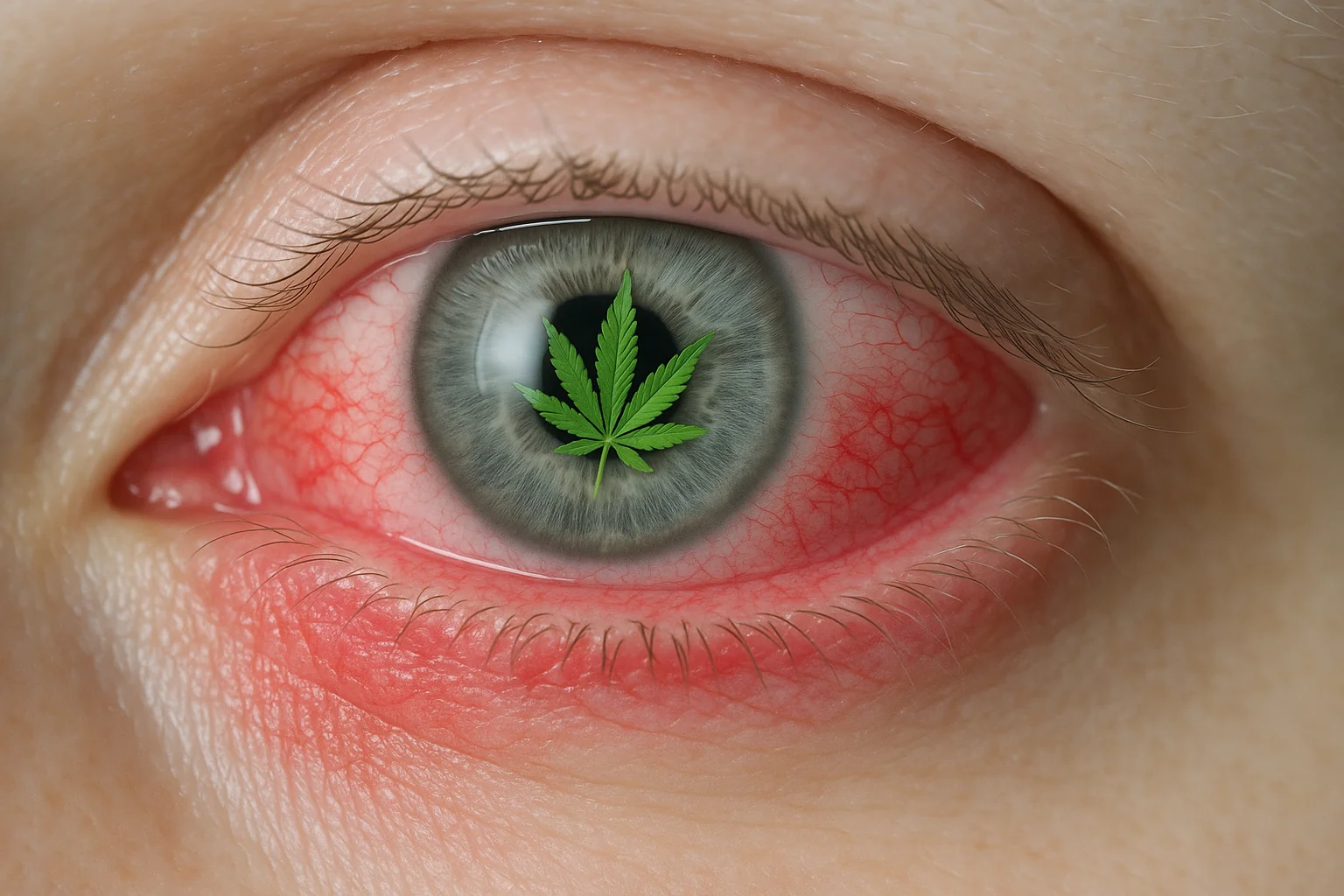
Red, bloodshot eyes are one of the most recognizable and - for many users - most troublesome effects of marijuana. They reveal themselves, especially at the wrong moment. Meanwhile, the mechanism behind this phenomenon is simple and well understood - it has nothing to do with irritation or allergy, as many people believe. This article explains the biology of red eyes after THC and CBD and suggests how to effectively address it.
KEY INFORMATION
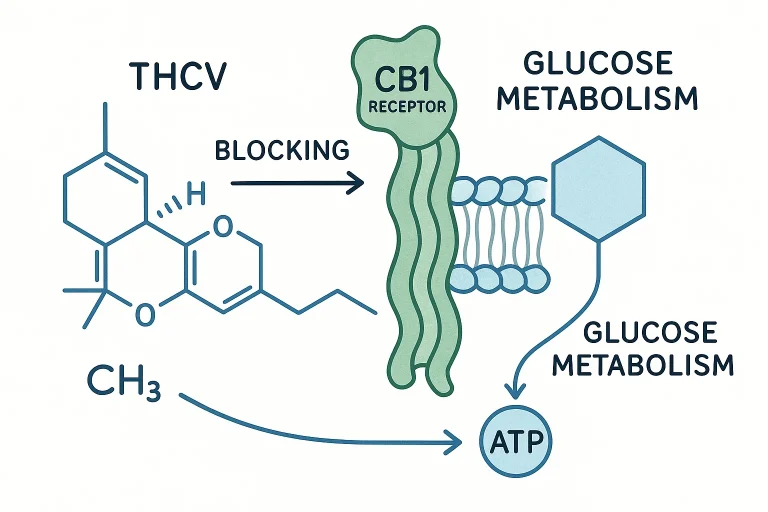
• Red eyes after THC are a result of vasodilation - the expansion of blood vessels in the eyeballs through the activation of CB1 receptors in the smooth muscles of the vessels.
• CBD rarely causes noticeable redness - it does not strongly activate the CB1 receptors responsible for this effect.
• Eye drops with naphazoline or oxymetazoline eliminate redness in 5-10 minutes.
• The effect is cosmetic and harmless - THC simultaneously lowers intraocular pressure, which is being studied as a potential glaucoma therapy.
Dlaczego THC powoduje czerwone oczy - mechanizm wazodylatacji
Red eyes after marijuana are a direct effect of vasodilation - the expansion of blood vessels. THC activates CB1 receptors present in the smooth muscles of blood vessels throughout the body, causing them to relax and widen. In the eyeballs, this means increased blood flow through the tiny vessels of the sclera (the white part of the eye), which become visibly red and dilated. This is the same mechanism that accounts for the lowered blood pressure observed after consuming THC - and for potential fainting when standing up quickly.
Important: this is not irritation, allergy, or a smoke effect. Individuals using vaporizers or THC edibles experience identical redness as smokers - because the culprit is THC in the blood, not irritating substances in smoke. Conversely, individuals allergic to smoke may have red eyes due to mechanical irritation, but this is a completely separate effect, independent of the THC content in the product.
Does CBD cause red eyes?
CBD (cannabidiol) interacts with CB1 receptors differently than THC - it is a negative allosteric modulator, not an agonist. It does not cause strong activation of CB1 receptors in the smooth muscles of vessels, so it does not induce noticeable vascular vasodilation in the eyes. For most users, CBD flower, CBD oils, or CBD capsules do not cause visible eye redness at typical doses.
An exception is made for individuals who are exceptionally vascular sensitive or using very high doses of CBD - in a few cases, slight, transient redness is observed. If you are buying CBD flower with THC content below 0.3%, eye redness is unlikely. However, if you notice this effect after a CBD product - check the THC content on the laboratory certificate: even trace amounts of THC can cause an effect in very sensitive individuals.
| Product | Risk of red eyes | Reason |
|---|---|---|
| Marijuana (high THC) | High (in most users) | Strong activation of CB1, vasodilation |
| Susz CBD (<0,3% THC) | Low (rarely) | No strong activation of CB1 by CBD |
| CBD Oil | Very low | Minimal THC content, CBD does not cause vasodilation |
| Edibles with THC | High, delayed by 1-2 hours. | Higher concentrations of 11-OH-THC in the blood |
| Vaporizing THC | Wysokie, szybkie (15-30 min) | Rapid increase of THC in the blood |
How to effectively get rid of red eyes after marijuana?
The fastest and most effective method is eye drops containing vasoconstrictors - alpha-adrenergic agonists such as naphazoline (Vizin, Berberil) or oxymetazoline (Visine Red Eye). They work by constricting the scleral vessels, directly counteracting THC-induced vasodilation. The effect is noticeable in 5-10 minutes and lasts 3-6 hours. Important note: vasoconstrictor drops should not be used more than 2-3 times a day or regularly for many weeks - they may cause a rebound effect with intensified redness after discontinuation.
Alternative methods provide a weaker effect but do not have a rebound effect. Cold compress on the eyelids (a wet cloth or a special gel compress) locally reduces blood flow and soothes the appearance of the eyes. Hydration - drinking water - speeds up THC metabolism and may shorten the duration of the effect. Moisturizing drops without vasoconstrictors (artificial tears) improve comfort and slightly reduce the appearance of redness. Artificial tears can be used multiple times without the risk of a rebound effect.
It is worth knowing that the same mechanism that causes red eyes - lowering intraocular pressure by THC - has been studied for years as a potential glaucoma therapy. Clinical studies from the 70s and 80s indeed showed that THC lowers intraocular pressure by 25-30% for several hours. However, it is not used today for glaucoma due to its short duration of action (it would require dosing every 3-4 hours) and systemic side effects - instead, more targeted eye drops have been developed.
How long do red eyes last and when will they go away on their own?
The duration of redness is closely related to the level of THC in the blood. After inhalation (vaporization or smoking), THC reaches peak concentration within 15-30 minutes, and the effects - including red eyes - usually subside after 1-3 hours. After THC edibles, where metabolism is slower (THC is converted in the liver to the more active 11-OH-THC), redness may last from 4 to 8 hours.
Individual variability is high. Individuals with higher blood pressure may notice weaker redness - their vessels have higher baseline tension, and THC-induced vasodilation gives a less noticeable effect. Conversely, individuals with low blood pressure or vascular hypersensitivity react more strongly. Regular marijuana use may lead to partial tolerance to the vascular effect - although this is not a rule and strongly depends on the individual.
THC, glaucoma, and intraocular pressure - what do we really know?
The effect of lowering intraocular pressure (IOP) by THC has been considered a potential therapy for glaucoma for decades - a condition where excessively high IOP damages the optic nerve. Pioneering studies from the 1970s (Hepler and Frank, American Journal of Ophthalmology, 1971) showed that marijuana smoke reduced IOP by 25-30% in subjects. This discovery sparked a wave of interest, and many people with glaucoma began using marijuana as an informal therapy.
The problem lies in practice: the effect of THC on lowering IOP lasts only 3-4 hours. Glaucoma is a disease that requires constant pressure monitoring around the clock - which would mean needing to dose THC 6-8 times a day, with full psychoactive effects throughout the day. No patient can function professionally and socially under such a regimen. Therefore the American Academy of Ophthalmology it does not officially recommend marijuana as a therapy for glaucoma - pointing out that modern eye drops (prostaglandins, beta-blockers) work for 24 hours without psychoactive effects.
However, it is worth knowing that red eyes and lowered IOP are two effects of the same vascular mechanism - vasodilation caused by THC. Visible red eyes are actually an external marker of this process. Individuals diagnosed with glaucoma should consult an ophthalmologist about any changes in IOP, regardless of their source - including the use of cannabis products.
Frequently Asked Questions
Why do eyes turn red after marijuana?
THC causes vasodilation by activating CB1 receptors in the smooth muscles of blood vessels. Increased blood flow through the scleral vessels (the white part of the eye) makes them visibly red. This is a vascular effect - not irritation or allergy. It applies to every form of THC consumption, not just smoking.
How long do red eyes last after marijuana?
Red eyes after inhaling THC typically last 1-3 hours - synchronously with the peak of psychoactive effects. After consuming edibles with THC, redness may persist for 4-8 hours due to slower hepatic metabolism. The duration depends on the THC dose, method of consumption, and individual vascular sensitivity.
Does CBD also cause red eyes?
Rarely and less than THC. CBD does not strongly activate CB1 receptors responsible for the vasodilation of ocular vessels. In most users, CBD flower (<0.3% THC), CBD oils, or CBD capsules do not cause noticeable redness. In very sensitive individuals, there may be isolated cases of mild redness.
How to quickly get rid of red eyes after marijuana?
The most effective are eye drops with a vasoconstrictor (naphazoline, oxymetazoline) available over the counter - they work within 5-10 minutes. A cold compress on the eyelids, hydration, and artificial tears alleviate the effect without the risk of rebound effect. Do not use vasoconstrictor drops more than 2-3 times a day for several consecutive days.
Are red eyes after marijuana harmful?
The redness of the eyes after THC is not dangerous to health or vision. It is a cosmetic effect - vascular vasodilation, not tissue damage. THC simultaneously lowers intraocular pressure, which has been studied for years as a potential therapy for glaucoma, although the short duration of action excludes practical application.
Why do some people get redder eyes than others?
The intensity of redness depends on individual vascular sensitivity, the dose of THC, baseline blood pressure, hydration level, and medications used. Individuals with naturally lower blood pressure or greater vascular sensitivity to THC notice stronger redness. Tolerance to this effect may develop with regular THC use.
This article is informational and educational in nature. It contains internal links to products available in the u Bucha store. Prices and specifications may change - please check the current data on the product page before purchasing.
Author: Michał Waluk · Published: 2026-05-04 · Updated: 2026-05-04