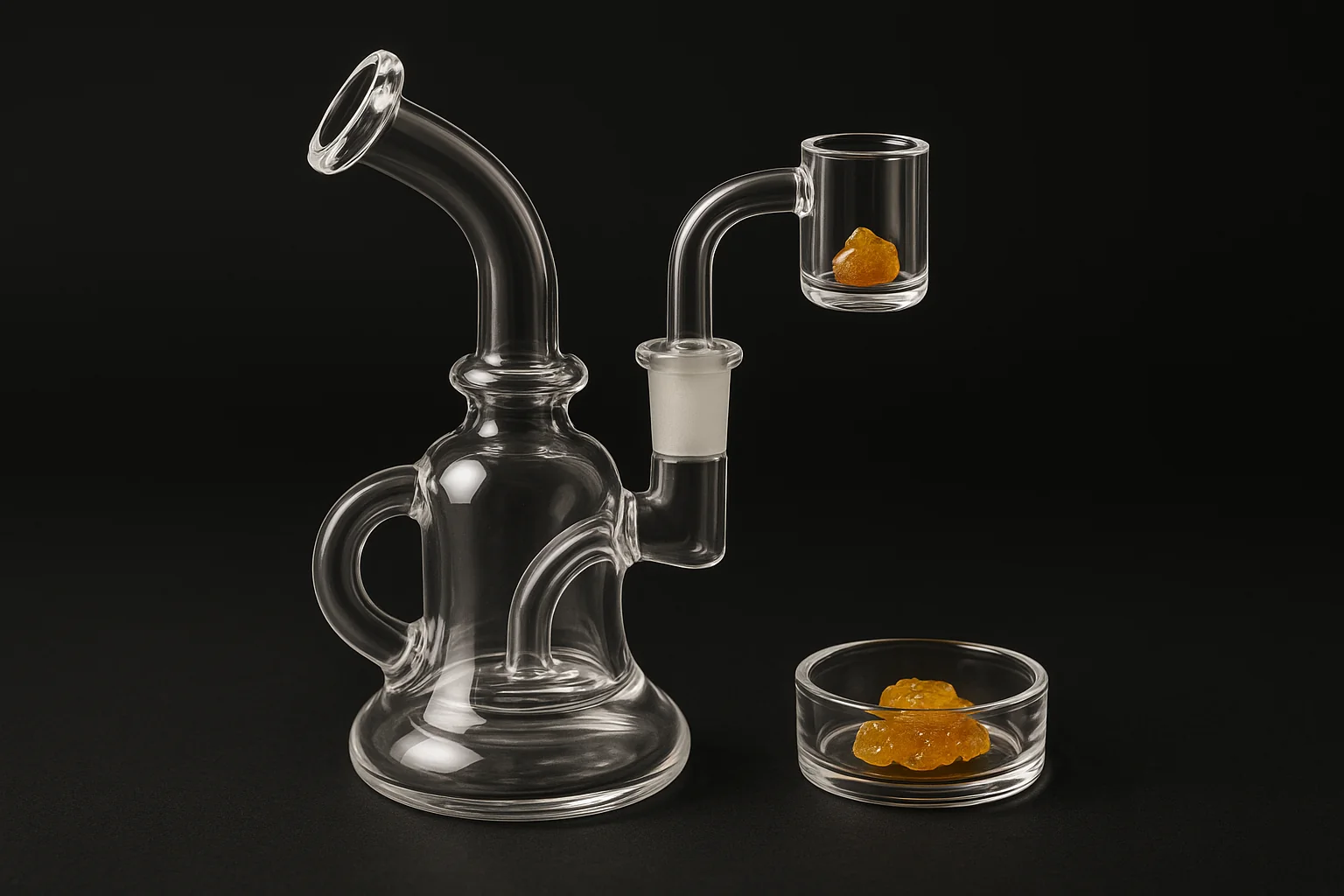

Dabbing - what is it and how does it differ from vaporization (definition)
Dabbing — what is it, how does it work, and what for. An understandable guide from u Bucha.
Dabbing is a method of consuming cannabis concentrates that has gained popularity in recent years among both recreational users and those seeking an intense, fast-acting way to intake cannabis's active ingredients. It differs from classic dry herb vaporization in both equipment and material - instead of dried cannabis flowers, concentrated extracts are used. A study published in ACS Omega analyzed the chemical profile of vapors produced during dabbing at various temperatures and showed that temperature is a key parameter determining the safety of this method (Meehan-Atrash et al., ACS Omega, 2019).
KEY INFORMATION
• Dabbing = vaporization of cannabis concentrates (wax, shatter, rosin) on a heated nail/banger.
• The key to safety: low temperature (150-250°C), no combustion - which requires an e-nail or thermometer.
• High-temperature dabbing (300°C+) can generate harmful degradation products of terpenes (Meehan-Atrash et al., 2019).
• Difference from vaporizing dry herb: concentrate vs flowers; different equipment; higher concentrations of active ingredients.
• Rosin (mechanically pressed) is the only method of extracting concentrate without chemical solvents.
Co to jest dabbing - definicja i historia
Dabbing comes from the English word 'dab' - a small amount. The method involves placing a small portion of cannabis concentrate (from the term 'dab') on a heated surface of the nail or banger and immediately inhaling the resulting vapor through a dab rig - a glass device similar to a bong, with a water chamber cooling the vapor before inhalation. The vapor forms instantly upon contact of the concentrate with the hot surface.
Dabbing as a practice emerged in cannabis communities in the United States between 2000-2010, parallel to the development of extraction techniques that allowed for the production of high-quality concentrates on a larger scale. In Poland and Europe, dabbing is much less common than in the USA, partly due to more difficult access to cannabis concentrates, but it is gaining interest among vaporization enthusiasts.
Dabbing equipment - what is needed?
A basic dabbing kit consists of several elements. Dab rig is a glass base with a water chamber and a dedicated joint (usually 14mm or 18mm), to which a nail or banger is attached. The water chamber cools the vapor and filters out fine particles. Nail or banger is a ceramic or titanium bowl that is heated and receives a portion of concentrate. A banger has a square or rounded dome shape, while a nail is a simpler tube or plate.
Torch - the traditional method of heating the nail - uses a butane or propane flame. The temperature achieved by the torch is difficult to control precisely, which is a serious drawback from a safety and quality perspective. Too high a temperature leads to the burning of the concentrate instead of vaporization. E-nail (electronic nail) replaces the torch with a precise electric heater with temperature control. This solution is preferred by experienced users who value consistency and safety.
Dabber This is a metal or ceramic tool used to apply concentrate to the nail - something like a small spatula or needle. Carb cap This is a cap for the banger that restricts airflow, lowering the pressure in the chamber and allowing for vaporization at lower temperatures - crucial for low-temp dabbing.
Types of concentrates for dabbing
The variety of cannabis concentrates available in markets where they are legal is significant. Shatter is a transparent, glass-like extract with a hard consistency, usually produced by butane extraction (BHO). Wax (wax) has a creamy or grainy consistency, making it easier to apply on a nail than shatter. Budder is a smooth, buttery concentrate with better plasticity. Crumble It has a dry, crumbly texture - it crumbles when applied.
Live resin This is a concentrate made from freshly frozen cannabis flowers instead of dried material. Freezing immediately after harvest allows for a fuller terpene profile - live resin typically has a richer aroma and flavor than standard concentrates made from dried material. Rosin It is the only extraction method that does not use chemical solvents - the flower or hash is pressed under high pressure and moderate temperature, and the resin flows out naturally. Rosin is preferred by those avoiding traces of solvents in the final product.
Dabbing vs vaporizing flower - comparison table
| Feature | Dabbing | Vaporizing flower |
|---|---|---|
| Material | Concentrates (wax, shatter, rosin, live resin) | Dried cannabis flowers |
| Concentration of active ingredients | Bardzo wysokie (40-90%) | Niskie-umiarkowane (5-25%) |
| Equipment | Dab rig, nail/banger, torch or e-nail | Vaporizer (portable or stationary) |
| Working temperature | 150-400°C (depends on the style) | 170-220°C |
| Ease of use | Requires skill | Simple to medium |
| Terpene profile | Intense (especially live resin) | Depends on the material and temperature |
| Portability | Low (glass equipment, fragile) | High (portable devices) |
| Entry cost | Higher (rig + nail + torch/e-nail) | Average (150-600 PLN vaporizer) |
How to start with dabbing - a practical step-by-step guide
Those starting their journey with dabbing should familiarize themselves with the basic sequence of actions. Using a gas torch: heat the nail or banger directly with the flame for 20-45 seconds until the metal or ceramic reaches working temperature (the nail starts to glow slightly red at very high temps). Wait 30-60 seconds (with an e-nail, set the desired temperature and wait for the signal) until the nail cools to the optimal range of 180-250°C. Then, using a dabber, apply a small amount of concentrate to the nail while inhaling through the mouthpiece of the rig. Cover the banger with a carb cap to lower the pressure and facilitate the vaporization of the remaining concentrate.
The first mistake beginners make: too high a nail temperature. If the concentrate immediately burns and produces black-gray smoke, the temperature is too high - you are not vaporizing but burning the material and inhaling combustion products. Proper vaporization of the concentrate at the optimal temperature produces a whitish, light vapor with a distinct terpene aroma. The cooling time of the nail after heating with the torch is crucial - each nail cools slightly differently, so the first sessions are usually about calibrating the timing.
Chemical extraction vs mechanical extraction - what you should know
An important aspect of making informed choices about concentrates is the extraction method. Chemical extraction using butane (BHO - Butane Hash Oil) or CO2 yields products with a very clean profile and high levels of active ingredients, but requires professional extraction equipment and purge (removal of solvent residues). The final product, when processed correctly, contains no solvent residues above safe thresholds; however, improperly performed BHO extraction can leave harmful butane residues.
Rosin - a mechanical extraction under high pressure - is a method without any chemical solvents. All you need is a press, a filter bag, and the right temperature (70-120°C). Rosin does not require purge because there is nothing to remove. Disadvantage: the extraction yield is lower than BHO or CO2, so more starting material is needed to produce the same amount of concentrate. Those who prefer absolute purity and no risk of chemical residues often choose rosin, despite the higher price per gram.
Dabbing temperature - a key safety parameter
Temperature is the most important parameter affecting the chemical profile of the vapor produced during dabbing. The Meehan-Atrash study and colleagues (ACS Omega, 2019) analyzed the chemical composition of vapor from dabbing at various temperatures. The results showed that at low temperatures (below 250°C), the vapor mainly contained terpenes and cannabinoids with minimal by-products. Above 340°C, methacrolein and benzene were detected - toxic degradation products of terpenes.
Practical conclusion: low-temp dab w 150-250°C is a safer range where the terpene profile of the concentrate is preserved, and the production of toxic pyrolysis products is minimal. High-temp dab above 300°C produces thicker vapor faster, but at the cost of the terpene profile and with the risk of producing harmful compounds. An e-nail with precise temperature control allows for consistent maintenance of the desired range - this is a key advantage over a gas torch.
Frequently Asked Questions
What is dabbing?
Dabbing is a method of consuming cannabis concentrates by heating a special bowl (nail/banger) to a high temperature and instantly vaporizing a small amount of concentrate upon contact with the heated surface. The vapor is inhaled through a glass dab rig with a water chamber. The temperature of the nail usually ranges from 150-400°C.
How does dabbing differ from vaporization?
Dabbing uses cannabis concentrates (highly concentrated extracts), while a dry herb vaporizer processes dried cannabis flowers. The dabbing temperature is usually higher than standard dry herb vaporization. Dabbing requires dedicated equipment - dab rig, nail/banger, torch, or e-nail.
What types of concentrates are used for dabbing?
Dabbing utilizes cannabis concentrates of various consistencies: wax, shatter, budder, crumble, live resin, rosin, and RSO. They differ in terpene profiles, active ingredient content, and extraction methods. Rosin is the only concentrate produced without chemical solvents.
Is dabbing safer than smoking?
Dabbing at low temperatures (150-250°C) does not produce smoke or typical combustion products. However, high-temperature dabbing (above 300-400°C) can generate harmful degradation products of terpenes, such as methacrolein and benzene (Meehan-Atrash et al., ACS Omega, 2019). Precise temperature control through an e-nail is key to safer dabbing.
What is an e-nail and why is it safer than a torch?
An e-nail is an electric heating element that replaces a traditional gas torch. It allows for precise, consistent temperature control in the range of 150-400°C with an accuracy of ±1-5°C. A gas torch heats the nail to a difficult-to-control temperature, often too high. An e-nail enables consistent low-temp dabs in a safer range.
This article is for informational and educational purposes and does not replace consultation with a doctor. If you are pregnant, breastfeeding, taking medications, or have chronic conditions, consult the use of supplements or herbs with a specialist.
Author: Michał Waluk · Published: 2026-05-04 · Updated: 2026-05-04