
WHO report from 2018 on CBD - what the World Health Organization really stated
Raport WHO z 2018 o CBD — co to, jak dziala i co mowia badania. u Bucha.
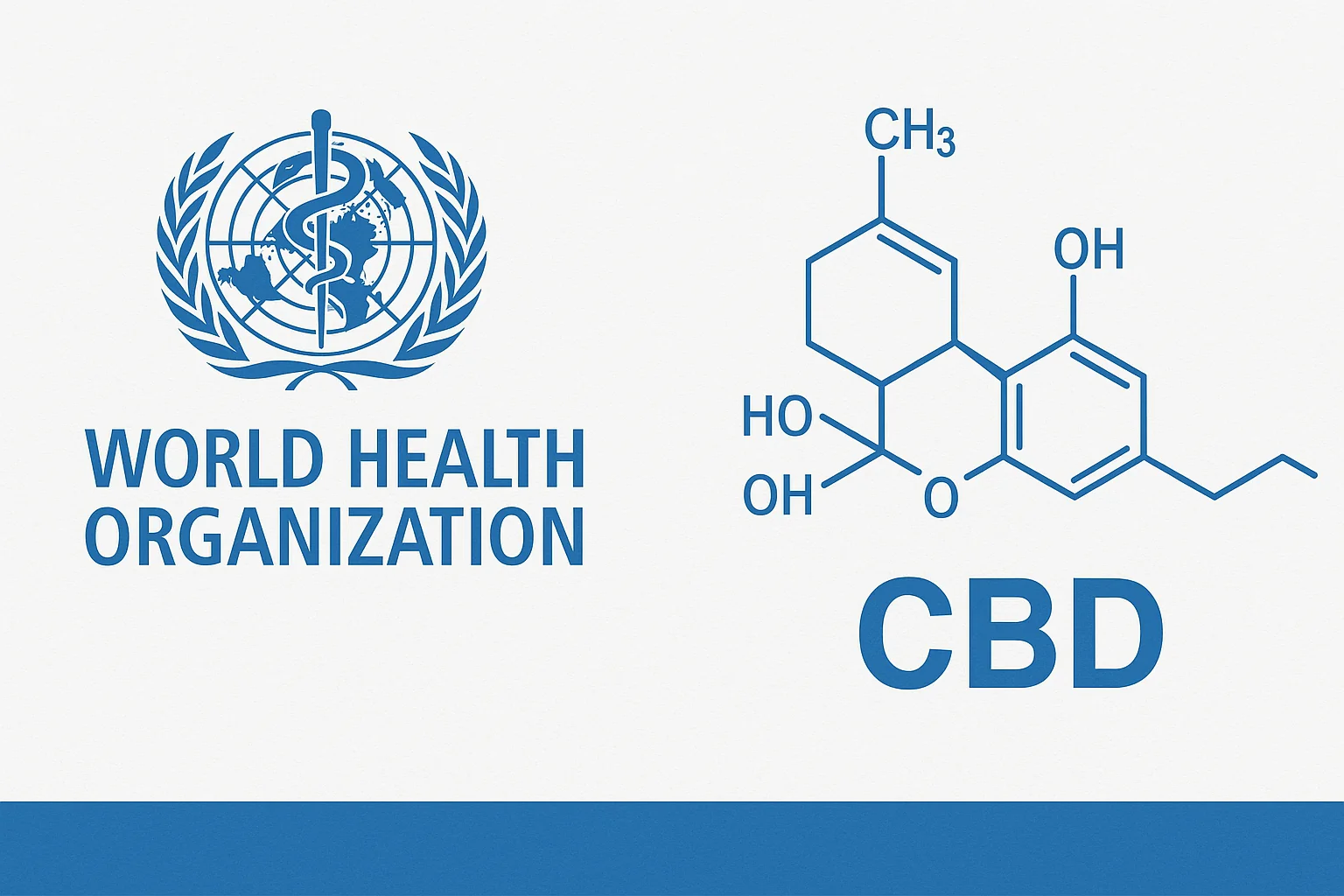
In June 2018, the WHO Expert Committee on Drug Dependence (ECDD) published a comprehensive report on cannabidiol. The conclusion was groundbreaking: CBD does not exhibit characteristics of an addictive substance, does not cause euphoria or intoxicating effects, and has a good safety profile in humans (WHO ECDD, 2018). The report is often cited - and equally often misinterpreted. This article explains what WHO actually stated and what it did not.
KEY INFORMATION
• The WHO ECDD report from 2018 stated: CBD is not addictive, does not intoxicate, and has a good safety profile at clinical doses.
• WHO did not recommend CBD as a general-purpose drug - the assessment concerned legal classification and safety, not clinical efficacy.
• The WHO recommendation led to the removal of cannabis from Schedule IV of the UN Convention in 2021.
• WHO noted the therapeutic activity of CBD in epilepsy, anxiety, pain, and Alzheimer's disease - based on existing, though still limited, evidence.
• The report clearly indicated potential interactions of CBD with drugs metabolized by CYP450 enzymes.
Context: why did the WHO evaluate CBD in 2018?
The WHO Expert Committee on Drug Dependence (ECDD) is an advisory body that assesses psychoactive substances for their abuse potential, harmfulness, and possible need for international control. Cannabis and its derivatives were subject to strict restrictions under the 1961 UN Single Convention on Narcotic Drugs - they were placed in Schedule IV, reserved for substances with "particularly high abuse potential".
Until 2017-2018, CBD was generally treated regulatory-wise the same as THC, despite fundamentally different pharmacological properties. CBD drug manufacturers (mainly companies developing Epidiolex for treatment-resistant epilepsy) pressured WHO for a separate assessment of CBD. In 2017, WHO conducted a preliminary study (pre-review), and in 2018, a full Critical Review - the most comprehensive assessment of CBD in the history of this organization.
Important context: the report was commissioned and published before the FDA in the USA approved Epidiolex (June 2018). Both events - the WHO report and the approval of the first CBD-based drug - occurred virtually simultaneously, creating an unprecedented moment in CBD regulations worldwide.
What the WHO report actually stated - point by point
The WHO ECDD report from 2018 consists of 27 pages and contains several key conclusions that are worth discussing precisely, as each has different regulatory and clinical significance.
CBD does not exhibit characteristics of an addictive substance
The Committee assessed that CBD does not meet the criteria for an addictive substance: it does not cause euphoria, does not lead to compulsive substance-seeking, does not produce characteristic withdrawal symptoms upon cessation, and does not exhibit potential for self-administration in animal studies. This is a crucial distinction from THC, which exhibits all these characteristics and is a controlled substance in Schedule I.
CBD has a good safety profile
The report stated that CBD is generally well tolerated in humans at doses used in clinical studies. Reported adverse effects include: drowsiness, diarrhea, fatigue, and changes in appetite - usually mild and transient. WHO noted the absence of reports of fatal CBD overdose or serious organ toxic effects at therapeutic doses (WHO ECDD, 2018).
CBD exhibits therapeutic activity in several conditions
The committee listed areas where CBD shows "therapeutic activity" based on existing evidence, assessed as preliminary or limited. The listed areas include: epilepsy (strongest evidence - Epidiolex was then under FDA review), anxiety, pain and inflammation, psychosis/schizophrenia, Alzheimer's disease and other neurodegenerative diseases, nausea and vomiting. The report clearly stated that these are "areas of research", not proven clinical indications.
Potential interactions with drugs
The WHO pointed out potential interactions of CBD with drugs metabolized by cytochrome P450 enzymes (CYP3A4, CYP2D6). The report stated that CBD may inhibit these enzymes and thus alter the metabolism of concurrently used medications. This is a significant clinical caveat, which in practice means that CBD is not a pharmacologically neutral substance when taken alongside prescription medications.
Table: key statements from the WHO 2018 report - what was confirmed and what was not
The table below compares popular claims about CBD with the actual findings of the WHO ECDD report from 2018. This is an important distinction, as the report is often selectively cited - both by CBD advocates who only mention positive conclusions and by skeptics who ignore evidence of therapeutic activity.
| Claim | WHO Position 2018 | Degree of certainty |
|---|---|---|
| „CBD is not addictive” | Confirmed - CBD does not meet the criteria for an addictive substance | High |
| „CBD jest bezpieczne” | Partially confirmed - good safety profile at clinical doses; concerns regarding drug interactions | Moderate |
| „CBD cures epilepsy” | Therapeutic activity confirmed (evidence from RCT Epidiolex); phrasing: „shows activity”, not „cures” | High for treatment-resistant epilepsy |
| „CBD helps with anxiety” | Therapeutic activity preliminarily confirmed - mentioned as an area of activity, evidence still limited | Moderate |
| „CBD jest zatwierdzone przez WHO jako lek” | False - WHO assessed the classification, did not approve CBD as a drug | - |
| „CBD has no side effects” | False - WHO pointed out drowsiness, diarrhea, appetite changes, and drug interactions | - |
| „CBD is completely non-psychoactive” | Partially - WHO states there is no euphoria or addictive potential, but CBD modifies CNS activity through 5-HT1A and other receptors | Moderate |
WHO recommendations and what happened to regulations after 2018
Based on the 2018 report, the WHO ECDD issued formal recommendations in 2019 regarding the reclassification of cannabis under UN treaties. Key recommendations included: removing cannabis and cannabis resin from Table IV of the 1961 Convention (a table reserved for substances with the highest potential for abuse), maintaining control in Table I (substances requiring control), and confirming that CBD preparations „containing no more than 0.2% THC are not subject to control” under UN treaties.
In March 2021, the UN Commission on Narcotic Drugs (CND) voted on the WHO recommendations. The result was the removal of cannabis from Table IV - a groundbreaking decision after nearly 60 years of classifying cannabis alongside heroin as a substance „lacking medical value”. This decision opened the door to medical research and national regulations, but does not mean automatic legalization of CBD in any country.
In the European Union, the legal status of CBD remains complex. CBD is classified by the European Commission as „novel food” and required approval from EFSA before being marketed as a dietary supplement. The application for CBD approval as novel food is still ongoing at the EU level. This is a regulatory gray area where CBD products circulate in the market, but their formal status is not fully regulated.
What the WHO report means for CBD consumers in Poland
The WHO report from 2018 does not directly change Polish law regarding CBD. In Poland, CBD contained in food products (supplements, teas) is subject to food regulations and novel food. CBD oils with hemp extract operate in a regulatory gray area - they are not registered drugs, but they are also not prohibited, provided they contain less than 0.2% THC (according to the Polish implementation of EU regulations regarding industrial hemp).
However, the WHO report has practical significance for consumers: first, it is an authoritative confirmation that CBD is not addictive - which removes one of the most common psychological barriers when considering supplementation. Second, it points to interactions with medications, which is important safety information when taking prescription drugs. Third, it provides a realistic assessment of the state of evidence - therapeutic activity preliminarily confirmed in several areas, but this is not an official drug approval.
Frequently Asked Questions
What did the WHO report from 2018 say about CBD?
The WHO ECDD report stated that CBD does not exhibit characteristics of an addictive substance, does not cause euphoria, and has a good safety profile at clinical doses. The committee concluded that CBD shows „therapeutic activity” in epilepsy, anxiety, pain, and other conditions. It recommended excluding pure CBD from control under the UN Convention on Psychotropic Substances (WHO ECDD, 2018).
Did WHO recommend CBD as a medication?
No - the WHO report was not an approval of CBD as a drug. It assessed the legal-regulatory classification and safety profile, not clinical efficacy. The only approved CBD-based drug is Epidiolex - approved by the FDA in the USA and EMA in Europe solely for the treatment of drug-resistant epilepsy (Dravet and Lennox-Gastaut syndromes), not as a general-purpose drug.
What did WHO say about the safety of CBD?
The WHO report stated a good safety profile for CBD at therapeutic doses. Adverse effects (drowsiness, diarrhea, appetite changes) are generally mild. Key caveat: CBD inhibits CYP3A4 and CYP2D6 enzymes - which may alter the concentration of concurrently taken medications. No reports of fatal overdose (WHO ECDD, 2018).
How did the WHO report influence CBD regulations worldwide?
The WHO recommendations from 2019 led to a vote in the UN Commission on Narcotic Drugs in March 2021, where cannabis was removed from Table IV of the 1961 Convention. This is a historic change in classification after nearly 60 years. It does not mean automatic legalization - each country regulates CBD independently. In the EU, CBD has the status of novel food and is still in the process of approval by EFSA.
Was the WHO report the first assessment of CBD by this organization?
No - the WHO conducted a preliminary study of CBD in 2017 (pre-review). The full Critical Review was completed in June 2018 and was the most comprehensive review of CBD by the WHO in history. The report included an analysis of clinical studies, safety profile, potential for addiction, and medical applications. Based on this, the WHO formulated recommendations submitted to the UN in 2019.
This article is for informational and educational purposes and does not replace consultation with a doctor. If you are pregnant, breastfeeding, taking medications, or have chronic conditions, consult the use of supplements or herbs with a specialist.
Author: Michał Waluk · Published: 2026-05-04 · Updated: 2026-05-04